
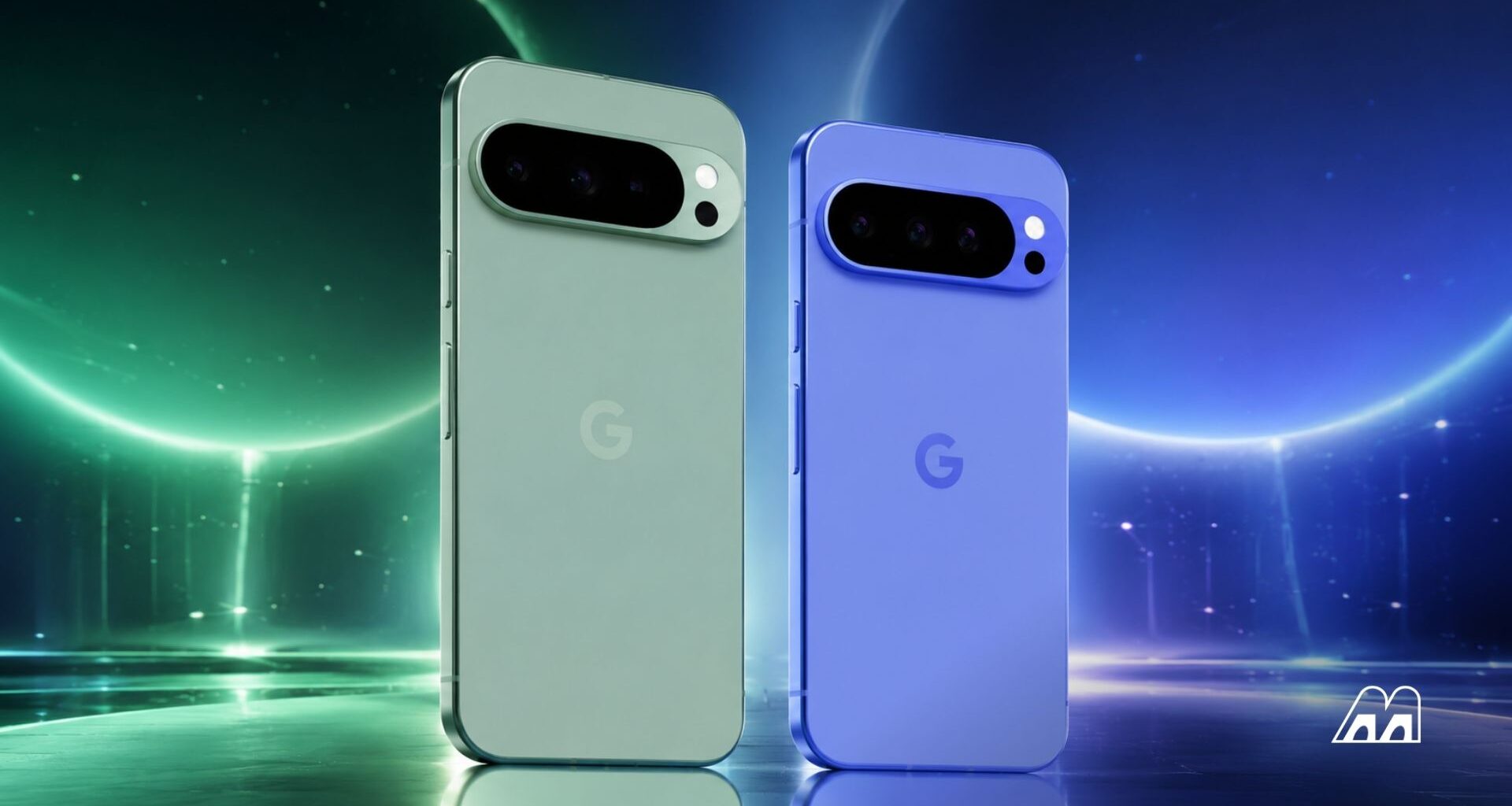
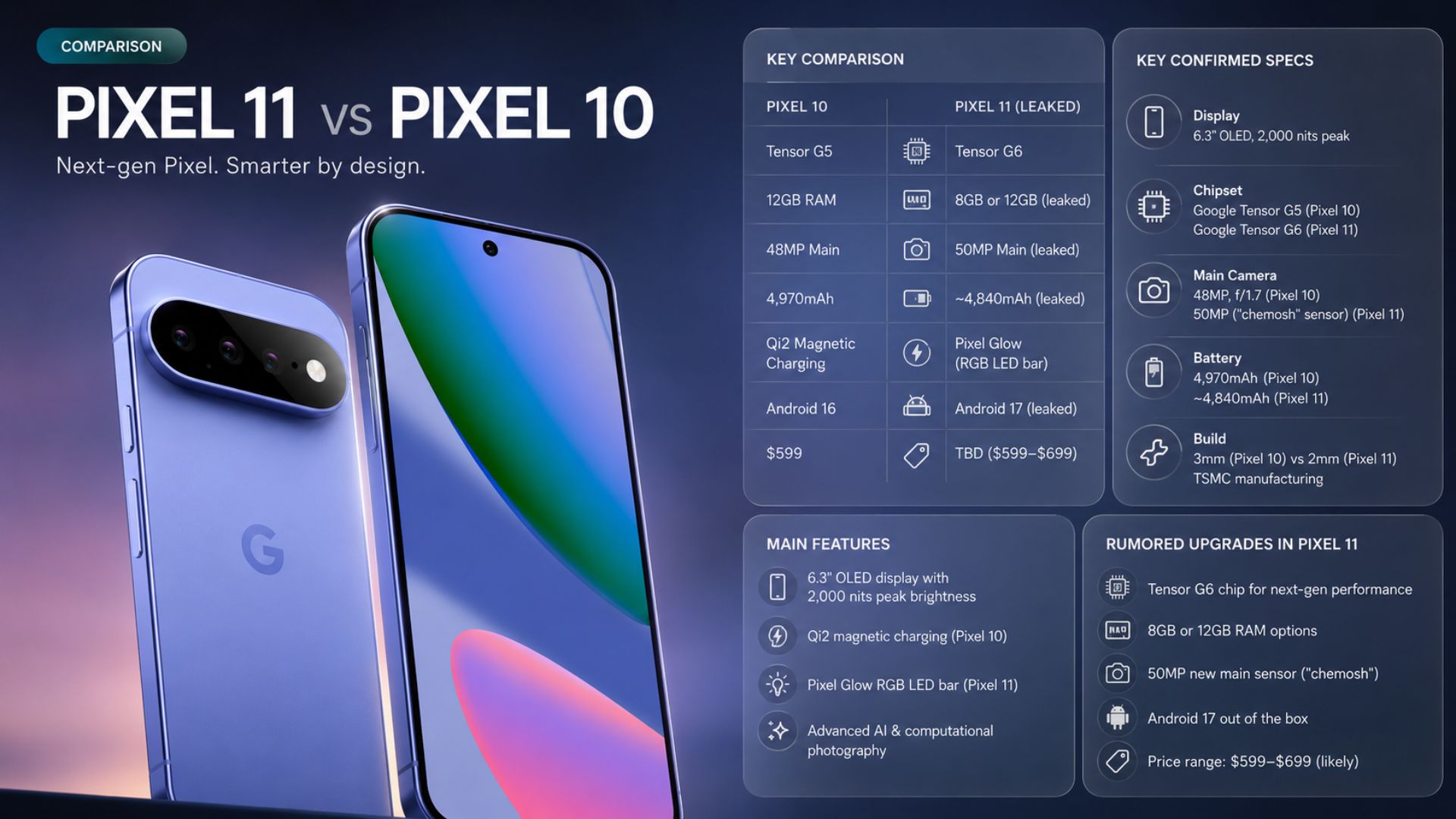
Google hasn’t confirmed a single Pixel 11 spec, but a May 2026 leak from Mystic Leaks just laid out nearly everything. The Google Pixel 11 vs Pixel 10 gap is the widest since Google switched from Samsung to TSMC fabrication last year, with a 2nm chip, new camera sensors, and a hardware feature borrowed from Nothing’s playbook. Here’s what’s actually changing, what’s risky, and whether it’s worth waiting.
The Chip That Actually Matters This Year
The Tensor G5 inside the Pixel 10 was Google’s first chip built on TSMC’s 3nm process — a big deal after years of sluggish Samsung-made silicon. The Tensor G6 in the Pixel 11 pushes that to 2nm, making it one of the first smartphones to use TSMC’s most advanced fabrication node.
What does that mean in practice? TSMC’s published specs estimate around 15% better power efficiency at equivalent clock speeds. The G6 also moves to a 7-core CPU layout (1+4+2) using ARM’s newer C1 cores, compared to the G5’s 8-core design with Cortex-X4 and A725 cores. Early Geekbench listings tied to the codename “Kodiak” suggest single-core performance around 2,354 — a notable jump from the G5.
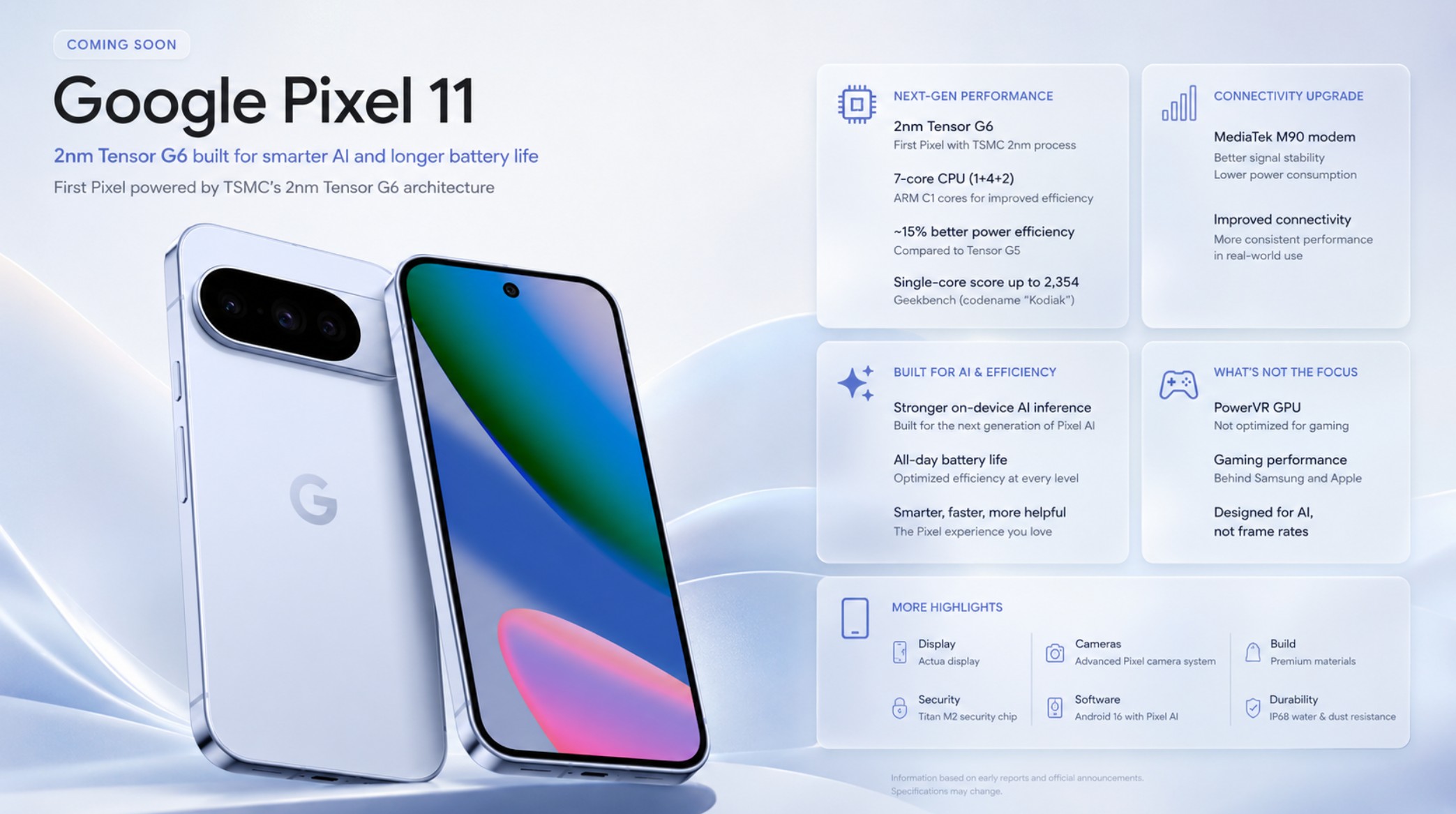
The chip story is less about raw benchmarks and more about what Google is not doing. The Tensor G6 still uses a PowerVR GPU rather than ARM’s latest Immortalis, which means gaming performance will trail Samsung and Apple again. Google is spending its 2nm budget on AI inference and battery efficiency, not frame rates. If you play Genshin Impact, this isn’t your phone. If you care about all-day battery life and on-device AI, it might be.
The modem swap deserves attention too. The Pixel 10 relied on Samsung’s Exynos 5400 — a 4nm component that contributed to heat and connectivity inconsistencies users have reported for years. The Pixel 11 switches to MediaTek’s M90 modem, which should improve signal stability and power draw. That one change, more than any CPU benchmark, could define the daily experience.
Why the RAM Leak Changes Everything
Here’s the number that matters more than clock speeds: 8GB.
Leaks from Mystic Leaks say the base Pixel 11 may ship with just 8GB of RAM. The Pixel 10 launched with a flat 12GB across every model. That’s not a minor trim — it directly affects whether Google’s own AI platform works on the phone.
Gemini Intelligence, announced at The Android Show in May 2026, requires three things: a flagship chip, Gemini Nano v3, and at least 12GB of RAM. The Pixel 10 meets all three. An 8GB Pixel 11 would fail the RAM test. That creates an awkward situation where Google’s newest phone can’t run Google’s newest AI feature. Memeburn’s Gemini Intelligence compatibility walkthrough covers the full requirement list and which phones currently qualify.
Why would Google do this? The global memory chip shortage is the likely answer. AI data centers are absorbing DRAM supply, driving up prices for phone manufacturers. Samsung’s mobile COO publicly blamed the shortage for the Galaxy S26’s price hike — the first time a phone maker has said that out loud. Google appears to be testing the opposite strategy: hold the sticker price, cut the spec.
We think that’s the riskier bet. Two years of marketing Pixel as “AI-first” make a RAM downgrade feel like a contradiction. If Gemini Intelligence matters to you, wait for the 12GB configuration — or grab the Pixel 10 at its current discount.
Camera Hardware Gets a Quiet Overhaul
The Pixel 10 uses a 48MP main sensor, a 10.8MP 5x telephoto, and a 13MP ultrawide. It’s a capable setup — Google’s computational photography still punches above its spec sheet.
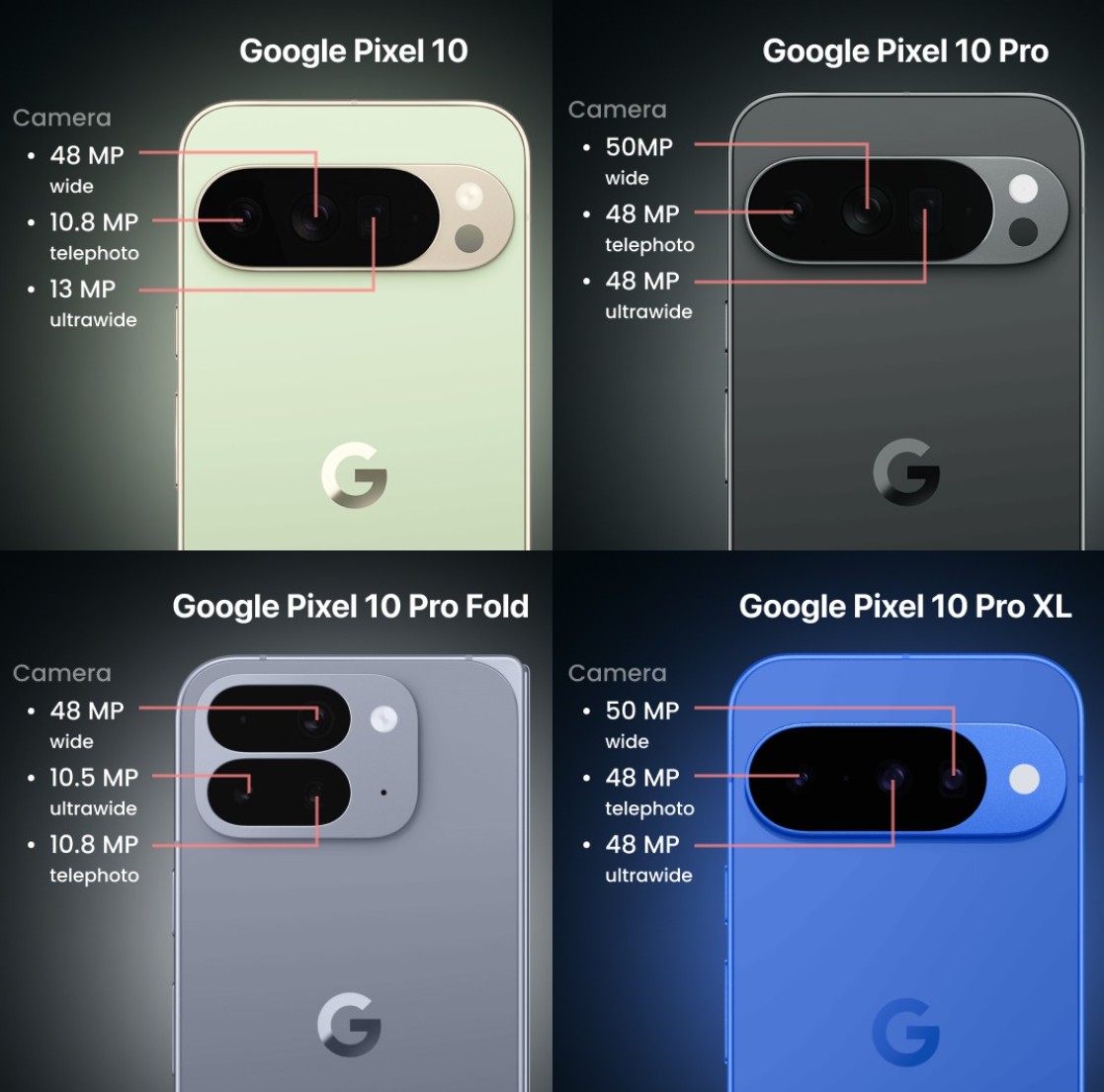
The Pixel 11 introduces a new 50MP main sensor codenamed “chemosh.” The telephoto and ultrawide details remain unclear, but Google appears to be swapping hardware across the lineup, which doesn’t happen often. The leaked CAD drawings also show a restyled camera bar with a blacked-out housing, replacing the color-matched frame of the Pixel 10.
In numbers, 48MP to 50MP is barely a difference. What matters is the sensor itself — pixel size, autofocus speed, low-light capture. Google hasn’t confirmed any specs for “chemosh,” so it’s too early to call this an upgrade or a sidegrade. What we can say: if you’re happy with the Pixel 10’s camera output, the Pixel 11 won’t give you a dramatic reason to switch on camera alone.
Pixel Glow Replaces the Thermometer Nobody Used
The rear-facing temperature sensor, introduced on the Pixel 8 Pro, is gone. In its place: Pixel Glow — an RGB LED array embedded in the camera bar frame.
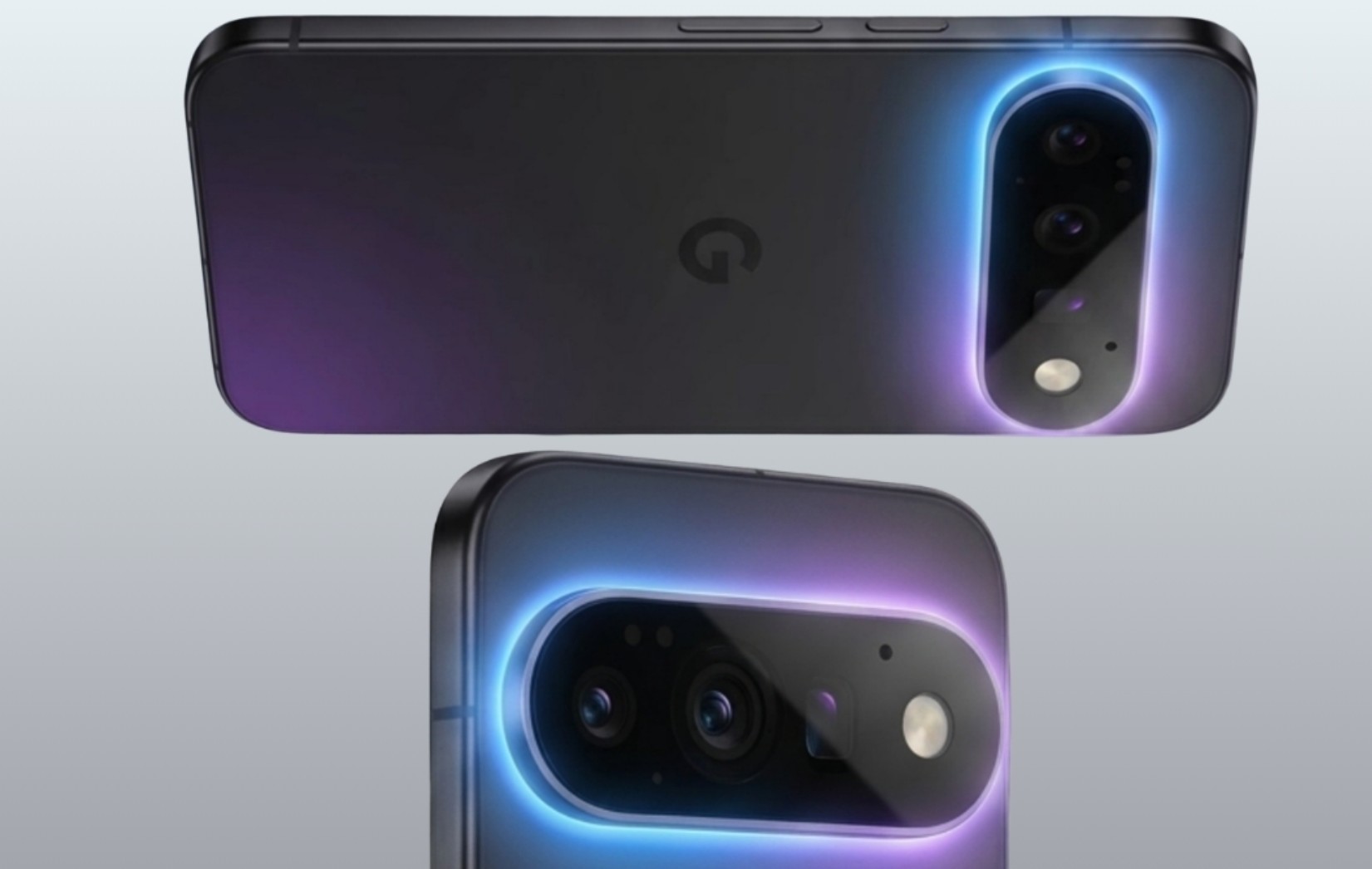
Think of it as Google’s answer to Nothing’s Glyph Interface. Android Authority found a dedicated “Glow Settings” menu in Android 17 Beta 4 under the internal codename “Orbit,” confirming this is real hardware with software already built for it. Unlike Nothing’s system — which uses hundreds of monochrome white LEDs across the phone’s back — Pixel Glow uses full-color LEDs concentrated around the camera bar. You’ll get color-coded notifications by app or contact, a pulsing animation when Gemini processes a request, and visual alerts for timers and alarms. Nothing’s approach with the Phone (4b) opened the door for this kind of back-panel notification system, and Google is walking through it with a more restrained design.
The thermometer was a tech demo that very few people used daily. Pixel Glow is the kind of feature that could actually change how you interact with a phone sitting face-down on a desk — which is where most phones spend most of their time.
Battery and Display: Smaller Numbers, Bigger Bet
This is where the Google Pixel 11 vs Pixel 10 comparison gets uncomfortable. The Pixel 11’s leaked battery sits at 4,840mAh — down from the Pixel 10’s 4,970mAh. The Pro drops from 4,870mAh to 4,707mAh, and the Pro XL goes from 5,200mAh to 5,000mAh.
Google’s argument: 2nm efficiency offsets the smaller cells. And mathematically, it could work. A 15% power efficiency gain against a roughly 3% capacity reduction leaves net headroom. But math on paper isn’t the same as a full day of navigation, video calls, and Gemini Intelligence running background automation. The Pixel 10 Pro already finishes behind Samsung and Apple flagships in battery endurance tests — this isn’t a phone that has margin to spare.
The display stays at 6.3 inches with the same 1080×2424 resolution, but peak brightness bumps from 2,000 nits (Pixel 10) to 2,200 nits. The Pixel 11 also picks up 240Hz PWM dimming, a spec that matters for flicker-sensitive users. Rival flagships shipping later this year — including whatever Apple launches in September — will likely challenge these numbers. And with the Galaxy Z Fold 8 arriving on July 22, Samsung gets to debut Gemini Intelligence first on its own hardware, a full month before Google’s event.
Should You Wait or Buy the Pixel 10 Now?
If you’re on a Pixel 9 or older, the Pixel 11 is the better target — especially for the modem and chip efficiency upgrades that address long-standing Pixel complaints. The Tensor G6 on 2nm and the MediaTek modem together could fix the two things Pixel owners grumble about most: heat under load and spotty cellular performance.
If you already have a Pixel 10, the Pixel 11 is a harder sell. The design is nearly identical, the camera upgrade is incremental, and the RAM situation introduces real uncertainty.
The wildcard is pricing. Memory costs are pushing phone prices up industry-wide. Samsung already raised the Galaxy S26. Google might absorb the hit, or it might quietly cut specs to hold the line. If the Pixel 10 goes on a deeper discount before August — and it’s already $300 off at some retailers — that math shifts fast.
FAQsWill the Pixel 11 work with Gemini Intelligence?
The 12GB model should qualify, but the rumored 8GB base version would fall below Google’s 12GB RAM minimum for Gemini Intelligence. Google hasn’t confirmed final RAM configurations. If on-device AI matters, wait for official specs before committing to the entry-level option.
When is the Pixel 11 release date?
Google hasn’t announced it yet, but the pattern from Pixel 9 (August 2024) and Pixel 10 (August 2025) points to a mid-to-late August 2026 reveal. For the latest confirmed details, check Memeburn’s full Pixel 11 release date breakdown.
How does the Galaxy Z Fold 8 compare to the Pixel 11?
Samsung’s foldable is a different category, but it launches a month earlier and debuts Gemini Intelligence first. At Galaxy Unpacked on July 22, Samsung will show six devices — giving buyers a concrete set of options before Google’s event.
Is the Pixel 10 still worth buying in 2026?
Yes, particularly at current discounts. It runs Gemini Intelligence, has a solid 48MP camera system, and gets Android updates through 2032. Tensor G5’s efficiency is proven — you’re not gambling on leaked specs. If Pixel Glow and a 2nm chip don’t excite you, the Pixel 10 is the safer play.
What is Pixel Glow and how does it work?
Pixel Glow is an RGB LED system embedded in the camera bar that replaces the temperature sensor. It provides color-coded notification alerts, a charging animation, and an AI processing indicator. It’s similar in concept to Nothing’s Glyph system but uses full-color LEDs in a smaller, more focused layout.