
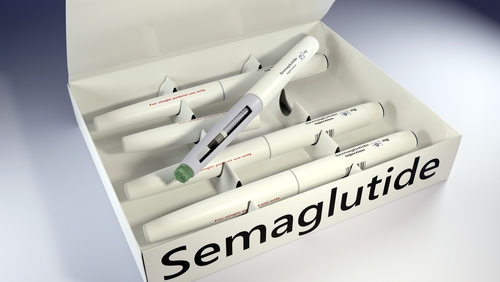
The FLOW trial found that semaglutide reduced the risk of kidney disease events and improved overall survival among participants with type 2 diabetes and CKD. In a posthoc analysis, Katherine R. Tuttle, MD, and colleagues aimed to determine how these benefits differ across a broad range of CKD severity.
FLOW, which was a double-blind, randomized, placebo-controlled trial, had a median follow-up time of 3.4 years. Some participants had type 2 diabetes and an estimated glomerular filtration rate (eGFR) of 50–75 mL/min/1.73 m2 and urinary protein-to-creatinine ratio (UACR) of greater than 300 but less than 5,000 mg/g. Other participants had type 2 diabetes and an eGFR of 25 to less than 50 mL/min/1.73 m2 and UACR of greater than 100 but less than 5,000 mg/g.
The primary outcome was a composite of factors including eGFR of less than 15 mL/min/1.73 m2, 50% or greater eGFR decline, dialysis, kidney transplant, and fatalities due to cardiovascular or kidney causes, in addition to all-cause fatalities. Investigators randomly assigned participants to receive subcutaneous semaglutide 1 mg once per week or a placebo. They categorized participants into subgroups based on baseline eGFR (<30 to ≥60 mL/min/1.73 m2) or UACR (<100 to ≥2,000 mg/g) to evaluate the primary outcome.
The primary outcome occurred in 19% of participants receiving semaglutide treatment and 23% of participants receiving the placebo (hazard ratio [HR], 0.76; 95% CI, 0.66-0.88). Fatalities occurred in 13% and 16% of those in the semaglutide and placebo groups, respectively. Across UACR and eGFR subgroups, HRs for the primary outcome were consistent. For fatalities, although the HRs were very similar among eGFR subgroups, the HR was lowest for those with a UACR of 2,000 mg/g or greater.
The researchers concluded that the results support semaglutide treatment for patients with type 2 diabetes with all levels of CKD severity.