
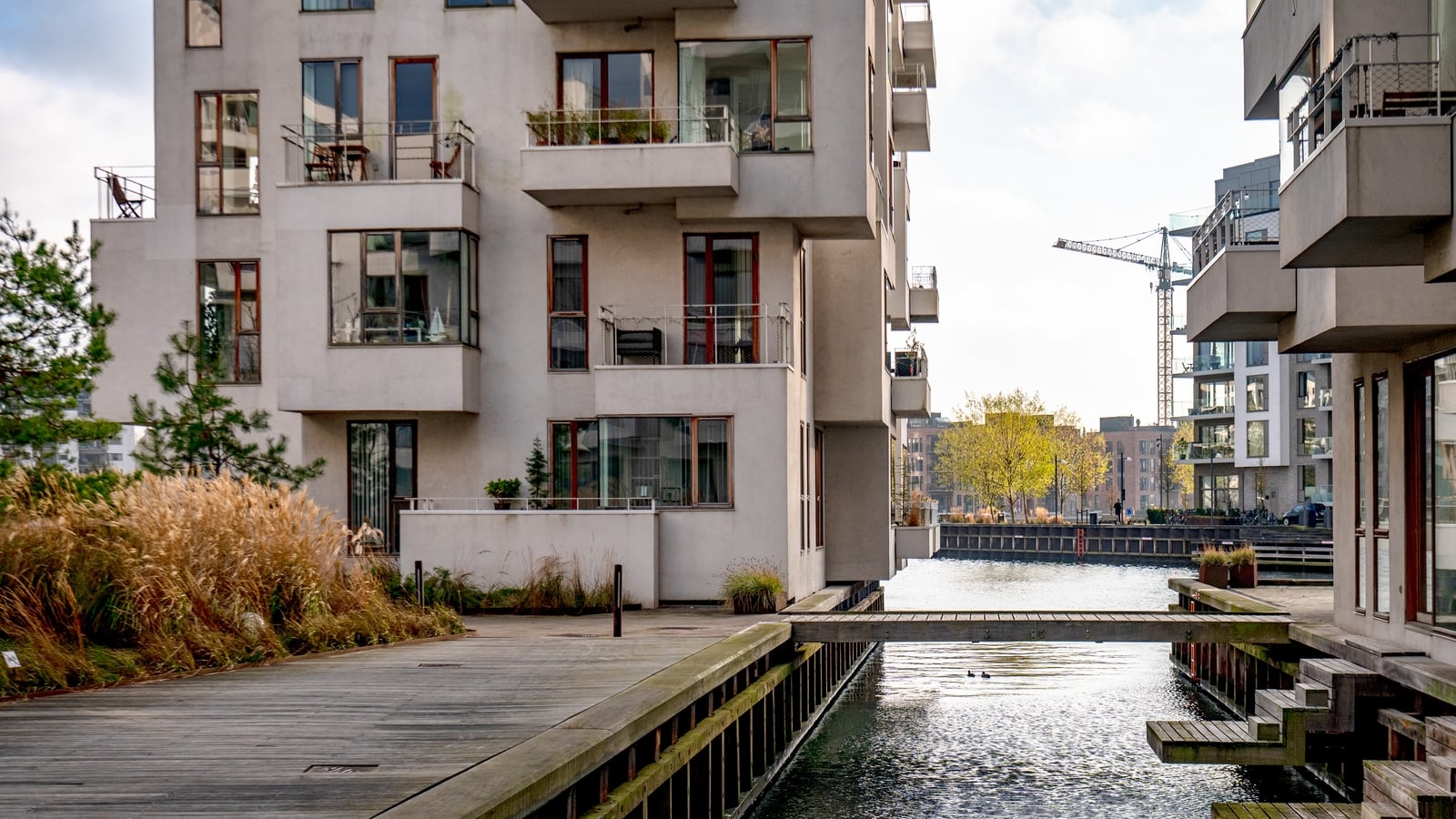
The house purchasing power of Irish residents has significantly weakened in the last few decades.
In 1995, the price of a house was the equivalent of around five times average annual salary. At that time the average price of a house stood at €88,664, while average annual earnings in construction and industrial sectors were about €17,000.
In 2024, buying a house in Dublin equated to just under 10 times the median annual salary, according to recent figures from the Central Statistics Office.
While median annual salaries in the capital rose 2.9-fold to €49,224 in almost 30 years, the median price of a house in Dublin soared five-fold to €472,000 in the same period.
The reality for prospective homeowners here has clearly hardened, but how does it compare to other European nations? Is the path to homeownership any shorter outside Ireland?
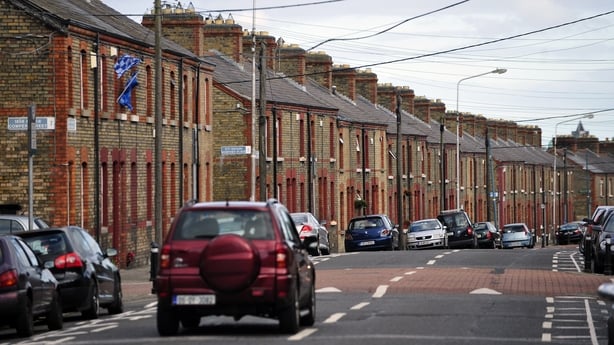
Salary growth in Ireland over the last 30 years was slower than house price inflation
Europe’s least affordable cities
Amsterdam, Athens and Prague are among Europe’s least affordable cities when it comes to buying a house, based on price-to-salary ratio.
According to Deloitte’s property index, in 2024 buying a home in the Dutch capital required 15.4 times annual gross salary, 15.3 in the Greek capital, and 15 in the capital of Czechia.
Amsterdam remains one of Europe’s most expensive housing markets, with the cost of a square metre in a new home ranging between €7,500-€10,000.
Residential property prices have also been soaring in Prague – not least due to the rising numbers of international residents, combined with a low supply of new homes.
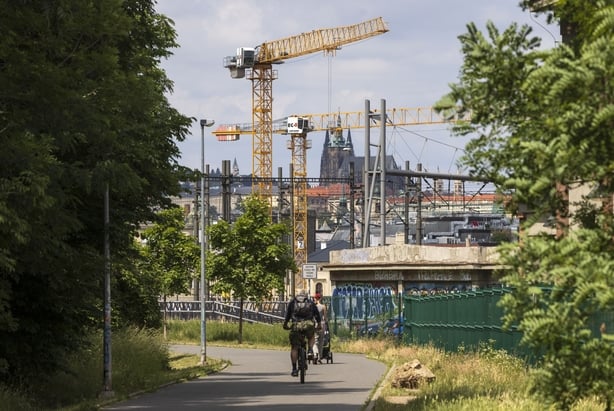
The gap between an average Czech citizen’s income and house prices has become among the EU’s biggest
Supply has become a key issue across the EU, especially in capital cities.
In a positive trend, in 2024, Ireland became a European leader in delivering new homes – 12.84 dwellings per 1,000 inhabitants. But that comes from a very low base – Ireland’s housing stock remains amongst the smallest in Europe.
‘People just like to live in Copenhagen’
On the other end of the housing affordability scale from Amsterdam and Prague are cities like Turin in Italy and Croatia’s capital Zagreb, where buying a home would take five and seven times the yearly salaries respectively.
Danish cities Aarhus and Odense are also Europe’s most affordable, though the property market in the capital, Copenhagen, tells a different story.
Like Ireland, the strong Danish economy offers high wages, but also above-EU-average housing costs.
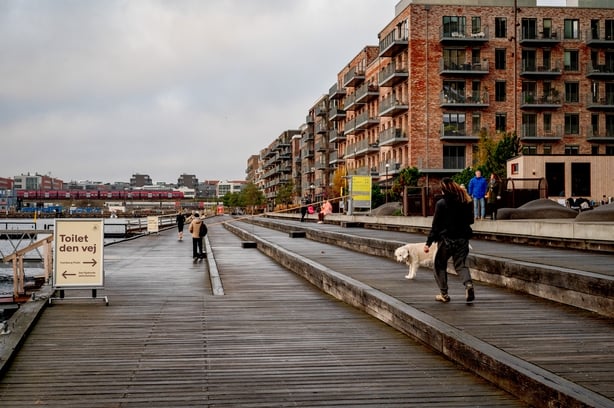
Waterfront apartment blocks along the Nordhavn Bassin in Copenhagen, Denmark
Soaring demand and lagging supply sent property prices to new highs in the city frequently ranking as one of the world’s most liveable.
“People just really like to live in Copenhagen”, Chief Economist at Danish housing think-tank Boligøkonomisk Videncenter Mark Lund Andersen told RTÉ News, citing the “tremendous development” of the city in the 1990s.
Prices of owner-occupied apartments jumped by an “extraordinary” 24% in 2025, according to the Danish National Bank, which called the increases “unsustainable” and “significantly higher” than in comparable countries.
The average asking price for a square metre in an apartment in Copenhagen went as high as €8,000 at the end of 2024, according to the Danish banks’ association Finans Danmark, bringing the price of a 73sq/m apartment to around €580,000.
Depending on a person’s earnings, it could take between six and nine times the annual salary to purchase such apartments in Copenhagen. Gross full-time annual earnings were roughly between €64,000 and €96,000 in the Danish capital in 2024, according to Statistics Denmark.
We need your consent to load this flourish contentWe use flourish to manage extra content that can set cookies on your device and collect data about your activity. Please review their details and accept them to load the content.Manage Preferences
With affordability becoming a real issue in the city, Danish housing experts are calling for an urgent increase in new houses and denser development.
Mr Lund Andersen has been critical of some regulations – for example, a 2005 rule requiring the average apartment size within a development to be at least 95 sq.m, meaning smaller units must be offset by larger ones in the same building.
“The argument was that we need to make it possible for families to actually stay in Copenhagen and raise kids – fair enough,” he said.
However, 21 years later that is “inefficient”, he argues, advocating for smaller flats.
The key difference between Dublin and Copenhagen is that Danish residents are generally under much lower pressure to become homeowners than many in Ireland, due to other housing options and a more mature rental market.
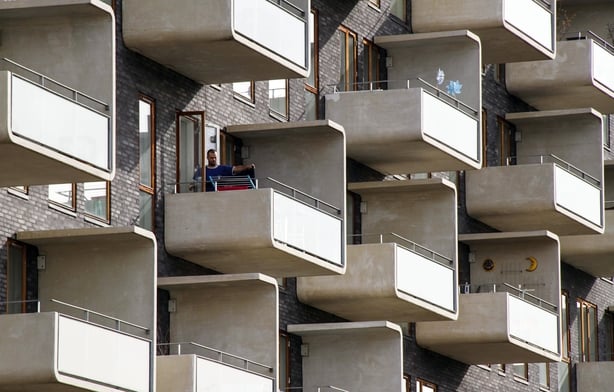
Danish economists argue that strict rules on the size of apartments in Copenhagen should be revised as house prices soar
Owner-occupied apartments account only for 20% of dwellings, with social housing making up a significant portion of housing in the city.
In comparison, roughly half of all Dublin homes are owner-occupied – with or without a mortgage.
“We have maybe the best social housing system in place in the world,” Mr Lund Andersen said.
“We don’t like to call it a social housing sector because the quality is completely different to what you see in most other countries. It’s a very high standard, very high-quality housing.”
Warsaw – booming economy, soaring prices
On the other flank of the EU, many central and eastern European countries have relatively low house prices in absolute terms, but house-price-to-salary ratio and mortgage rates can be less favourable than in western European states.
In Prague, the price per square metre in a new dwelling has soared to €5,900, close to the levels seen in Dublin, despite salaries there being much lower.
High interest rates of around 5% are making purchases even more difficult.
Expensive mortgages are also an issue in neighbouring Poland, where borrowing costs can go as high as 8%.
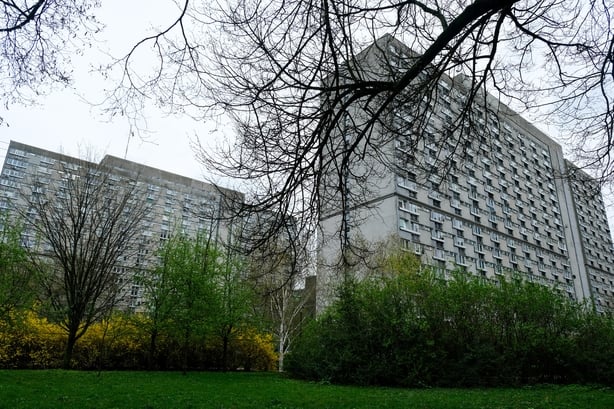
Warsaw residents tend to live in smaller apartments of around 60 sq.m
Poland’s economic boom has been hailed in recent years, however, delivering enough new housing for the population of over 38 million people has remained challenging.
While supply in Warsaw dropped by 37% in 2024, housing prices soared by around 20% in the same year – to €3,800 per sq.me, according to the country’s central bank.
So, to buy a 73 sq.m flat worth €275,000 would require 10 times a yearly salary, which in Warsaw stood at €28,320.
Square metres cheaper in Brussels than in Dublin
Belgium also struggles to address increasing demand for housing, amid growing population and falling family size.
Economists and housing analysts there are urging policymakers to dramatically increase delivery of new homes in the coming years and modernise the existing stock.
In 2024, prices for new dwellings in Brussels increased by almost 4% to around €4,500 per sq.m, which is still below Dublin’s cost of around €6,000.
That brings the cost of an average 73 sq.m apartment to around €330,000.
According to the country’s statistics office Statbel, a median annual salary in Brussels was €46,284 in 2024, meaning it would take “only” seven times annual salaries to buy a new apartment in the Belgian capital.
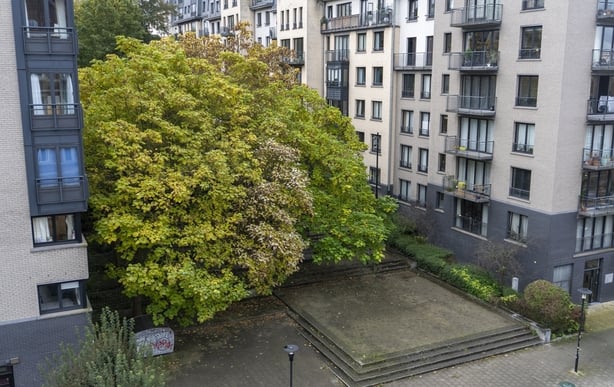
Asking prices for new dwellings in Brussels vary significantly depending on the area.
Housing realities
The house-price-to-salary ratio cannot fully capture housing realities of a given city or country.
Dr Rachel Slaymaker, an economist and housing researcher at the ESRI, notes that housing conditions are also shaped by access to affordable and social housing, mortgage rates and security of tenure.
“Ireland has always been a homeownership society, whereas in many European countries, renting long-term is much more common,” she said.
A “tougher” rental sector leaves fewer routes to secure stable housing outside homeownership, “ramping up the pressure” to buy.
Dr Slaymaker also noted that Dublin’s average purchasing power figures can be distorted by high salaries in sectors such as tech and finance.
For “more standard households”, high rents can create a “trap”, making it harder to save for a deposit.
The less developed rental market may also help explain why more people in Ireland face housing insecurity.
EU agency Eurofound defines housing insecurity as the proportion of respondents who said it is likely they will have to leave their home in the next few months because they can no longer afford it.
Since 2020, that has been worsening across the EU and affecting both low- and middle-income households.
Slovakia and Latvia were the worst impacted, with almost a quarter of respondents reporting housing insecurity.
Austria, Denmark and Germany had the highest levels of security, reflecting greater income stability and more regulated rental markets.
Despite high wages, Ireland doesn’t appear to offer the same level of housing security as other western and northern European states – 17% of people here feel insecure about whether they can stay in their home in the next three months.