
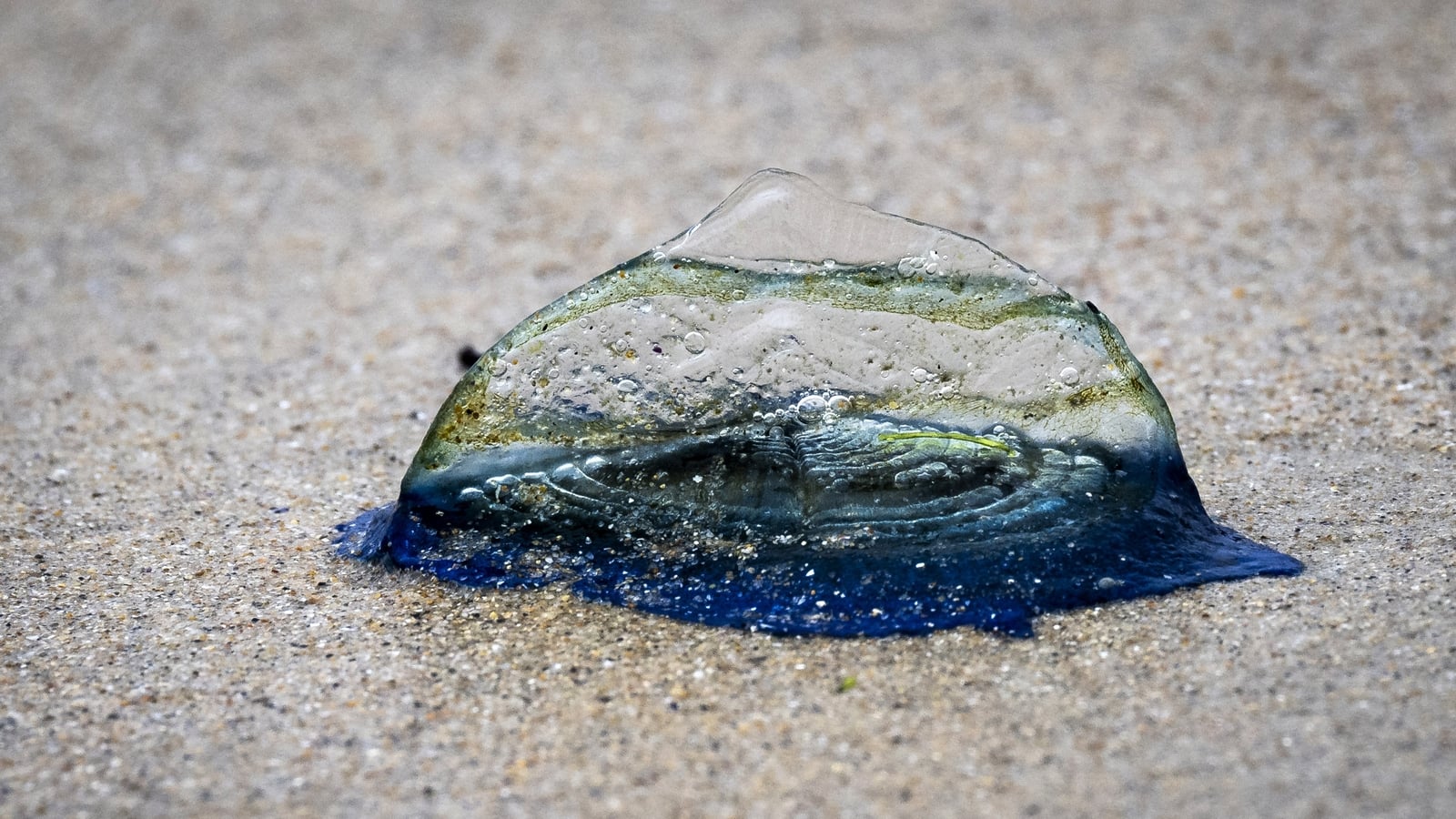
Lola O’Sullivan, a Water Safety Ireland volunteer in Waterford, joined Today with David McCullagh on RTÉ Radio 1 to discuss the danger of jellyfish. Listen back above.
“There’s a variety of types of jellyfish out there at the moment,” Lola explains, listing Compass jellyfish, Blue jellyfish, and Barrel jellyfish as Ireland’s usual suspects.
While some species will give more of a sting than others, Lola says that the ones you really have to watch out for are the Lion’s Mane and Portuguese Man o’ War, which tend to appear in Irish waters around August.
Unfortunately, it can be difficult to know what type of jellyfish you have been stung by, so it is best to seek medical attention if your discomfort goes beyond the pain of a nettle sting.
A sting from a Lion’s Mane jellyfish can cause nausea, sweating, cramps, headaches and other symptoms, while a Portuguese Man O’War’s sting can cause muscle spasms, headaches, diarrhoea, difficulty breathing, heart rhythm problems and other symptoms.
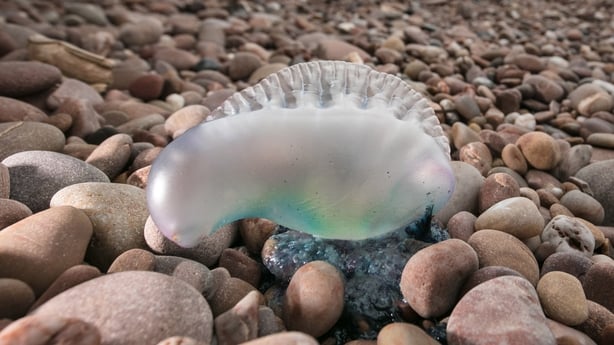
Portuguese Man o’ War. Getty Images.
Read more: Ireland’s jellyfish: A quick guide from a marine biologist
One whimsically named jellyfish that is present in Ireland, but can often be mistaken for a Portuguese Man o’ War, is the By-the-Wind Sailor.
“They’re absolutely harmless, but they’re all over the beaches,” she explains.
What people need to be super aware of, she insists, is that even when a jellyfish has been washed up onto a beach, the sting remains. This is something to be particularly mindful of when it comes to young children and curious pets.
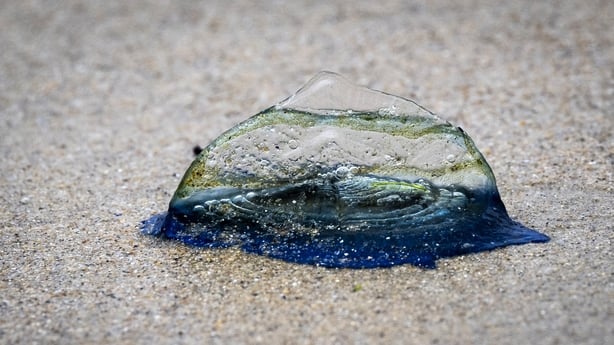
A by-the-wind sailor jellyfish. Getty Images.
What to do if you have been stung
Seek help and advice from lifeguards if possible
Try to carefully remove any attached tentacles by flushing the sting area with seawater
Removing tentacles with gloved hands, a clean stick, tweezers, or scraping gently with the edge of a credit card. Don’t try to rub them off.
Mild symptoms of pain and swelling can be treated with simple painkillers
Mild itching at the sting site may respond to anti-histamine creams
Apply a ‘dry cold pack’ to the area
Use hot water for Portuguese Man O’War stings at approximately 45° Celsius for 20 minutes
Keep any puncture wounds clean and dry to avoid them getting infected
Seek medical attention if you develop any serious symptoms
What not to do
Don’t rub the area
Don’t rinse with fresh water; use seawater
Don’t pee on the sting (this is a myth and will make it worse)
Don’t use vinegar for the types of jellyfish stings that might happen in Ireland
Don’t use alcohol
Don’t put on a tight bandage
For more information on jellyfish stings, visit HSE.ie.