
Annual asking-price inflation for homes across the country rose to 5% between April and June, from 4.7% in the first quarter, according to an analysis of the property market by MyHome.
The report from the online property portal – covering the second quarter of the year – suggests this level of asking-price inflation is “bucking the trend of recent quarters”, given that MyHome had previously forecast that Irish house prices would rise by 4% in 2026.
The study found that year-on-year asking prices for Q2 rose faster outside of Dublin – by 5.4% – compared to the capital (where annual asking prices were 4.5% higher).
The figures are based on asking prices for properties advertised for sale on the MyHome portal, which indicate that the median asking price for a home between April and June nationally was €395,000 (€495,000 for Dublin, and €350,000 for the rest of the country).
The report notes that “despite reports of stretched affordability and softer conditions at higher price points in the market, vendors and estate agents still felt sufficiently confident to raise asking prices just ahead of key summer trading season”.
The MyHome property report also notes that homes across the country sold for an average of between 7-8% above their asking price in May and June, which Conall MacCoille – report author and chief economist at Bank of Ireland – said signals “more intense competition amongst homebuyers”.
We need your consent to load this rte-player contentWe use rte-player to manage extra content that can set cookies on your device and collect data about your activity. Please review their details and accept them to load the content.Manage Preferences
“While stretched affordability is becoming more apparent in the mortgage market, wages are still rising in line with house prices,” he said.
Though, the research points to official CSO residential property price index (RPPI) statistics for April, which “show transaction prices have had their softest start to the year, in the first four months of 2026, since 2020”.
“The RPPI was up 6.2% year-on-year in April, but increased by only 0.2% between December 2025 and April 2026.”
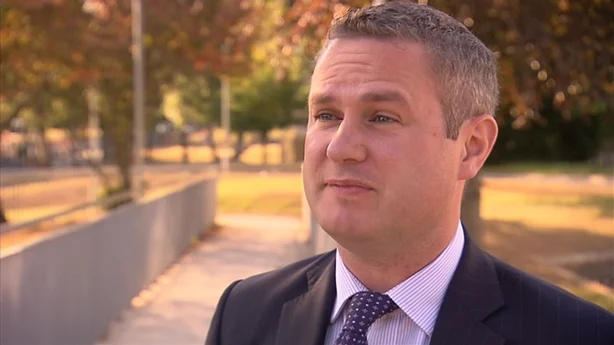
Report author Conall MacCoille said that wages are rising in line with house prices
Meanwhile, according to MyHome liquidity “among the existing stock of homes is at its weakest rate (just 2% of the 2.2 million homes) since 2014”, which “implies the average home is sold just once every 50 years”.
However, it says notices for termination of rental tenancies were up 50% in the first three months of the year to 7,062 and that “this trend could add 5% to market liquidity in time”.
The property portal also says the number of properties listed for sale on its website in June was 14,200, up from 12,600 this time last year.
Mr MacCoille, said “the key question now is whether buyers will actually be able to meet the elevated asking prices we are seeing”.
“Our data, while surprising, does not suggest vendors are being unrealistic. Through May and June transactions were being settled 7-8% above the original asking price – if anything signalling more intense competition amongst homebuyers.
“A key piece of context here is the latest data showing average earnings (AWE) were €56,000 annualised in Q1 2026, up 4.4% on the year. So, the bigger picture is still one in which house prices are rising broadly in line with wages – so that affordability is broadly steady,” he added.
Dublin prices not affordable for ordinary people – Sinn Féin
The Sinn Féin leader has said that house prices of €400,000, and up to €500,000 in Dublin, are not affordable for ordinary people.
Mary Lou McDonald called for a major change of direction to end this crisis, but asked if the Government wants to continue with the “rinse and repeat policy of failure”.
She also sought to find out if the Coalition accepts that house prices are still rising.
Public Expenditure Minister Jack Chambers said all the reforms the Government introduced have aimed to increase housing supply.
He stated that Sinn Féin opposes policies which increase supply and make homes more affordable.
He vowed that the Government would deliver more social homes and would continue to help younger people bridge affordability gaps.
He branded Sinn Féin’s housing policy as “populist waffle” and accused the party of “NIMBYism” on the ground.
Social Democrats TD Rory Hearne said the Government is continuing to put investors ahead of young people trying to buy homes.
“People cannot have families. They cannot have an independent life. That is a fundamental rupture in the social contract in this country,” he said.
Independent Ireland TD Michael Collins said the Government needs to “crack the whip” on energy companies due to increasing electricity prices.
He said the prices are “unfair” in a wealthy country.