
A woman who was refused bail in a hearing where she did not have a solicitor due to the current dispute over legal aid has taken High Court proceedings challenging the lawfulness of her detention.
Lawyers for the 31-year-old woman, who is charged with robbery, said a bail hearing at Dublin District Court earlier this week was not fair as the woman wanted to be represented by a solicitor.
Ceiligh McCormack, a mother of one from Railway Street in Dublin, was arrested on Friday, charged with robbery of a woman in her 60s and taken to Dublin District Court the following day.
She requested a solicitor but was told none was available.
Solicitors have withdrawn their services in new custody cases in protest at the introduction of a new payment scheme for criminal legal aid introduced on 1 July.
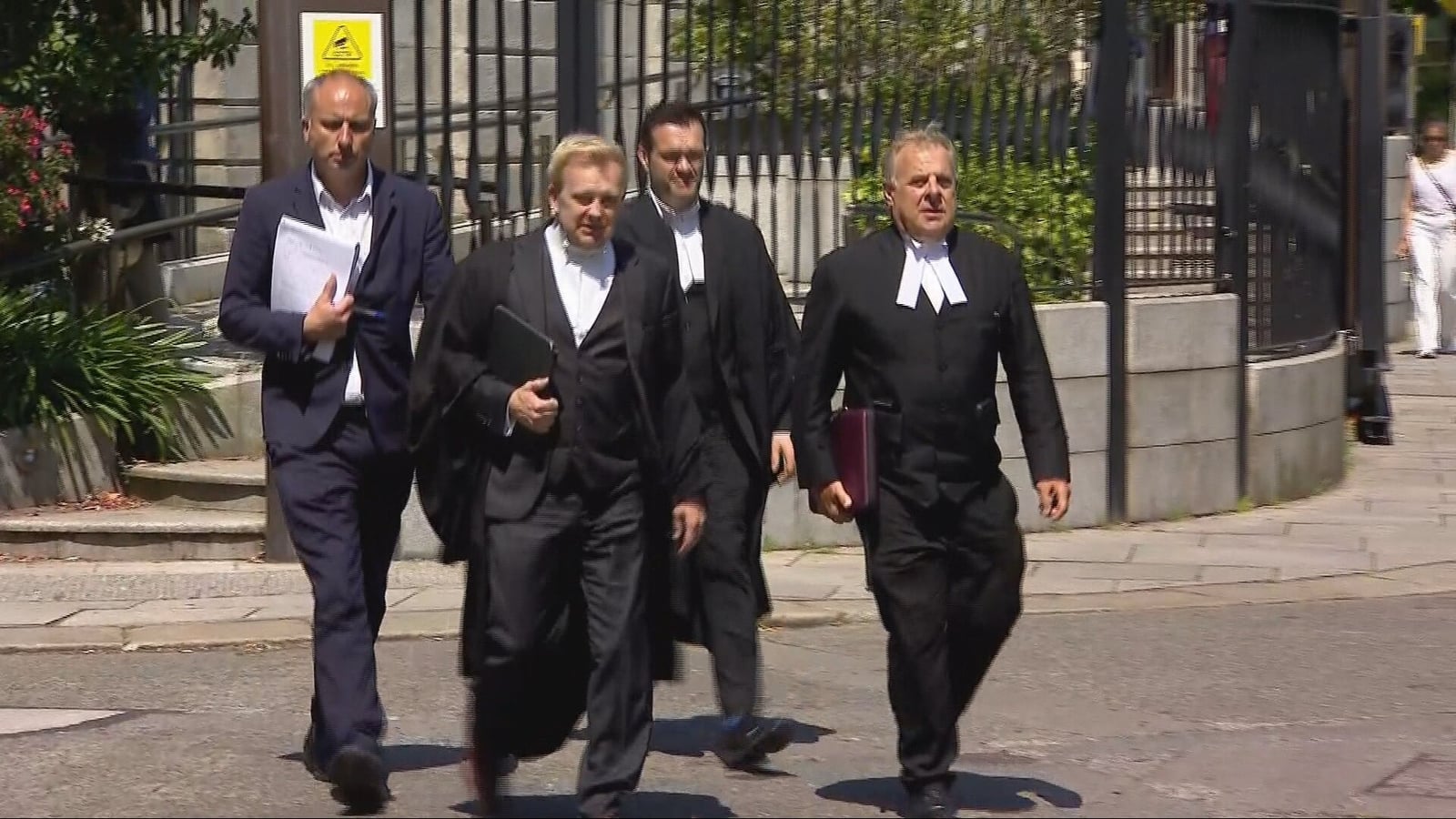
Senior Counsel, Michael Lynn told the high court that Ms McCormack wanted to be represented and the judge in the District Court wanted her to be represented.
Gardaí objected to bail, and Ms McCormack was remanded in custody to 8 July to allow her to make a fresh bail application.
Solicitor Donal Quigley went to see her and said he was unable to take the case on.
In a sworn document, he said he explained to Ms McCormack that he could not work under the new scheme.
He said this was because under the new scheme a solicitor is not entitled to be paid until there is a final court order and that there will be many cases where a solicitor does work but is never paid for it because a final order is not made.
He said these could include situations where the case is struck out, or there is a suspended sentence. He said solicitors would also not be paid if the client changed to another solicitor.
Ms McCormack said in her sworn document that she had previously heard about the solicitors’ dispute from other inmates in the Dóchas women’s prison at Mountjoy, which she said is extremely overcrowded.
She said she told the District Court on 8 July that she wanted to make a bail application.
District Judge Michelle Finan said she had tried to get a solicitor for Ms McCormack but could not find a willing solicitor. The hearing went ahead and gardaí objected to bail on a number of grounds, including the seriousness of the offence and the potential penalty of up to life in prison.
Ms McCormack was refused bail and remanded in custody until 22 July.
She said she was a single mother who received social welfare and could not afford private legal fees. And she said she had been advised that the State had an obligation to provide a solicitor for people in her position.
She said she was now in custody after a hearing in which she was incapable of properly defending herself and making a case for bail.
In his affidavit, Mr Quigley said an accused person should be given the right to speak to a legal advisor and be represented at a hearing.
He said the State had an obligation to vindicate the right of a citizen to a fair trial and to provide legal aid to those who cannot afford private representation.
He said the right to legal aid was not effective or vindicated by the State if the only system provided for in the District Court was one that no solicitor was willing to work under.
He said the State had violated Ms McCormack’s right to be legally represented on a serious criminal charge by implementing a new system that had been rejected wholesale by lawyers.
Mr Lynn told the High Court the bail hearing did not accord with fairness, “possibly through no one’s fault on the ground”.
He said the district judge wanted to help, but a judge was in an extremely difficult position in trying to help an unrepresented person where bail is opposed.
He said he was also arguing that the new legal aid scheme itself was unlawful.
Ms Justice Mary Rose Gearty said it was an unusual situation. She said a sufficiently serious point had been made and she would open an inquiry into Ms McCormack’s detention.
She directed Ms McCormack’s lawyers to notify the State of the proceedings and directed that she be produced at the High Court later today.