
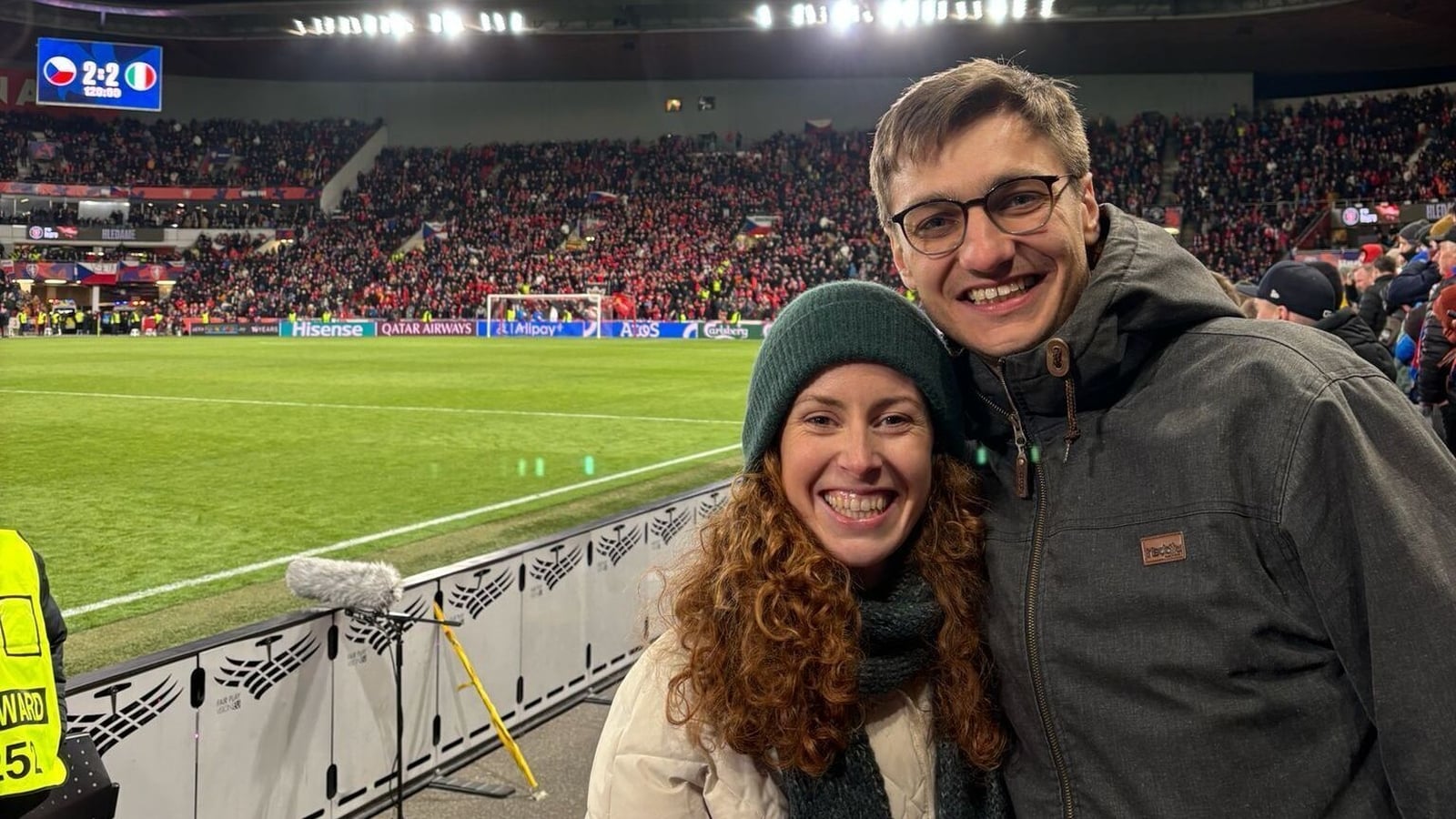
Kate Brayden chats to couples crossing linguistic lines, and what it means to learn their partner’s first language for connection.
Relationships between two people who don’t share their first language can create challenges at times, but the cultural and linguistic blend can be exciting. My partner isn’t the first person I’ve dated who had English as a second language, but he is the only one whose language I decided to learn (I hope he doesn’t get a big head).
It wasn’t a decision about understanding each other’s vocabulary better – his English is so fluent that he’s often better at crosswords than me – but about knowing who he was beyond our life in Dublin.
At the time, I didn’t realise that I would meet his family in Argentina and would notice how important Spanish was in terms of gravitating closer to his culture.
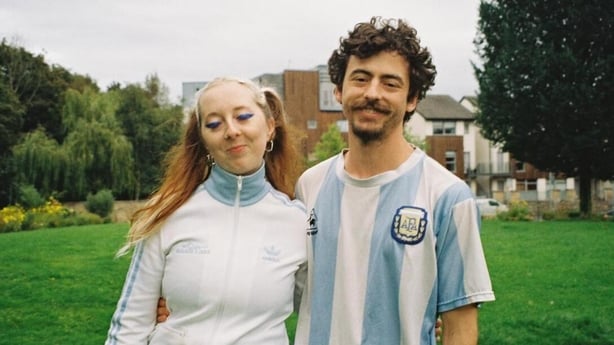
Kate Brayden and her partner
His family were all kind enough to speak English around me, but I couldn’t shake the desire for them to be comfortable in their native tongue. Even if the slang-filled Argentine dialect was tricky to grasp, I knew that speaking Spanish would change my relationship to my partner and his world.
There is some science behind receiving affection through your mother tongue, unsurprisingly. A study published in 2024 examined emotional responses and word processing, with researchers trying to figure out whether we react in stronger ways to hearing certain words or phrases in our native language – ‘I love you’, for example.
Their findings were consistent with the hypothesis that emotional resonance can be stronger when processing words in a native language.
When my partner understood the meaning behind ‘a chuisle mo chroí’ (the pulse of my heart) or gave me a nickname as Gaeilge, it felt like a sign of his commitment to knowing me better.
Speaking to himself, as well as two other couples who do not share first languages, the pattern was similar: all had delved into their partner’s other languages. For the person hearing their loved one speak their first language, they felt massive pride.
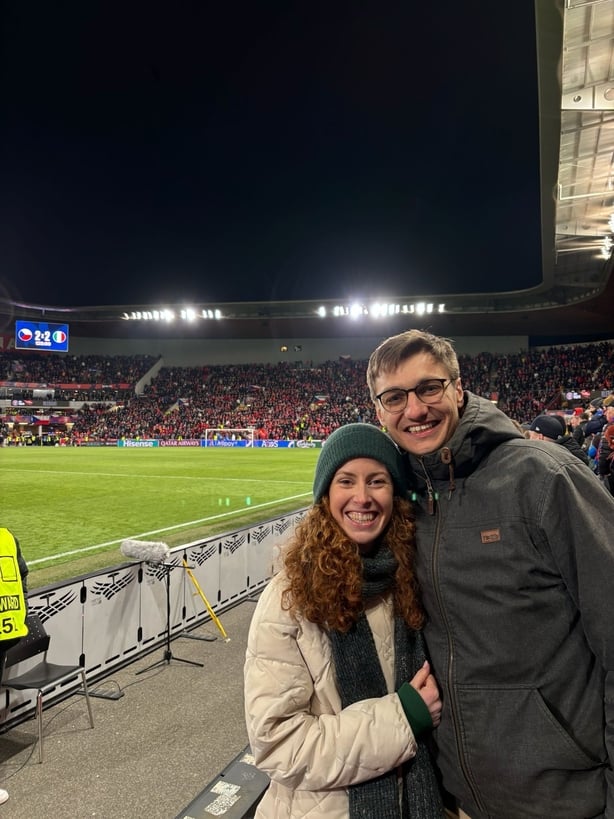
Muireann and Jakub
Muireann and Jakub, who met in London while studying for their Master’s degree, share multiple languages. Both of them speak English and French, while Muireann has fluent Italian, and has started learning Czech – Jakub’s first language.
“It’s an insanely difficult language, but Muireann has been doing a heroic job at learning Czech,” Jakub tells me. “She will tell you that she isn’t, but she’s been really incredible sticking with it and trying to master it. I always tell her that I hated Czech in school. It’s a very structured language, and there are so many rules and different ways of saying one thing.
“Muireann says herself that she wants to be speaking Czech with kids in our native languages. I want my kids to speak my language, and she has been brilliant at making the effort to learn it too – it means a lot to me. It also makes the commitment that’s obviously already there extremely raw. It’s strong, and it’s tangible, but also it’s a sign of respect and curiosity. I love that about her.”
For Muireann, living in Brussels together and having multiple languages meant that international friends and connections were natural. Learning Czech after meeting Jakub was a building block for their future (they are getting married this year).
“Trying to learn Czech has brought us closer, because Jakub appreciates it,” Muireann notes. “It’s important for me to try, even if I don’t succeed. It’s also important for me to be able to say a few things to his family, because not everyone in his family speaks English. Not all of his friends speak English, either. It’s only right, I think, that I should be able to have a conversation with him in Czech at some stage.

“My Czech isn’t good enough to get that insight into family and friends yet, but I can ask someone how they are. I can say hello, I can name things around the house and fruits and vegetables but I can’t have a conversation yet! But it helps to understand even a bit of what his grandparents are saying when I’m sitting at the dinner table.”
Communication through English has never been an issue for the pair, but there are differences between Czech and Irish culture that both Muireann and Jakub noticed.
“They’re way more direct, which can be good for foreigners because they know where they stand straight away,” Muireann mentions. “It can be difficult for Jakub to figure that out with the Irish, because we don’t always show what we really think about people. We come across as friendly, but really, that’s not always the true scenario.”
“We certainly did find things that don’t translate very well – slang, certain jokes for sure,” Jakub says.
“A big part of that is culture and directness rather than language. I sometimes struggle with the Irish-English side of English. Some turns of phrases – I jokingly call them ‘Muireann-isms’ – like ‘yer wan’ and ‘yer man’, but there’s obviously more. I haven’t even scratched the surface yet, and I love learning these new quirks.”
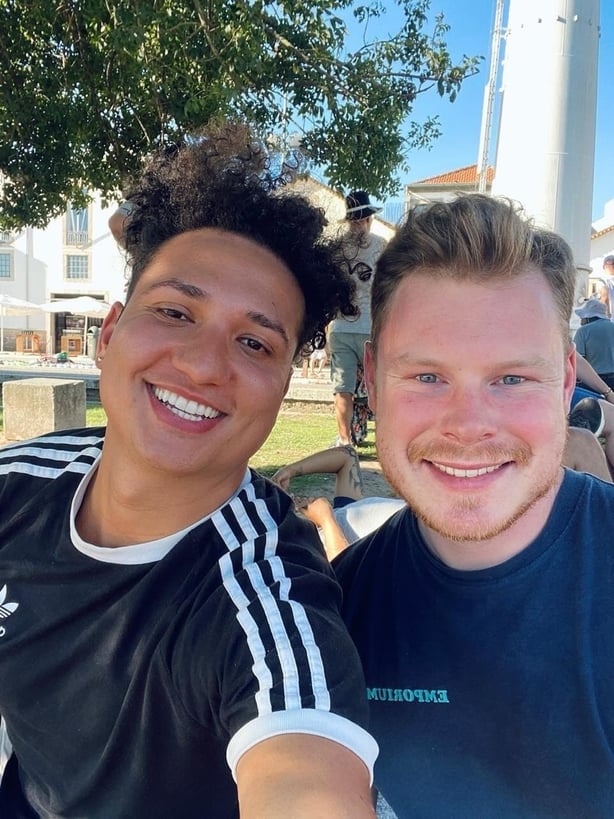
César and Dan
For Dan and César, an Irish-Brazilian couple based in Dublin, speaking a mixture of their first languages has only added to the vibrancy of their relationship. They met online in 2023. Since then, Dan has learned Portuguese (he says B1 level, but César told me Dan’s being too modest).
“I started to learn Portuguese about a month into our relationship,” Dan tells me. “I had a good feeling. It definitely brought us closer together. I think it really helped for trust and for sharing more about who we are and where we come from. My friends and family wouldn’t know too much Portuguese and vice versa, so having each other’s languages really does help for getting to know the wider circle.”
“Sometimes I get confused when Dan’s dad talks, but it’s gotten much better over time!” César smiles. “I was able to converse in English before, but I wasn’t very confident. But now, according to Dan, my English is great. I always say that I can express my feelings better in Portuguese. When I speak in English, I feel like the word doesn’t have as much power, you know? Maybe it’s in my mind, because I recognise the word in Portuguese and the strength it carries.”
César only has encouraging words to say about Dan’s knack for the language.
“I feel immensely proud when Dan speaks Portuguese,” César adds. “He’s very intelligent and learns Portuguese quickly. Seeing him make an effort to speak in Portuguese when I’m tired of speaking in English is wonderful. He also enjoys learning about our culture, watching our news and soap operas. He already knows much more about São Paulo than I do!”

“I think a lot of the trust comes from the fact that we’re always happy to switch if the other person wants to say something specific that would come easier in their own language,” Dan nods. “Sometimes we switch back and forth multiple times during conversations.”
Still, there are some challenges: “Humour is a great example of something that doesn’t always carry over. The worst part is knowing the perfect quip but not knowing how to say it.”
“When I’m angry, I’ll use bad words in Portuguese, but I say them quickly so Dan doesn’t repeat them like a parrot,” César laughs. “Relating to someone who spoke English was a big challenge, but Dan’s interest in Portuguese changed everything. Speaking a new language 24 hours a day can give you a headache.”
Experiencing the headache of a new language or feeling lost surrounded by native speakers can be a massive challenge, but I know from experience that the reward of seeing your partner smile when you remember a new word or understand a joke is usually worth it. I asked Alfie, the Argentine himself, to confirm how he feels about our ‘Spanglish’ connection.
“There have been many times where I’ve said things that don’t translate to Irish culture or the Irish way of speaking English, but you learn as you go,” Alfie says. “Kate has been patient with me in that regard, which I appreciate. I learned English from the age of three, but picking up on the subtleties has helped.”
One motivational factor of my Spanish classes was when my partner told me that he’s quite different in Spanish. Being nosy/Irish, I felt I was entitled to know every detail.

“I do believe I’m quite different in my first language,” he nods. “Part of the craziness that I’m feeling while being home in Buenos Aires now is about being back in touch with myself in many ways. A lot of things remain the same, but I think differently. I make more jokes in Spanish, but Kate and I already laugh a lot together in English.
“It means a lot when Kate speaks Spanish,” Alfie adds. “She started learning right before we met – after she went to Colombia – but it makes me feel like she is dedicated to knowing my culture and understanding me as a person better. It’s about getting more in touch with the side of me that she might not know that well.
“I thought the cultural difference would be bigger than it turned out to be with an Irish person. I was surprised to find someone who I can share so much with.”
Language and culture can hold people back from connecting with each other on an intrinsic level, but curiosity reaps benefits. A lot of sparks don’t need translating.
If you are affected by any of the issues raised in this article, click here.