

A new outpatient addiction service unit has been launched in Athlone, Co Westmeath due to increased demand for treatment from the west of the country, particularly those affected by gambling.
The Rutland Centre, which runs a specialist addiction treatment service in Knocklyon in Dublin, is introducing a second outpatient service to the midlands.
The new service responds to growing demand from people who previously faced lengthy journeys to Dublin to access treatment.
Karl Fitzharris, treatment coordinator for the new Athlone programme, said: “For too long, we’ve had to turn away people who desperately wanted treatment because travelling to Dublin twice a week simply wasn’t practical.”
The service in Athlone will also offer funded treatment places for gambling and gaming addiction.
The Rutland Centre runs Ireland’s only dedicated gambling addiction treatment service.
“What we were recognising is that people from much further afield over to the west of the country were coming to access the outpatients programme that we have here,” Mr Fitzharris said.
Gambling has the highest mortality rate of any commonly treated addiction.
“The mortality rate of somebody in gambling addiction is six to eight times higher than somebody in an alcohol or cocaine addiction,” Mr Fitzharris said.
“There’s a really elevated risk of suicidal ideation and attempts.
“It can lead to financial ruin, leading to despair and hopelessness.
“There’s chronic stress, which can result in cardiovascular issues.
“And there’s a huge rate of co-occurring mental health issues.”
Problem Gambling
One in 30 (3.3%) Irish adults suffer from problem gambling, according to a 2023 study from the ESRI.
People with problem gambling spend more than €1,000 per month on gambling.
Last year, 14% of Rutland’s patients had a primary addiction of gambling.
Mr Fitzharris said, “access [to gambling products] is a huge issue”.
“It’s like having a bookies in your pocket.”
Although the Rutland Centre only treats adults, most say they began placing bets long before they turned 18.
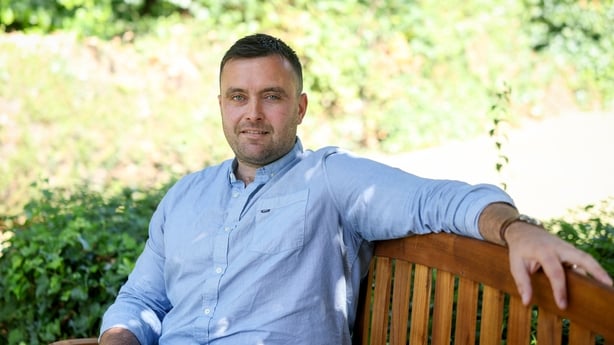
Karl Fitzharris say access to gambling products is a huge issue
Nearly two-thirds of adults in Ireland had first gambled before the age of 18, according to the ESRI study.
The rise of cryptocurrencies, prediction markets, and online casino products are all relatively recent phenomena starting to be seen in treatment settings.
Maebh Mullaney, chief executive of the Rutland Centre said all the new products are “exacerbating the situation”.
“And I think that’s where the work of the regulator is going to become really, really important to get a handle on that,” she said.
“It is such a fast-moving industry … it evolves and it changes at a pace that’s very difficult for services to keep up with.”
I’d really like to see the Social Impact Fund get up and running,” Ms Mullaney added.
The Social Impact Fund was introduced in the Gambling Regulation Act 2024 to be a major public investment in prevention, education, treatment, recovery and research related to gambling harm in Ireland.
Two years on from the act, the rate of contribution and the timeframe in which the fund will open are yet to be announced by the Department of Justice.
“Services are running on limited resources,” Ms Mullaney said.
“I think the demand is growing.
“I think the needs and the complexity of addiction is growing and that includes gambling.
“So, I think the Social Impact Fund is going to be really, really important for services to be able to meet the need that’s going to emerge over the coming years.”
Former Offaly GAA player Niall McNamee completed the Rutland programme in 2011. He says gambling has completely changed since his treatment.
“Traditionally sports betting was horse racing, dog racing, football.
“It’s kind of moved away from that now with more casino-based gambling – it’s very much one bet and just keep the person there, keep them at the wheel, keep them on the laptop, keep them spinning after spin after spin after spin.
“Those are the types of products that really need a lot more research done from a regulatory point of view,” he said.
‘Digital hunting’
Gamblers’ Anonymous (GA) has seen a “significant” rise in membership since Covid-19 especially among young people and women.
There are more than 120 weekly GA meetings in Ireland between in-person, phone and virtual meetings.
‘Paul’, the public relations officer for Gamblers’ Anonymous, told RTÉ’s This Week there has been a “dramatic change” in how people gamble in recent years.
Traditionally, their members would mostly have placed bets in the bookies.
“Today, the vast majority of people gambling will go online and make a bet using digital currencies,” he said.
“The way people gamble now, you don’t have to get into your car, you don’t have to go to your bank and get money.
“You can just by pressing a number of buttons on your smartphone wagers.
“So, it being that easy to make a bet is a difficulty from people who suffer from either compulsive or problem or addictive gambling because the immediacy, the temptation is heightened.”
“A huge change in the last 24-36 months is cryptocurrencies and the whole digital gaming piece,” he said.
“Online casinos are operating all the time”.
The way gamblers are advertised to on their phones is commonly brought up in GA groups.
Since June 2025, the Advertising Standards Authority has received 28 complaints against gambling products and services.
“There’s digital hunting going on,” Paul said.
“Basically, where the platforms and the advertisers are, through technology advances, are able to understand that vulnerable people are out there and they target to market to them.
“That is probably the biggest thing that’s occurred in the last 12 to 24 months is that we have seen people who will come in and share their experience saying, ‘I’m getting emails – They seem to know more about me than I know about myself.’
“And they’re pitching products at them.
“There’s a level of invasiveness around that.”