
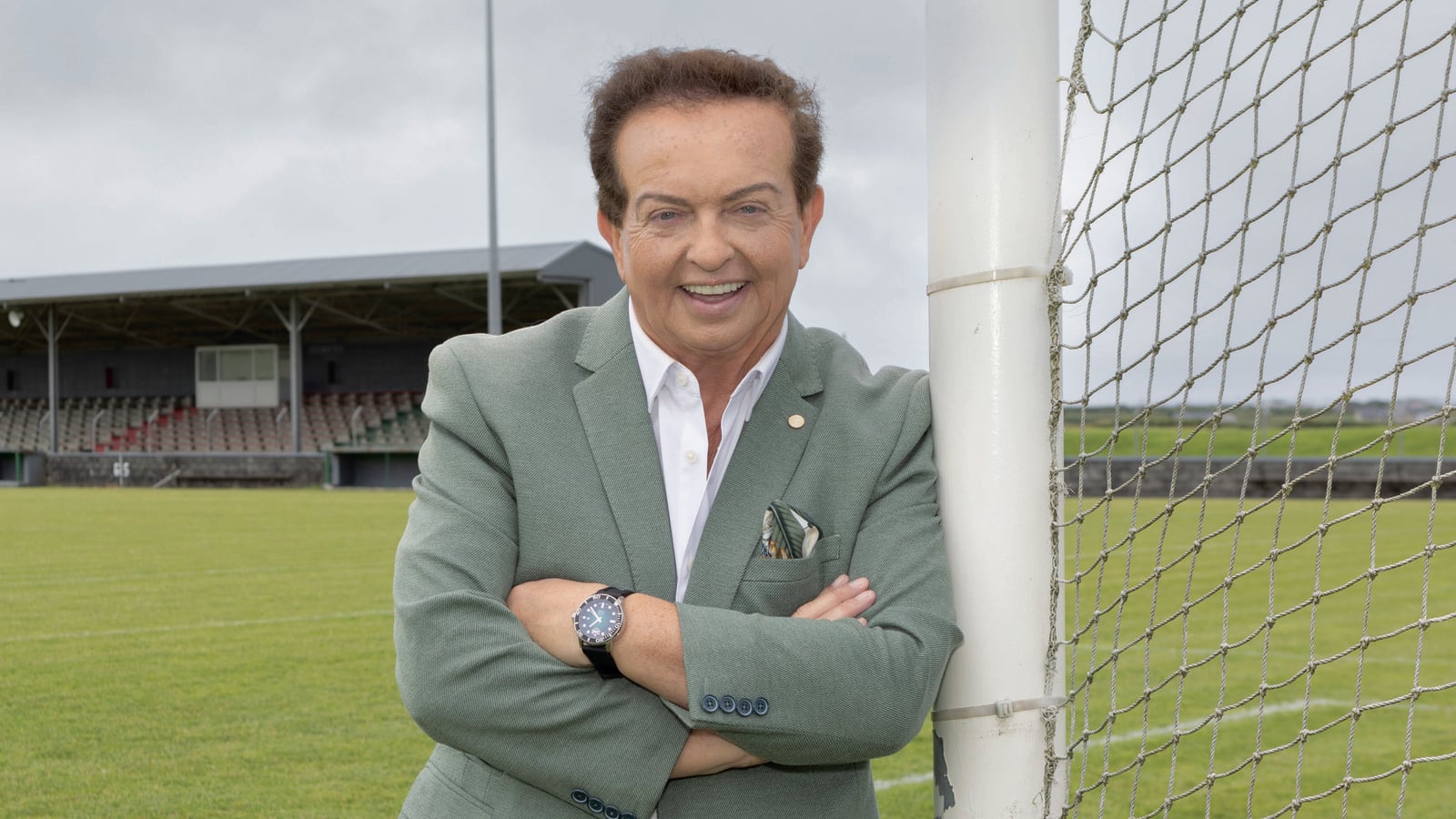
For many, he is the voice of the GAA they grew up with and as Marty Morrissey tells Darragh McManus on a visit to his family home in West Clare, there are always more stories to tell.
Stories, stories and more stories: Marty Morrissey’s life is built around them, both past and present.
As match commentator on RTÉ’s Gaelic games coverage on radio and TV, he brings us the story, live, as it’s unfolding in all its operatic drama. As GAA correspondent across all platforms, he covers breaking news stories and ferrets out the deeper stories behind the match day facts.
On his self-titled Radio One shows every Bank Holiday, he broadens out from sport and hears the interesting stories of people across the country. And in conversation, he’s a wealth of fantastic stories, both personal and professional. The man can, and literally does, talk for Ireland.
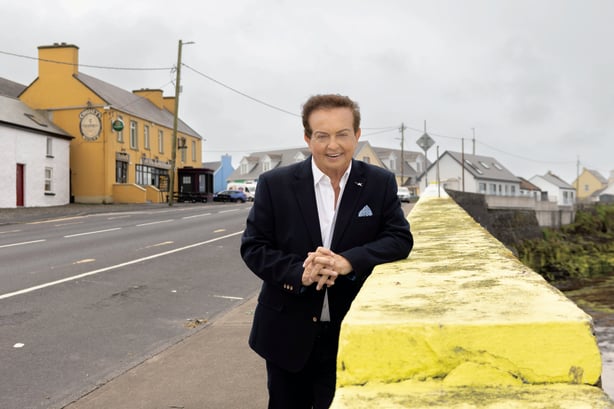
Here he is, standing in the old family home in Quilty in beautiful West Clare, pointing across the road and reminiscing on childhood football matches with local lads who “would arrive on their bicycles and use pitchforks for goalposts”.
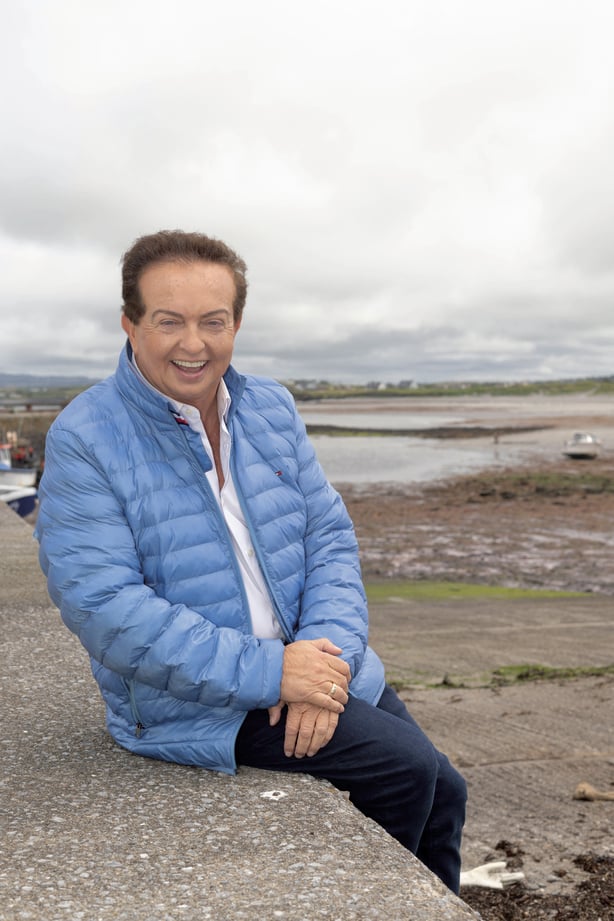
There’s the story of how his Uncle Paddy was once asked to sell those fields for a proposed new airport – and decided not to, but dined out anyway on the fact that he could have “made a load of money” if they hadn’t chosen to relocate the airport to Shannon.
Marty tells a story of his father walking over a hill to the West Clare Railway to get to school in Ennistymon CBS and then selling single cigarettes to classmates, from his grandmother’s “small shop with a half-door”, to “make a few bob for whatever was going on at the time”.
Then, of course, there’s the story of how the young Marty was born in Cork, spent early childhood in New York and later youth in Quilty: a place he now calls “home, and part of my soul. It means an awful lot to me”.
Martin Sr had been teaching in Mallow where, in the Mousetrap Pub, “he met a girl called Peggy Twomey from Doneraile in North Cork, who was training as a hairdresser. They started dating and fell in love, and my father decided he wanted to go to America. My grandmother and mother said, ‘You’re not going anywhere unless you get married!’ So they got married and went to America.”
Mart’s father set up a travel agency in The Bronx, where the family lived in a one-bedroom apartment. “I still remember the number,” Marty says, “4D, in Bainbridge Avenue. My parents had no money so the apartment was at the back, but you’d see the city lights outside.
“Then you come from that back to Quilty. There was a shaky light outside the local pub – which still shakes! – and my bedroom window looked across the Atlantic, over to the Aran Islands. Every 13 seconds the lighthouse would light up. I remember asking my dad, ‘My God, what have you done to us?’”
Marty was 10 at the time, a few years from high school, and national service was coming in for American teens. “My father said, ‘He might fight for Ireland, but he won’t fight for the USA!’ The Quilty Tavern came up for sale, he bought it, and I grew up over the pub.”
It didn’t take him long to settle in, and sport played a large part in that. He’d been to Ireland several times as a child, playing ball with neighbouring kids; psychologically, Marty says, “I had a base. It wasn’t total culture shock. And I always loved Quilty. I used to cry when we’d go home to New York.
“I played baseball and basketball with my school, St Anne’s, and swore my allegiance to the American flag every day. Then on Sundays, I’d swear allegiance to the Irish flag at GAA matches in Gaelic Park. So it was a kind of dual nationality.” (He’s a US citizen but always travels on his Irish passport.)
The story of how Marty got into broadcasting is equally colourful. First, after school, Marty studied medicine in UCC for three years. “I thought being a doctor would impress the nurses. But anatomy and me didn’t agree – dissecting bodies! I decided to change courses (microbiology and physics) and did well, and I was on the college football team, playing with these top players from Cork and Kerry.”
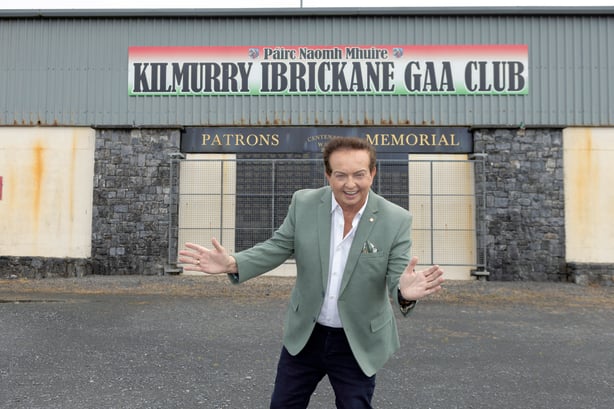
He brought home the football knowledge gleaned to local club Kilmurry-Ibrickane, coaching underage teams to success. This, in a roundabout way, led to three years teaching science and PE in Spanish Point secondary, and his first commentating gig.
“I loved every minute of teaching, but couldn’t see myself staying there until I was 65. I’m an only child of only children; no aunts, uncles, first cousins. So while I loved Quilty, I also knew I needed to go do other things.
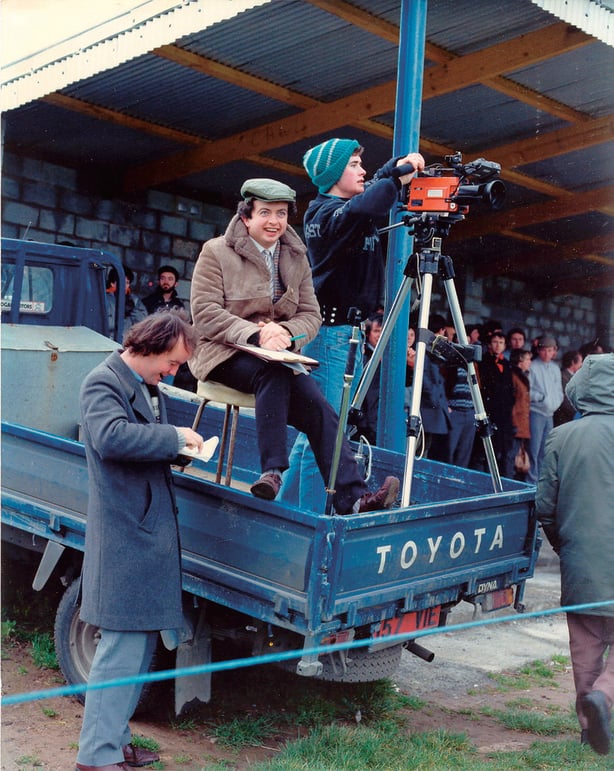
“In October 1984, Patrick Galvin the postman rang and said, ‘You know we’re in the country final on Sunday? I’ve decided to get a video done, will you do the commentary?’ I said no, I didn’t want to listen to my own voice. He tried other people who couldn’t or wouldn’t do it, so eventually I agreed.”
That broadcasting debut comes across almost like a D’Unbelievables skit in real-life: Marty in his “sexy black raincoat” and massive mop of untameable hair, standing on the back of a tractor-trailer while wild Atlantic winds buffet the sheets of plastic and galvanised iron set up as a makeshift shelter.
Still, small acorns and all that: three weeks later, he and the cameraman were asked to do the Munster Club hurling final in Thurles. “I was gone from the back of a trailer to a brand-new stadium. Clare club Sixmilebridge won, and I interviewed Sean Stack, who I greatly admired. And a Patrickswell player called David Punch: we became great friends, and for the last 25 years, Punchy has sat beside me at every game, doing the stats.”
He remembers skipping out of school at morning break, ringing RTÉ from a call-box a few miles away, pestering them for a job. Finally, they said, says Marty, “‘We’re sick and tired of you applying, we’ll give you a chance.’ In spring 1989, after a few auditions, I got a match to do properly.”
He did 13 games in total that year, the last being the legendary All-Ireland hurling semi-final between Antrim and Offaly. “I was so nervous. I’d never seen Antrim play in my life, so I went up there and became friends with Sambo McNaughton, Olcan McFetridge and Niall Patterson.
“They gave me such a warm welcome, I just love Antrim. And they did me a massive favour by beating Offaly, one of the greatest shocks ever. Then Offaly formed a guard of honour for Antrim, a really classy move, and suddenly my voice was on the main evening news.”
These days, Marty still does the same things to prepare before a commentary. A lot of work goes into making that off-the-cuff flow for which he’s famous. He says, “Everybody in broadcasting has their own style, but I passionately believe in that Roy Keane thing about ‘fail to prepare, prepare to fail’. So, say, if someone goes down injured, I can say that they pulled a hamstring three years ago or whatever.
“At the same time, you want to wear it lightly. You have to inform people, but you’re there to entertain too. Too many stats are like painting only in magnolia; I like to bring a bit of colour. So I’d probably only use a small percent of the research. The main thing is name recognition, which can be tricky with helmets in hurling. And very tricky if someone changes the colour of their helmet…”
Radio is a medium he particularly loves. By definition, with no visual element, it’s his voice painting the picture, enhancing it. Marty says, “It’s a different skill-set. But the team is everything, for telly or radio: researchers, producers, sound, camera. It’s a massive team effort every time.
“I love doing my Monday Bank Holiday show on Radio One, several times a year. It’s a great change of pace from sport, and sport-reporting. You’re just having a chat with interesting people, and you can be yourself. When you’re doing news, you’ve a minute and 45 seconds to talk about something, get it all in there. On this show, you can have various stories, characters, whatever you like.”
He’s 68 this year – time to make plans for what comes after working-life? Marty winces and laughs. “No. Don’t use the word retirement! I’ve never heard of it. I love Clint Eastwood’s great line, ‘Don’t let the old man in.’ He’s a man who doesn’t know the meaning of the word retirement!”
For now, Marty Morrissey intends to keep on rockin’. And telling those great stories, his own and other people’s.