
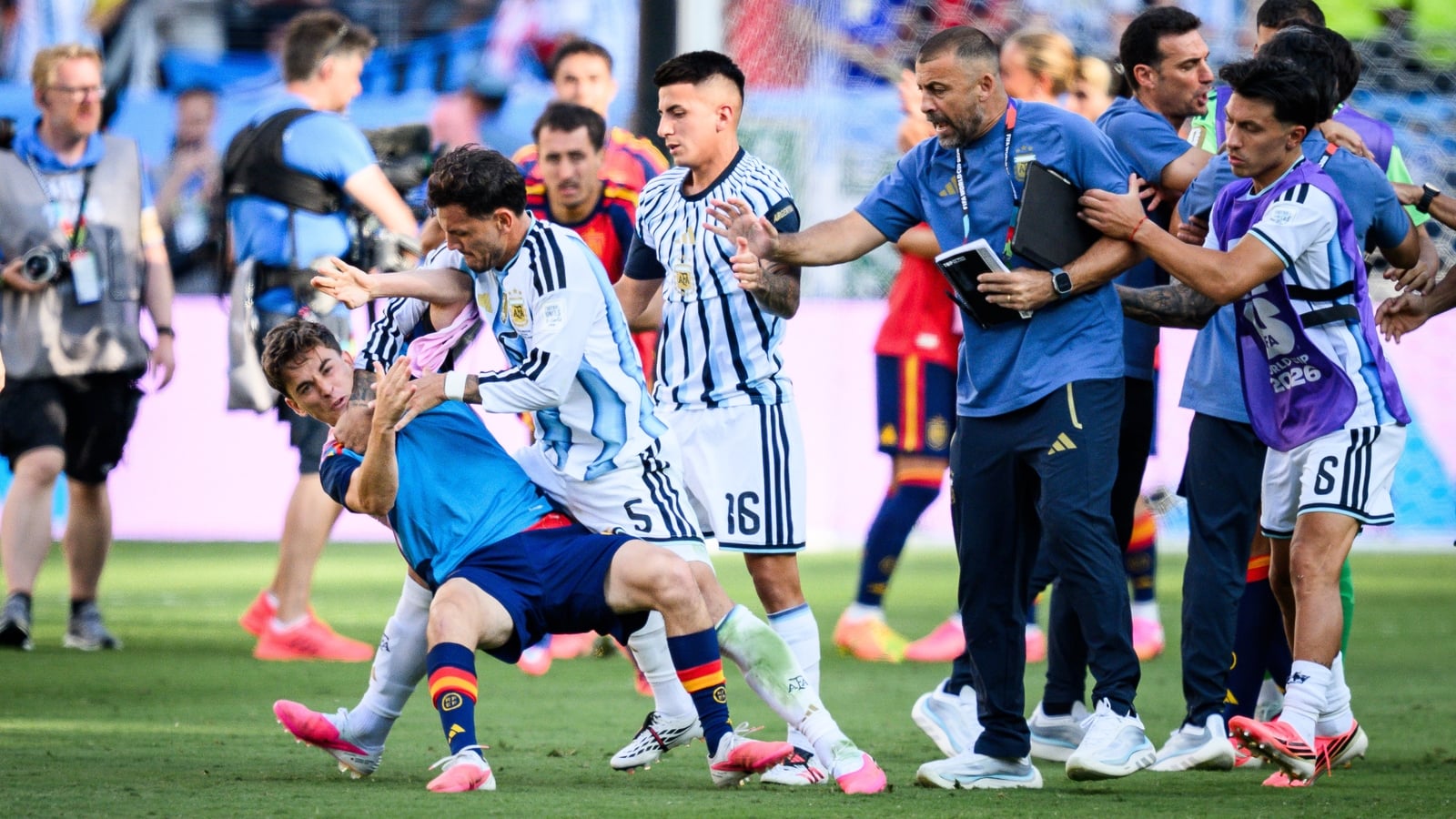
World soccer’s governing body FIFA has appointed a disciplinary and ethics prosecutor to investigate the post-match brawl that erupted after Spain’s 1-0 extra-time victory over Argentina in a chaotic World Cup final.
Tensions boiled over after Spain secured their second World Cup title courtesy of a winner from winger Ferran Torres.
Argentina had already been reduced to 10 men in the 93rd minute of normal time when Enzo Fernandez was sent off for a second yellow card.
At the final whistle, Argentine midfielder Leandro Paredes clashed with several Spanish players, including defender Eric Garcia and midfielder Gavi, triggering a broader brawl between the two sets of players.
The teams exchanged shoves and had to be physically separated, with Argentina coach Lionel Scaloni trying to calm down the players at the end of the ill-tempered encounter.
No timeframe was given for the conclusion of the investigation.
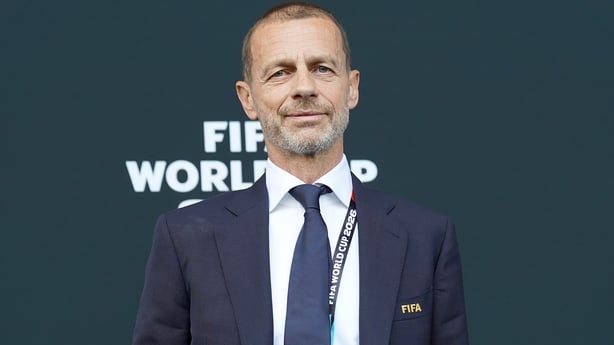
Meanwhile, UEFA President Aleksander Ceferin refused to attend the final following a series of disagreements between the European governing body and FIFA over disciplinary procedures, refereeing logistics, and match operations, a source with direct knowledge of the matter told Reuters.
A central point of contention was FIFA’s decision to suspend the implementation of an automatic one-match ban for United States forward Folarin Balogun following a red card.
The saga became one of the tournament’s biggest controversies, drawing condemnation from the European football body, which said FIFA had “crossed a red line.”
Another reason for Ceferin’s absence was the case of Somali referee Omar Abdulkadir Artan being unable to take part in the World Cup after being denied entry into the United States.
Artan was subsequently appointed to officiate the UEFA Super Cup between Paris St Germain and Aston Villa in August.
Additionally, European delegates raised concerns regarding the geopolitical management of matches involving Iran, alongside operational adjustments introduced for the tournament.
These included the implementation of mandatory hydration breaks and an extended half-time interval in the final, which FIFA introduced in this tournament.
Listen to the RTÉ Soccer podcast on Apple Podcasts, Spotify or wherever you get your podcasts.