

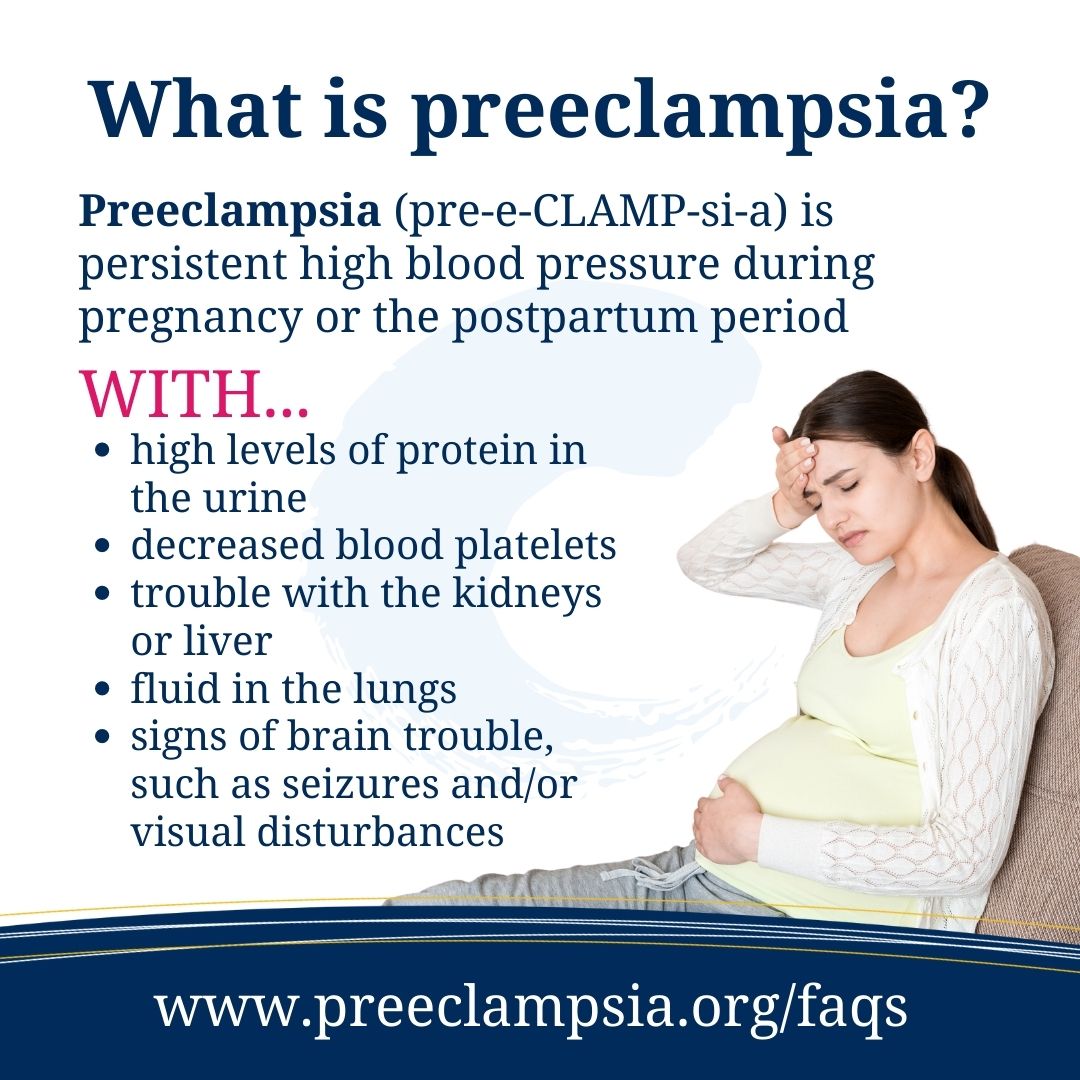
Targeted ophthalmic evaluations are recommended for pregnant women who experience hypertensive disorders like preeclampsia, particularly those with other cardiovascular or renal conditions. Photo: Preeclampsia Foundation. Click image to enlarge.
Hypertensive disorders of pregnancy (HDP) are associated with increased long-term risk of maternal cardiometabolic disease, but links with future retinal diseases remain unclear. In a recent study, researchers evaluated the association between HDP and the long-term risk of maternal retinal and ophthalmic diseases.
They found that HDP may unmask an underlying predisposition towards retinal disease in some women, or that such disorders may induce endothelial damage that can alter the trajectory towards development of retinal disease. The findings were reported in BJOG: An International Journal of Obstetrics & Gynaecology.
Researchers searched databases including PubMed, Embase, Web of Science and Cochrane Library through March 2026 and included 13 observational studies involving approximately 2.45 million participants. Eligible studies followed parous women with at least one HDP exposure (preeclampsia or gestational hypertension) and excluded women with pre-existing retinal/ophthalmic diseases.
HDP is associated with a significantly increased risk of diabetic retinopathy and is higher among women who experienced preeclampsia, specifically. This finding suggests that, even among non-diabetic women, those exposed to HDP may be at risk of future diabetic retinopathy compared with women who have had normotensive pregnancies.
A previous study found that it is possible that preeclampsia may induce direct endothelial damage to the retinal microvasculature during pregnancy or that this association may be mediated to some extent by post-pregnancy hyperglycemia or hypertension. “Women who are diagnosed with HDP and later diabetic retinopathy may share an underlying susceptibility to cardiometabolic disease (including later chronic hypertension and type 2 diabetes) or may simply be differentially screened for and diagnosed with retinal disease in later life,” the authors wrote in their paper.
These findings are consistent with previous research, which has suggested that women exposed to preeclampsia may be at future risk of developing type 2 diabetes, independent of other comorbidities.
Furthermore, they found a significant association between hypertensive disorders and other non-diabetic retinopathies, such as retinal detachment and retinal vascular occlusion, although this was impacted by high levels of heterogeneity.
Individual studies reported associations between HDP and cataract extraction, non-infectious uveiti, and choroidal neovascular age-related macular degeneration. No significant association was found for glaucoma.
“It is possible that HDP may unmask an underlying predisposition towards retinal disease in some women, or that they may induce endothelial damage which may alter the trajectory towards development of retinal disease,” the authors concluded in their paper. “Further research is needed to address gaps in the current evidence, to confirm whether observed associations are true and to determine whether affected women would benefit from secondary prevention opportunities to optimize their ocular and vascular health.”
Click here for the journal source.
This article was developed by the editorial staff in conjunction with experts in the field. In the process, AI may have been among the editorial tools used to meet the goals of human editors, who approved all content.