
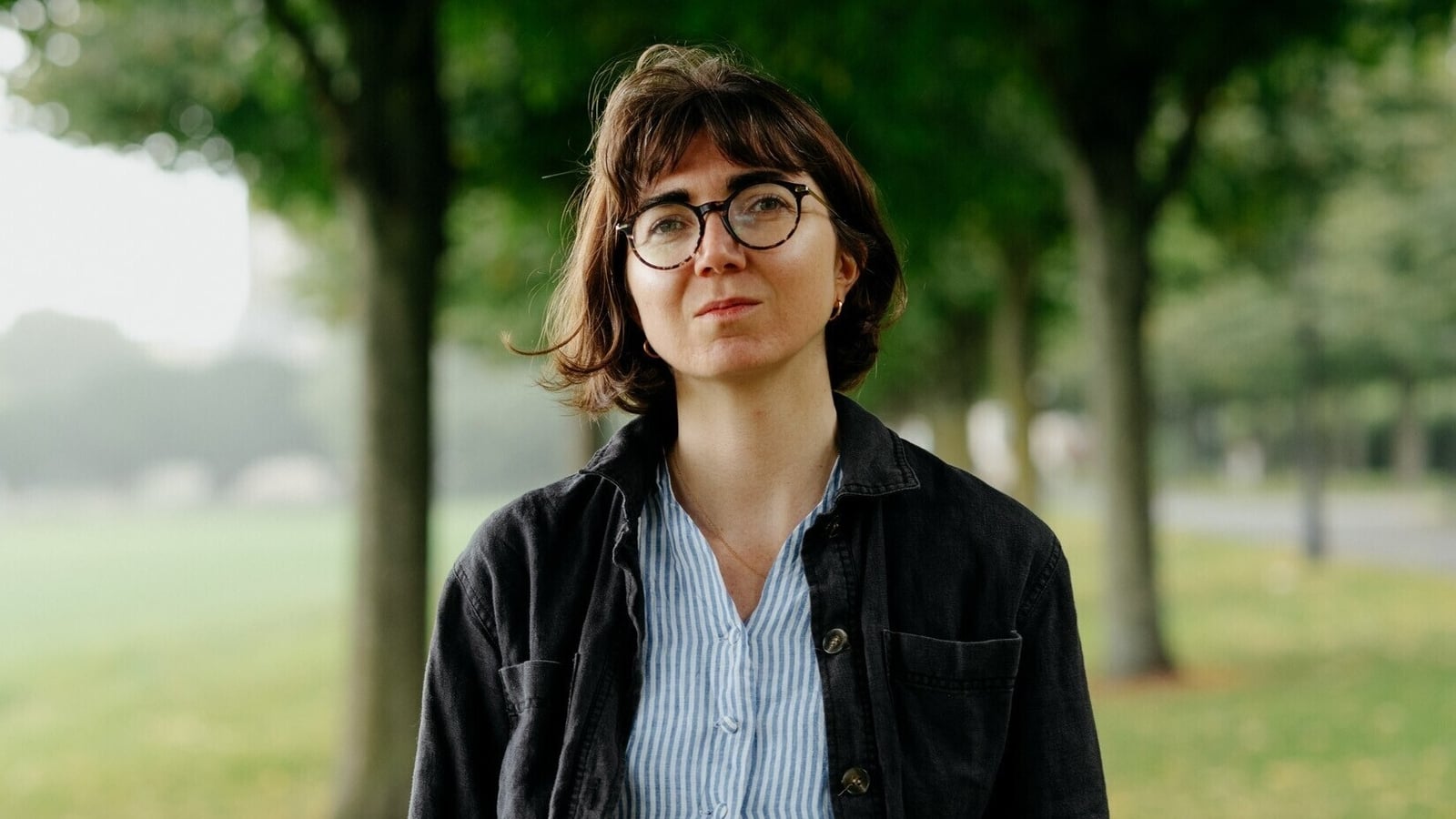
We present an extract from Frida Slattery As Herself, the debut novel by Ana Kinsella.
When Frida Slattery and John Reddan meet in a Dublin pub in 2005, neither can imagine how they will come to shape and define each other’s lives.
Frida is struggling to launch her acting career, while John is already gaining a name for himself as a director. From the first they see in each other potential and the chance to create work that matters, though the lines between collaboration and exploitation, friendship and desire will prove dangerously slippery.
With the financial crisis looming, the next 16 years takes them from Dublin to London, via New York and LA, and through success and disappointment, joy and heartbreak. Their connection is tested and stretched to the point of rupture, but something remains that outlasts both their work and their own shifting perceptions…
One of two things happened each time Frida Slattery was waiting in the wings, about to step on stage. Sometimes she was consumed by it all: the role, the costume, the lights. The audience there in the dark, expectant. Her lines. Her make-up. Her character. Eaten up by it and disgorged, a new person, not Frida but Hedda or Juliet or, at the forefront of her memory, Maria in The Sound of Music, as she had been when she was still in school. This was the thing that usually happened. It was the thing that she loved most.
We need your consent to load this rte-player contentWe use rte-player to manage extra content that can set cookies on your device and collect data about your activity. Please review their details and accept them to load the content.Manage Preferences
Listen: Author Ana Kinsella talks to RTÉ Arena
But sometimes it didn’t go her way. Instead, Frida remained obstinately herself – just Frida Slattery, refusing to undergo any meaningful dramatic change. As if some valve hadn’t managed to open. Just an actress, on this occasion nineteen years old, wearing a long silver gown, standing on a staircase at the back of the stage, waiting in silence. Visible to the audience, though only barely. Frida was supposed to be a ghostly presence, one who hovered on the stairs while the play’s two main characters, a man and a woman, moved around a rudimentary set made to look like a living room: a faded green sofa and matching armchair, a tasselled yellow lampshade, a painting of a whitewashed farmhouse on the wall.
An hour earlier Frida had been at home in the flat she shared with her friend Catherine in Rathmines, having finished a quick dinner of beans on toast with grated cheese and showered at breakneck speed, shaving her underarms and legs in record time, then looking for her leather jacket, her bike helmet, her keys, imagining that very soon she would stop being herself and start being the ghostly presence she had been cast as. She cycled back into the city centre in the dark, a little rain dampening her curly hair en route. It took hours for Frida to get her hair right for this role. It seemed to take Frida hours to do anything – a personality defect that Catherine and the other student actresses she’d become friends with didn’t have.
That was just the kind of person she was, Frida thought. She and the other girls went for the same roles in these student productions and it was stupid, wasn’t it, for Frida Slattery to think that this was going somewhere, that this was anything other than passing time. She was studying history of art and geography because she hadn’t been accepted onto the acting degree. She was the ghostly presence and not the female lead because Catherine had gotten the female lead. Tonight Frida’s role was to stand very still at the back of the scene, while the couple in front of her argued and laughed and cried.
Watch: 5 Minutes with Friday Slattery As Herself author Ana Kinsella
She was trying to follow the play’s dialogue passively. It was easy to zone out and end up surprised by the arrival of your own cue. But when her only job was to remain still, her thoughts inevitably started to wander. Her mind went to failure, to the myriad problems she knew existed within her, rattling around like ball bearings that had scattered into every nook and cranny of her. If she was a better actor, she would have been given the lead.
If she looked like Catherine – tall and imposing, not short and mousy, pale and unfit – she would be speaking now, upstage instead of half-visible in the shadows here. If she had gotten into the acting course and not merely the cop-out arts degree she’d settled for after failing the auditions in her final year of school. If she was different somehow, took all of this more seriously. Acted like an actress. If she wasn’t so worried about everything, about time running out, about what people thought of her, about all the other girls.
She was living with Catherine because the two were mostly inseparable, but also because Catherine was rich and her uncle rented the flat to them cheaply. Before this Frida had lived at home, in the small terraced house she’d grown up in with her mother and older sister, Edel. Growing up, the atmosphere there had been thick with the miasma of Edel’s anger and arguments with her mother. God, Frida needed to focus. She was not back in that terraced house. She was standing half in shadow at the back of a pub theatre, waiting for her cue. She was wearing the silver dress that was supposed to represent ghostliness, in a glamorous sort of way. She had dressed in the tiny storage room half an hour earlier and now she was sweating, heart racing. And for what? A monologue in another student play. Why had she chosen this life for herself?
All of these were quotidian problems, she thought, starting to feel the warmth of the stage lights. Rivalries with friends, the longing she had for better roles, for some kind of stardom or success: Frida wanted a better class of anxiety for herself, but this was what she was stuck with. Upstage, Catherine turned to look at Frida. The black silk robe hanging on her graceful shoulders, like a life model. Expectation all over her friend’s face. The room was silent, and Frida could feel it, the way the audience was waiting for something. Their attention stretched tight as a drum. Something had gone wrong, Frida thought. Maybe backstage, or a technical fault. Someone had made a mistake somewhere.
One hand still resting on the banister, Frida stood still as ever. She stared straight back at Catherine. Then the male lead turned to look at where Frida stood on the stairs and made a concerned face at her. It’s me, Frida realised at once. I have made a mistake. Oh, God. The room’s attention was straining. She heard a man at the back release a little nervous chuckle, and then as Catherine and her counterpart stared with alarm, Frida stepped down the staircase and began, belatedly, the ghost’s monologue.

Frida Slattery As Herself is published by Simon & Schuster