
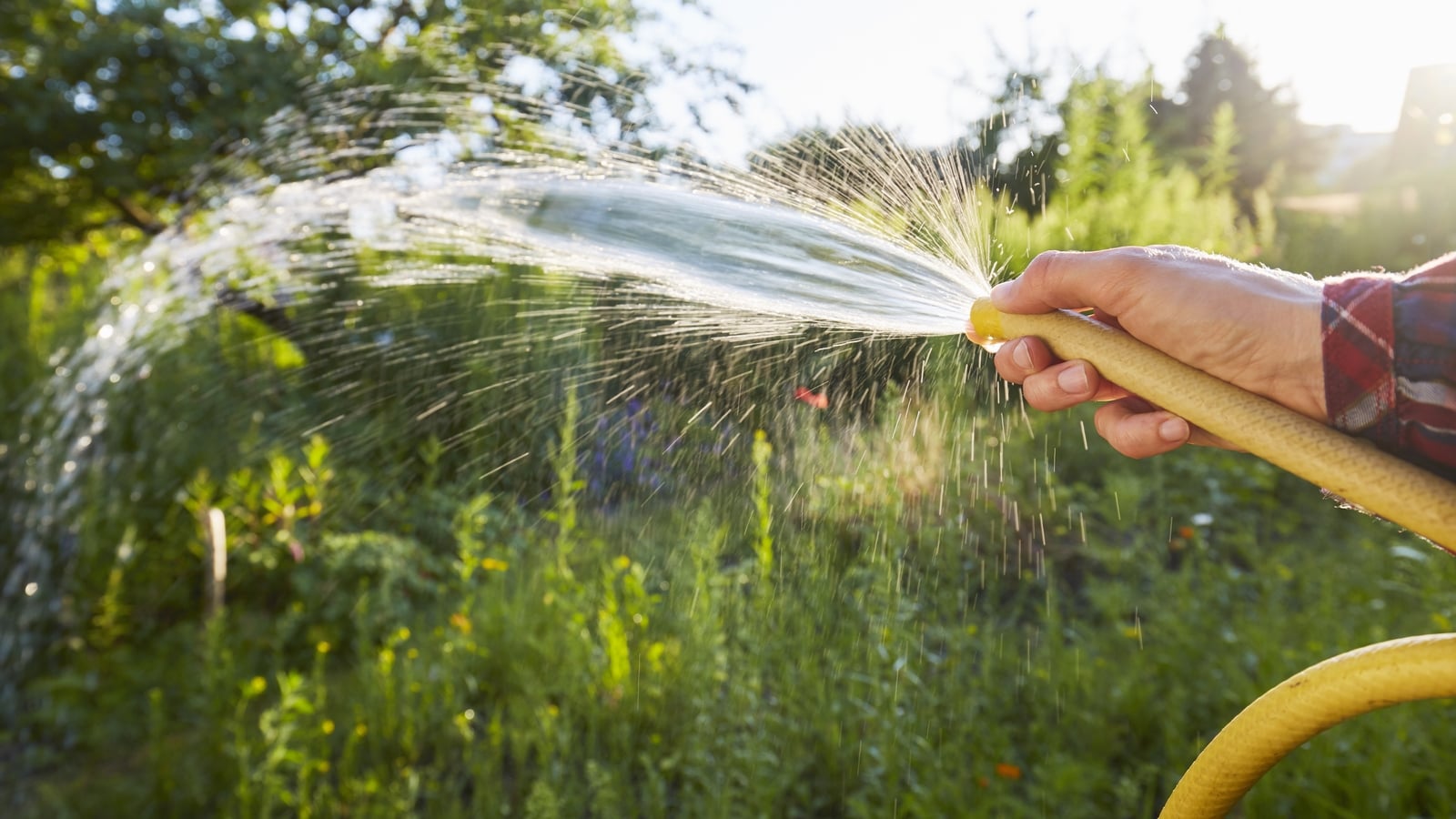
Analysis: The hosepipe ban can trigger a change around how we use and conserve water, but such emergency measures are just a sticking plaster.
Following a period of unprecedented high temperatures in Ireland, a hosepipe ban will now come into effect across the entire country from Friday. For the first time since records began, temperatures on the island breached 30 degrees Celsius in May, June and July this year. This dry period follows an exceptionally wet winter, in which Dublin experienced the highest ever level of rainfall for February.
Such extreme weather events, a direct result of climate change, are likely to become more frequent and more severe given the lack of progress on climate action. Consequently, we face increased scarcity of essential natural resources such as food and water in the decades ahead.
We need your consent to load this rte-player contentWe use rte-player to manage extra content that can set cookies on your device and collect data about your activity. Please review their details and accept them to load the content.Manage Preferences
From RTÉ Radio 1’s News at One, a hosepipe ban has come into effect in certain parts of Ireland
Despite the perception that water is plentiful in Ireland, treated drinking water is a scarce resource and demand exceeds supply in periods of drought. To ensure households have sufficient supply for necessary usage, water needs to be conserved where possible. But is a hose pipe ban the best way to reduce water demand and will it work?
Water in Ireland is considered a public good, with provision such that consumption is free at point of use for households. For an individual, there is little incentive to conserve water because there is no cost associated with consumption. If people are self-interested, the individually rational choice is to use as much water as required to maximise comfort and minimise effort. This can lead to behaviours such as taking long showers, or leaving taps running for convenience.
From RTÉ News, how do you feel about the hosepipe ban?
While the actions of one individual might have a negligible impact on overall demand, everyone overusing a scarce resource leads to what is called ‘the tragedy of the commons’. This is when everyone acts in accordance with their own interests to the detriment of the collective, meaning the resource is depleted and shortages occur.
Akin to the issue of reducing carbon emissions to mitigate climate change, addressing the current water shortage requires solving a collective action problem. This is a situation where, individually, one person’s actions have little effect, but there is a big impact when individuals all act collectively. A social dilemma occurs because it remains rational for a person to decide that they can continue as normal and it won’t make any difference as their own consumption is relatively very small. But, if everyone makes this decision, water supplies will dwindle further, leading to lengthier and more severe restrictions in the long run.
From RTÉ News, how to water plants during the hosepipe ban
Some people are intrinsically motivated to conserve scarce resources like water and do not need to be incentivised to change behaviour by rewards or penalties. Rather than acting purely out of self-interest, they consider the common good when making decisions. However, for the majority, some form of extrinsic motivation is required for behavioural change. In other words, external factors are needed to incentivise reductions in usage.
A hosepipe ban is a clever framing of what is essentially a message to households to conserve water. The focus is particularly useful because water from a hose pipe is for discretionary rather than essential usage. Asking people not to fill paddling pools, wash cars or water their lawns is less likely to result in a public backlash than for example, asking them to take shorter showers.
We need your consent to load this rte-player contentWe use rte-player to manage extra content that can set cookies on your device and collect data about your activity. Please review their details and accept them to load the content.Manage Preferences
From RTÉ Radio 1’s Drivetime, Irish Times climate contributor Sadbh O’Neill and ESRI’s Shane Timmons discuss the hosepipe ban
More importantly, using a hosepipe is the most public form of water consumption. Unless we live in a rural or isolated area, neighbours and passers-by can observe us using a hose in our garden. The salience of the hose pipe means that in general people are more likely to observe the ban. If we can see that our neighbours are adhering to the ban, we are more likely to do so ourselves, because we can see that others are playing their part and cooperating with the restrictions.
Additionally, the hosepipe ban can trigger a change in what is commonly acceptable behaviour in society. People often use social norms as a shortcut when making decisions because of a tendency to conform- we like to fit in rather than stand out from the crowd. Injunctive norms describe what people should do in a certain situation, and the ban stipulates that people should not use a hose given the current low water supply.
This means that even an individual who would like to flout the ban and continue to consume water as normal will likely be deterred from doing so for fear of social sanctions. They don’t want to be seen doing something that is no longer acceptable. The fear of social stigma is a greater disincentive than monetary penalties such as fines, partly because there is a much bigger chance of being rebuked by neighbours than being fined.
We need your consent to load this rte-player contentWe use rte-player to manage extra content that can set cookies on your device and collect data about your activity. Please review their details and accept them to load the content.Manage Preferences
From RTÉ Brainstorm, why you should be collecting and using rainwater
But, though effective, these emergency water conservation measures are simply a sticking plaster. Long term planning is needed to deliver improvements to the water infrastructure and to ensure revenue streams are available to fund the ongoing investment required. Government policies have enabled data centre growth in Ireland, increasing the strain on our energy supply. The current water shortages have brought the impact of data centres on water supply into sharp focus, as large centres can consume up to 5 million gallons a day.
Moreover, more than a decade after the failed attempt to introduce water charges in Ireland, it is surely even more critical now to reconsider this policy. Ireland is the only country in the OECD not to charge for domestic water use and shortages will become ever more frequent without an economic incentive to reduce consumption. The brutal truth of climate change is that this may actually be the coldest summer we experience for the rest of our lives. The need to conserve water in the future will be even greater and we need to plan accordingly.
Follow RTÉ Brainstorm on WhatsApp and Instagram for more stories and updates
The views expressed here are those of the author and do not represent or reflect the views of RTÉ