
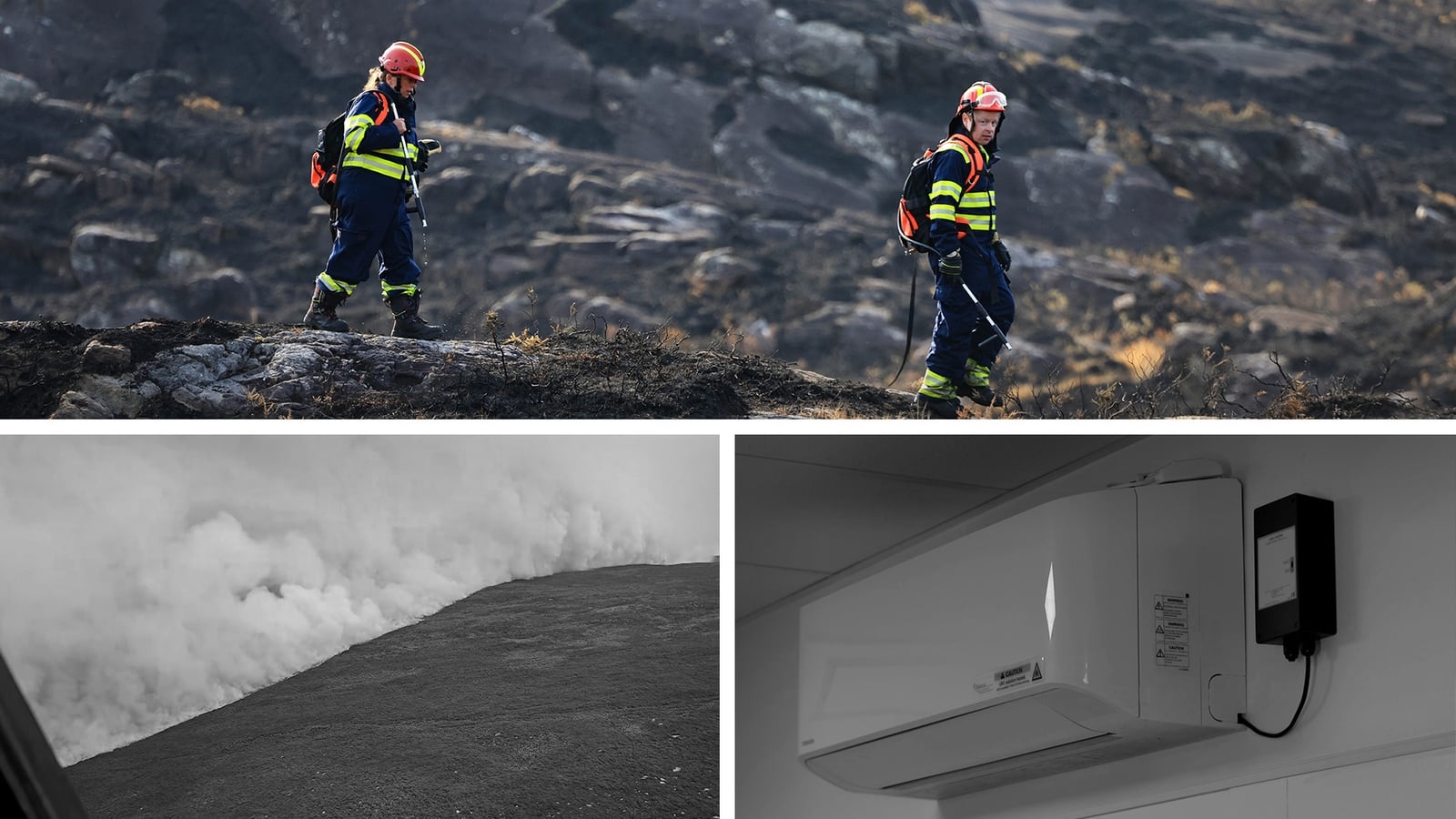
From wildfires in Ireland to deadly heatwaves in France and soaring demand for air conditioning in Dublin, experts say this summer has offered a glimpse of how climate change is reshaping life across Europe.
Fire crews remain on Slievenamon, Co Tipperary today as they continue to monitor a major wildfire following several days of intense operations. Across southern Europe, firefighters have also battled large blazes fuelled by extreme heat and dry conditions.
Nowhere has the human impact been more apparent than in France where thousands of estimated excess deaths have been recorded, while cities such as Paris have struggled to cope with temperatures well beyond what they were designed for.
“This is probably the coolest summer we are ever going to have into the future because of what’s happening with the world warming up,” environmentalist, author and broadcaster Éanna Ní Lamhna told Prime Time.
“This year we got these temperatures, we got fires breaking out, and then people think, ‘Oh yes, we have climate change now.’ Whereas the impacts of it in Ireland are going to be storms and rain and flooding more than the actual heat that we’ve had for a few weeks. But it’s here and it’s only going to get worse,” Ms Ní Lamhna said.
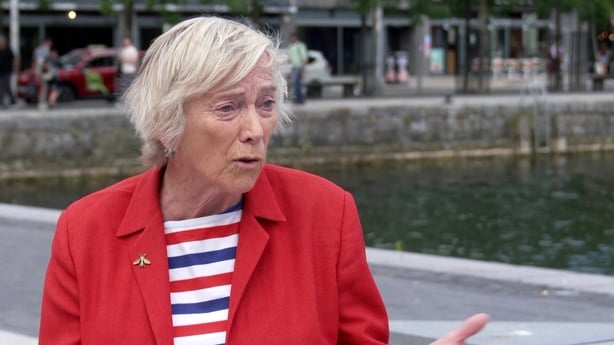
Environmentalist, author and broadcaster Éanna Ní Lamhna
One sign of that change can be seen in the growing demand for air conditioning in Irish homes.
Stephen Harkin has been installing air conditioning systems in Dublin for almost 20 years. The director of Shiva Air Conditioning said residential enquiries have risen sharply during the recent spell of warm weather.
“Ten years ago, we might get one or two enquiries per month. Now, we’re getting one or two enquiries per hour for residential purposes. So, there’s a huge surge in that sector,” Mr Harkin said.
Portable air conditioning units sold out in many parts of Europe during the recent heatwave, including in Ireland.
“Suppliers have informed us that there’s no more coming in in the near future. When I say near future, maybe next two or three months. The HSE arrived with us there two weeks ago and literally just took the rest of our stock for a Dublin hospital.”
Mr Harkin says those living in A-rated homes can face particular heat discomfort.
“A-rated homes, insulation works two ways. It is great in the winter when it’s three degrees outside and you’re retaining your heat, but when you have weather like this, insulation is working the opposite way. Too much insulation and no source of cooling is a recipe for disaster,” he said.
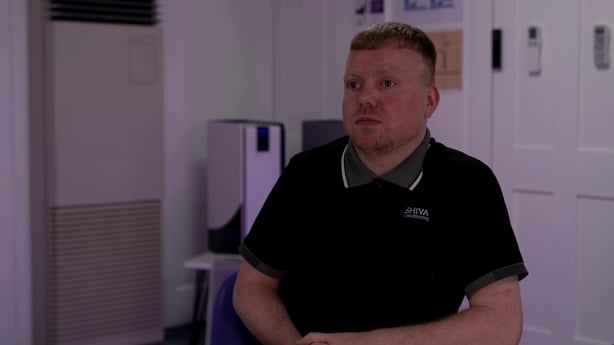
Stephen Harkin, Director of Shiva Air Conditioning
It’s a similar story in France. Chaotic scenes erupted in French supermarkets in early July as scuffles broke out between customers rushing to buy limited stocks of air conditioning units and fans in Lidl stores.
The French public health agency, Santé publique France, estimate that 5,700 additional deaths were recorded in the historic June heatwave.
Paris-based journalist Elaine Cobbe says the city was built long before we had the sort of heat experienced this summer and it is not prepared for it.
“People have died in the searing heat because they’ve stayed indoors. There have been shocking accidents, like when a child was forgotten in a car, ” Ms Cobbe said.
“This year, I think, is the year that France has to accept this is definitely the new normal,” she added.
Reports emerged across the summer of people sleeping in public parks to escape the heat trapped inside their apartments, while Paris’s famous zinc-roofed Haussmann buildings only intensified the soaring temperatures.
“There’s a lot of zinc roofs, and they are really hot. It’s something that the city is starting to look at. But obviously they can’t change the entire city. The zinc roofs are famous, and you’re not going to do away with them all,” Ms Cobbe said.
“And what would you replace them with? Because then there’s also winter. Let’s not forget, for most of the year, Paris is a temperate climate,” she added.
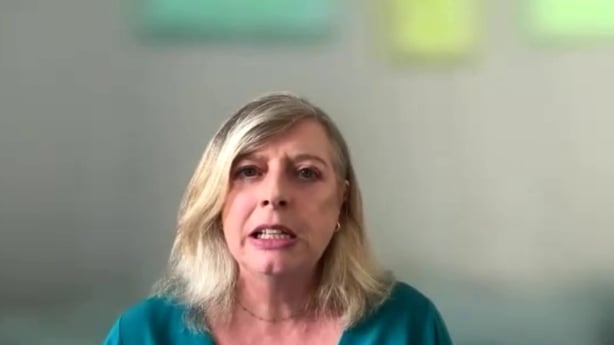
Paris-based journalist Elaine Cobbe
The effects of a warming climate are not only being felt in homes and cities. Ms Ní Lamhna says they are also becoming increasingly visible in Ireland’s natural environment.
She said birds like the Ring Ouzel, or mountain blackbird, are now almost extinct in Ireland as rising temperatures affect the mountainous habitats where they breed.
At the same time, warmer conditions have allowed other species once associated with southern Europe to establish themselves in Ireland.
“We have that lovely white little egret that has come up from Spain 30 years ago. If you said you saw one of those, people would think you were on the blue Smarties. They only occurred in the south of Europe. Now they’re all around the country. They’re breeding, they’re nesting,” she explained.
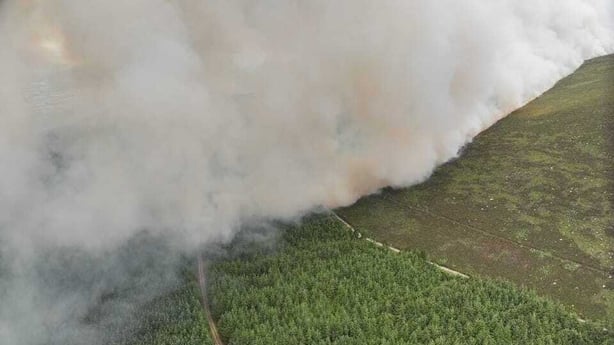
Wildfires have been raging in Slievenamon, Co Tipperary
Niall Roche, Adjunct Professor in Global Health, Trinity College Dublin (TCD), believes changes in nature brought about by climate change could pose future challenges to human health.
He pointed to data from the European Environment Agency that mosquito-borne infections are moving from southern Europe up into northern Europe.
“Cities in northern Europe such as Paris and Amsterdam are struggling to control mosquitoes that can potentially transmit diseases such as dengue fever or Rift Valley fever, for example,” Mr Roche said.
“I would regard climate change as a climate crisis, and climate crisis is actually a health crisis,” he added.
“The Lancet Countdown did a report in 2026 detailing that in 2024 nearly 63,000 people died in Europe from heat-related illness, which is a staggering number. If that was an earthquake like in Venezuela, we’d all be up in arms, we’d be saying we need an emergency response.”
Mr Roche added that heatwaves can pose serious health risks, particularly for older people, young children and those with underlying health conditions.
“On a day like today, which is I think 25 degrees here in Dublin, that can lead to heat stress and to heat stroke. You can maybe see it in the admissions to the emergency departments in our hospitals, and you can see people struggling.”
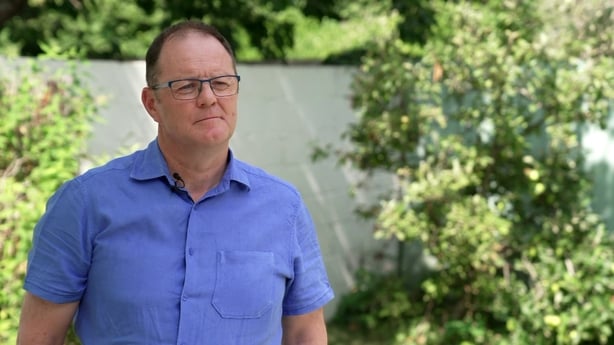
Niall Roche, Adjunct Professor in Global Health, Trinity College Dublin
A member of the Climate and Health Alliance, Mr Roche says that if heatwaves are to continue and summers get warmer, we have to future-proof our society and our economy to deal with hazards down the line.
“Climate change is the greatest threat to global health this century. That’s unquestionable. We’re going towards an unliveable world. It’s important for my children and my grandchildren that we get it right now,” he said.
After more than four decades studying and speaking about climate change, Ms Ní Lamhna says she fears the consequences of failing to curb global emissions.
“Is nobody going to believe us and put an end to all these emissions? Because otherwise it’s just going to get warmer and warmer, and by the year 2100, half the world will be dead from the heat. I’m glad I’ll be gone before that.”
Watch Conor McMorrow and producer/director Aaron Heffernan’s report on the 23 July edition of Prime Time at 9.35pm on RTÉ One and the RTÉ Player.