

Iarnród Éireann (Irish Rail) has announced works to upgrade Ireland’s busiest rail corridor, the two-track railway between Dublin Connolly and Malahide stations.
The line is the main rail network for commuters in north Dublin and forms a key link between Dublin and Belfast. It currently accommodates northside DART, Northern Commuter, Belfast Enterprise and rail freight services
Under the FourNorth programme, Irish Rail will expand the line to four tracks to allow for increased capacity, more services and greater reliability between Dublin, Meath, Louth and Belfast.
The works, which are expected to cost hundreds of millions of euro, will be funded by the Department of Transport and the Connecting Europe Facility Transport programme.
Irish Rail will outline the exact route for the project after a public consultation later this year.
FourNorth is currently in the early design and option development phase, and Iarnród Éireann is seeking a preferred option that will balance engineering, operational, environmental and community considerations.
Mary Considine, CEO of Iarnród Éireannm said “FourNorth is about more than new tracks. It is about building a resilient, high-capacity rail corridor that supports everyday journeys, strengthens regional connections and helps deliver a sustainable transport future for Ireland – making space today for the needs of tomorrow.
“We look forward to developing and confirming the preferred option throughout the remainder of this year, and to the input of our customers, the communities we serve and all stakeholders.”
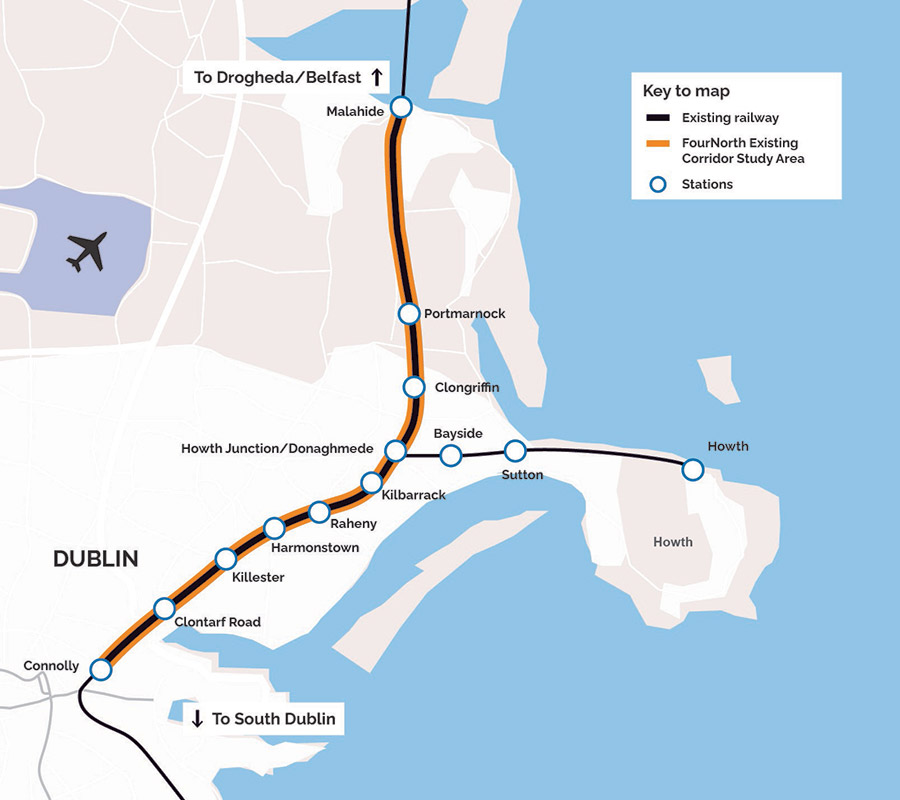 The FourNorth study area. (Pic: Iarnród Éireann)
Minister for Transport Darragh O’Brien said: “The rail line between Dublin Connolly and Malahide is one of the busiest on the island, and track capacity is a major constraint on frequency and capacity upgrades.
“The Four North project will not only unlock future growth and support additional DART, Commuter and Enterprise services, but will also enhance reliability and enable speed improvements for the services already operating today.
(Pic: Getty Images)