
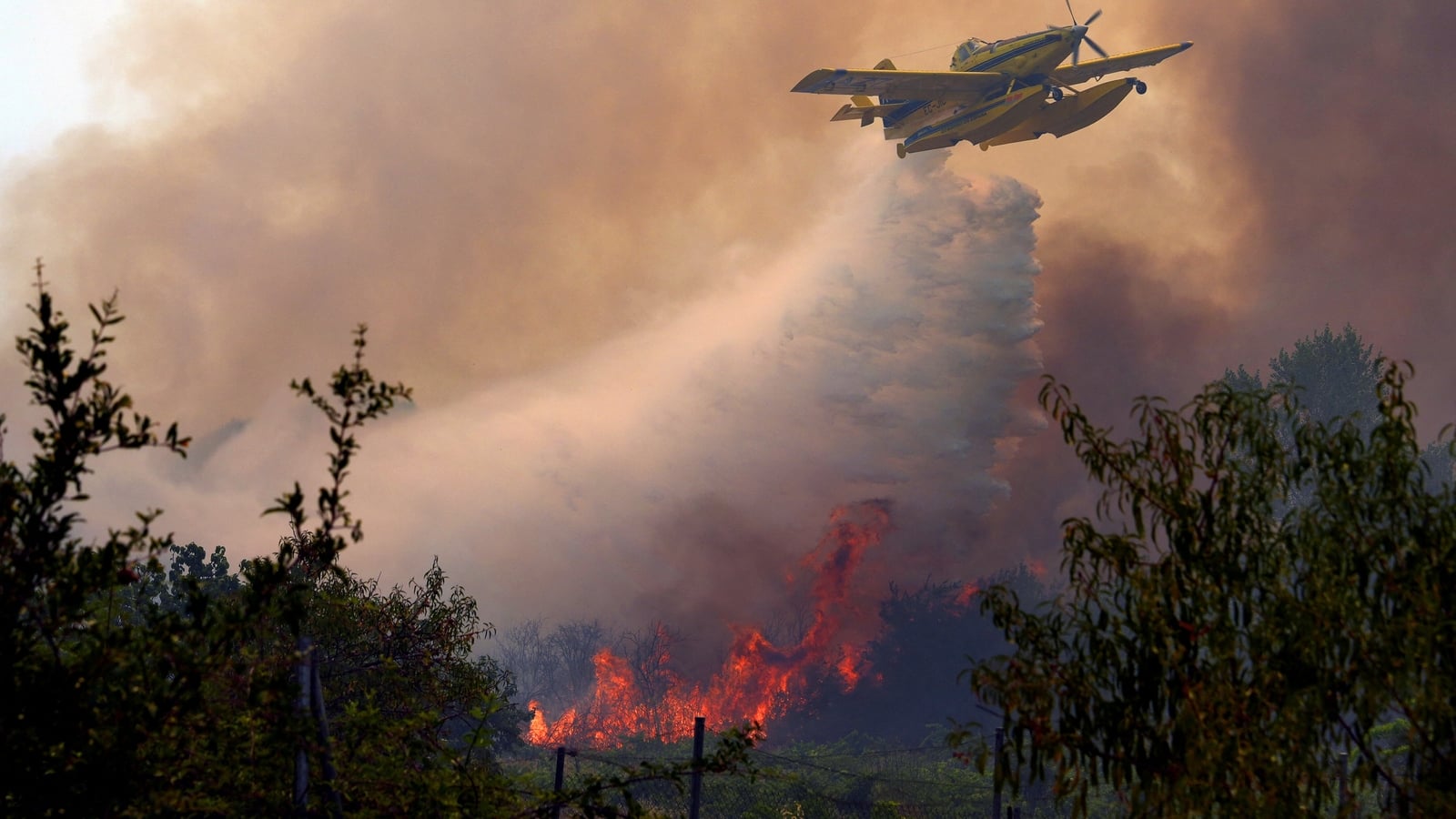
Fire crews in France and Spain battling unchecked wildfires that have forced more than 300,000 people to flee were overwhelmed as the unpredictable blazes advanced.
France’s southwestern city of Bordeaux, at the heart of a region of vineyards, was under threat, with a major highway and train lines cut.
In Spain more villages in the fire zone raging west of Madrid were emptied during the night — and a new front opened near the coastal city of Valencia.
France was faced with “a historic situation”, Prime Minister Sebastien Lecornu said late last night.
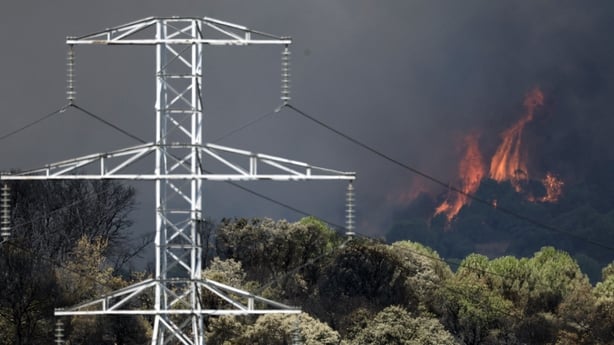
A wildfire burns a forest area near Pelayos de la Presa, 65km west of Madrid
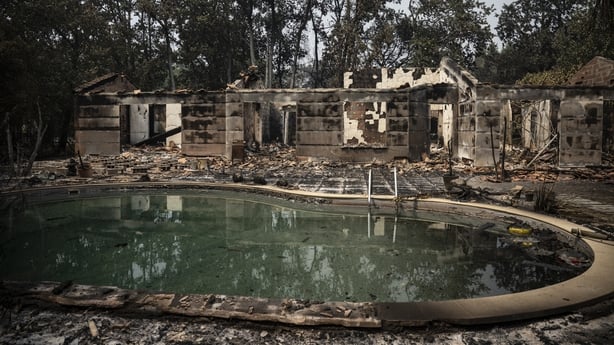
Destroyed buildings by a swimming pool in a residential area in Le Porge, in the Gironde area of France
The fire in the southwest and resulting evacuation operation now rank among the biggest seen since World War II, authorities said, with more than 250,000 people ordered out of the danger zone.
Interior Minister Laurent Nunez wrote on X that “the situation remains very unfavourable” for fires across France.
More than 5,200 firefighters, soldiers and gendarmes have been mobilised for the inferno in the Gironde region that was moving closer to Bordeaux.
Fire in Spain’s Castellon beyond extinguishing capacity, authorities say
Cestas – a village close to Bordeaux’s southwestern edge – was “deserted” as it braced for flames, with only a few of its 17,000 residents resisting evacuation, its mayor Jerome Steffe told the BFMTV broadcaster.
“This fire is unpredictable and each time we think we’ve got on top of it unfortunately it surprises us in the worst possible way,” he said.
“Right now, it’s impossible to say where the fire will end up.”
New fire in Spain
The wildfire has forced nearby peak-season holiday spots along the Atlantic coast to be evacuated, and the swath of land reduced to cinders is equivalent to four times the area of Paris. Houses in the village of Le Porge, near the ocean, were gutted, AFPTV aerial images showed.
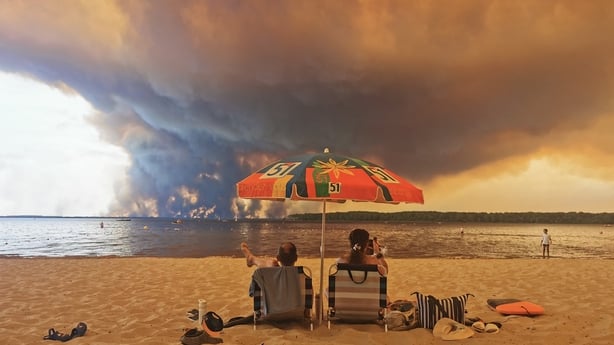
Beachgoers on the shore of Lake Lacanau in France watch as smoke rises from the Gironde wildfire across the bay
Another wildfire in the adjoining Landes region that had forced 30,000 evacuations was being “better contained – but not yet stopped”, the local prefecture said.
Struggling firefighters were being challenged by “turbulent winds”, a prefecture spokeswoman told AFP.
In Spain, authorities said that winds were pushing wildfires near Madrid to the south, away from the capital for now, but forcing more evacuations of villages in their path.
Interior Minister Fernando Grande-Marlaska said late yesterday that wind speed – forecast to subside – would be crucial to how the firefighting went today. So far, “weather conditions have been extremely difficult,” he said.
But a new fire front opened up hundreds of kilometres away, in eastern Spain near the Mediterranean city of Valencia.
At least 15,000 people were evacuated there, adding to the tally of 60,000 who had fled the fires near Madrid.
“The fire is beyond our capacity to extinguish,” Juanfran Perez Llorca, Valencia’s regional president, told reporters.
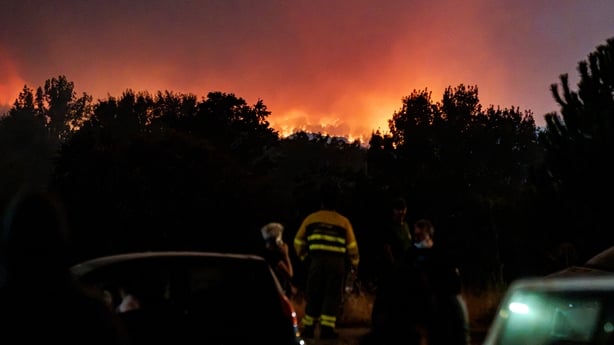
Firefighters battle the blaze in La Adrada in the Province of Avila in Spain
Pilar Bernabe, the central government delegate to Valencia wrote on X that “the night was very intense”.
“Weather conditions are expected to deteriorate as the day progresses, so these hours are being used to battle the flames,” he said.
Yesterday, one person was killed near Valencia in a separate, smaller fire.
That was the only civilian death so far reported. In France the death toll was two firefighters killed near Bordeaux on Wednesday.
Spanish Prime Minister Pedro Sanchez, making his second visit to the fire zone in 24 hours, said “difficult hours” lay ahead.
But Mr Sanchez said he saw “positive” developments in efforts to contain the fires.
Parched woodland
Woodlands in Spain and France have been parched by successive heatwaves since May that have brought drought to many areas.
Scientists say global warming is creating conditions for weather emergencies to become more extreme and more frequent.
Europe is the fastest-warming continent due to climate change.
Firefighters in France and Spain have now been battling non-stop for more than three days, leaving them exhausted and overstretched.
Both countries have requested, and received, help from other European Union nations, with five planes and two helicopters sent to France, along with a Swiss fire crew.
Four planes have been deployed by other countries to Spain.
In addition, France has started using a specially modified A400M military transport plane able to dump up to 20 tonnes of water or fire retardant. It joined 18 other aircraft already battling blazes from the sky.
Spain reportedly has at least 29 aircraft in the air over its Madrid fire zone.