
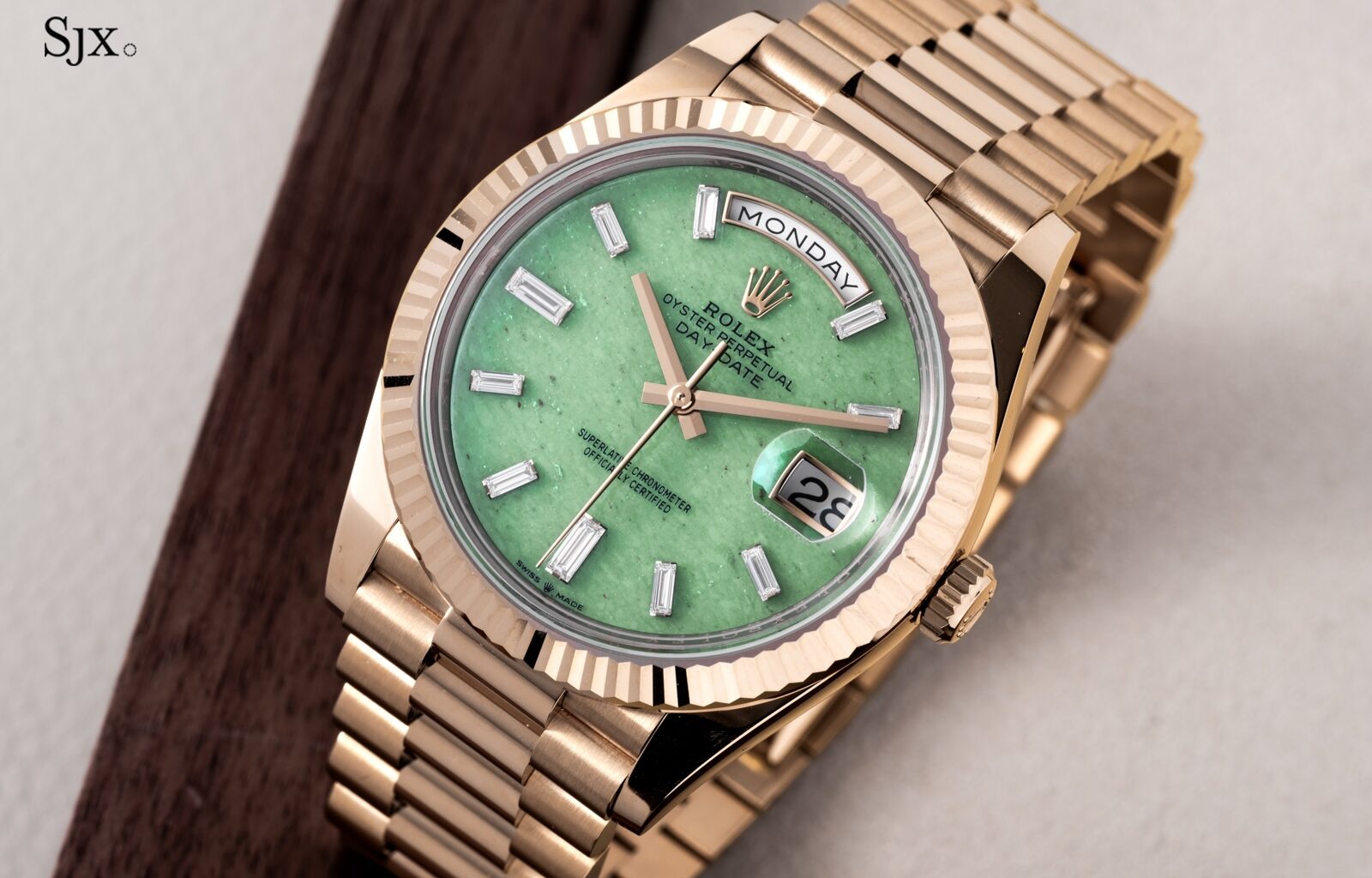
Twenty twenty-six has been a milestone year for Rolex, which is celebrating the 100th anniversary of its signature Oyster case with several commemorative models.
While not as innovative as the enamel-dialled Daytona or as surprising as the revised Yacht-Master II, the Oyster Perpetual Day-Date 40 dresses the brand’s flagship time-only watch in a new proprietary gold alloy dubbed “Jubilee” gold and an aventurine stone dial.
Initial thoughts
Stone dials are everywhere, but as usual Rolex has found a way to stand out by using an unusual mineral. Most brands today source the same few varieties of stone — especially malachite and tiger’s eye — from the same few suppliers, resulting in stone-dialled watches that tend to resemble one another.
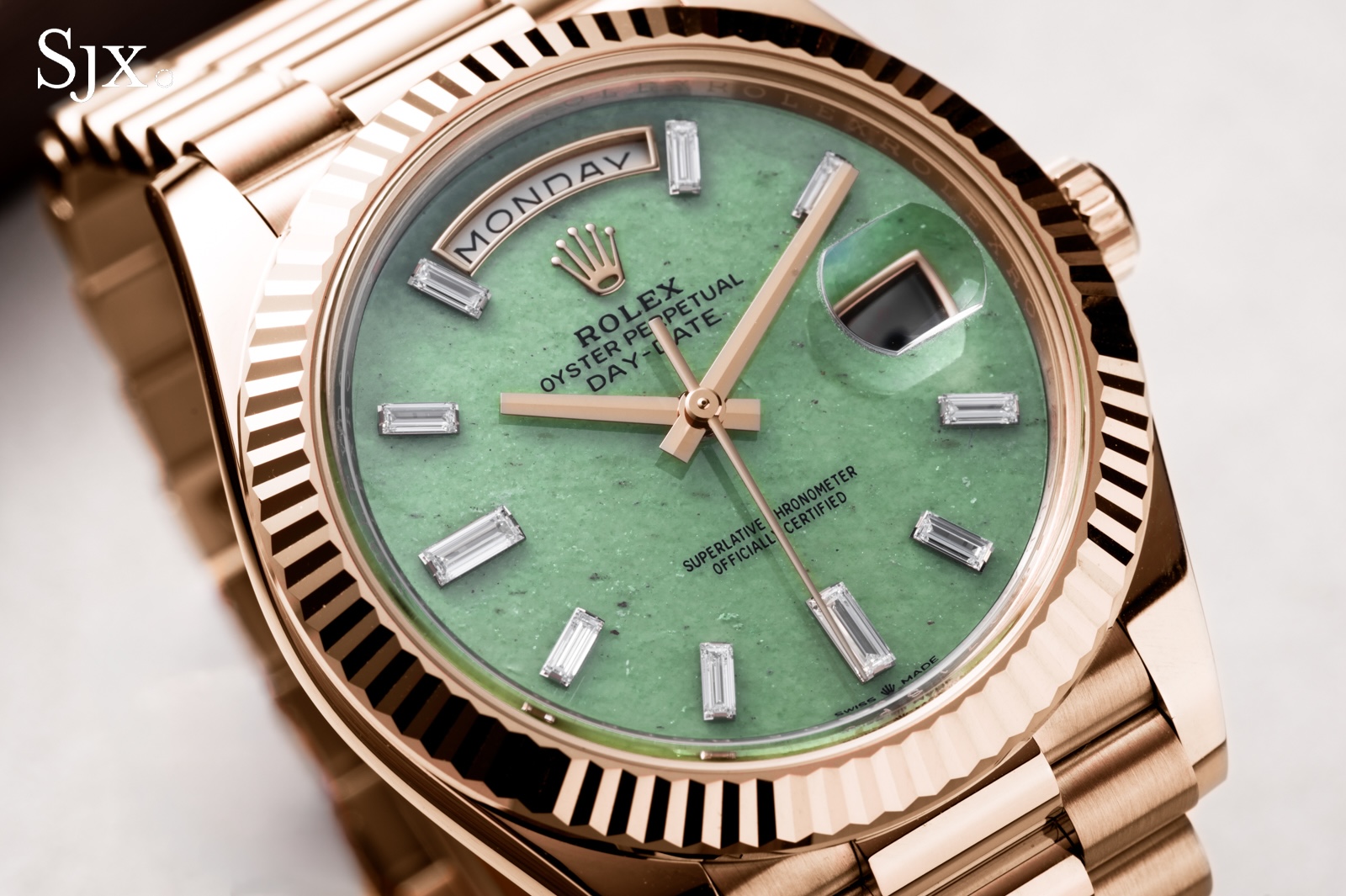
But with its unusual aventurine dial and muted Jubilee gold case and bracelet, there’s no mistaking the Day-Date 40 for anything else. And this is also actually aventurine stone, rather than the more commonly used and less expensive aventurine glass. The exotic dial and proprietary alloy give the new Day-Date 40 a look that is both distinctive yet coherent with the rest of the collection.
Many key Rolex models are perpetually out of stock, underscoring the brand’s commitment to value. While it might seem disingenuous to describe a US$65,700 time-only watch as a good value, the Day-Date 40 in Jubilee gold makes a case for itself. In a perfect world with on-demand availability, this would be a strong value proposition.
The A. Lange & Söhne Odysseus Honeygold, for example, which features the same day and date functionality, retails for US$110,000 — 67% more than the Day-Date. The Odysseus is produced in smaller numbers and offers a much more finely finished movement, but the Day-Date counters with its gem-set, natural stone dial – and the remarkable engineered perfection that only Rolex has achieved in watchmaking.
Gold and stone
The Rolex Day-Date is one of the most well-known luxury watches. Since introducing the full-text weekday indicator in 1956, the Day-Date has been the brand’s precious metal mainstay.
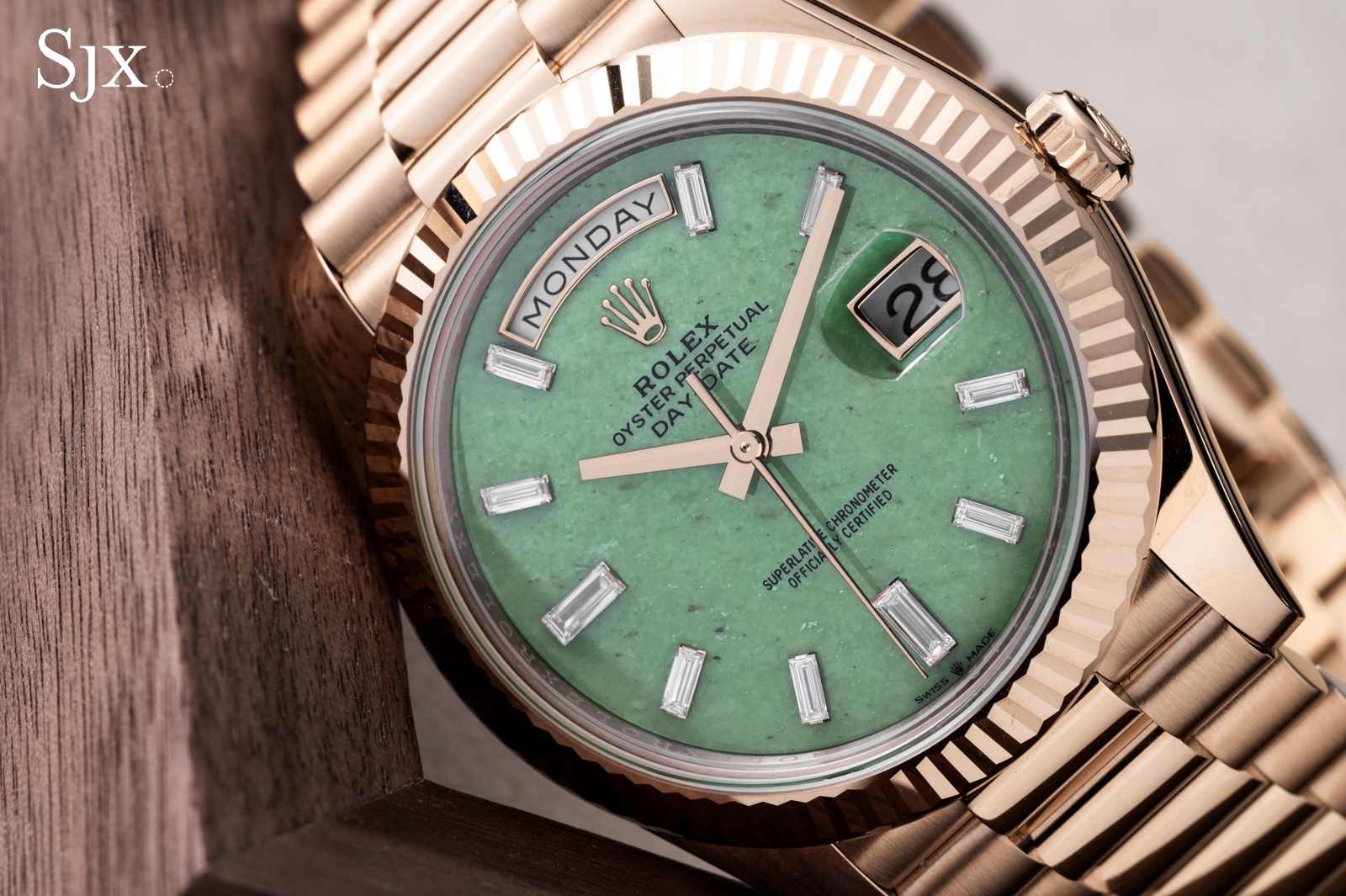
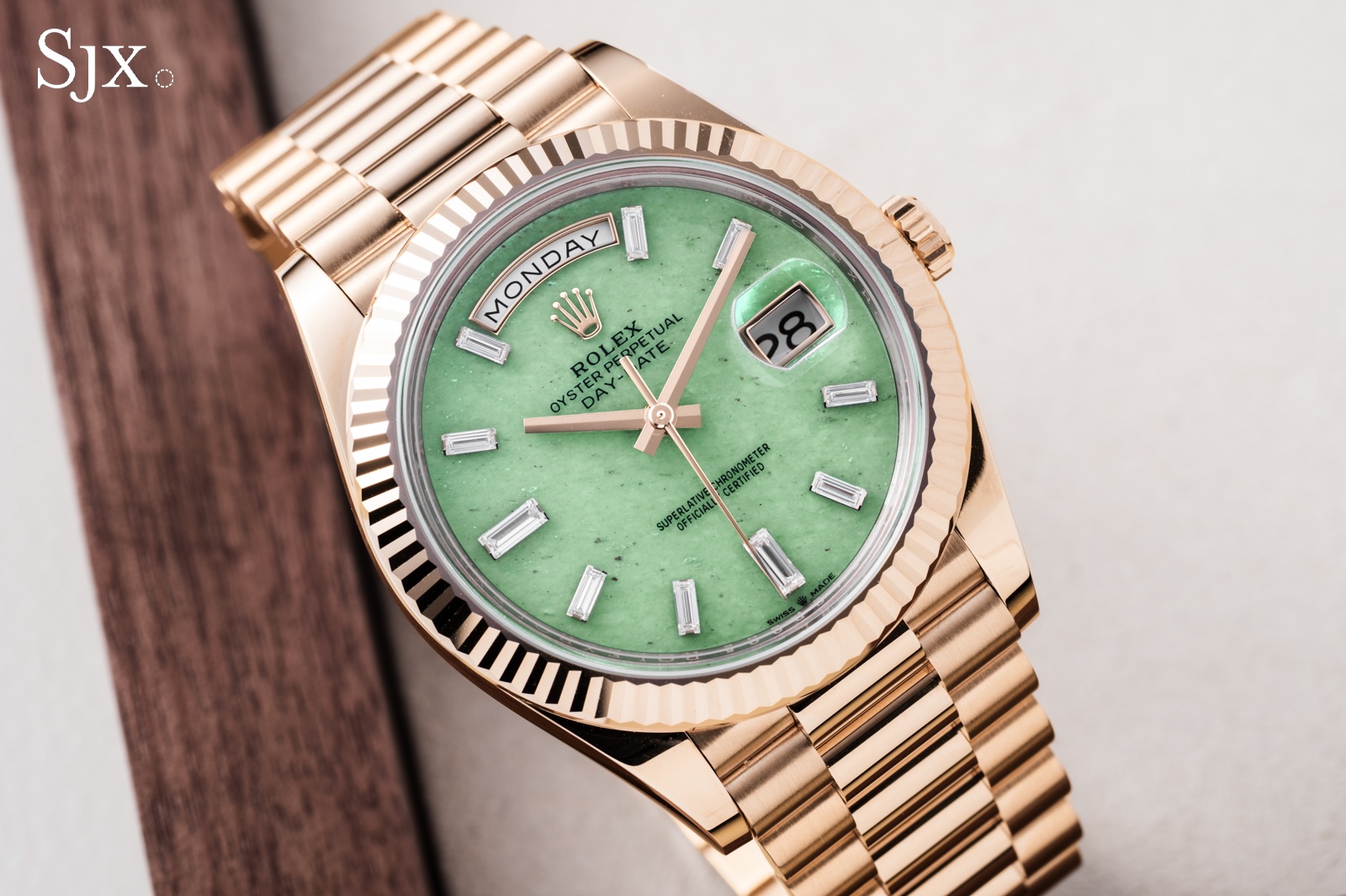
The aventurine-dialled edition is identical to the standard 40 mm Day-Date — largely unchanged since its last refresh in 2015 — save for its elaborate dial and the proprietary alloy used for the case and bracelet.
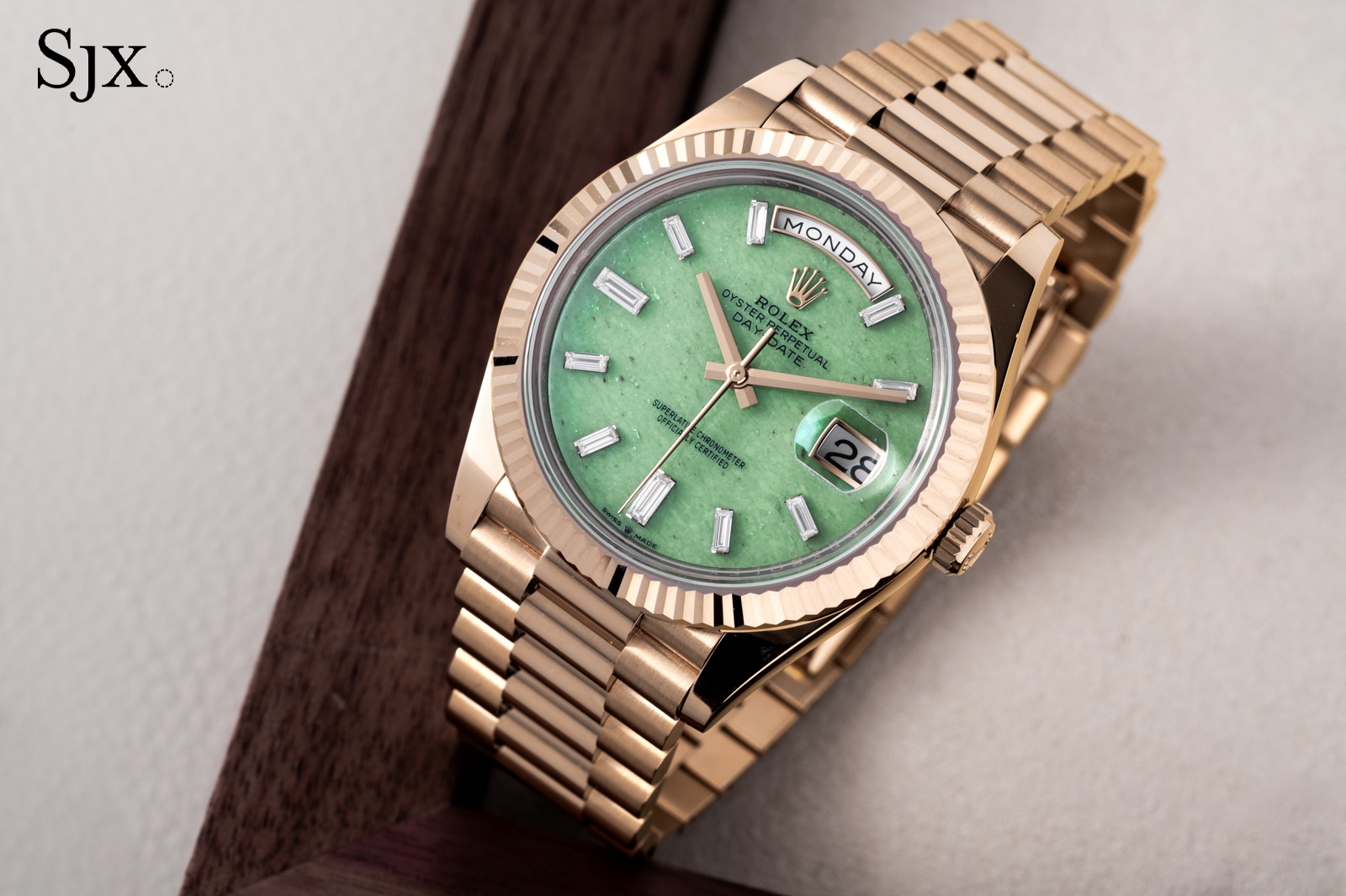
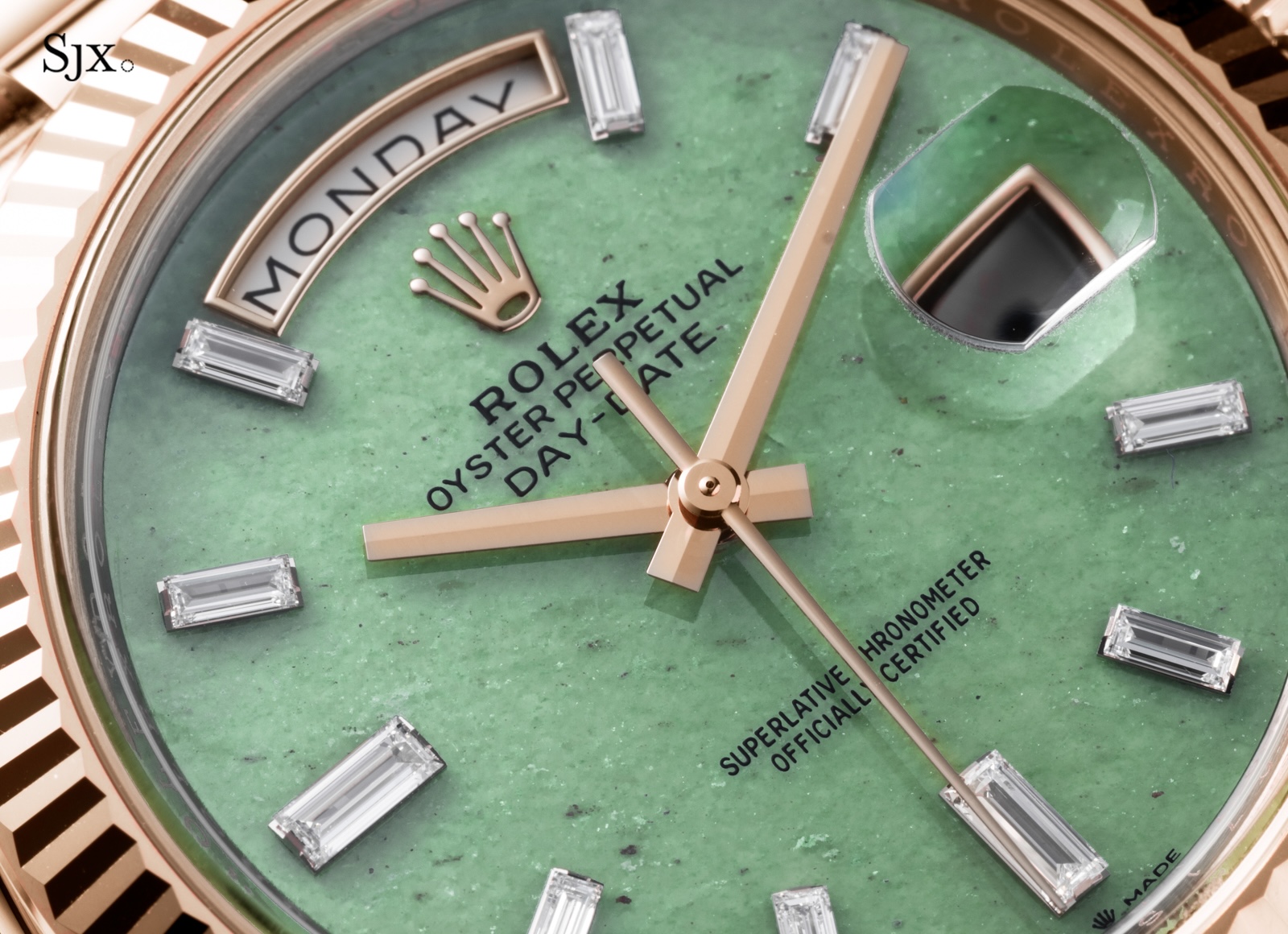
Starting with the dial, the anniversary Day-Date features dial made from natural aventurine, not to be confused with aventurine glass, which is man-made and much more common in watchmaking.
The almost jade-green hue of the natural aventurine feels like an overture to Rolex’s signature green colour. The naturally occurring occlusions emphasise the organic nature of the material, and more importantly — from a collecting standpoint — differentiate each dial from the next.
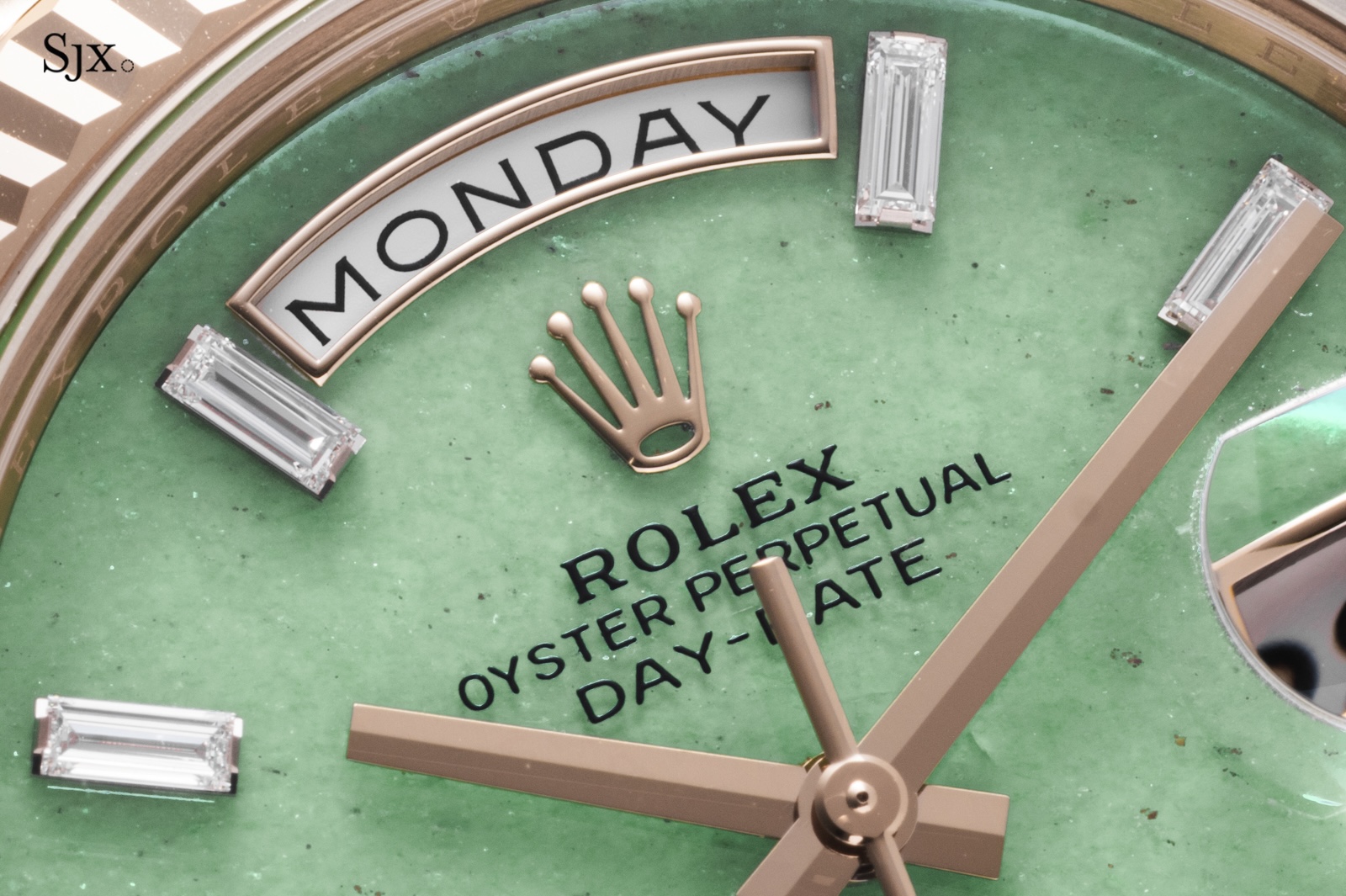
The dial is evidently finished with several layers of clear lacquer, judging by the way the printed text appears to float above the dial’s surface. This effect is especially striking when it comes to the applied coronet logo, which casts a shadow on the stone beneath.
Finally, the ten applied hour markers are baguette-cut diamonds, with larger stones used for the markers at nine and six. All ten stones are big enough to admire their brilliant clarity and prism-like facets.
As for the case, there’s little to differentiate the new model other than the hue of the new Jubilee gold alloy — the first new gold alloy introduced by Rolex since the 2005 launch of Everose gold, the first fade-resistant pink gold to arrive on the market. To my eye, Jubilee gold falls between yellow gold and pink gold on the colour spectrum. Despite being new, the colour feels somehow familiar, probably due to its similarity to yellow gold.
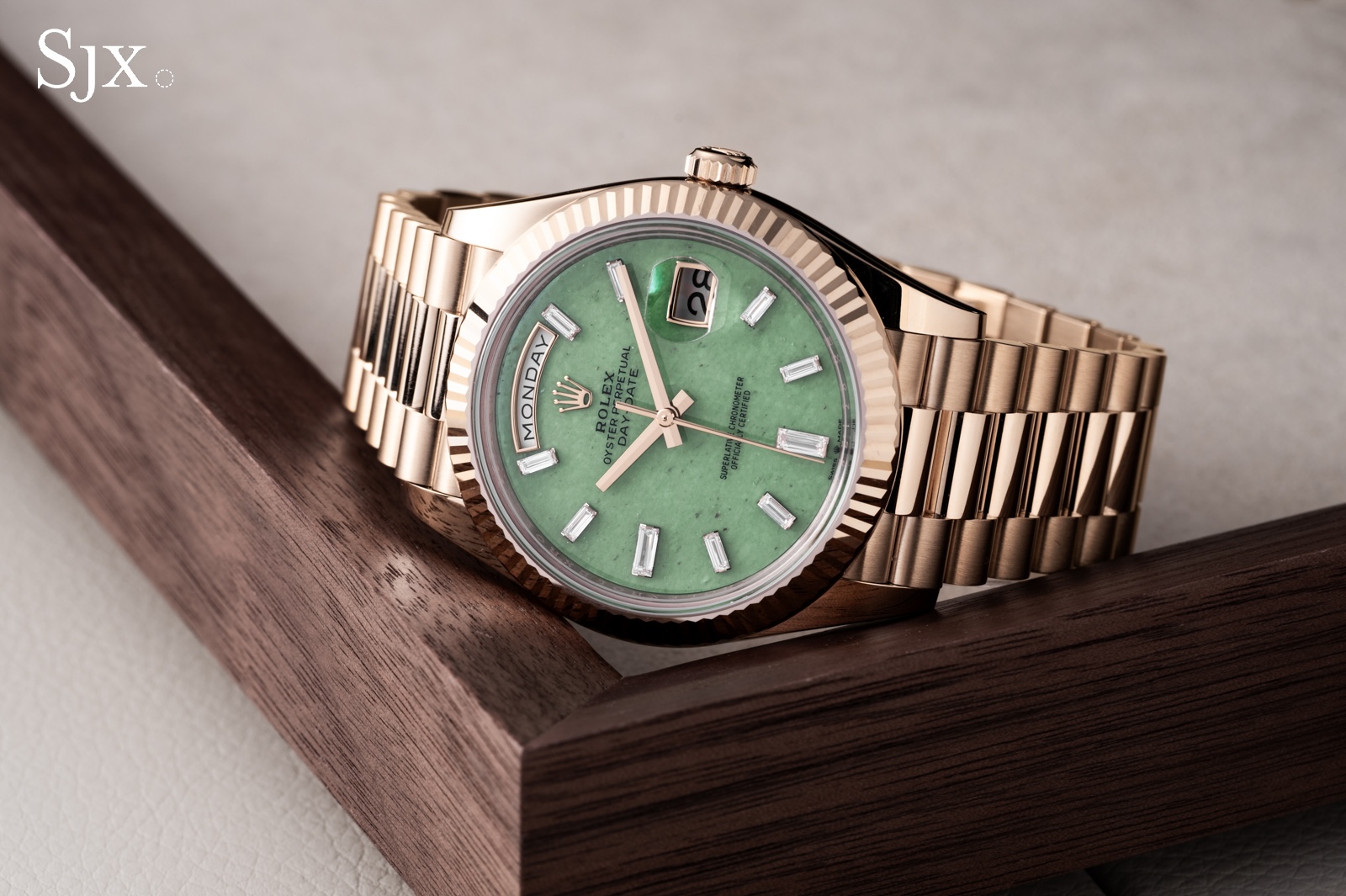
Rolex was a pioneer in developing proprietary gold alloys with special characteristics, being one of the tiny handful of brands with its own metals foundry. Everose gold, for example, is more stable than traditional pink gold alloys, preventing discolouration even when exposed to harsh chemicals like chlorine.
Since then several brands have introduced their own alloys. A. Lange & Söhne’s Honeygold comes to mind, as does Audemars Piguet’s sand gold. But unlike Rolex, majority of brands rely on specialist suppliers of metal alloys for their proprietary materials.
Class-leading calibre
It might seem hard to believe, but the cal. 3255 has now been in production for more than a decade. And while it might no longer be the brand’s latest and greatest movement — that distinction probably goes to the Land-Dweller’s Dynapulse-equipped cal. 7135 — the cal. 3255 remains a class-leading platform with several technical innovations that set it apart from its peers.
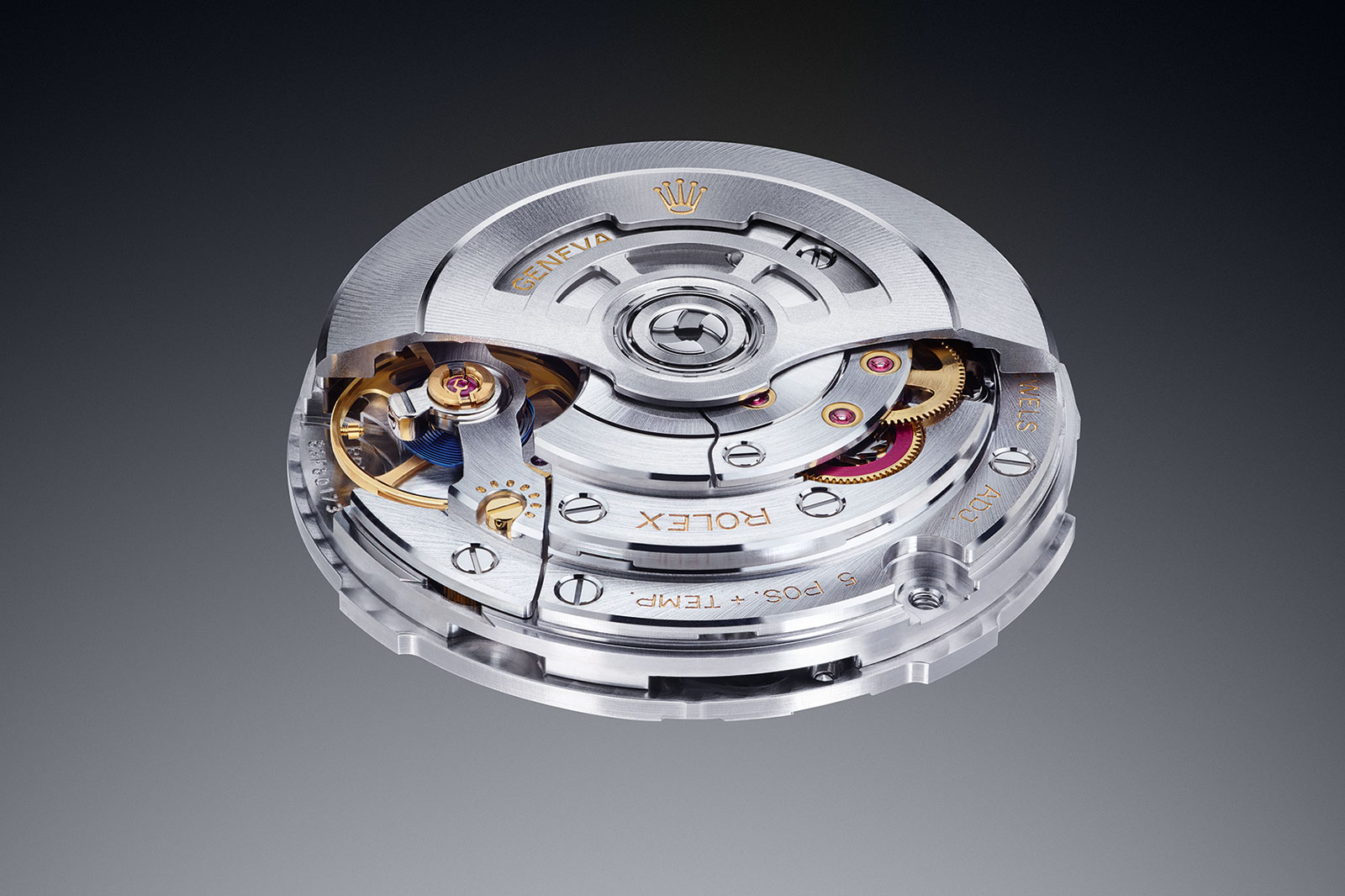
The Rolex cal. 3255. Image – Rolex
Chief among them is the brand’s proprietary Chronergy escapement, which is a riff on the classic Swiss lever escapement with clever geometry optimised to increase efficiency.
While more recent Rolex calibres have introduced the Syloxi silicon hairspring, the cal. 3255 relies on the tried-and-true Parachrom metallic hairspring, complete with an overcoil terminal curve.
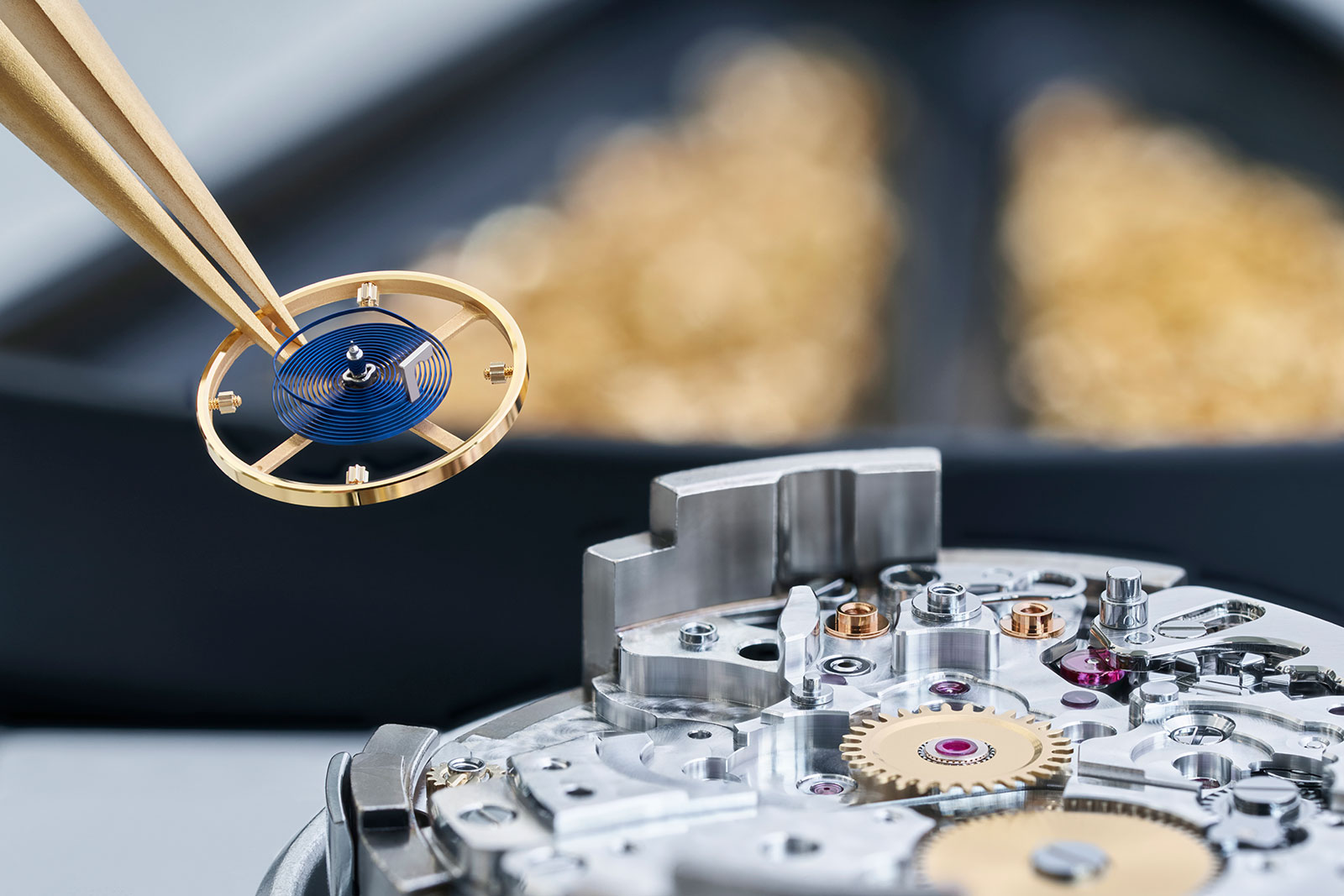
The Rolex Parachrom hairspring with Breguet overcoil. Image – Rolex
These chronometric features, combined with the industry’s most mature bidirectional winding system, help the cal. 3255 achieve Rolex’s “Superlative Chronometer” performance standard. This testing is completed on COSC-certified movements and ensures the rate of the fully cased watch stays within +/- 2 seconds per day.
Rolex is an industrial brand, and proudly so. As a result, the finishing is machine-applied for uniformity and production efficiency, but what the cal. 3255 lacks in decoration, it makes up in technical leadership.
Key facts and price
Rolex Oyster Perpetual Day-Date 40
Ref. 228235JG
Diameter: 40 mm
Height: Unknown
Material: 18K Jubilee gold
Crystal: Sapphire
Water resistance: 100 m
Movement: Cal. 3255
Functions: Hours, minutes, seconds, day of the week, and date
Winding: Automatic
Frequency: 28,800 beats per hour (4 Hz)
Power reserve: 70 hours
Strap: Matching President bracelet
Limited edition: No
Availability: From Rolex boutiques and authorised retailers
Price: US$65,700 excluding taxes
For more, visit Rolex.com.