
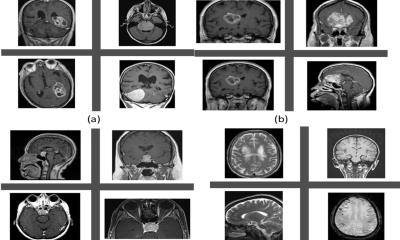
To ensure consistency across data sources, a unified preprocessing pipeline was applied to all images. This included resizing scans to a fixed input resolution, intensity normalization, and contrast equalization, thereby minimizing dataset-specific variations and enabling more reliable model evaluation.
Detecting brain tumors at the earliest possible stage can significantly improve treatment outcomes, underscoring the significance of the study. Brain tumors remain a serious health problem worldwide, and advances in diagnostic accuracy and speed can improve patients’ prognosis and healthcare.
The authors report that their system is computationally efficient, requiring a fraction of a second per scan to detect and classify brain tumors. As they note, “The system showed efficient inference times, averaging 21.6 ms for binary and 17.6 ms for multi-class tasks, supporting its suitability for near real-time clinical applications. Nonetheless, evaluating the model’s robustness under low-resolution or highly variable MRI conditions remains an important avenue for future work.”
Overall, the study presents a balanced and comprehensive comparison of several leading deep learning approaches for brain tumor diagnosis. Although additional validation will be required before clinical implementation, the findings demonstrate the considerable potential of modern AI techniques to enhance the accuracy, speed, and reliability of brain tumor detection from MRI scans.
The researchers emphasize that “our focus was on the classification performance of different deep learning architectures under a unified and clinically relevant protocol.” They further suggest that future research could incorporate interpretability tools, such as feature attribution techniques and lesion-level visualization, to provide greater insight into model decision-making, strengthen the links between AI predictions and tumor pathology, and increase clinicians’ trust in the technology.
While the results are encouraging, the authors acknowledge several limitations that should be addressed in future studies. “The experiments were conducted using publicly available MRI datasets, which may not fully represent the diversity of real patients, hospitals, and imaging equipment,” they explain. To mitigate this concern, the researchers employed techniques to increase the diversity of training images and improve the model’s performance on previously unseen cases.
Nevertheless, they stress that further testing on larger and more diverse clinical datasets will be essential before the system can be deployed in routine medical practice.
Source: University of Sharjah