
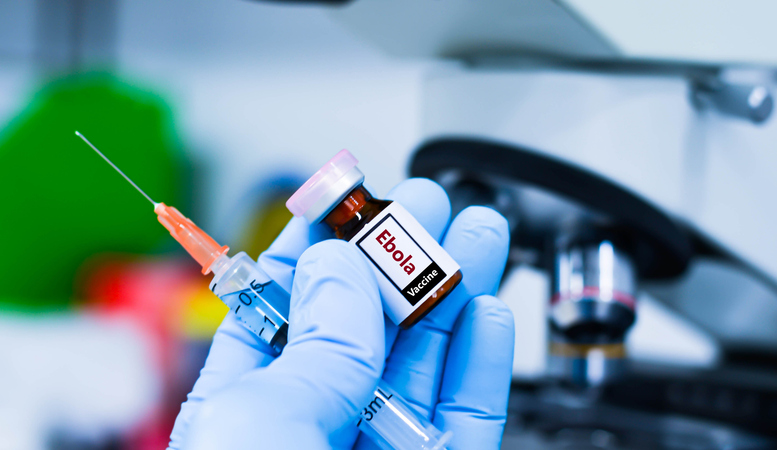
A new clinical study published in Nature Immunology suggests that delaying the booster dose of the vesicular stomatitis virus–based Ebola vaccine by 18 months after the initial vaccination can significantly strengthen and prolong immune protection in humans. The research focused on the recombinant rVSV∆G-ZEBOV-GP vaccine, which is currently licensed and used in outbreak settings for rapid protection against Ebola virus disease. Investigators found that while the vaccine already induces protective antibody responses after a single dose, the quality and durability of immunity can be substantially improved when a booster is administered after a long interval.
In the study, participants who received a delayed booster 18 months after their initial vaccination developed markedly stronger Ebola-neutralizing antibody responses that persisted for up to three years, remaining at levels comparable to or higher than peak responses observed after primary vaccination. In contrast, individuals who received only a single dose showed the expected gradual decline in antibody levels over time. Beyond antibody quantity, the delayed booster had a pronounced effect on antibody quality, promoting significantly greater affinity maturation, meaning the antibodies bound more tightly and effectively to the Ebola glycoprotein. Researchers estimated roughly a 13-fold increase in affinity maturation compared with a single-dose regimen.
The immune response in boosted participants also showed broader and more diverse recognition of viral epitopes, along with enhanced functional activity, including improved antibody-dependent cellular cytotoxicity and phagocytosis. These effects were linked to reactivation of memory B cells and increased class switching toward IgG antibodies, which are typically associated with long-lasting immunity. The findings suggest that allowing a longer interval between vaccine doses may give the immune system time to mature before re-exposure, resulting in a more refined and durable response.
The study also adds to a growing body of evidence from other vaccine platforms, including mRNA vaccines for SARS-CoV-2 and certain influenza vaccines, where extended dosing intervals have been shown to improve immune quality. Researchers propose that the timing of booster vaccination is a critical factor in shaping the long-term effectiveness of humoral immunity, as it influences both the magnitude and functional capacity of antibody responses.
Although the standard rVSV∆G-ZEBOV-GP vaccine regimen remains a single-dose strategy for rapid deployment during Ebola outbreaks, the findings raise the possibility that a delayed booster approach could offer enhanced long-term protection, particularly for healthcare workers and other high-risk populations. The authors note that the study was conducted in a controlled phase 2 trial with a relatively small number of participants and emphasize that further research will be needed to confirm optimal booster timing and assess real-world effectiveness.