
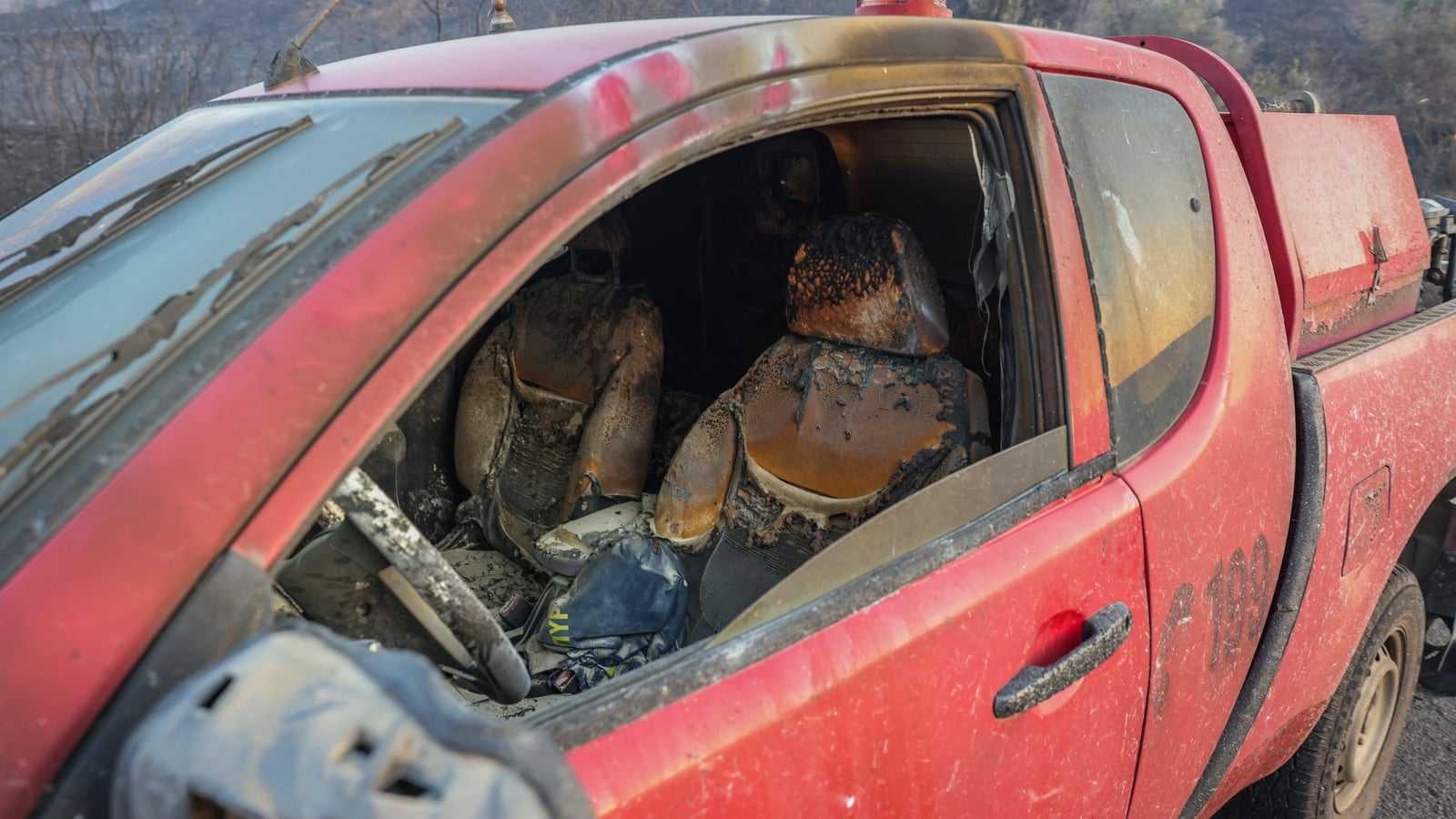
Greek firefighters continue to battle a wildfire ravaging parts of the tourist island of Crete, although conditions have improved, authorities have said.
“The situation around Rethymno is better,” a fire department spokesperson said.
However, the blaze “has not yet been contained, there are still many hotspots,” he added.
Fires are also burning on the islands of Paros, Kalymnos and Andros in Aegean sea but “the situation is better”, according to the fire service.
About 4,500 hectares had been scorched on Wednesday and yesterday south of the tourist town of Rethymno, according to meteo.gr, the weather service of the National Observatory of Athens, citing an analysis of satellite imagery from the European Union’s Copernicus programme.
Strong, persistent winds, combined with the area’s rugged terrain, continued to complicate firefighting operations, authorities said.
Across Greece, firefighters and civil protection services have been placed on general alert, fire brigade spokesman Vassilis Vathrakogiannis said at a briefing yesterday.
Many parts of the country, including the Athens region, Crete, numerous Aegean islands and parts of the Peloponnese, faced a “very high” wildfire risk today, the second-highest level on Greece’s five-point scale, according to Greek civil protection.
Greece’s geography, made up of hundreds of islands, complicates the rapid deployment of emergency responders, Mr Vathrakogiannis said.
Additional firefighting resources have been dispatched to Crete.
“Strong winds and dense smoke are creating conditions of near-zero visibility and severe turbulence, making aerial water drops extremely difficult, if not impossible,” he said, particularly in Crete.
Greek authorities on Wednesday ordered the evacuation of around 8,000 residents and tourists from the coastal resort of Agia Galini.
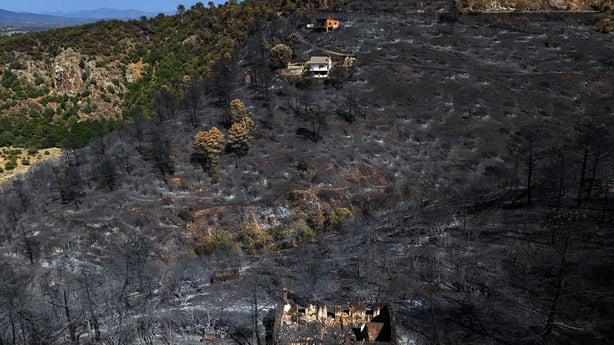
Smoke from fires contains a mix of pollutants that reduce air quality even hundreds of kilometres away
Most evacuees have since returned to their homes and hotels as Crete’s peak tourist season continues.
Prime Minister Kyriakos Mitsotakis warned that Greece, which had largely avoided the severe heatwaves and major wildfires seen earlier this summer in countries such as France and Spain, was entering a challenging period.
“August … is traditionally a difficult month,” he said.
“Conditions are expected to worsen further in the coming days,” the fire department spokesperson also warned.
Millions exposed to wildfire pollution
Wildfires in France and Spain have exposed millions of people to health-damaging air pollution over the last few days, scientists have said.
Smoke from fires contains a mix of pollutants that reduce air quality even hundreds of kilometres away.
Scientists said they were particularly concerned about emissions of fine particulate matter, known as PM2.5, which is associated with cardiovascular diseases, lung cancer and respiratory problems.
“We know that this has a really major health effect, particularly when there’s exposure over multiple days,” said Theodore Keeping, a climate scientist at Imperial College London.
“We’re seeing increasingly severe and frequent high-intensity fires where people are exposed to these very, very high levels of PM2.5.”
In the French city of Bordeaux, levels of PM2.5 pollution soared to peaks of above 300 micrograms per cubic metre on 26 July, data from the EU’s Copernicus Atmosphere Monitoring Service showed.
Mr Keeping said Bordeaux’s PM2.5 levels had averaged 115 micrograms on 26 July, nearly five times the EU’s average daily limit.
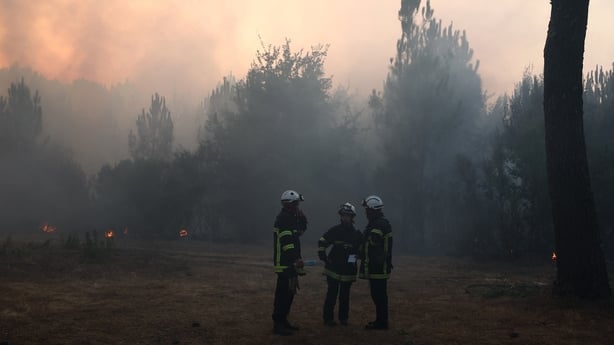
Wildfires in Europe have emitted 18 millions of metric tons of CO2 this year
Smoke plumes spread unusually high PM2.5 levels downwind of Madrid and Bordeaux.
In Limoges, a city more than 200km northeast of Bordeaux, PM2.5 levels peaked at above 400 micrograms per cubic metre over the weekend.
“They are producing huge amounts of smoke … we see it spreading out across central parts of Spain, southern France,” said Mark Parrington, a senior scientist at the European Centre for Medium-Range Weather Forecasts.
Wildfires can make PM2.5 even more dangerous, increasing the particles’ toxicity as they combine with other components in smoke.
“It can also have a lot of other very unpleasant things condensed onto the particles which, being smaller in size, are the ones that can really get into the lungs and affect respiratory illness,” Mr Parrington said.
He urged people in affected areas to follow local authorities’ advice, for example by keeping windows closed, staying indoors, or wearing masks.
Climate change is intensifying the hot, dry conditions that allow wildfires to spread faster and burn longer.
Wildfires themselves make it harder to fight climate change. Europe’s forests absorb and store hundreds of millions of tons of planet-heating carbon dioxide, which are released back into the atmosphere when the forest burns.
Wildfires in Europe have emitted 18 millions of metric tons of CO2 this year, with France logging its highest fire CO2 emissions on record for this point in the year, data from the European Forest Fire Information System showed. Half of the EU’s fire emissions this year occurred in the last week alone.
Wildfires contribute a small fraction of the EU’s total greenhouse gas emissions, but the EU also counts CO2 stored by forests towards its emissions-cutting targets, to compensate for pollution from industries.
Scientists said fire emissions this year had not reached a scale that would thwart climate targets, but that this could change, as climate change expands fire risk into northern countries with large CO2-storing forests.
“Once we start seeing fire weather conditions that cause large fires in those regions, where that’s a large part of their net zero target, then that would be more of an issue,” Mr Keeping said.