
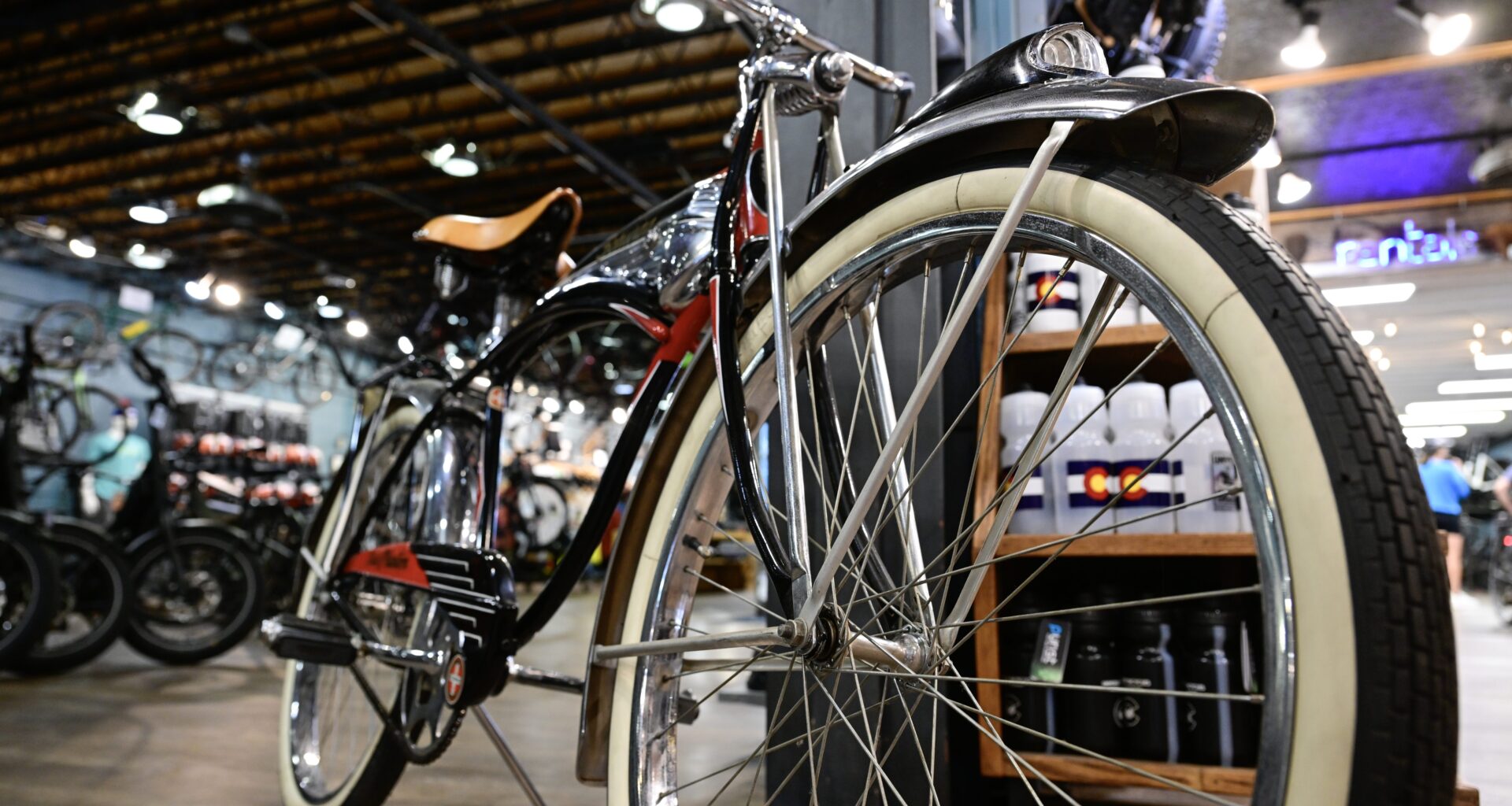
For many Americans, their first memory of riding a bike is coupled with fond memories of their first Schwinn bicycle.
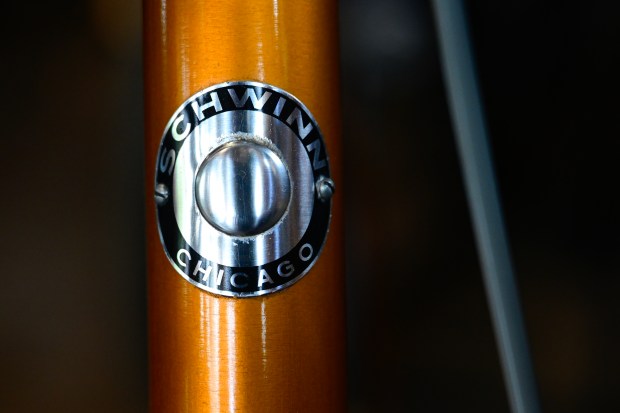 The badge on the head tube of a 1965 Schwinn Varsity in Radiant Coppertone color 10-speed bicycle is seen at University Bicycles in Boulder on July 23. The bicycle makes an appearance in the documentary film “No Hands: The Wild Ride of the Schwinn Bicycle Company.” (Matthew Jonas/Staff Photographer)
At its peak, the Schwinn Bicycle Company was an industrial giant and an American cultural icon. Since its founding in Chicago in 1895, Schwinn has sold millions of bikes. By the 1950s, one in every four bikes sold in the U.S. was a Schwinn.
Schwinn established deep ties to Boulder when it moved its headquarters to town in 1993. Now, Boulder filmmakers are capturing the company’s legacy with an independent film about the rise and fall of Schwinn, and what the company meant to millions of Americans.
“There’s a huge emotional connection to Schwinn, and for generations of Americans … (they had memories) on a Schwinn bike, or at least they wanted to be on a Schwinn bike,” the film’s Boulder-based director Daniel Clarke said.
The film is called “No Hands” and is based on the book “No Hands: The Rise and Fall of the Schwinn Bicycle Company, an American Institution,” which is about the Schwinn Bicycle Company and its bankruptcy in 1992. The documentary film is about the rise of Schwinn and what the company meant to bicycling for so many Americans.
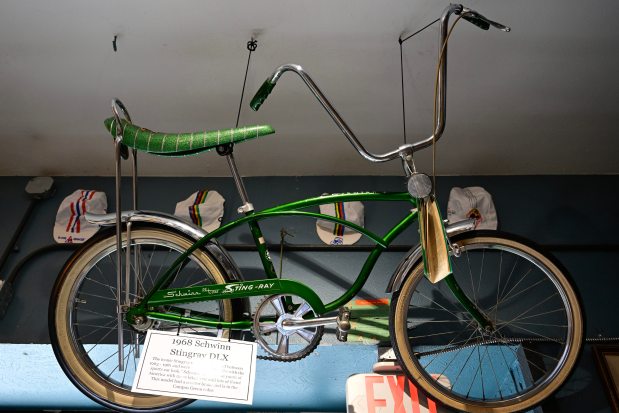 A Campus Green 1968 Schwinn Stingray DLX with a coaster brake is seen in the Bike Museum at University Bicycles in Boulder on July 23. The bicycle makes an appearance in the documentary film “No Hands: The Wild Ride of the Schwinn Bicycle Company.” (Matthew Jonas/Staff Photographer)
Narrated by Lance Armstrong, the documentary film tells the story of the rise and fall of Schwinn, from its founding in 1895 to its bankruptcy in 1992. It covers everything from the iconic Sting-Ray bike model to Schwinn’s widespread influence in the worlds of BMX and mountain biking. Through the accounts of fans, collectors and the Schwinn family themselves, the documentary tells the story of a brand that changed American cycling forever and survived through the struggles of American manufacturing, family drama, fads and business challenges.
Schwinn moved its headquarters to Boulder in 1993 from Chicago due to a buyout following its 1992 bankruptcy. The company remained in Boulder until 2001, when it faced new financial challenges and a subsequent bankruptcy sale. The 2001 sale transitioned the company into a mass-market, big-box retailer name. Today, the brand is still privately held and Schwinn bikes are still widely sold.
“We leave it to the viewer to decide for themselves what went wrong,” CU Boulder alum and the film’s executive producer Jim Packer said. “But it’s really also kind of a love letter to Schwinn and the fact that they really did a lot for biking in America and gave a lot of kids, including myself, their first memory of their first bike that they never forgot.”
The film premiered at the Boulder International Film Festival this spring, where it earned a lot of attention and a sold-out crowd. Despite having a matinée show time, the line to get into the Boulder Theater wrapped around multiple blocks.
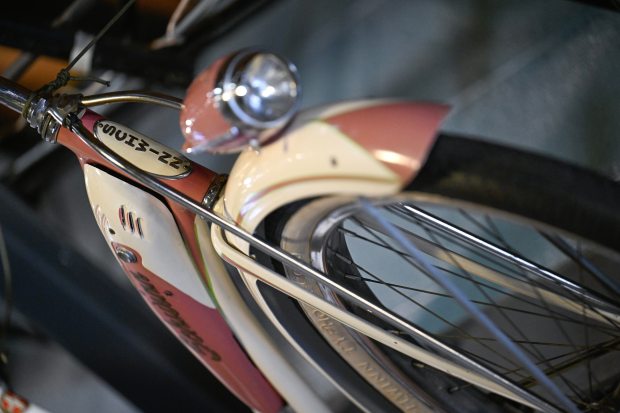 The badge on the head tube of a 1951 Schwinn Starlet in Summer Cloud White color with a step through frame that was marketed to women and girls is seen in the “Bike Museum” at University Bicycles in Boulder on Thursday, July 23, 2026. The bicycle makes an appearance in the documentary film “No Hands: The Wild Ride of the Schwinn Bicycle Company.” (Matthew Jonas/Staff Photographer)
“I thought it was really cool and surprising how audible a reaction so many people had,” Clarke said. “There was a lot of cheering and joyful screaming at certain points, like when certain bikes were announced or certain nostalgic moments came up for people.”
The film’s core crew members are based in Boulder, and some of the scenes from the film were shot in the city. It also features Boulder local Jenn Dice, who is the CEO of PeopleForBikes, a bike advocacy organization. Bicycles from the University Bicycles Vintage Museum in Boulder are also featured in the film.
The filmmakers heard from longtime members of Boulder’s cruiser community that Schwinn’s Boulder headquarters era helped influence the city’s cruiser ride culture in the 1990s. People continue to organize weekly cruiser rides, or community bike rides, in Boulder, an event that started around the same time Schwinn moved to Boulder in the ’90s.
Nearly everyone who rides a bike has been impacted by Schwinn, Clarke said, as the company helped to usher in a new cycling culture. A place like Boulder, which has a huge cycling culture today, is no exception.
“Boulder definitely has an old Americana feel to it, and for generations of people who rode their first bike, it was on a Schwinn,” Clarke said.
The film will continue showing at various festivals for the rest of the year before going out for distribution in 2027. For more information, visit theschwinndocumentary.com.