
Multinationals paid an additional €1 billion in corporation tax in July following the introduction of a new minimum 15 per cent rate for large firms.
Without these receipts, corporate tax would have fallen dramatically during the month, impacting on the public finances in the run up to the budget.
The latest monthly exchequer returns, published by the Department of Finance, show the business tax generated €1.3 billion last month, up marginally on the same month last year.
The department noted that approximately €1 billion represented the first wave of “top-up” payments arising from the new global minimum rate of 15 per cent, agreed as part of an Organisation for Economic Co-operation and Development agreement on international tax in 2021.
Estimates suggest this higher rate could yield an additional €5 billion in receipts for the exchequer.
Cumulatively, corporation tax amounted to €15 billion for the seven months to the end of July, up €678 million (4.7 per cent) on the same period last year.
Despite repeated warnings about the potential volatility of multinational profits, corporation tax, which is heavily concentrated around several firms in the tech sector here, has continued to grow.
The latest exchequer data shows the Government collected a total of €59.6 billion across all tax heads in the seven months to July, up €1.6 billion or 2.8 per cent on the same period last year.
However, when once-off receipts connected to the Apple tax case, which boosted last year’s total, are excluded, total tax receipts this year were up by €3.4 billion or 6 per cent.
Tax coffers were also boosted by income tax, which generated €3.3 billion in July and €21.9 billion over seven months, up €1.5 billion (7.5 per cent) on the same period in 2025.
Strong income tax receipts come on the back of a sustained period of jobs growth in the Irish economy. Separate figures released from the Central Statistics Office show unemployment remains anchored near a historic low of 5 per cent.
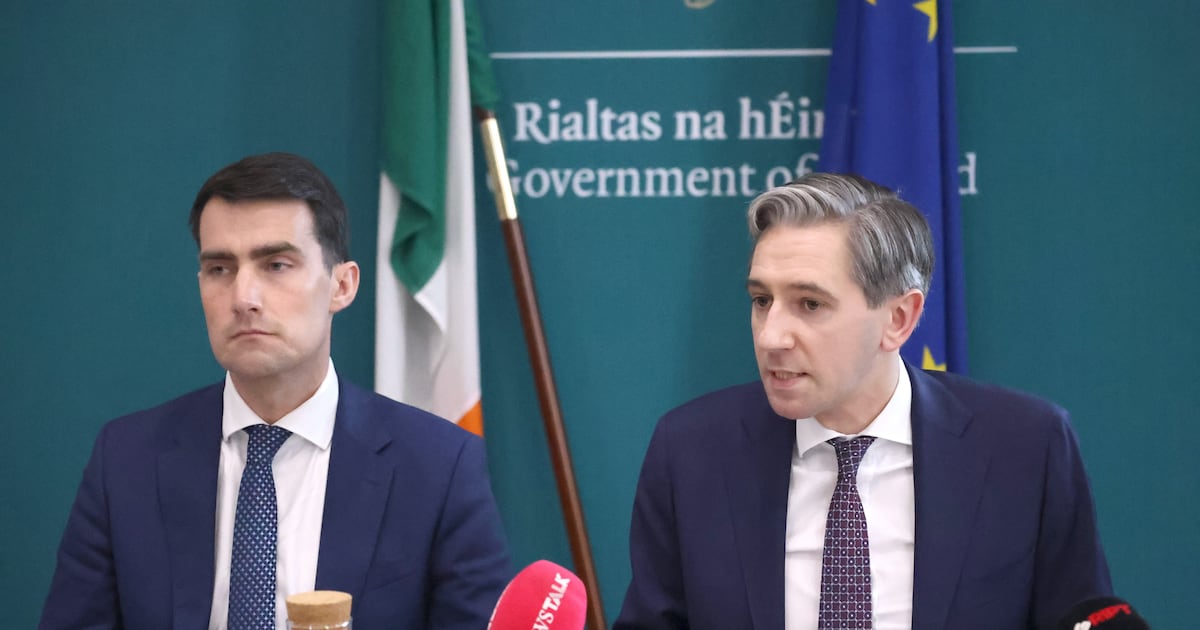
“Today’s figures are further evidence of the resilience of our economy,” Minister for Finance Simon Harris said.
“In a deeply uncertain world, it is more important than ever that we maintain a sensible and sustainable approach to fiscal policy,” he said.
Harris said the upcoming budget would seek “to strike a careful balance”.
“We will deliver a package that will help workers keep more of their earnings, while continuing to invest in our public services and critical infrastructure,” he said.
The budget will contain a €1.5 billion tax-reducing package to protect workers from inflation and increase take-home pay.
VAT receipts, which reflect consumer spending, were also up, rising by 17.5 per cent to €3.8 billion in July.
The sales tax generated €16.3 billion for the seven months to the end of July, ahead of last year by €1.4 billion.
On the spending side, total gross voted expenditure for the seven months was €64.9 billion, which was €4.5 billion (7.4 per cent) ahead of last year but €1.2 billion (1.8 per cent) below profile.
The Government is, however, forecasting overruns in departmental budgets of €700 million this year, mainly due to overruns in health and education.
Minister for Public Expenditure Jack Chambers has signalled a major clampdown on department spending amid a near doubling of public expenditure since 2019.
“The figures published in today’s fiscal monitor underline the increased investment in services and infrastructure to support a growing population and economy,” Chambers said.