
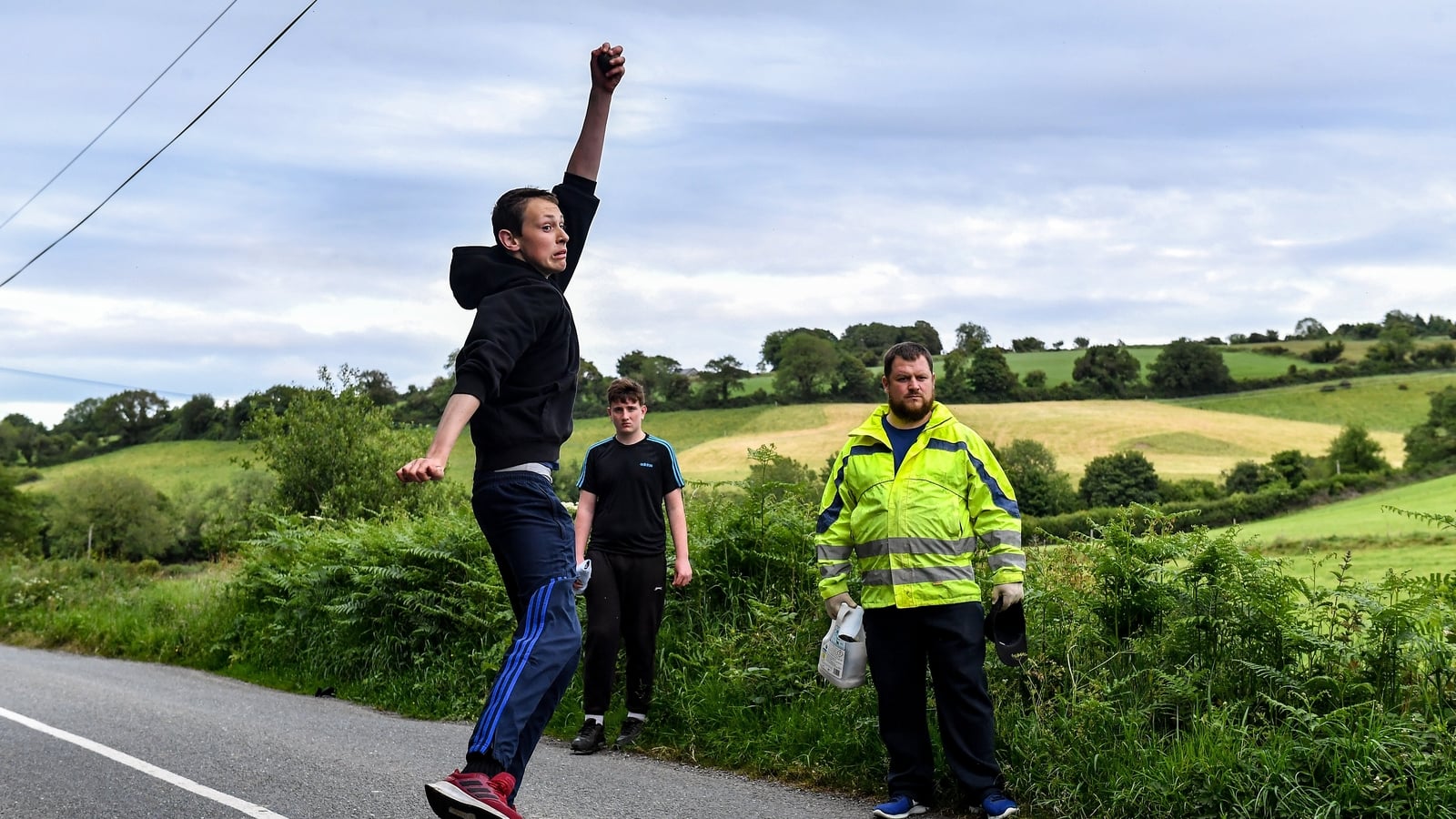
The governing body of road bowling has called for the sport to be listed to Ireland’s UNESCO cultural heritage list.
The game, which is governed by Ból Chumann na hÉireann, has been played on Irish country roads for centuries.
It would join traditions like Uilleann piping, harping, and hurling.
UNESCO maintains that cultural heritage does not end at monuments and collections of objects. It also includes traditions or living expressions, inherited from ancestors and passed on.
Séamus Ó Tuama, Honorary Secretary with Ból Chumann na hÉireann, said that the best comparison for special recognition for road bowling can be made with Uilleann piping.
Speaking on RTÉ’s Morning Ireland, he said that road bowling was a “fairly straightforward game,” with two lines on a road, start line and finish line, “and the object of the game is to get from A to B in the least number of throws”.
He said adults play with a 28-ounce bowl and children play with a smaller 24-ounce bowl.
Mr Ó Tuama said the bowls used to play the game are adapted from small cannon balls.
He said that the best comparison for special recognition for the game can be made with Uilleann piping.
While there is piping “all over the world,” Uilleann piping is “unique and special, developed in Ireland and unique to the Irish character,” he said.
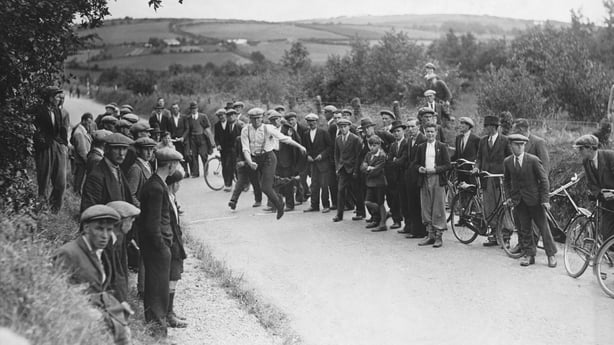
Spectators watch as a man takes part in a game of road bowling in 1936
“So Irish road bowling is the same, it developed on this island … across communities, all kinds of people played it, it’s completely unique – there is nothing like it anywhere in the world, and the origins of the game are lost in time, we don’t actually know where it came from.
“But it is a unique part of our heritage, it’s part of the ingenuity of the Irish spirit, and that includes all people on the island of Ireland.”
He said that nowadays the game is most popular in Munster, with Cork to the fore, then Waterford but also with players in Kerry, Limerick, and Tipperary competing in the Munster championships.
Armagh is the centre of the sport in Ulster, where it is also played in Monaghan and Tyrone, he said.
“Traditionally it was also played in the west of Ireland, extensively, but today Mayo is the only county really, that’s affiliated.
“And then there are new areas like Louth and Dublin in the east,” Mr Ó Tuama said.
He said getting UNESCO heritage status for road bowling would “create context for bringing the game forward and ensuring that it thrives and prospers in to the future.
“At the moment in the heartlands of the sport, it’s thriving like never before, there are more girls and women and boys playing the sport now than any time in its history.
“But it’s completely reliant on volunteers, has very little resources and it’s been lost in a lot of counties where it was very, very prominent … so we want it to be preserved and prosper,” he said.
More: The surprising revival of road bowling, Ireland’s ancient sport