
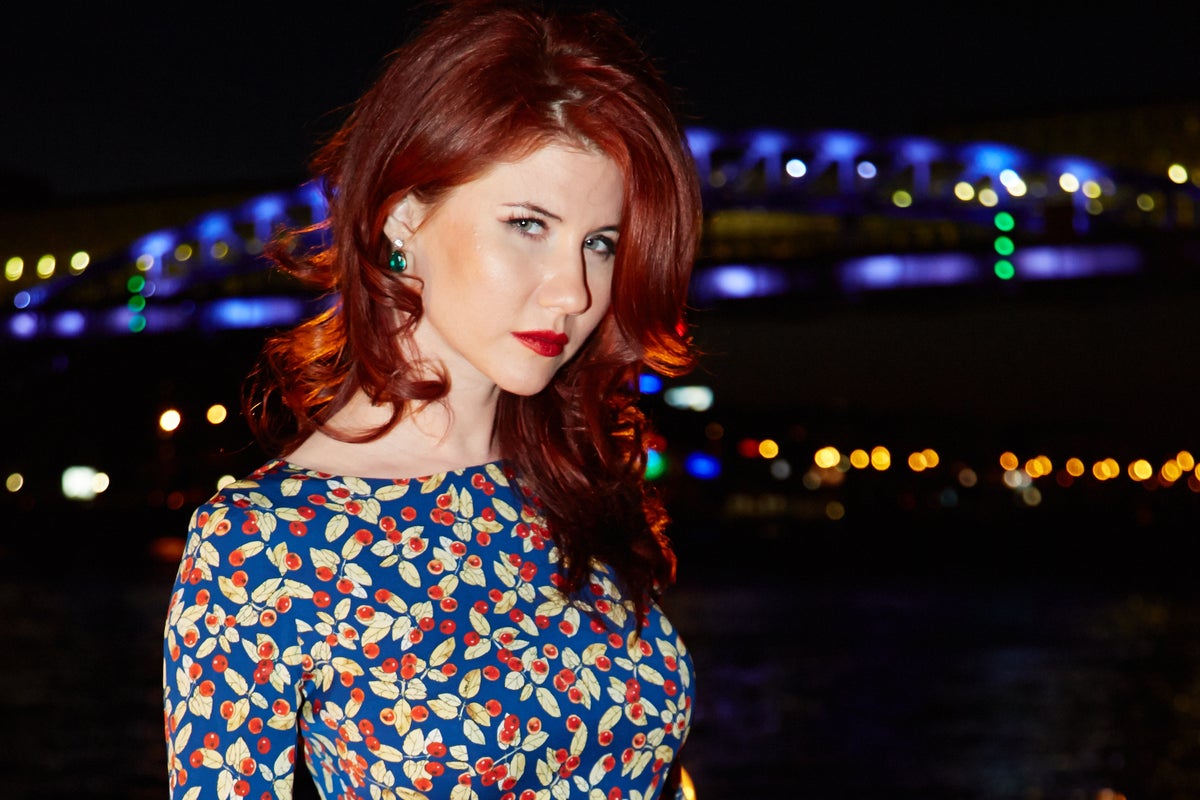
If you say the name ‘Anna Chapman’ or ‘that story about the Russian redhead spy’, everyone’s come across it in the tabloids at some point,” says Jamie Crawford. “It’s one of those cultural blips in the last 15 years or so… Her story in and of itself is not history-changing. But what’s interesting about it is how it fits into a bigger story of East against West.”
Crawford is the director of the new Channel 4 documentary Spy Next Door: The Anna Chapman Story. It depicts the true story of Chapman, a glamorous Russian spy, from her time living in Britain in her early twenties before moving to New York City, where she’s tracked by the FBI as part of a larger web of deep-cover Russian agents.
“It’s a story told in reverse in that she suddenly sprang to brief fame in 2010 when she was arrested as part of an FBI sting on Russian spies operating in the United States,” says Crawford. “And it quickly became apparent that before being in the US, she had been in the UK.”
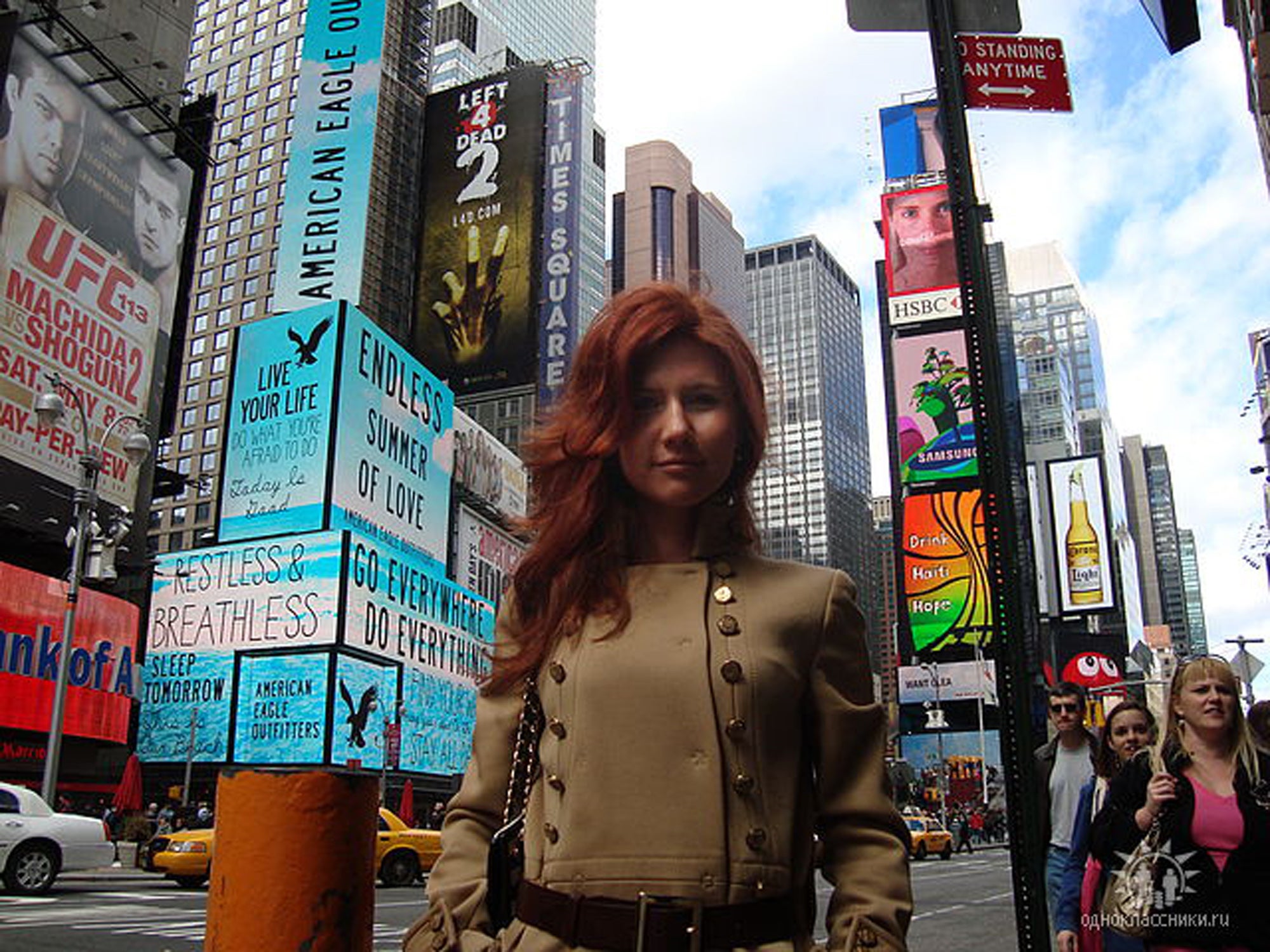 2010: Anna Chapman in New York for a hearing after she and 10 others were arrested on charges of conspiracy to act as an agent of a foreign government (Social media)
The story begins with Marcus Read, a DJ in Brighton, who met a “highly seductive” girl in a club while on holiday in Africa. That girl, Anna Chapman, who was 19 at the time, then came to visit him in Britain for the summer. “From the very beginning, the air of mystique she carried with her was consistent,” says Read in the documentary. “The only thing that really struck me was when she told me her dad was in the KGB.”
Chapman went on to spend almost a decade in Britain, although she quickly moved on from Read after that summer, meeting public schoolboy Alex Chapman and marrying him. A couple of years on, they split.
“Then very quickly this young Russian woman – who is clearly extremely bright, very fun, personable, and has great success in UK society – is very quickly hanging out with powerful Russian dissidents in London,” explains Crawford.
“At some point along the road, she is recruited by the Russian secret service and operates on their behalf, then being transferred to New York where she pops up on the radar of the FBI and unwittingly falls into this giant operation that’s been running for 10 years following Russian spies.”
From the outside, Chapman’s life in New York looked like that of any privileged upper-class woman in her twenties, living in an apartment costing around $4,500 a month, going to Bikram yoga in the day and grocery shopping, before getting dressed up to go out to VIP clubs every night. But in between Bikram and dates, she was also sharing information with her handlers in Moscow while shopping for cosmetics at Saks or sitting in Starbucks.
“She’s very beautiful; she’s very striking,” says Crawford. “She was flirtatious by all accounts. In an age of internet dating and all of that kind of stuff, she got on like a house on fire with lots of different people. The FBI agents that we spoke to in New York said that she very rapidly worked her way through lots of boyfriends and contacts. And whether or not she was a girlfriend of people, she was good fun and she was charming. You can see how she used that to her advantage.
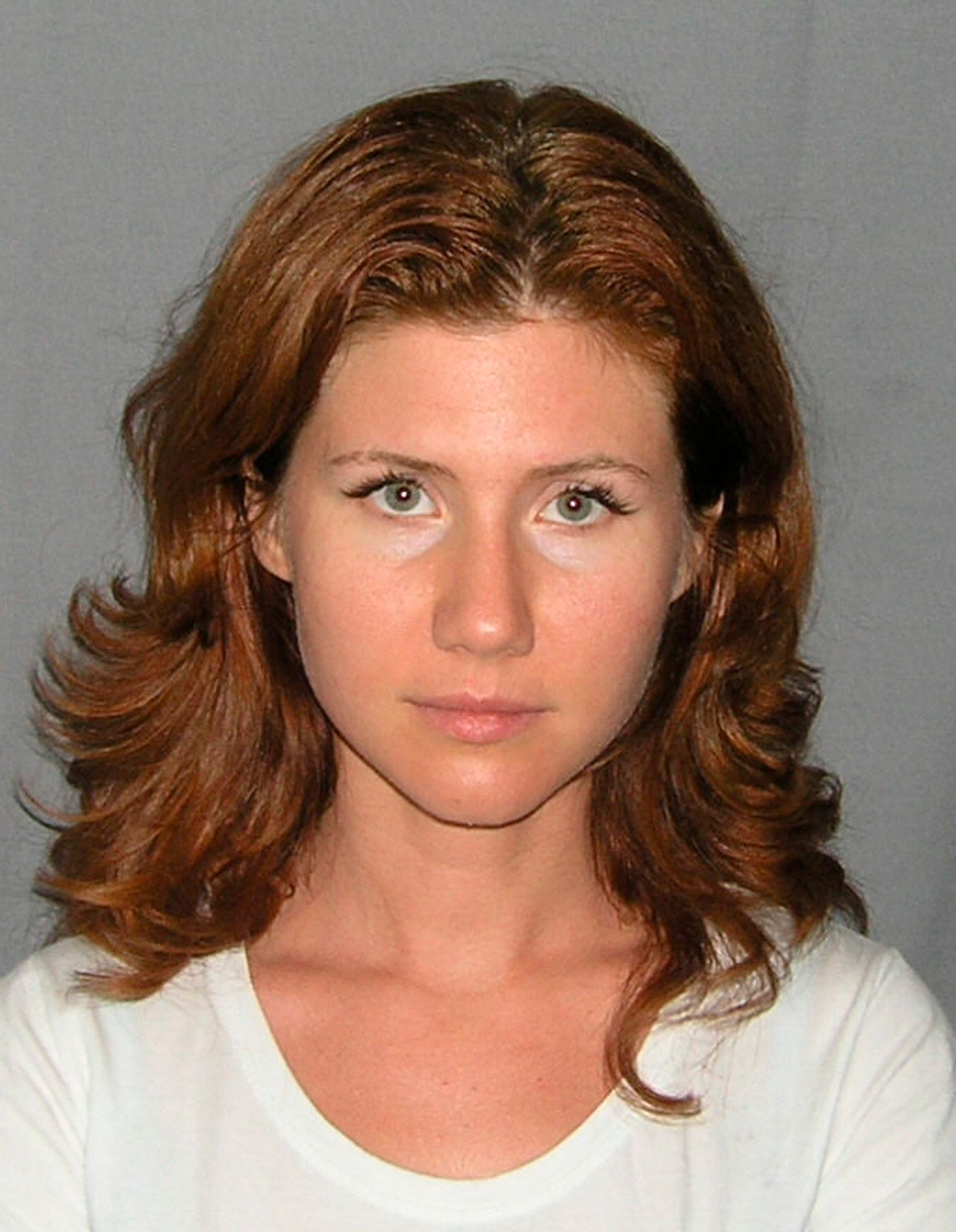 ‘She was fun. You could see she used it to her advantage’: A photo of Chapman provided by US Marshals in 2010 (US Marshals)
“I’m not suggesting by any means that she’s a sort of dumb honey-trapper or anything like that. She’s completely the opposite. I think she’s really bright, she’s very funny, very engaging, and whether she dated people or not, I would imagine that she’s just really good fun to hang out with as much as anything.”
Chapman – who is now living back in Russia – declined to be part of the Channel 4 documentary, but Crawford spoke to her on the phone during the process, saying “she was fun, entertaining and clearly super intelligent”. That charm was Chapman’s superpower and allowed her to get close to people of influence and make contacts so she could send information back to the Russian secret service. But other than the classic spy trait of being charming, Chapman was quite different from spies of the past.
If her story had cropped up today, she would be using [Instagram and TikTok]
Jamie Crawford, director, ‘Spy Next Door: The Anna Chapman Story’
“The spy craft has evolved over the years,” explains Crawford, pointing out that up to the 1980s, Russian spies were trained for years in the motherland before being sent off to third countries to build a backstory before arriving in their destination with “the task of infiltrating that nation for years and years to come, and perhaps spending their entire lives there, sending back little tidbits of information from that sort of old-school era of spying”.
In contrast, Chapman was likely recruited during her time in England, given minimal training, and she always used her own name. “She’s part of a new breed of spy,” says Crawford. “They’re not pretending to be somebody else. They arrive in the country with their own surname and their own backstory because as soon as everybody has a digital past, it’s very difficult to invent a history without having your own kind of Facebook photos or Instagram or whatever it is.”
 Anna Chapman at Fashion Week Russia in 2013 (Getty)
Chapman was an active spy in the 2000s, before being arrested in 2010 in her late twenties along with nine other Russian spies. “That sort of felt like an interim period, whereas today we’re kind of into this era of gig economy spying where people are recruited online and sent a wedge of cash to go and set fire to something or to sort of cause some kind of havoc,” adds Crawford.
He calls her an influencer, explaining “if her story had cropped up today, that’s exactly what she’d be, and she would be using [Instagram and TikTok] had they existed.” He’s found that Russia’s spies of today are exactly that – “youngsters with TikTok handles and Instagram profiles, and who use Snapchat more than anything.” He adds: “It was really fascinating to see the sort of modern-day approach to spying and to realise that it’s not necessarily about stealing sort of nuclear secrets; it’s more about infiltration and influence.”
He chose to share Chapman’s story now because of how it fits into the changing geopolitics of our time. Back in the noughties, Britain and America were working hard to create closer ties with Russia and Vladimir Putin. “Little did we realise that Russia is Russia and they operate with a totally different mindset, and that he was hellbent on returning Russia to its kind of imperial past,” says Crawford. “In a way, we are today at the other end of that narrative where that’s exactly what they’re trying to do, successfully or otherwise.”
I think the great thing about this story is it’s a little doorway onto a really big picture look at Russia and the West in the last two decades
Jamie Crawford
Chapman was lucky in that the US negotiated a swap with Russia – in exchange for the 10 spies they’d caught, they received four Russians who had been accused of or were working on behalf of the US and UK. One of those men was Sergei Skripal, who hit national headlines when he and his daughter Yulia were poisoned with the nerve agent Novichok in Salisbury.
“It was really interesting to combine this ground-level spying story with the bigger story of geopolitics of the time, and retrace our steps to try and understand a little bit how we’ve got to where we are,” says Crawford. “It’s really interesting to see how the spies kind of feed into that matrix, because you can’t assassinate somebody abroad without the intelligence coming back from spies placed in those countries that allows you to know where this person lives, what their habits are, that kind of thing.”
For Chapman, being a spy clearly paid off. She returned to Russia as a hero, and very quickly became a celebrity, appearing on catwalks, having her own TV show, and showing up in magazine photoshoots. “She has made a great success of things,” says Crawford. “I think she would class herself as an entrepreneur now.”
He hopes that his documentary allows viewers to reacquaint themselves with Chapman’s story in detail, but also to reflect on changing times. “I think it’s just an interesting reflection on how our relationship with Russia has evolved over the last two decades. We’re kind of at a tipping point right now to see where things go in the next couple of years. I think the great thing about this story is it’s a little doorway onto a really big picture look at Russia and the West in the last two decades.”
‘Spy Next Door: The Anna Chapman Story’ airs on Channel 4 on Wednesday and Thursday at 9pm.