
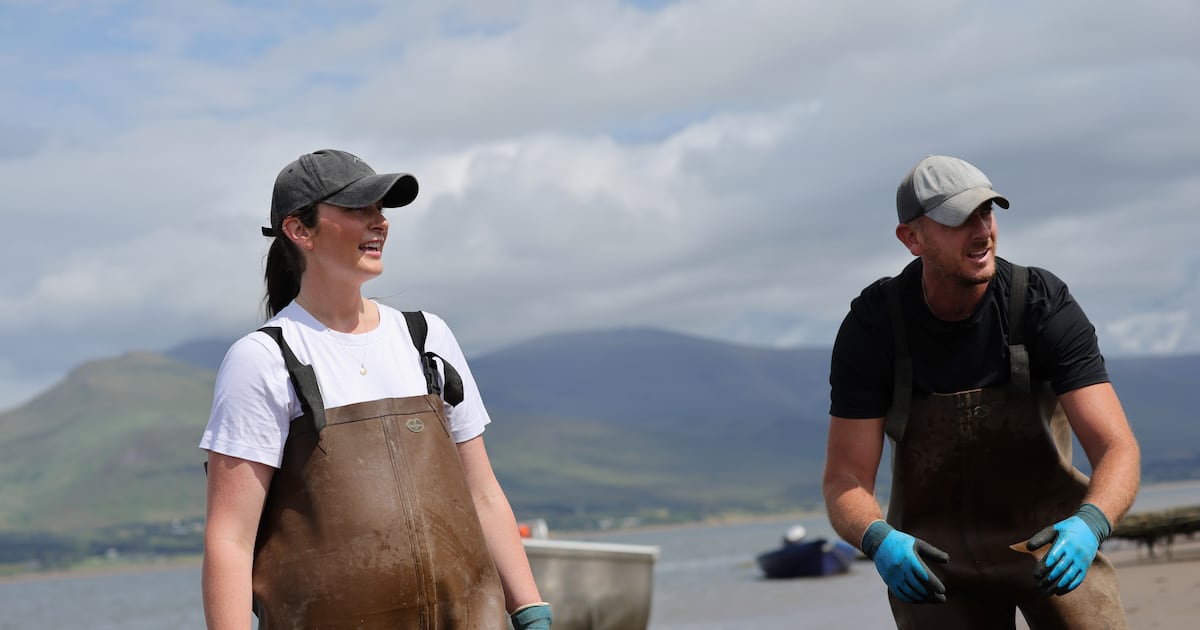
On a clear day at Cromane Bay in Co Kerry, you can see all the way to the top of Carrauntoohil. I’m standing with Sharon Sugrue, waiting for the tides. “You know the tide is leaving the harbour because all the boats are facing south,” she says. “When they turn north, we’ll know it’s coming back in.” Beyond the shingle beach, a bank of golden sand is emerging, and nudging above the receding seawaters are the oyster beds.
Nestled between the Dingle and Iveragh peninsulas, in the sheltering sweep of Castlemaine Harbour, it’s a near perfect spot for oysters and mussels, with the nutrient-rich waters running down the rivers from the surrounding mountains. “With the tides going out, all the oysters and mussels are exposed, and that’s when the birds come. It’s a bird watcher’s paradise,” she says, describing the spoonbills, brent geese, curlews, heron gulls and, of course, the oyster catchers.
She has watched both birds and boats coming and going in great numbers over the years. “That’s our home house there,” she says, pointing back to the shore. “This was our back garden before we made it a business.” Sharon, her brother Micheál Sugrue, and business partner Emmet Casey are the fourth generation of each family to make their living from the sea. They run Réalt na Mara Shellfish, where you can buy fresh oysters and mussels, and tour the facilities, learning and tasting as you go. Photographs dotted around the Réalt na Mara buildings show the trio’s grandfathers, Patrick Sugrue and Jimmy Casey, working on the local mussel beds and fisheries in the 1960s.
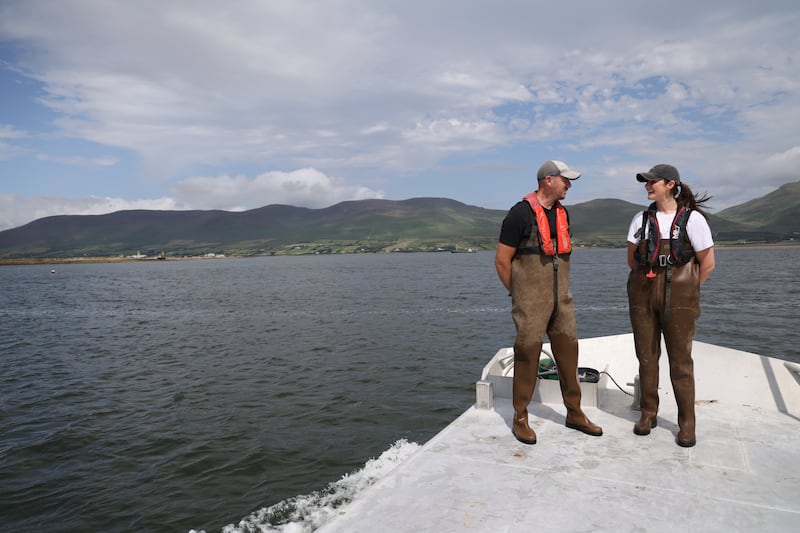 Siblings Sharon and Micheál Sugrue of Réalt na Mara Shellfish. Photo: Bryan O’Brien
“It was our way of getting to live in the place where we grew up, the place we love,” says Sugrue, who doubles up as a marine biologist, having spent time on the State’s Marine Institute research vessels, keeping an eye on the waters that are, right now, nurturing her crop. “We harvest wild Cromane mussels and farm Pacific oysters,” she says. “And we still fish for the native oysters too, when the season is open.” That fishing season, from September to April, also explains the idea of eating oysters only when there’s an R in the month. The rule doesn’t apply to farm-raised oysters.
“People often ask why we grow Pacific oysters on the Atlantic coast,” says Sugrue, explaining how overfishing, pollution and habitat loss led to a decline in Ireland’s native flat oyster populations. Pacific oysters, Crassostrea gigas, were introduced in the 1970s, and proved to be perfectly suited to the clean, nutrient-rich waters in this part of the Atlantic. They also grow well in farms, unlike the native oyster population, Ostrea edulis. Native oysters these days are, according to Sugrue, carefully managed, and while they are not at the levels they once were, regulations and stock management, through licensing and seasonal closures, are endeavouring to keep them viable for the coming generations.
So what is the difference? “Oysters reflect their merroir,” says Sugrue, introducing me to the concept of an aquatic version of terroir – the term used to describe how climate, soil and environment localise the tastes of food and wine. This means that while most consider the native round flat oyster to have a heavier, more mineral-driven flavour, the two oyster types will share some characteristics when growing in the same waters. “The flavour that our farmed oysters develop, due to the unique combination of our tides, plankton, salinity and Atlantic waters, is unmistakably Irish,” she says.
At this point, her brother Micheál walks up the beach to say the tides are right and it’s time to go. He and Casey pull their custom-made flat-bottomed barge, The Endeavour, close enough to step on, and we putter across to the sand bank to see where the magic happens. And there is a level of magic to it. According to the Centre for Environmental Humanities at Trinity College Dublin, the farming of oysters can be one of the most sustainable and environmentally restorative forms of food production. “They’re like trees,” says Sharon. “Both mussels and oysters take carbon from the waters. They get their nutrients from the water, there’s nothing added, and we get years out of our trestles and bags. Still, there is a lot of husbandry,” she adds.
Alighting from The Endeavour, I get to see this in action, as the team detaches each mesh bag of oysters from the rows of metal trestles to shake, or “tumble” them. This keeps the shells smooth and evenly shaped, and causes the oyster to grow a deeper cup, which can lead to a bigger bite inside. While the tides and winds will also help, the manual shaking is what brings additional quality and, as I lift a 10kg bag, I realise it would certainly keep you fit. Thinking of muscles (not mussels), I wonder about the reputation of oysters as an aphrodisiac. While not exactly scientifically proven, the idea persists thanks both to the high zinc content, which is involved in testosterone production, and the notion that they are, in the right hands, pretty sensuous to eat.
Back at Réalt na Mara, a line of bubbling water tanks is purifying the oysters, a vital part of the process before they are ready for sale. When a red tide comes in, the colloquial term of a tide overfull with harmful algae, caused by anything from heavy rain to warmer ocean surfaces to agricultural fertiliser run-off, the oysters will happily feast. Time spent in the clean water tanks washes through anything harmful to humans, which is also a reason always to buy your oysters from a reputable source, rather than pick them yourself – which is illegal without a licence in Ireland.
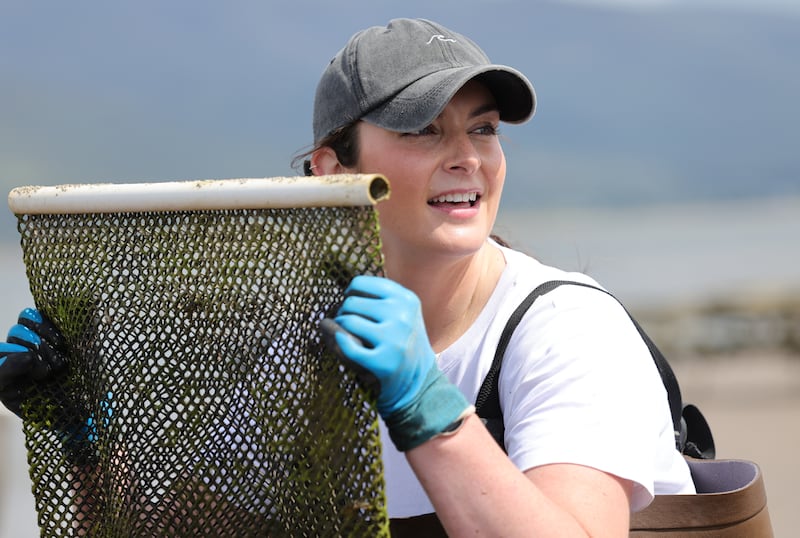 Sharon Sugrue of Réalt na Mara Shellfish in Cromane, Co Kerry. Photograph: Bryan O’Brien
 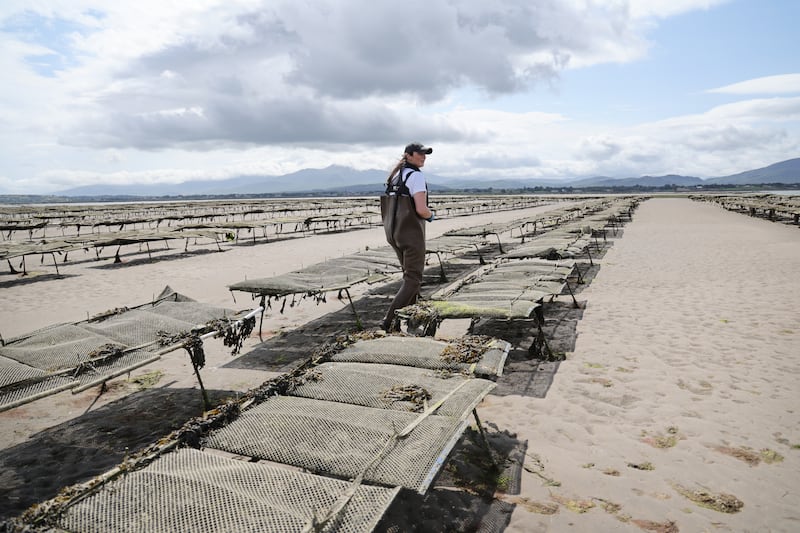 Sharon Sugrue of Réalt na Mara Shellfish in Cromane, Co Kerry. Photograph: Bryan O’Brien
 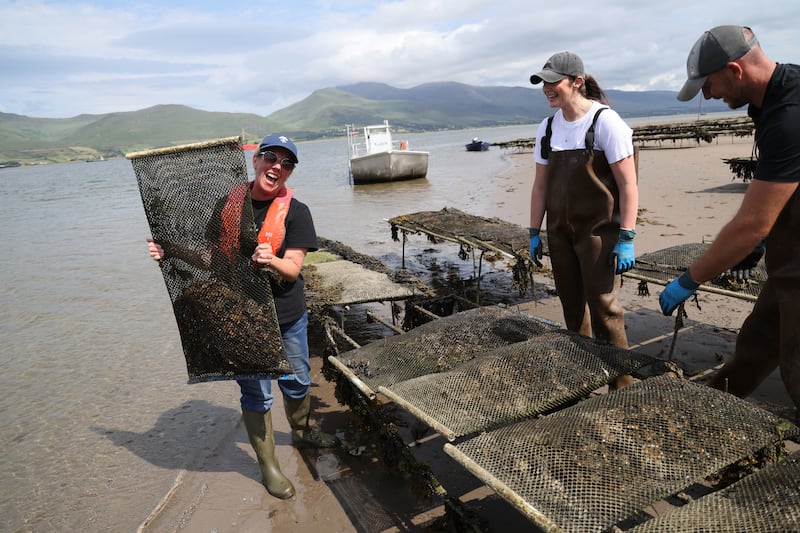 Gemma Tipton with the Sugrue siblings. Photograph: Bryan O’Brien
 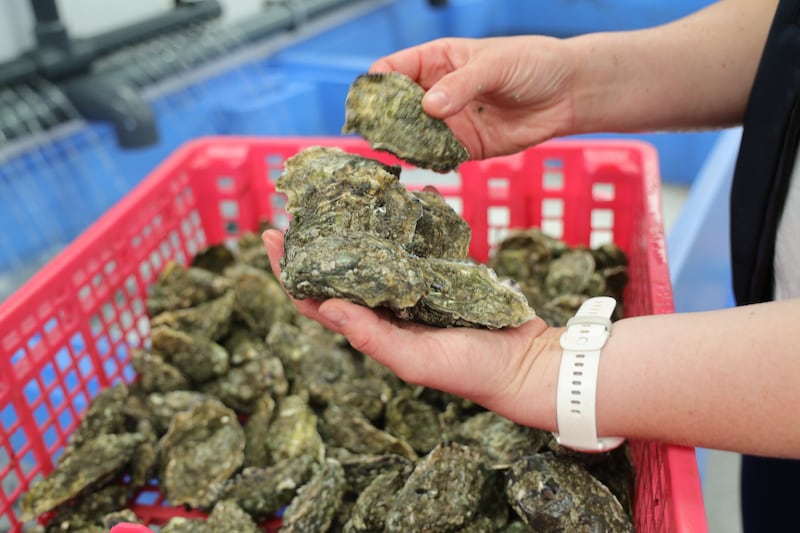 Réalt na Mara Shellfish oysters. Photograph: Bryan O’Brien
 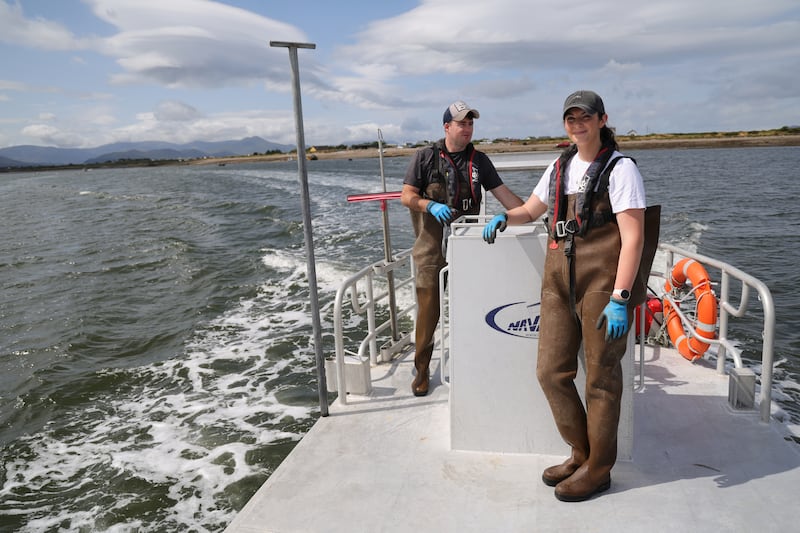 Sharon Sugrue and Emmet Casey of Réalt na Mara Shellfish. Photo: Bryan O’Brien
At this point a car appears down the sandy drive and a couple get out, apparently having done their research. French tourists, they are here to buy their dinner, and after some chat leave happily with their box of Cromane oysters.
Aphrodisiac myths aside, oysters weren’t always considered a delicacy. Back in the day they were so abundant and undervalued that they were thought of as peasant food. Writer Samuel Johnson fed them to his cat, Hodge, and a statue of Hodge in London shows him sitting on top of Johnson’s famous dictionary, beside a pair of empty oyster shells. Lobster and caviar, and more recently monkfish, were all likewise once thought of as food for the poor, which just goes to show how fashions, as well as tastes change.
Oysters are nonetheless an acquired taste for many, and we seem slower to pick up on this harvest of deliciousness here at home. Some 90 per cent of Réalt na Mara’s oysters are exported wholesale via France and The Netherlands, from where they go as far afield as Asia and the Middle East. “They’re very resilient,” says Sharon. They don’t even need to go into very cold storage. “They like seven degrees.” So what about serving on ice? “It’s preference. I was at an event in France where they were all served at room temperature.” The same goes for taste: “It’s like you preferring a certain type of wine. Someone might like a Cromane oyster, or a Carlingford, or a Galway or Sligo oyster. We have had oyster sommeliers here, who have said there’s a very cucumbery and umami flavour to our oysters.” She pauses. “It’s far from umami we were reared,” she laughs.
And then it’s time to get down to the serious business of tasting. Réalt na Mara has a dedicated tasting space, with shucking lessons (see goodfoodirelandexperiences.com) and plenty of dressings to try, but we’re heading across the peninsula to Kenmare’s Landsdowne Hotel, where owner Patrick Hanley has invited his friend – local chef and wildlife expert James Coffey – to give us a mini masterclass. The pair go way back, Hanley having been raised at the Landsdowne, then owned by his parents, Breda and Bobby Hanley.
After working in hospitality around the world, Hanley bought back the hotel from John and Francis Brennan in 2024, and now runs it with his wife, Aileen Hanley. Previously chef at the neighbouring Park Hotel, Coffey now works as a deer manager for Kerry and Cork, and is passionate about local food. He deftly demonstrates how to protect your hand with a tea towel, then insert the oyster knife into the hinge of the shell, and lever, lift and twist. A quick slide of the knife on the underside of the oyster cuts the muscle inside. A pro will then flip the oyster flesh over, although this isn’t strictly necessary.
For Coffey, and for Sharon Sugrue, there’s nothing like a fresh oyster with just a dash of fresh lemon juice, and forget about the idea of gulping it down in one go. If you don’t bite, you don’t get the full taste. Tastes in oysters have changed, and where once Oysters Rockefeller – baked oysters on the half-shell, topped with butter, herbs and breadcrumbs – was the height of culinary chic, these days it’s considered too heavy and rich, as is wrapping and baking them in pancetta for Angels on Horseback, and the like.
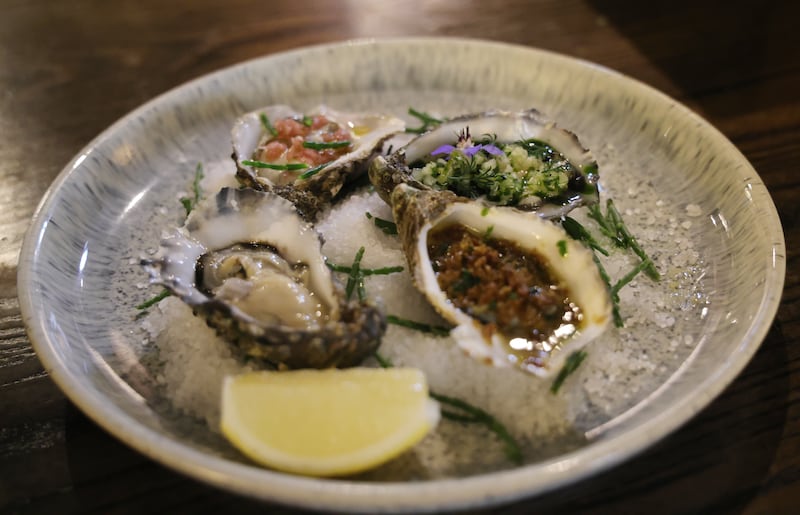 Réalt na Mara oysters at The Landsdowne in Kenmare. Photograph: Bryan O’Brien
 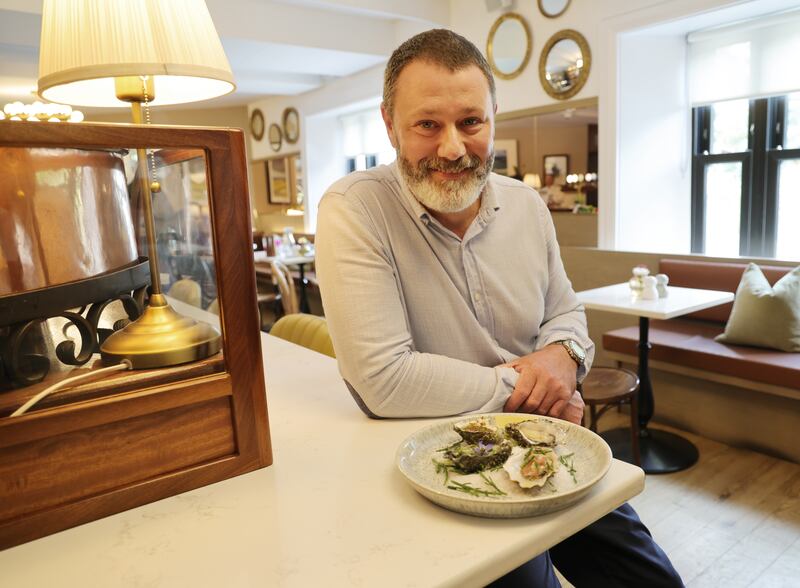 Patrick Hanley, owner of The Landsdowne. Photograph: Bryan O’Brien
 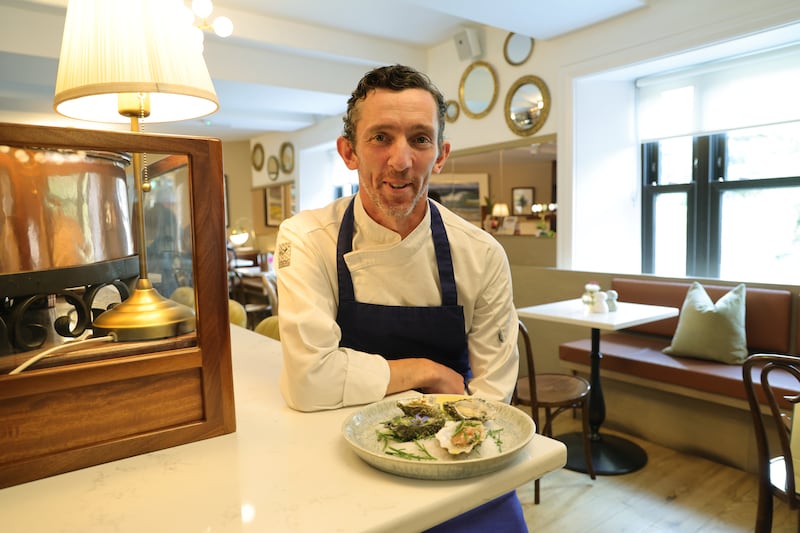 Chef James Coffey. Photograph: Bryan O’Brien
If you do prefer your oysters cooked, barbecuing is a surprisingly brilliant and simple suggestion. “Sit them in the campfire,” says Coffey. “The heat will pop the shell when it’s done, add a bit of butter, and you get the taste of the oyster, and the smokiness of the fire. With a nice glass of white wine, it’s lovely. Oysters have a delicate flavour,” he adds. “The key is to make sure the oyster taste stands out. Don’t mask it with other flavours.”
He whips up a zesty apple and cucumber topping, where the finely chopped ingredients are mixed with fresh dill, herb oil, white wine vinegar and lemon juice. Suddenly the cucumber note in the oyster comes to the fore, and it is delicious. Alongside this, I discover, my former go-to of a dash of Tabasco has been destroying the subtleties of what I’m eating. A very light breadcrumb and garlic butter topping adds crunch to another oyster, while there’s also a classic mignonette – chopped shallots with vinegar and black pepper – to try.
I don’t know if it’s the day out on the sand bank, with the taste of the salt air and sunshine in my mind, the glorious Kerry landscapes or the oysters themselves, but later, lying in my very comfortable Landsdowne Hotel bed, I realise it is up there as one of my most unforgettable meals. Perhaps that’s the true essence of farm to fork (sea to spoon?) – you’re eating memories as well as tasting the terroir. Merroir, even. And we are lucky enough to have it all, right on our doorsteps, whatever the number of Rs in the month.
Going off-menu
The Landsdowne Kenmare will source and prepare local foods, from oysters to venison, for guests on request. Give advance notice to make sure the foods are perfectly fresh.
Cromane Oyster Tours at Réalt na Mara include an on-land tour and tasting, and an oyster shucking lesson. The minimum group size is four people and the tour takes about 90 minutes. Cost is €75 per person. Discover this, and a wide range of farm to fork experiences, at Good Food Ireland (goodfoodirelandexperiences.com).
Gemma Tipton was a guest of The Lansdowne Kenmare hotel