
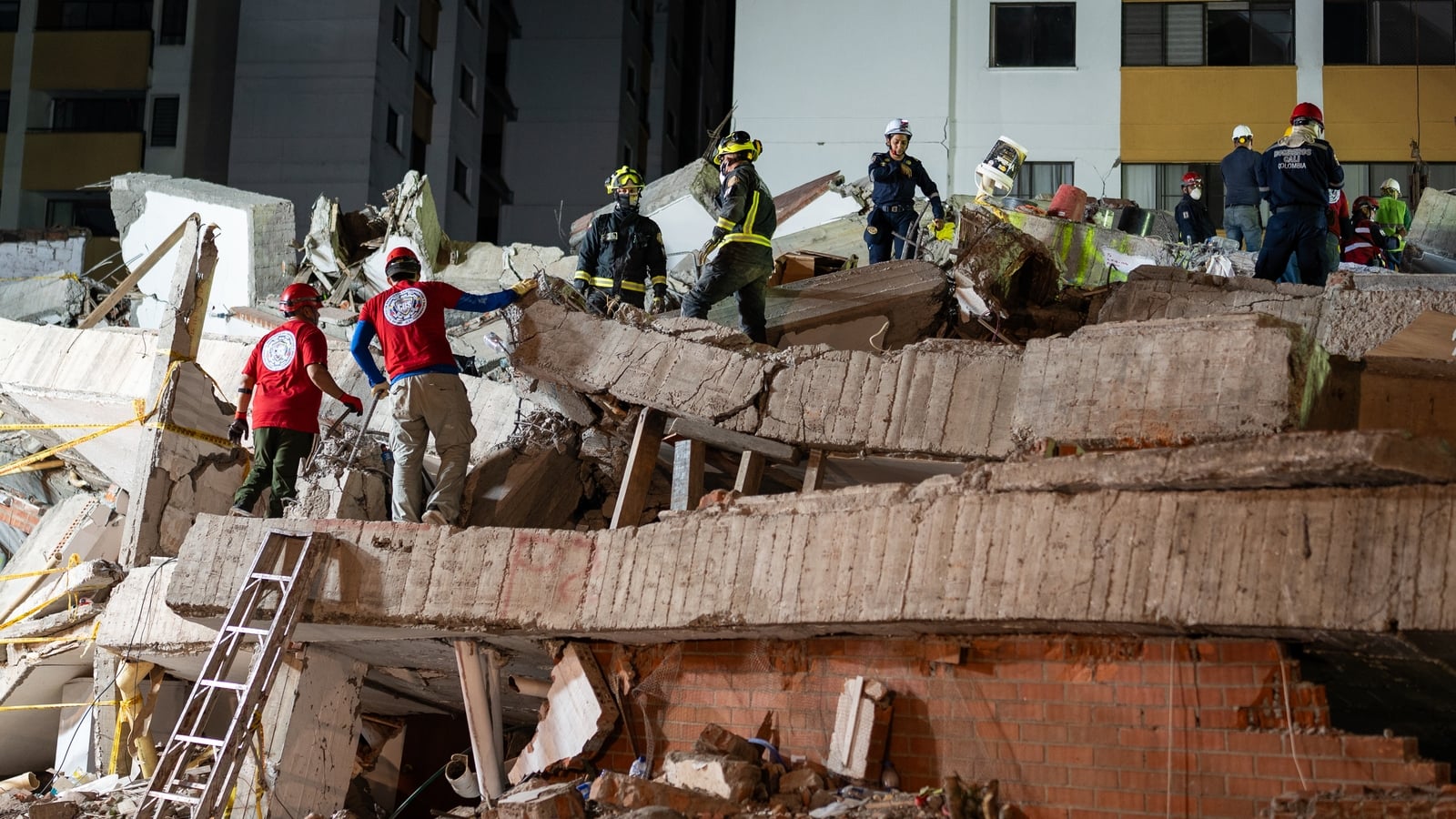
Colombia’s disaster relief chief has vowed to find the hundreds of people still missing after a massive earthquake, as rescuers dug through rubble following the end of a critical lifesaving period.
The strongest quake to hit Colombia this century devastated the western cities of Cali and Pereira and destroyed nearly 13,000 homes across the coffee-growing region and along the coast.
The 7.4-magnitude tremor struck on Monday, killing 281 people and injuring almost 4,000, President Abelardo de la Espriella told reporters, while 379 others remained missing.
Rescuers had little hope of finding more survivors, who are typically saved in the first 72 hours after an earthquake.
David Tamayo, head of Colombia’s disaster relief agency, acknowledged that the “likelihood of finding survivors is going to diminish”.
“But our commitment is to never stop searching… The order is to not rest until we find all the missing persons,” he said in a video posted by his agency late yesterday.
In Cali, many families that lost their homes sought refuge in makeshift camps set up in streets and parks.
Mayor Alejandro Eder said nine search-and-rescue efforts remained active, and called for silence in these areas so rescue workers could listen for signs of survivors.
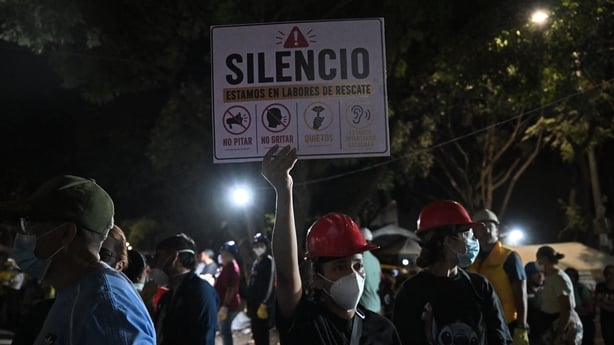
Rescue workers ask for silence as they search for survivors
‘Lost my home’
Mr De la Espriella has declared the disaster an “economic emergency” and announced three days of national mourning.
“We will do what is necessary,” the newly appointed leader said, vowing to “emerge again as a country and as a society.”
Javier Alzate, a 79-year-old psychologist, was trying to remove tiles and chunks of debris that were obstructing access to his damaged home in Pereira.
“It’s very distressing. Very sad. You work 40 or 50 years to buy a little house, struggling all that time to get it. I finally got it, and a few days later it’s gone,” he said. “I lost my home and my car.”
The impoverished Choco region on the Pacific coast also suffered immensely, with some of its remote communities yet to be surveyed.
In the neighbouring Valle del Cauca region, Governor Dilian Francisca Toro said officials were conducting a census of damaged and destroyed homes to determine which buildings could still be occupied.
“We have to begin working because people simply cannot bear staying out on the streets any longer,” she said.
“People are telling us: ‘If you give us the materials, we’ll do the work ourselves,'” Ms Toro said, describing plans for community-led reconstruction efforts.
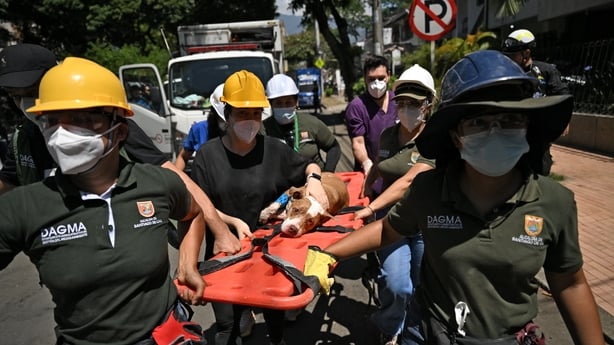
A dog named Renata is carried after being rescued from underneath the rubble in Cali
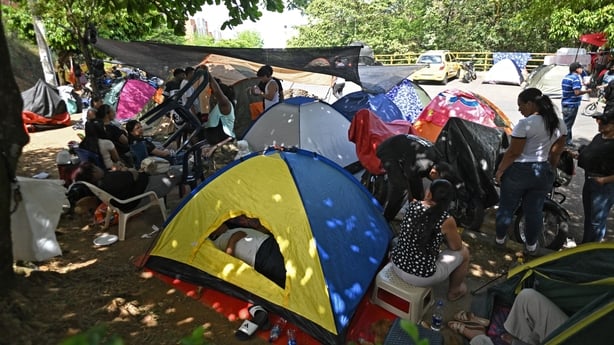
The government has estimated the quake destroyed more than 12,500 homes
‘Not alone’
Many Colombians have mobilised to help, bringing water, food and supplies to affected neighbourhoods, while long lines have formed outside blood donation centres.
Quake victims “are not alone, that is a message we want to convey,” one volunteer organising donations in the capital Bogota, told AFP.
“We are here giving what we can so that they at least have the most basic things,” she said.
A musician in Cali took to offering hugs to anyone who needed emotional support.
“We are going through a collective trauma, and I think the best way I could help was by giving away the energy I have and the vitality I have left,” he told AFP.
Colombia was preparing to receive international urban search-and-rescue teams from the United States, El Salvador, Ecuador and Israel, disaster authorities said.
Mexico’s President Claudia Sheinbaum has said that Colombia had refused entry to Mexican rescuers over a claim that they lacked correct certification.
De la Espriella’s administration is facing criticism over allegedly blocking rescue teams from countries with leftist leadership, but it has denied the accusation.
Meanwhile, the World Bank has announced that it had disbursed $200 million in emergency funds for the response to an earthquake in Colombia that killed more than 280 people this week.
In addition to the aid funds, the World Bank said in a statement that it had launched a “Global Rapid Assessment of Damages from Earthquakes (GRADE) to provide the Government with an early assessment of economic loss to help it prioritize aid and reconstruction efforts”.