
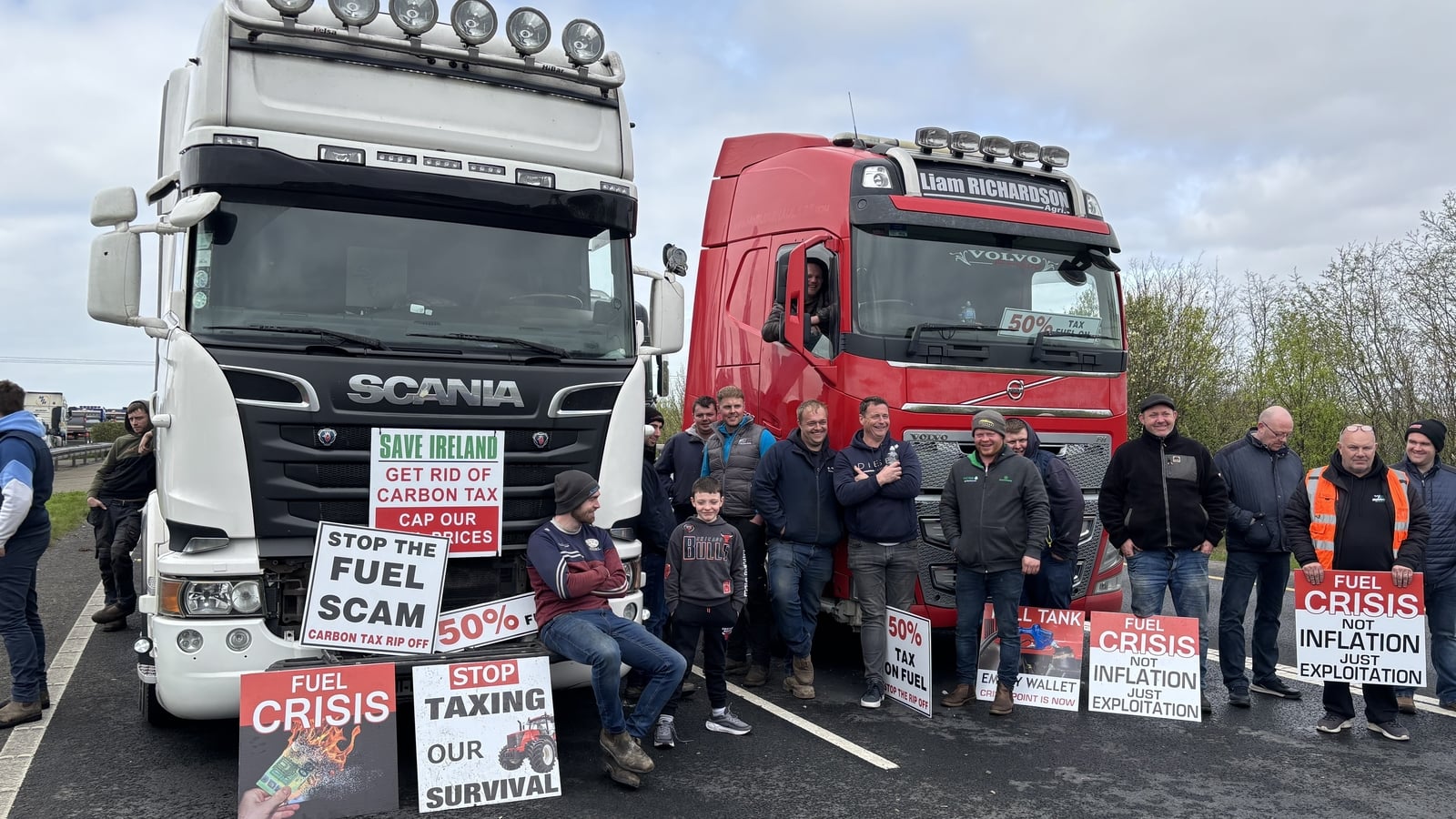
There’s never a good time to hike prices.
The Government had hoped that as the deadline looms to begin restoring excise on fuel that the price shock at the pumps would have eased.
But the continuing instability in the Middle East has shattered that expectation and the long hot summer has brought further difficulty as smaller crop yields will lead to food prices rising again.
This all means that there is serious political pressure on 1 September deadline for the first of four hikes to petrol and diesel.
Back in March, the Government signed off on a ‘temporary’ excise cut to cushion motorists, hauliers and farmers from the increases at the pumps.
But nationwide fuel protests in April meant the Coalition had to cave to demands for further deeper cuts with a date set for their removal at the end of July.
More lobbying and opposition pressure led the Government to declare that there would be no cliff edge to the removal of the cuts.
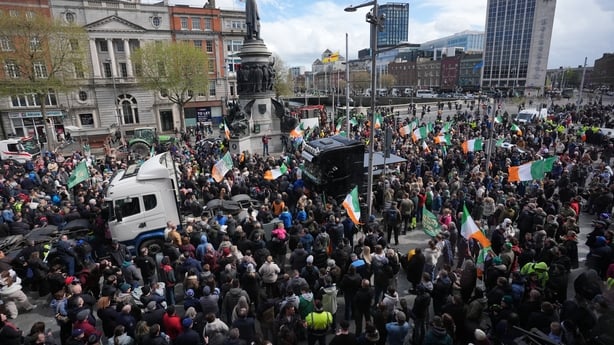
Farmers and hauliers blocked Dublin’s O’Connell Street during April’s fuel cost protests
And so, at the end of June, a schedule was announced for the restoration of excise reductions with gradual increases set for September, October, November and December.
This brings us to the current dilemma as the first of those dates looms into view, with representative groups and opposition parties renewing their calls for a further postponement.
The Government is grappling with the perennial political difficulty in removing a so-called ‘temporary’ cut.
Unsurprisingly the electorate is more focused on the immediate imposition of a price hike levelled by the Government rather than being bathed in gratitude for the temporary relief given by the excise cuts.
In addition, the tax figures revealed this week have laid bare the upside for the Government of the elevated fuel prices as the tax take has soared.
Department of Finance figures also show that €328 million was collected in VAT on diesel and petrol in the first five months of this year, with the vast majority of that collected in April and May.
The significant rise in fuel VAT receipts during those two months coincided with a jump in pump prices for motorists due to the Iran war.
The Government has rebutted the contention that it is drowning in excessive fuel receipts, pointing out that the support package since the outbreak of the conflict has amounted to over €1 billion – significantly larger than the increased VAT received by the Exchequer.
‘Wrong’ and ‘unfair’
Aontú’s Peadar Tóibín has pounced on the tax figures, accusing the Government of “taking record VAT despite the fact that we are in a cost of living crisis”.
“They’re benefitting while the customer takes the hit, this is wrong and it’s unfair.”
Road hauliers and farmers have also been out this week calling for the postponement of planned increases.
So, will the Government hold the line and drive forward with unpopular price hikes?
The official line is that no decision has yet been made and Ministers will keep everything under review, but there are signs of a splintering in Government thinking on the matter.
There is a view at senior ministerial level that if prices remain elevated, the timetable for restoration will have to be revisited.
However, it seems the coalition is determined to get the first (and largest) price rise over the line on 1 September.
On that date, petrol is set to rise by 9c while diesel will rise by 10c.
It’s probably not a coincidence that the first excise increase will happen while the Dáil is on recess, as this will reduce the political spotlight considerably.
But after that, the schedule for reversing cuts could be stretched out, according to some in the Government.
The thinking is that this would allow space for the Budget when the coalition has a good news story to tell with well-flagged income tax cuts.
In reality, there will never be a good time to reintroduce full excise and restoring the cuts will remain a challenge.