
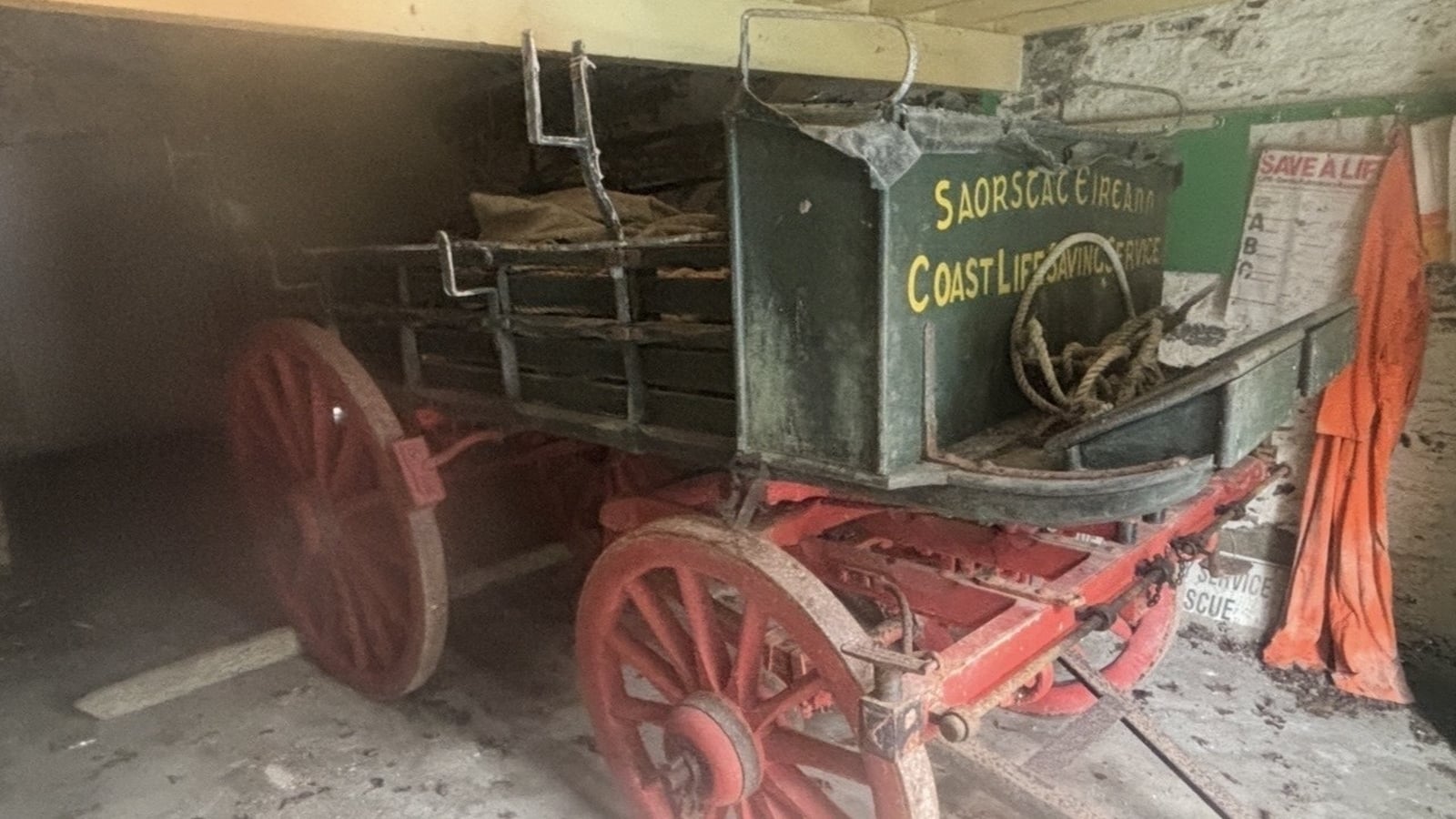
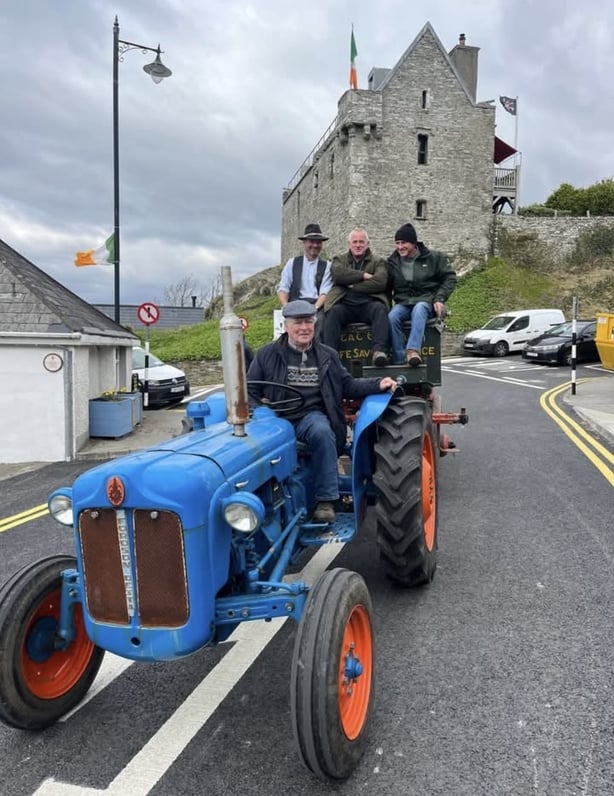
Every St Patrick’s Day in Baltimore, west Cork, a little piece of maritime history emerges from the darkness of the cove boathouse for a celebrated jaunt around the village.
The four-wheeled carriage was the cornerstone of the Coast Life Saving Service for more than 100 years, a forerunner of the Irish Coast Guard, and was known colloquially as the “rocket car” or “rocket rescue”.
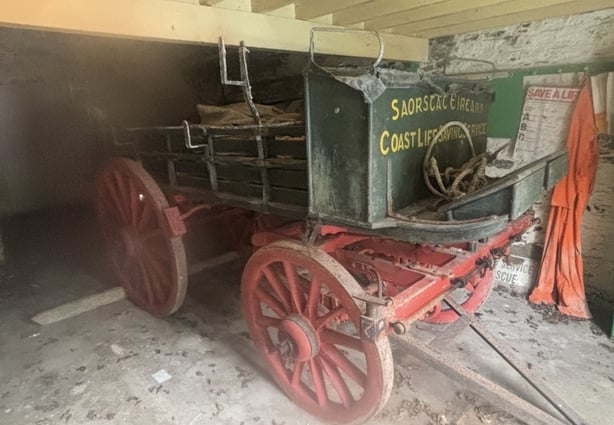
The Baltimore rocket car in its boathouse
In times past, the largest number of shipwrecks occurred when vessels came into “unplanned contact with the shore”, in other words hitting the rocks or running aground – often areas where it was too risky to send in a lifeboat.
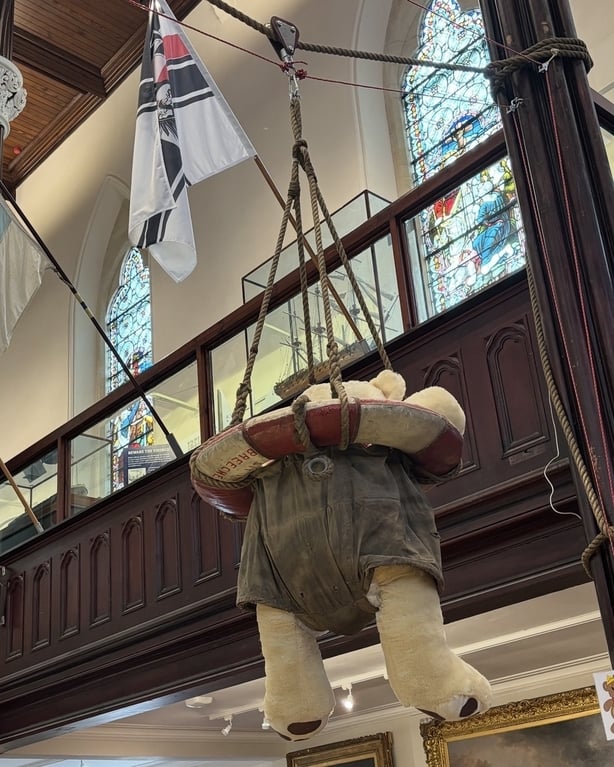
A breeches buoy, at the National Maritime Museum
The solution was to deploy the rocket car which had a gunpowder charge to fire a rope to the stricken vessel, and imperilled sailors could be brought back safely on a pulley system – known as a ‘breeches buoy’.
The apparatus was invented by Captain George William Manby, inspired by his witnessing a ship HMS Snipe run aground off Great Yarmouth in 1807.
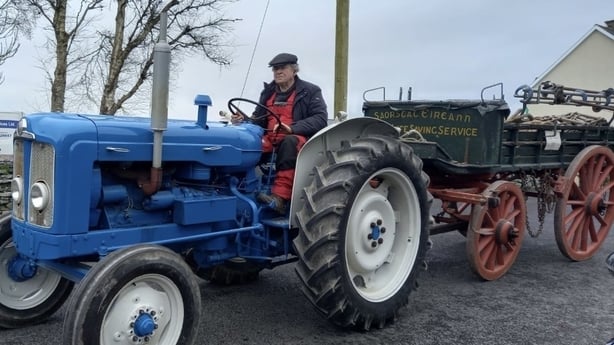
Ted O’Driscoll pulling the Baltimore rocket car
Ted O’Driscoll was a volunteer member of the rocket car crew in the 1970s, just like his father before him, and he’s a custodian of the village’s maritime history.
“It is looking very well, since I think it’s probably 1922 when we got the last lick of paint. But we’re lucky we have a shed here without any windows. Keeping it away from the sunlight actually has kept it in good condition.”
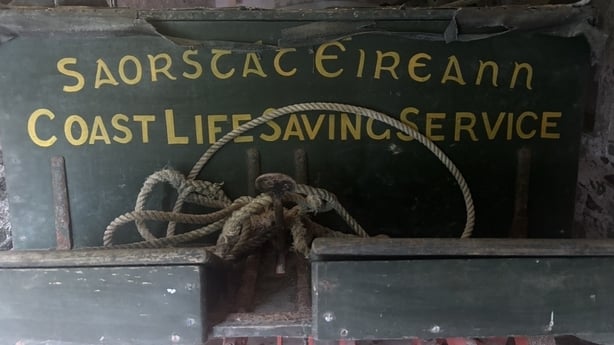
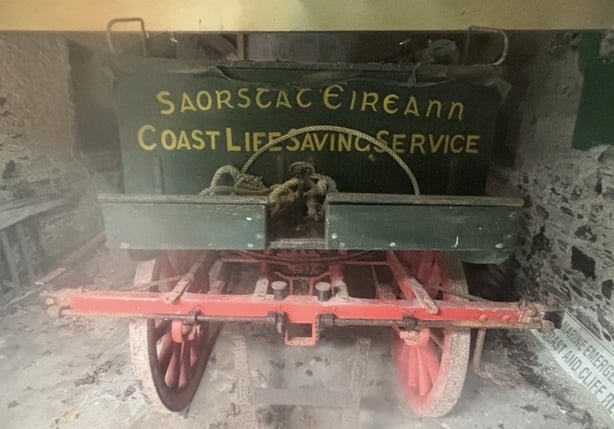
The rocket cart was painted green and “Saorstát Éireann” is emblazoned on the front in gold letters.
But standing beside Ted inside the Rocket House, on the cove, it was clear to me that the original colour was blue and red.
“They were instituted actually by the British, part of the Coast Guard outfit – prior to even 1880. And there were 52 or 53 around the coast of Ireland,” Ted explained.
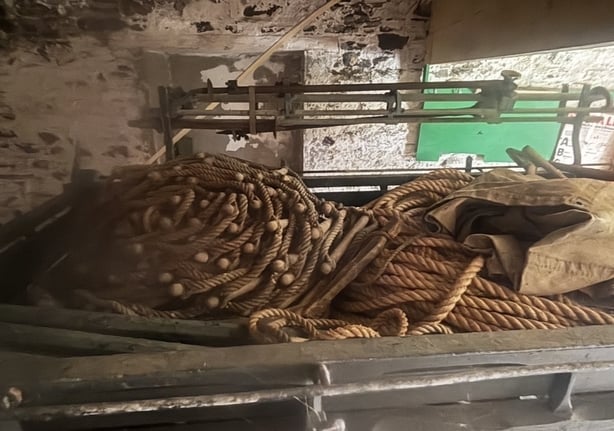
The rocket car still has its 200-metre rope and rope ladder
The rocket car still has its 200-metre rope, a rope ladder, and the explosive rocket which would propel the line from shore to sea.
Ted O’Driscoll handled the rockets regularly.
“They were big. They were about two feet long, four-inch diameter, and they were set up in that [tripod] with the three legs on it. That’s the actual gun.”
There’s a two-wheeled rocket in the National Maritime Museum in Dún Laoghaire, which was originally stationed in Greystones.
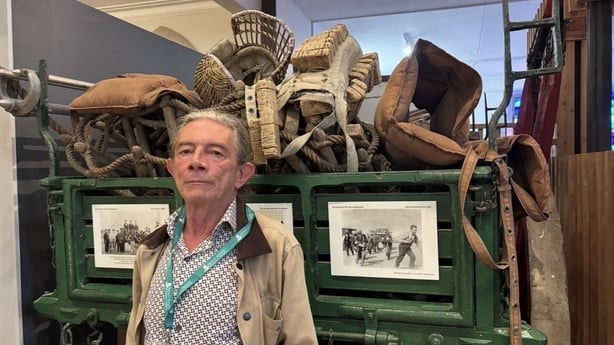
Gary Moore at the National Maritime Museum of Ireland
Mariner turned museum volunteer Gary Moore explained the firing mechanism: “The line was fired from… like a small cannon, with the line attached. So you just aim it at the ship, and then – boom – off it goes.”
Gary operated a similar device during his working life, getting a line to a stricken ship, which would be attached to the mast.
“If there’s no wind, it’s quite simple and straightforward. You just literally aim at your target. You aim slightly up, to give you maximum range, and then you pull the trigger. And the idea is to shoot the line across the ship… so they get a hold of it.
“If it’s windy, then you actually fire it downwind… the wind catches the line… and then the shell or the rocket just curves around. You need to know what you’re doing. But, practice makes perfect.”
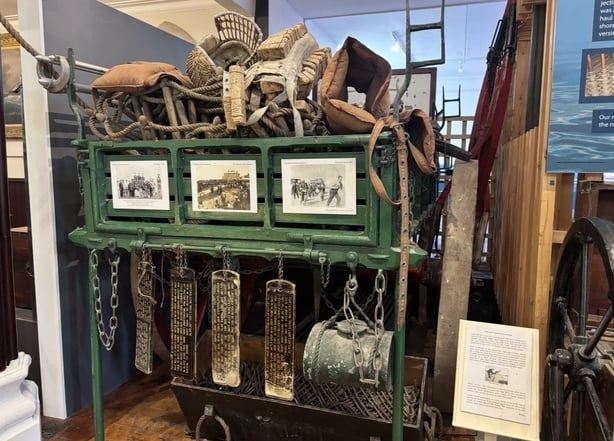
The two-wheeled rescue car in the National Maritime Museum of Ireland in Dún Laoghaire
The rocket car’s ladder was deployed when volunteers needed to scale down a cliff, which happened if a helicopter couldn’t operate effectively due to a down draft caused by the cliff face.
This coastal rescue service was staffed by local volunteers, as Ted explained back in Baltimore.
“There were volunteers – much the same probably as the lifeboat today, and but there was an exercise every quarter, spring, summer, autumn, winter, with an inspector. He was usually a retired sea captain or maritime surveyor.”
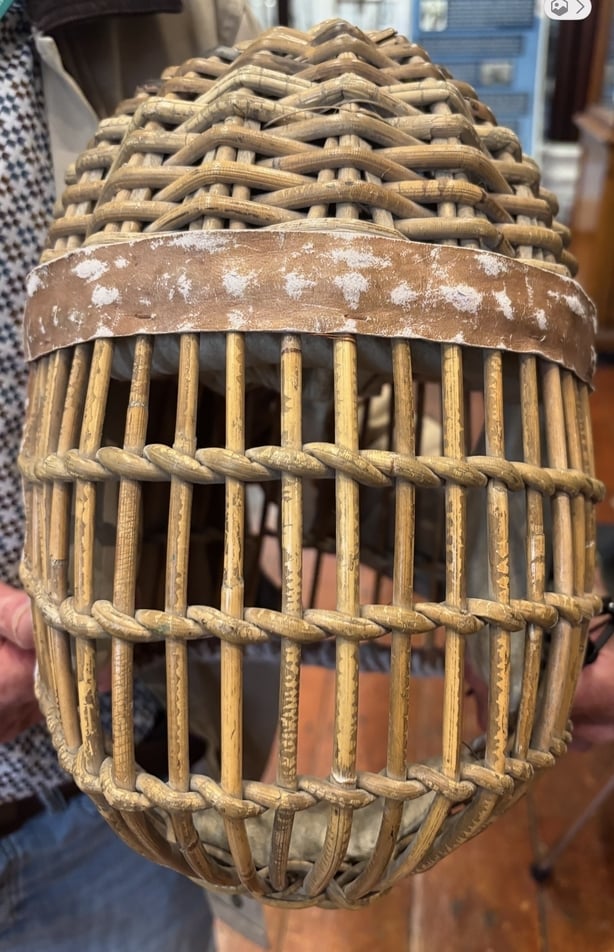
Protective headgear used by ‘rocket’ volunteers when scaling down a cliff face
The rocket car saved many lives, but in 1954, it also saved the integrity of the general election on a blazing hot May Day.
Elaine Loughlin, political editor of the Irish Examiner, said it was a significant intervention:
“It was a significant day and significant numbers of voters actually turned out. One district in Monaghan recorded 93% turnout. Can you believe it? I think that’s only something that today’s politicians could dream of.”
The weather was difficult in Dursey Sound, at the tip of the Beara Peninsula, and its churning seas prevented ferries from getting ballot boxes to the 6km-long Dursey island.
The Baltimore rocket saved the day, and Ted’s father was one of the nine or 10 volunteers called into action.
“My father was on it for years. He joined, I think, in 1932. They went over and down to Dursey. They set up their thing and shot the rocket across, and sent out the ballot box on the breeches buoy. They hung around all day until the people voted and brought it back in the evening.”
The Cork West constituency was a three-seater, and only around 200 votes separated the third and fourth candidates after the first count – Clann na Talmhan’s Florence Wycherley from Fine Gael’s Seán Collins.
While Collins ultimately prevailed, Elaine Loughlin says this was a constituency where every vote counted.
“Dursey Island recorded a population of 96 people back in 1951, just a few years before this 1954 election. And if they didn’t manage to get those boxes across the sea to be counted, we may or may not have had a different election result. We’ll never know.”
We need your consent to load this rte-player contentWe use rte-player to manage extra content that can set cookies on your device and collect data about your activity. Please review their details and accept them to load the content.Manage Preferences
By the early 1980s, technological change meant that the rockets effectively became obsolete.
Even Ted concedes the Baltimore rocket car was getting “very little real action”.
The National Maritime Museum believes the last deployment of a rocket car was at Slí Cheann Sléibhe, Daingean Uí Chúis, in 1982 when the Spanish owned MV Ranga went aground on its maiden voyage.
Kieran Cotter from the island of Chléire joined the Baltimore lifeboat in 1975 at the age of 17, and retired as Station coxswain in 2020.
“Well, in my time, the rocket wasn’t really operating, so I wouldn’t be kind of… I wouldn’t have the knowledge about who made that decisions. But I would say what happened was that the lifeboats became more sophisticated, and the helicopters took over from the rocket.”
That left the question: what to do with the rocket car?
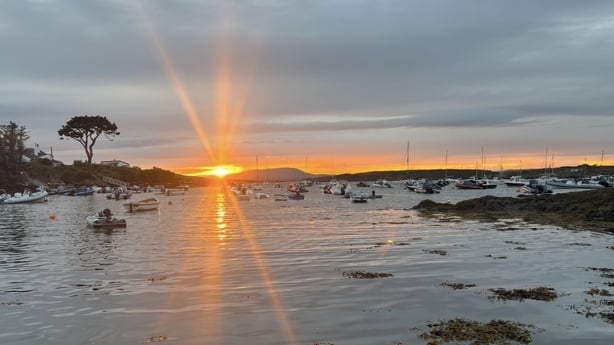
The cove at Baltimore, Co Cork
Ted O’Driscoll takes a dim view on how the authorities evaluated the situation:
“We’re very careless that way as a nation on minding our heritage. And when these were became obsolete, when modern methods came in, and this thing was disbanded in the ‘80s, and the coastguard was formed, these things were more or less dumped, and there might be, I’d say, less than a dozen left in the country.”
The State may have wanted to get rid of the Baltimore rocket, but the people of Baltimore didn’t want to let go of their heritage.
I asked Ted about how the village’s rocket rescue went “missing” for over a decade.
“I wouldn’t say it went missing. I think most of us knew where it was! The house, of course, is owned by the OPW, and there was an order – this is 20, 25 years ago – and they wanted to clear all this stuff out of the house. Thanks to a few generous people around with sheds and garages, we were able to put it in.”
On 17 March next, the cherished rocket car will reappear on the streets of Baltimore.
No doubt, Ted will be on hand to ensure its tour of the village goes smoothly, before the precious piece of maritime history is placed carefully back into its boathouse, on the quiet Rocket Slip in the cove, where generations of local children still fish for crabs.