
Analysis: The shift to the autumn months affects us in both obvious and subtle ways, many of which has been observed for hundreds of years
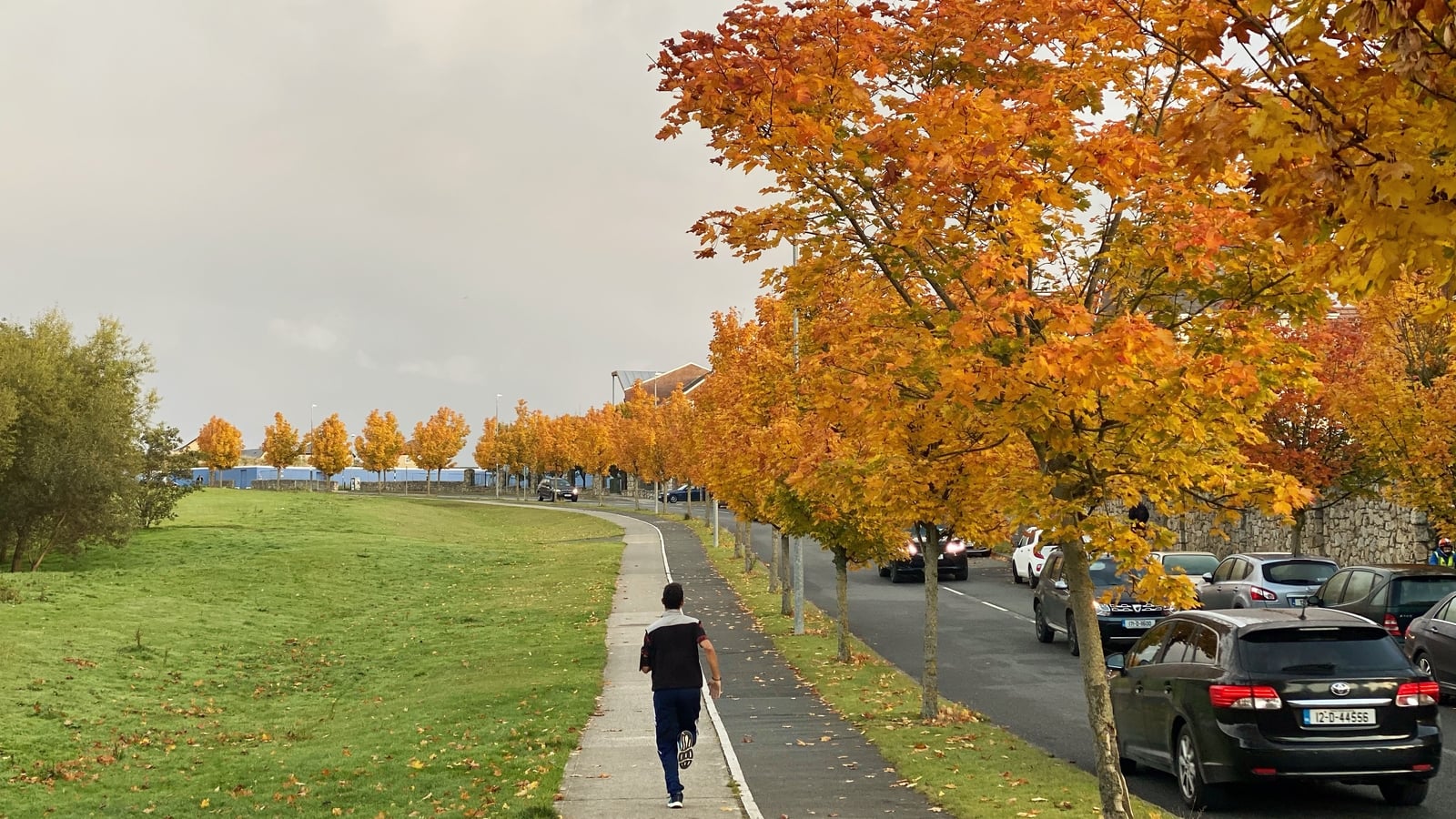
With the arrival of September, you might have felt things are a little different. It might be kids returning to school, the temperature a little cooler or the fact that rain has returned. Your mood might feel a little different as a result. In reality, the shift to the autumn months affects us in both obvious and subtle ways, many of which has been observed for hundreds of years. Here are the many ways the move to the autumn period affects us in our day-to-day lives.
We need your consent to load this rte-player contentWe use rte-player to manage extra content that can set cookies on your device and collect data about your activity. Please review their details and accept them to load the content.Manage Preferences
From RTÉ Radio 1’s Oliver Callan Show, life design coach Caoimhe de Fréin on why so many of us feel ready for a reset after the summer and treat September as the new January
Changes in weather and daylight
A mainstay of Irish small talk, the weather changes can have a substantial effect on our mood. What does happen isn’t necessarily that sunshine is good, and rain is bad, but how our own personalities interpret the weather.
Some might miss the hot sunny days while others might be more at home being indoors on a wet day, all of which depends on our temperament, says Trevor Harley, emeritus professor of Psychology at the University of Dundee,
“It’s not the case that sunshine is good and rain is bad; both are good. We just have to learn to look for different things and to understand that different weather brings different conditions that affect us in different ways. When it’s sunny, people feel more creative, and when it’s cloudy, they’re able to concentrate and do more.”
We need your consent to load this rte-player contentWe use rte-player to manage extra content that can set cookies on your device and collect data about your activity. Please review their details and accept them to load the content.Manage Preferences
From RTÉ Radio 1’s Drivetime, how much does the weather affect our mood?
Alongside the weather changing, you may have noticed that the nights are starting to get darker a little sooner, with night time arriving between 9pm to 10pm in September. Kevin Nolan, lecturer in Physics at TU Dublin, explains that this is due to Ireland’s position in the Northern Hemisphere, meaning we have to adjust more to seasonal change than regions further south.
Nolan adds that from late May to late July, Ireland doesn’t officially have night – which is when the Sun drops more than 18 degrees below the horizon – instead we have astronomical twilight. When the transition from summer ot autumn happens, both the length of day and the height the Sun reaches above the horizon each day change.
“At mid-summer, the Sun reaches a height of over 60 degrees above the horizon by noon, but in mid-winter it rises only 13 degrees above the horizon by noon,” he explains. “And in autumn on the Autumn Equinox it rises about 36 degrees into the sky by noon.”
We need your consent to load this rte-player contentWe use rte-player to manage extra content that can set cookies on your device and collect data about your activity. Please review their details and accept them to load the content.Manage Preferences
From RTÉ Radio 1’s Drivetime, should we scrap daylight savings to cut costs?
Nolan also highlights that when the Sun rises only 13 degrees above the horizon, all sunlight and solar heat must pass through at least four times as much atmosphere to reach us on the ground as when the Sun is at 60 degrees in the sky during summer.
“So not only are we seeing the Sun lower in the sky, but we are only getting a fraction of the light and heat it can deliver to us because it has to pass through so much atmosphere – a significant contributor to the days getting colder as autumn and winter approach,” he added.
Our sleep patterns
Unsurprisingly, changes in daylight and temperature affect our sleep. In fact, the shift to darker, colder days can help some people fall asleep faster, says Professor Samantha Dockray from the School of Applied Psychology at UCC.
We need your consent to load this rte-player contentWe use rte-player to manage extra content that can set cookies on your device and collect data about your activity. Please review their details and accept them to load the content.Manage Preferences
From RTÉ Radio 1’s Morning Ireland, How does sleep affect your mental health?
“As it gets darker as we move into autumn, the shorter days and longer periods of nighttime darkness can support the body’s natural sleep processes by increasing melatonin production, which may help some people fall asleep more easily and sleep slightly longer,” she says.
She adds that seasonal changes in light can influence both melatonin, a hormone that helps control your sleep-wake cycle, and cortisol, a hormone that keeps people alert. Less evening light supports earlier melatonin production than in summer. “This increase in melatonin can increase how sleepy someone feels, and so this leads to an earlier bedtime, which, in turn, often means a longer time spent asleep, as the mornings are darker as well”.
However, while we can naturally fall asleep faster, social patterns and work and school demands also change during that period. Also, said effects aren’t experienced equally either. Children and adolescents are more likely to experience sleep disruption when school starts, while adults usually have less variation in their patterns across seasons because of a consistent work schedule.
We need your consent to load this rte-player contentWe use rte-player to manage extra content that can set cookies on your device and collect data about your activity. Please review their details and accept them to load the content.Manage Preferences
From RTÉ Radio 1’s Drivetime, how much does the weather affect our moods?
“For some people, fewer hours of daylight can also contribute to worsening mood, excessive sleepiness, fatigue and changes in their appetite, and for people who have long-term sleep disruption or insufficient sleep, there is an increased risk of poorer mental and physical health outcomes over time,” adds Dockray.
“It’s important that we remember that for most of us, we adapt as the season changes, and although we might have a few weeks of adjustment, we do adapt. As the summer draws to a close, people should pay attention to making the adjustment as easy as possible and allow time for an earlier bedtime,” she concluded.
What we spend money on
Unsurprisingly, autumn can change our spending habits. According to Dr Oliver Browne, lecturer in accounting at UCC, there is generally a renewed sense of planning, as the new school year feels like a new calendar year for many.
School is one place where spending shifts toward essential items such as clothes, shoes, stationery, and bags. Likewise, savings ramp up after the summer as people expect to increase spending on school-related items and Christmas shopping. “Any debt incurred over the holidays in the summer often gets increasingly paid off in anticipation of a large Christmas spend,” Browne says.
We need your consent to load this rte-player contentWe use rte-player to manage extra content that can set cookies on your device and collect data about your activity. Please review their details and accept them to load the content.Manage Preferences
From RTÉ Radio 1’s Drivetime, Barnardos report finds parents are routinely spending €450 on digital devices for school
Perhaps the crucial changes come from our food intake and fuel usage. The shift from summer to autumn means we move away from salads and light meals to hearty warming meals with greater proportions of beef, pork and whole chicken.
“This is often called the ‘cosy effect’ and can be evident in buying blankets, fleeces and ‘cosy’ gear as we move from outside to inside,” explains Browne. “September often comes with a healthy kick for many, where you plan to eat healthier and exercise more. By October, normal service often resumes as the increased traffic in commuting and school runs become normalised.”
With fuel and electricity, spending often increases as temperatures drop and rain becomes more frequent, with Browne noting “the heating and fires come back on and the dryer runs more often,” he said. “The increased commute time often has an associated fuel cost; a modern car in the city with less idling may be negligible, but country school runs can add significant cost.”
We need your consent to load this rte-player contentWe use rte-player to manage extra content that can set cookies on your device and collect data about your activity. Please review their details and accept them to load the content.Manage Preferences
From RTÉ Radio 1’s Ray D’Arcy Show, a guide to getting your home cosy as the winter rolls in
The Central Statistics Office (CSO) has tracked changes in consumer spending since its foundation 77 years ago. Tommy Allen is a Statistician in the Enterprise Division of the CSO and Anthony Dawson is a Statistician in the Prices Division of the CSO and they explained what the main changes are.
For business, September marks a change for consumers which companies match. “September marks a transition point in consumer behaviour in some sectors captured by the Retail Sales Index,” says Allen. “It represents the end of a relatively static period of summer spending on things such as clothing and footwear, pharmaceutical and cosmetic items, and even purchases in non-specialised stores such as supermarkets.” From October on, he adds, sales volumes in these sectors will trend upwards until the end of the year.
In terms of prices, Ireland typically sees the impact of the return to school and third-level education on the Consumer Price Index, says Dawson. “Looking back at 2025, we saw a 4% increase in the price of education services when compared with 2024. This was driven mainly by higher college costs. We also saw a slight decrease in the cost of textbooks in 2025, which may be due to the expansion of the free book scheme from primary schools to second level.”
We need your consent to load this rte-player contentWe use rte-player to manage extra content that can set cookies on your device and collect data about your activity. Please review their details and accept them to load the content.Manage Preferences
From RTÉ Radio 1’s Today with Claire Byrne, the seasons and folklore
Autumn in folklore
Irish history and folklore have recognised the transition between seasons since pagan times. The autumn equinox marks the end of the year, with September 29th, or Michaelmas, marking the close of the year.
Writing on this topic, Marion McGarry, art historian and lecturer at Atlantic Technological University, mentions that the Autumn equinox, which will happen this year on September 23rd, marks “a brief period of ‘balance’ between daylight and darkness in both the spring and autumn.”
“The so-called Celtic calendar contains the seasons of Imbolc, Bealtaine, Lughnasa and Samhain, the festivities of which were dominated by agricultural custom,” she wrote. “The traditional Irish calendar uses this as its basis and is additionally peppered with timely events approximately every six weeks. Some of these are Christian (Easter and Christmas) which gave occasion for rest and celebratory feasting, and most importantly prompted people to pause to reflect.”
We need your consent to load this rte-player contentWe use rte-player to manage extra content that can set cookies on your device and collect data about your activity. Please review their details and accept them to load the content.Manage Preferences
From RTÉ Archives, the Autumn Equinox At Loughcrew in 2005
“There is a strong correlation between the autumn equinox and the festival of Michaelmas, a Christian feast day celebrated on September 29th, just a few days after the astronomical event of the equinox, which marks the beginning of autumn in the Northern Hemisphere. Michaelmas was also a day that heralded, most appropriately for RTE Brainstorm writers, the beginning of the academic year.”
So if you find yourself feeling a little differently during this period and can’t pinpoint why, remember that it’s not just you. It’s something we all experience.
Follow RTÉ Brainstorm on WhatsApp and Instagram for more stories and updates
The views expressed here are those of the author and do not represent or reflect the views of RTÉ