

‘Diagnosis Duality – the Seen, Unseen and Everything in Between’ is the title of a new awareness drive by the Marie Keating Foundation
Conflicting emotions can sit side by side during and after a prostate cancer diagnosis, but they are not always visible to the people around us.
That is the message of a new campaign by Marie Keating Foundation to mark Blue September, an international awareness initiative held every September to promote men’s health.
‘Diagnosis Duality – the Seen, Unseen and Everything in Between’ explores these different feelings that can coexist through five pairings: Alive / Angry; Free / Fear; Grateful / Grieving; Delighted / Detached and Strong / Shaken.
Around 4,500 men are diagnosed with prostate cancer in Ireland each year. Excluding non-melanoma skin cancer, it is the most common cancer diagnosed in men in Ireland.
Prostate cancer survival in Ireland has improved substantially over the past three decades. According to the National Cancer Registry Ireland, age-and-stage-standardised five-year net survival has increased from 76 per cent for men diagnosed in 1994–1998 to 97 per cent for those diagnosed in 2019–2022.
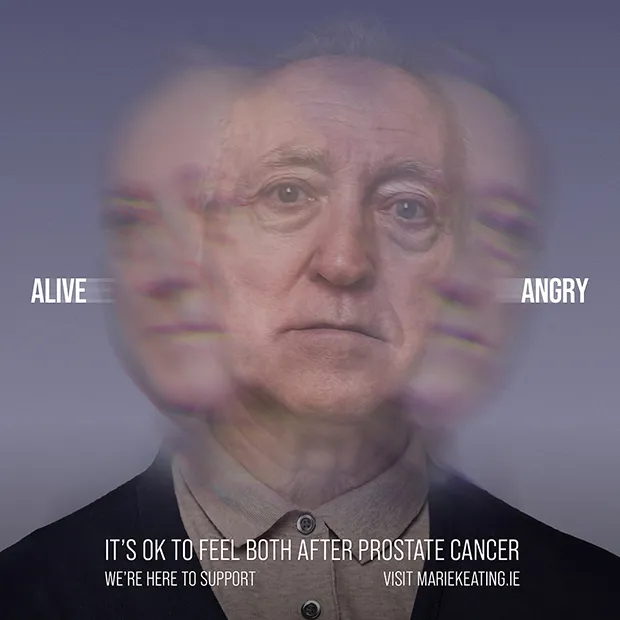
However, the impact of the illness on a man’s life can continue to affect them, resulting in conflicting emotions.
“One of the things we see when supporting people affected by prostate cancer is that there isn’t one ‘right’ way to feel,” said the charity’s director of nursing, Helen Forristal.
“It can be a huge relief to have finished treatment or to have received good news after treatment, while at the same time feeling worried about your future. You may feel angry that you already have incontinence or early signs of erectile dysfunction, or simply anxious about the overall effects and not quite feel like your old self. For people living with prostate cancer, those feelings can change over time too and fluctuate.”
She added: “The impact of a diagnosis doesn’t always end when treatment does, and it isn’t always visible to the people around you. That’s why it’s so important that we make space and be open to honest conversations about how people are really doing and make sure they know that support is there if and when they need it.”
The Marie Keating Foundation also hopes to encourage men to understand their prostate cancer risk and talk to their GP about PSA testing.
Prostate cancer can develop without obvious signs or symptoms. Family history is an important risk factor. Men are around two and a half times more likely to develop prostate cancer if their father or brother has had the disease. Inherited genetic factors, including BRCA2, and being overweight or obese can also increase risk.
The Marie Keating Foundation advises men to talk to their GP about their individual risk and PSA testing from age 50, or from 45 where there is a family history of prostate or breast cancer.