
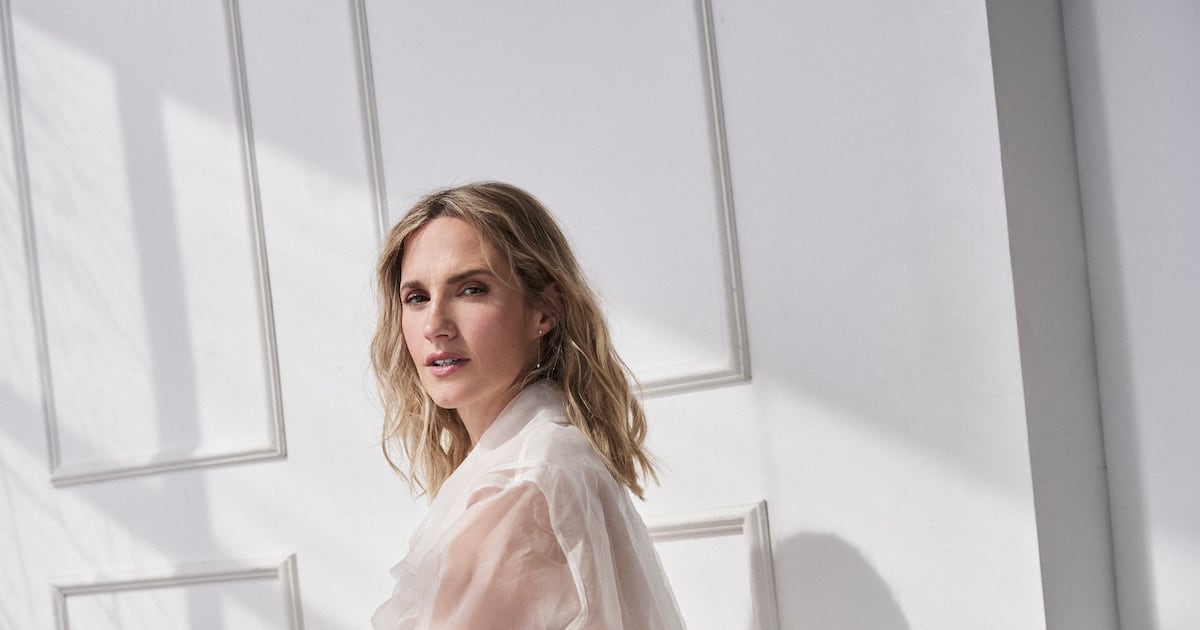
Ruth Bradley loves her character in Slow Horses. At one point, she “fell in love” with her. “We put this thing out there, a ‘this is who I am’ to the world, but actually we’re all just kind of babies who grew up and want to be loved,” she says of Emma Flyte, MI5’s head of security in the Apple TV spy drama. It’s a dream job for the award-winning Irish actor, not least because in the upcoming sixth season she gets to show another side of Flyte: the messy side.
Indeed, the more this apparently strait-laced woman orbits Slough House, the MI5 fringe office led by dishevelled Jackson Lamb (Gary Oldman), the closer she seems to resemble the “losers, misfits and boozers” who work there. Bradley, in her third year on the show, finally has the chance to give glimpses of the “real Flyte” – the one who is not quite suited to the corruption and cover-ups of the Park, the show’s shiny intelligence headquarters, after all.
“She keeps coming up against people who want to do underhand things, but she really wants to go for the truth, which is actually more Slough House. So this season we see her being herself much more. We get to see who this person is behind closed doors.”
In one episode, a discombobulated Flyte kicks back on the sofa with a glass of wine. “In the script, I think it was vitamin water or something, and I said, ‘No, guys, she’s been [spoiler]. In the books, there’s talk about her drinking beer with chasers, and we hadn’t seen much of her drinking, and I kind of loved the idea that she was so judgmental of Lamb because in real life you always judge people who remind you of yourself.”
Bradley was a fan of Slow Horses before she was in it. Part thriller, part comedy, Apple TV’s pacy adaptation of Mick Herron’s series of books resembles “an old-school, prime-time show” in its appeal, while also commanding the ample budget (there’s plenty of expensive location filming in central London) and high-calibre cast typical of the streaming age. She would play Flyte forever if she could, she says, speaking over Zoom from her home in north London, where she lives with her partner and two young daughters.
The role demands lots of training for various gun-wielding action sequences, which this season involves some “horrible sprinting on a sandy beach”, where Flyte and most of the Slough House gang end up. “We were in Suffolk, all living in this beautiful little village. It was like a gorgeous holiday, and then we’d go and do our sprinting.”
Being away on location with the cast and crew was a brilliant bonding experience, especially with costar Hugo Weaving – “he’s just like the wonderful godfather of sociability” – on hand, though the schedule was intense. One weekend, they took a break from the beach filming to fly over to what was then known as the Sag awards in Los Angeles, where the cast, including Bradley, were nominated in the drama ensemble category.
“We all got to get in the plane together and catch up again and hang out with Gary, who lives over there, and it was just really gorgeous,” she says. She likes this dimension of the job. “I do take the work very seriously, but it also has to be fun, you know. You’re getting dressed up and nice people come and do your hair, and you have a lovely chat with the people doing your make-up, and it’s just this really enjoyable time.”
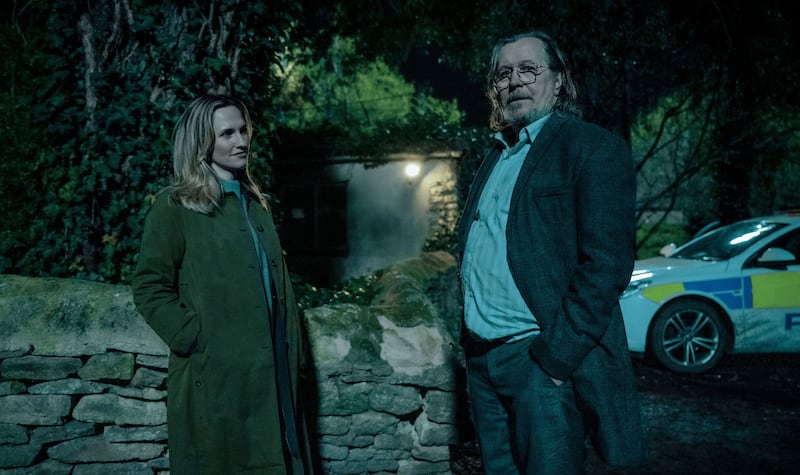 Ruth Bradley and Gary Oldman in Slow Horses. Photograph: Apple TV
As the eldest daughter of Irish actor Charlotte Bradley, she grew up understanding that the acting world isn’t always as glamorous as this. “I knew what the reality of it was. I wasn’t thinking, ‘Oh, I’m just going to be on the red carpet and be a millionaire.”
And yet she also can’t remember a time when she didn’t want to act. Born in Dublin, she spent some of her early years in Newfoundland, Canada, but was raised mainly in Killester and Clontarf, with her parents separating when she was 12. She was just six months old when she was brought to her first rehearsals for Charlotte’s work with pioneering Dublin theatre company Passion Machine.
“Now that I have kids, I think of what they’re like at six months, when they’re just taking everything in, ingesting, and I do wonder. Because when people ask me when I thought I wanted to be an actor, I’m like, ‘I just always did.’ There was never any other thought in my head, and there never has been since.”
When she was eight, Charlotte was performing in a Passion Machine production called Buddleia, which had a cast of 30, and ended up touring to London and Warsaw. “There was one scene with a young couple and their daughter in the bed, so my mother just said ‘Oh, Ruth can do that’, and I was delighted. Since day dot I’d been saying when can I act, when can I be on the stage?”
No longer would she have to be content with just watching rehearsals while pretending to do her maths homework. “I had one line, and my line was ‘Mammy’, but it was amazing.”
She was about 15 when she started acting “properly”. Charlotte, who later played her mother in the 2006 BBC drama The Innocence Project, was always supportive of her career – Ruth’s younger sister Róisín Murphy is also an actor, and brother Ferdia works in the industry – without being pushy. “She was the opposite of a stage mom. She was always very much like, ‘You need a childhood. You’re not getting an agent until you’re at least 16.’ I think the second I turned 16, she let me do it, but she was right. I was so obsessed with it.”
After going to Trinity College Dublin “for five minutes”, she upped sticks for London aged 18, keen to make her mark. “I think the beginning, for me, was the toughest because I moved here as a kid, really, and I’d worked in Ireland but I’d never experienced a bigger industry and massive capital city,” she says.
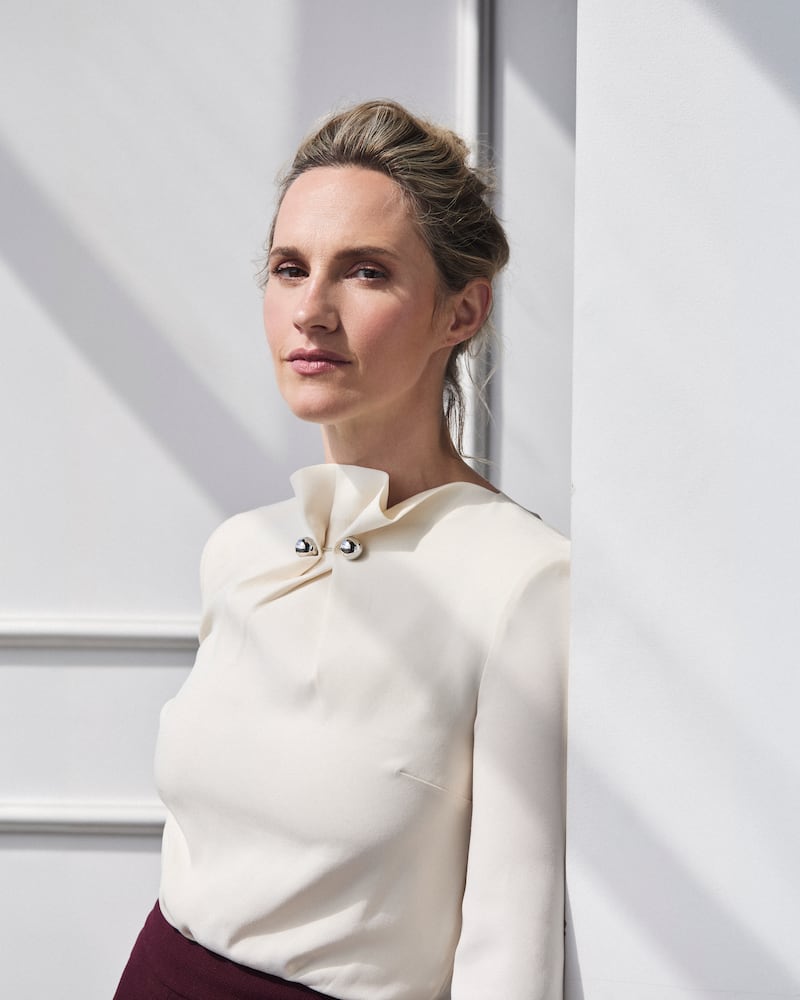 Ruth Bradley: ‘If you’re working on something you don’t believe in, it’s hard to do your best work.’ Photograph: David Reiss
Figuring out “who you are and how you’re supposed to operate” in a world geared towards secure, regular income was “tricky”, as was getting her work-life balance right. “Initially I thought I needed to be obsessing over acting and reading acting books. It took me years to realise that maybe that’s not what is good for me.”
Over the years she has learned to think of her career as a marathon and become at peace with the idea that the right thing comes along at the right time. “I’m much better at surrendering to it and trusting it. But, really, the older I get, the more I think there aren’t many downsides. I’ve been very lucky, you know? And a lot of it is just luck.”
Luck, but also talent. Even viewers who haven’t seen her in Slow Horses will probably have caught her in something: Bradley is one of those quietly gifted actors who inhabits her screen roles to such an extent that people are sometimes surprised to discover that Flyte is played by the same person who was the no-nonsense teacher who flirts with Roy Kent in Apple’s Ted Lasso or, say, the status-revelling wife of Dominic Cooper’s grasping solicitor in the BBC’s The Gold.
Others will remember her as normality-craving Mary in RTÉ ratings phenomenon Love/Hate, in which her assured performance made her a standout in a cast replete with rising stars. Irish people living abroad still bring up the show with her all this time later, she says.
[ Gun play: how ‘Love/Hate’ became RTÉ’s best dramaOpens in new window ]
“Sixteen years ago, it’s crazy. I remember being struck at the read-through by how interesting the casting was, how young everybody was, how the boys were kind of gorgeous kids, you know. But we had no idea how it was going to hit.”
She is also fondly remembered by fans of Channel 4’s robot-themed drama Humans (2015-2018), in which she played Karen Voss, a detective hiding the fact she is a “synth”. In one key reveal scene showing Karen reach down into her throat to remove a bag containing the wine she consumed while pretending to be human, Bradley decided she would drop her head back as if she had no spine. “A bit of a neck injury” lingered as a result, she says wryly, “Because I have a spine.”
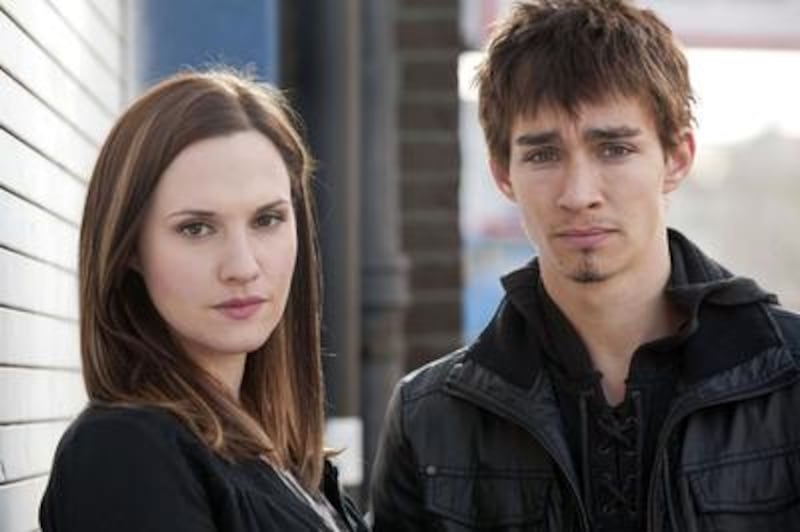 Ruth Bradley and Robert Sheehan in Love/Hate. Photograph: RTÉ
 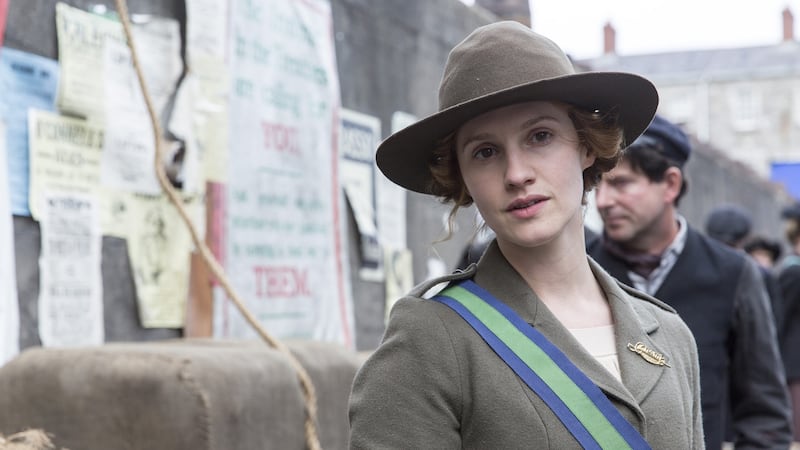 Rebellion: Ruth Bradley as Frances
She has won Iftas for Grabbers, an Irish comedy-horror film in which she had to act drunk for much of the runtime; for Rebellion, the RTÉ costume drama about the 1916 Rising; and for RTÉ’s 2006 miniseries Stardust, in which she played survivor turned campaigner Antoinette Keegan, who lost two sisters in the nightclub fire. It felt close to home for Bradley. “My mother’s from Artane, so I’d grown up hearing about the survivors and the kids who died there.”
She cites Stardust and an Australian film called In Her Skin, in which she portrayed the killer in the real-life case of a murdered teenager, as early breakthroughs that made her feel proud to be an actor. Being trusted with the responsibility to tell somebody’s story is an honour, she says.
“That always hits me, playing a real person who has been through something real, because, well, there’s no space for ego. You can’t be thinking about yourself. It has to be really selfless to be done properly.”
On In Her Skin, she worked with Sam Neill, the Omagh-born New Zealand actor who died in July. “He’s gorgeous. He was gorgeous, oh God,” she says. On set, he was “just so caring and kind” to Bradley, who was only 21 when she was playing this sensitive role, and would help her separate herself from the weight of it once filming stopped.
[ Remembering Sam Neill: The breadth of Omagh-born actor’s work was extraordinaryOpens in new window ]
She has been home to Ireland for jobs recently and “flippin’ loves” it, in part because she often recognises the crew from projects she worked on back when she was just getting started. She likes the “theatrical troupe vibe” of Irish productions, she says, and finds the constant slagging is good for her soul.
Last year she shot The Last Days of Rabbit Hayes, in which she plays the sister of a dying woman, though the film is more uplifting than this sounds. She will also soon appear in Walk the Blue Fields, a Netflix adaptation of a Claire Keegan story, alongside Emily Blunt, Andrew Scott and Ciarán Hinds, and she has just finished making a coming-of-age film called Bender, set during the papal visit to Ireland in 1979.
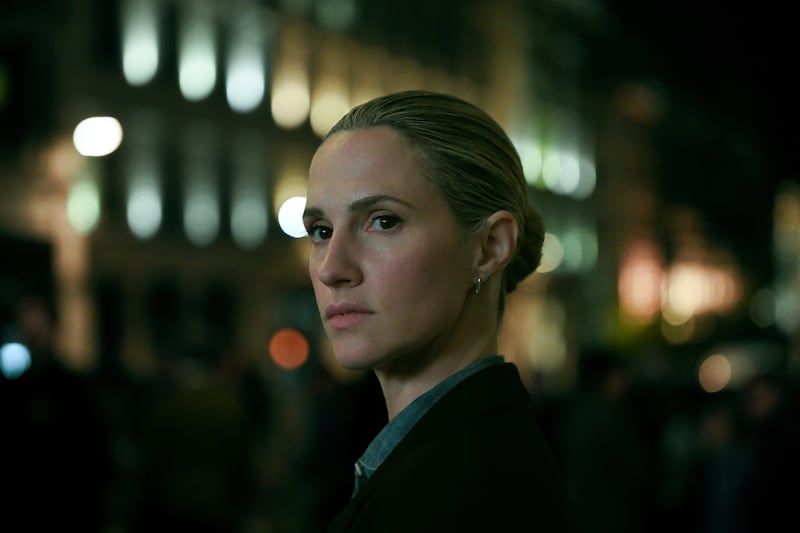 Ruth Bradley in Slow Horses. Photograph: Jack English/ Apple TV
 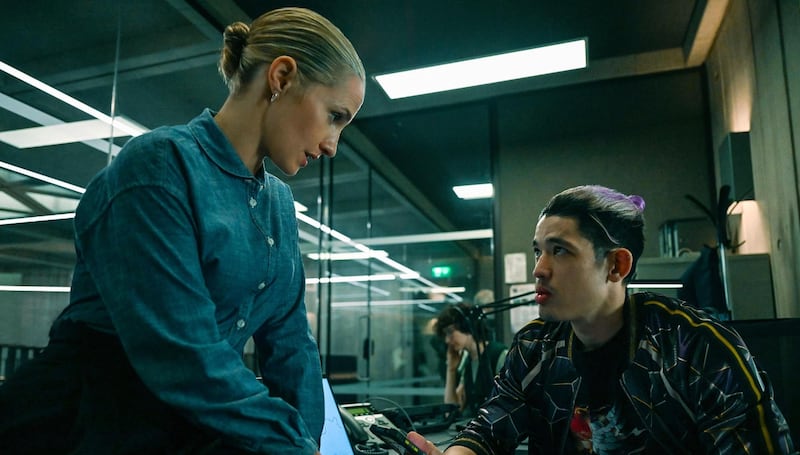 Ruth Bradley and Christopher Chung in Slow Horses. Photograph: Apple TV+
“That’s a total comedy, but my character has got some of the really sad hard-core drama,” she says. She had “an absolute blast” on it, nevertheless. “Even if you’re on the floor crying, there should still be an element of fun to it for me, because otherwise it gets too earnest. And that’s life, isn’t it? We’re really upset, and then we crack a joke.”
In Bender, she got to use her own accent, which she loved. “It’s kind of rare that I get to do that now,” she says. “With the Irish accent, for me, so much of our heart and soul just comes out of our mouth. It’s all in the body. Certain accents hold that back.”
We talk about what she wants to do next. She likes how rewarding it can be to make independent films, though they’re “always a gamble” and can mean everyone “getting in the trenches together” to make them work. Finance delays on the film Embers (2023), for instance, meant she ended up filming her role as a sexual surrogate just four weeks after she gave birth to her second child, who she would go into the next room to feed between takes. “It was really a perfect example of work and life all coming together,” she says.
A return to the stage is also on her wishlist, as is comedy. In this next season of Slow Horses, Flyte is part of several seamlessly executed group scenes in which the comic heart of Herron’s books is to the fore, and it reminded her that she wants to do more of this. “I love doing comedy and for whatever reason it hasn’t come my way as much as straight serious stuff.”
But a script that blows her away is all she needs to say yes. “I never really think of the genre, unless it’s horror, because that’s an awful lot of work for really disturbing nights. I think the older I get, the more sensitive I am as well. Like, God, if I do this job, I’d have to bring this home. Do I want to be thinking about ghosts and demonic possession?”
Horror is in vogue, though. Maybe people spot something in her that makes them think she would be great at it? She throws her head back, laughing hard at the idea of doing one just to see.
She has learned a lot from her 20-plus years in the business, including the value of being in a “good mental place” and saying no to projects that aren’t right for her, even if it means turning down a pay cheque.
“If you’re working on something you don’t believe in, it’s hard to do your best work. I’d rather just kind of hope for the best and do something that I’m really invested in.”
It’s helpful for younger actors to understand that “rejection is most of the job”, she says. After an audition, you have to be able to walk out of it and tell yourself it’s done, it’s over, and you did your best. “Because you can’t control any of that. You can’t control why you’re cast, or who wants you. And most of the time, one person voted yes, one person voted no. You can’t be thinking about any of that stuff. You just make it real, you present what you’ve got and then you forget it.”
It’s a philosophy that has led to a long list of screen credits and many magnetic performances. In one highly satisfying scene in an upcoming episode of Slow Horses, the usually deferential, protocols-adoring Flyte tells her boss, Diana Tavener (Kristin Scott Thomas), “F**k you and [spoiler]”. They had time to shoot it, so they tried out lots of versions, with Bradley knowing she could trust the director to pick the right one.
“Some of the takes we did were like a teenage daughter having a strop with her mother,” she says. “I really leaned into my teenage angst.”
Slow Horses returns to Apple TV on Wednesday, September 16th