
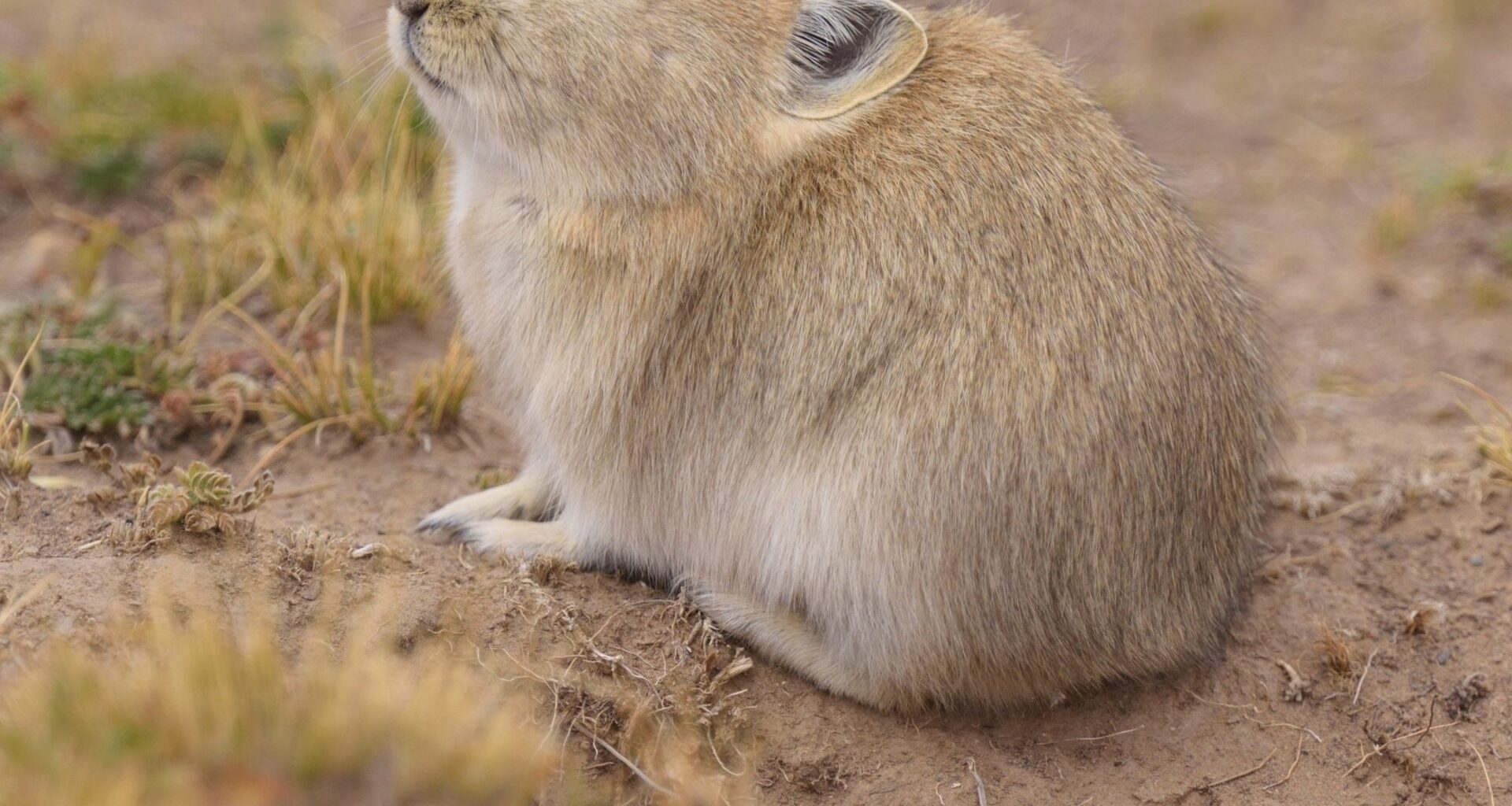
Plateau pikas labeled as pests can actually help livestock gain more weight by keeping poisonous weeds from taking over valuable grazing plants.
High on the grasslands of the Qinghai-Tibetan Plateau in western China, herders have spent decades trying to wipe out a small burrowing animal called the plateau pika.
It competes with grazing yaks for food, the thinking has always gone, and poisoning campaigns have targeted the animal for years.
New research turns that story around: at the right numbers, the same pest herders want gone can help yaks put on more weight.
The two animals don’t fight over the same food nearly as often as people assume. Pikas favor broad-leaved weeds, while yaks stick mostly to grasses and sedges.
One of the weeds pikas cut down without eating a single bite of it happens to be a plant that can choke out the grass yaks need most.
No competition for food
Zhiwei Zhong is an ecologist at the Northeast Institute of Geography and Agroecology, part of the Chinese Academy of Sciences in Changchun.
He wanted to know whether that competition was as real as everyone assumed.
“In rangelands and other less productive ecosystems, small mammals are often considered pests because their population outbreaks can lead to competition with livestock for food,” Zhong said.
“However, it remains unclear whether their competitive effects on livestock diminish or even help livestock growth when their numbers are at lower, non-outbreak levels.”
Zhong’s team studied a grazing meadow in Menyuan County, in Qinghai province, at an elevation of about 10,500 feet (3,200 meters).
Plateau pikas there very frequently clipped down a tall, poisonous weed called Stellera chamaejasme, known in the scientific literature as wolf poison, but they almost never ate it.
Yaks grazed mostly on grasses and sedges instead. Wherever pika burrows were thick on the ground, wolf poison thinned out, and wherever the weed thinned, yak activity picked back up.
Remove pikas, and poison weeds spread
To test what the survey hinted at, Zhong’s team fenced off 16 plots on the same meadow, each about 490 feet (150 meters) on a side.
Some plots kept their pikas; in others, the animals were trapped out every two weeks.
Some plots kept wolf poison standing; in others, it was clipped down every month, mimicking how a pika would trim it.
Across parts of the plateau, toxic weeds spread as grazing pressure builds up, so the question wasn’t an idle one.
Over two growing seasons, from June through August in 2022 and 2023, the plots without pikas told a clear story.
Wolf poison’s cover roughly doubled compared with plots where pikas stayed. Grass cover in those pika-free plots fell by about half, and sedge cover slipped by about 15%.
The grasses and sedges that survived were also less nutritious, carrying about 14% less crude protein than the same plants growing where pikas remained.
Thinner grass meant less efficient yaks
Yaks noticed the difference. Watching each animal graze for six two-hour stretches every month, the researchers counted how often the yaks bit into plants and how many bites they managed per step.
Without pikas around, yaks bit into sedges about a third less often and managed less than half as many sedge bites per step. Their grass bite rate fell by close to 30%, with a similar drop in grass bites per step.
Eating less added up fast. Yaks in the pika-free plots gained 42% less weight per day than yaks grazing alongside pikas, as long as wolf poison was still standing.
Take the weed away too, and pikas made almost no difference at all, a sign that the whole benefit comes from that one plant.
Bingbo Ni, an environmental researcher at the same institute as Zhong, explained the mechanism.
With fewer poisonous plants crowding the ground, he said, grasses and sedges no longer had to fight for light, water, and soil nutrients. They grew back thicker and richer in protein instead.
Helping turned to harm at higher densities
The benefit wasn’t open-ended. Yak weight gain rose alongside pika numbers up to about 81 active burrows per acre (200 per hectare).
Past that point, more pikas hurt the yaks instead of helping them. Above about 162 burrows per acre (400 per hectare), the animals began competing rather than helping.
That’s close to the outbreak densities, sometimes exceeding 200 burrows per acre (500 per hectare), that first got pikas branded as pests worth poisoning.
Zhong said the stakes reach well beyond one meadow.
“Livestock grazing currently uses around 77% of global agricultural land and sustains billions of people worldwide,” he said.
“A critical assessment of small mammals’ impacts on livestock production is therefore urgently needed to guide management for both production and biodiversity conservation.”
Implications for other regions
Zhibin Zhang, a professor at Hainan University’s School of Ecology who worked on the study, said the same balance could guide rangeland management well beyond this one plateau.
Small animals often have an outsized say in how rangelands behave. Prairie dogs on the American plains reshape grazing land for cattle in similar ways.
American pikas in the Rocky Mountains face pressures of their own as mountain habitats shift.
Ecologists call animals like these keystone species: small in number, outsized in effect.
What happens once summer ends?
Zhong’s team watched pikas and yaks graze together only during the growing season, from June to August, when food is most plentiful.
Whether the same benefit holds up in leaner months, when autumn and winter cut into the grass supply, is still an open question.
The team also worked at a fairly low elevation for the Qinghai-Tibetan Plateau. Wolf poison thins out above about 13,100 feet (4,000 meters), where other, milder toxic plants take its place.
Nobody yet knows whether pikas would do the same favor for yaks grazing among those weeds. It’s also unclear whether the same trade-off would hold for the sheep and goats that share this land.
The full study was published in the journal eLife.
—–
Like what you read? Subscribe to our newsletter for engaging articles, exclusive content, and the latest updates.
Check us out on EarthSnap, a free app brought to you by Eric Ralls and Earth.com.
—–