
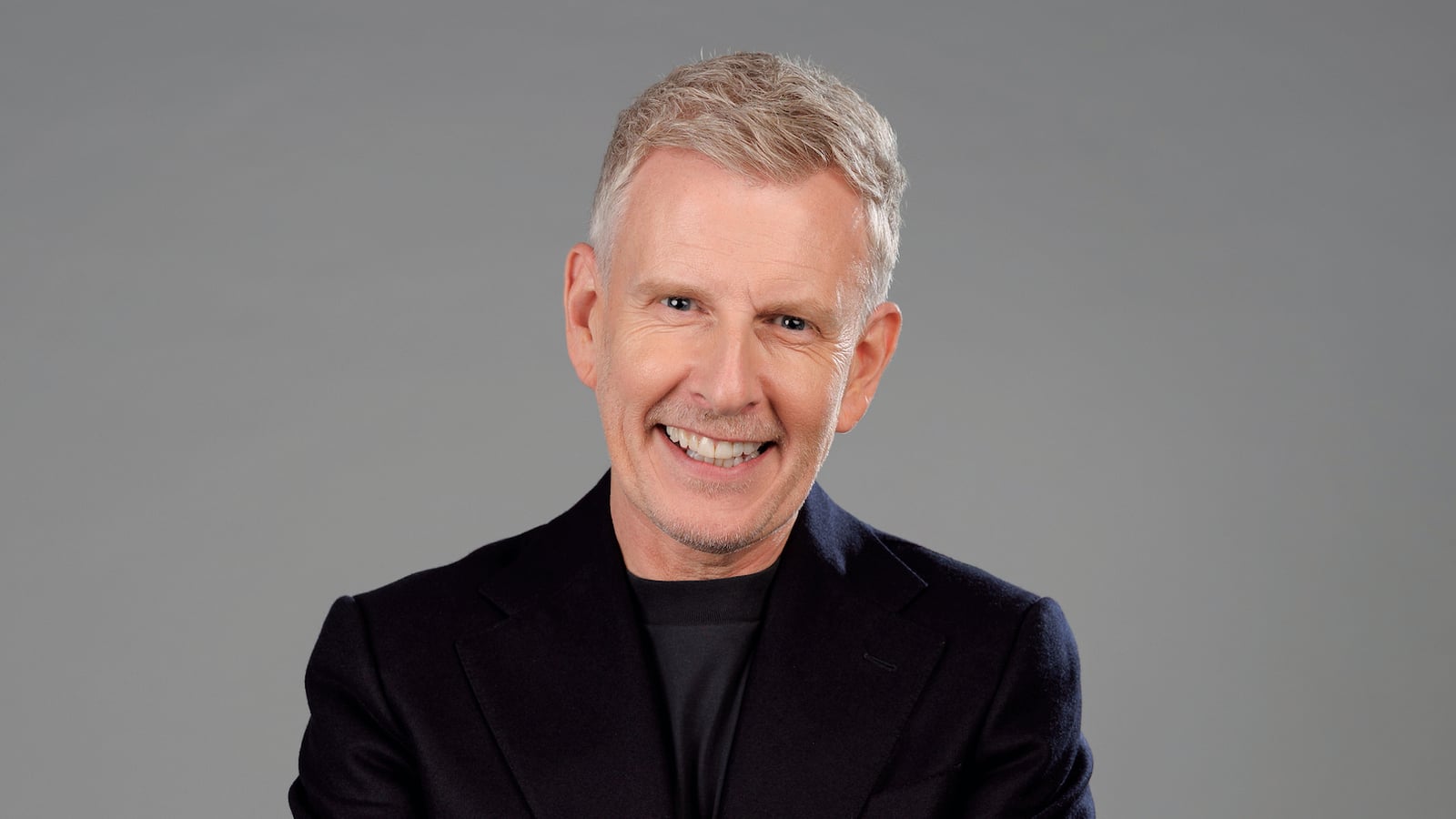
As he prepares for his fourth season of The Late Late Show, Patrick Kielty chats to Claire O’Mahony about settling into the show, changing audience expectations and learning to live in the moment.
Patrick Kielty has a new way of describing his age, courtesy of a friend from Mayo who reached a landmark shortly before him.
‘Britfic’, as he calls it, is inspired by the orange drink long advertised as “55”, and Kielty needs little encouragement to explain the joke.
“He turned around to me, same age as me, and he says, ‘You do know now we’re Britvic?’ I says, ‘What?’ He says, ‘55, 55!’” Kielty hit his mid-50s in January, although the birthday itself did not prompt any sudden reckoning or reappraisal. The reflection had already begun during a period in which his professional life remained under scrutiny, while his personal life experienced profound changes.
His mother, Mary, died in March 2025, and his separation from his wife of 12 years, Cat Deeley, was announced the following July.
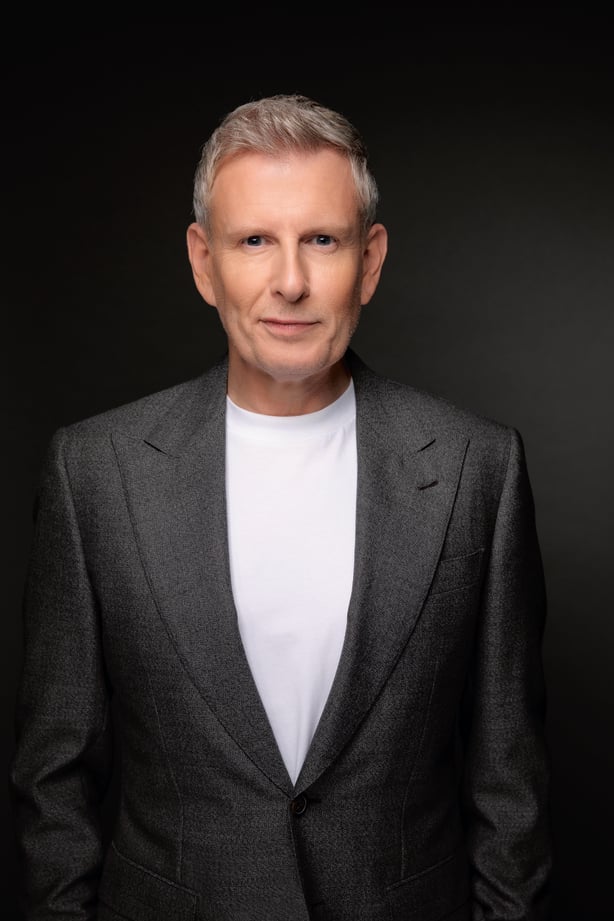
Patrick Kielty. Picture Andres Poveda.
As he gears up for a new season of The Late Late Show, he doesn’t mention either loss, but acknowledges that recent years have altered the way he looks at the life immediately in front of him.
“I think not so much of the birthday as a moment of reflection,” he says. Looking back at everything he has experienced, both in his career and family life, he finds himself living “in the moment, for the moment”.
That living in the moment is evident when he talks about the return of The Late Late Show, which begins its 66th season Friday, September 18. It will be Kielty’s fourth season in the chair and the first of a new three-year contract announced by RTÉ during the summer.
“It feels kind of like yesterday and a lifetime ago from when I walked out for that first show,” he says. “I feel much more content, you know, like going into this show in terms of feeling determined to enjoy it.”
His arrival to the long-running chat show in September 2023 coincided with an exceptionally turbulent period for RTÉ, leaving little space to become accustomed to the job already freighted with expectation. Each milestone in his first season arrived with another waiting behind it. “You feel you’re celebrating it, but you’re kind of just getting through it because the following week is gonna be another first,” he says. “I know show one is show one and I want to enjoy that.”
Three seasons have given him an ease he could not have possessed at the beginning. “The show is so much part of me, and I’m now the show in a way that I wasn’t going into that first season,” he says. “It’s a nice place to be.”
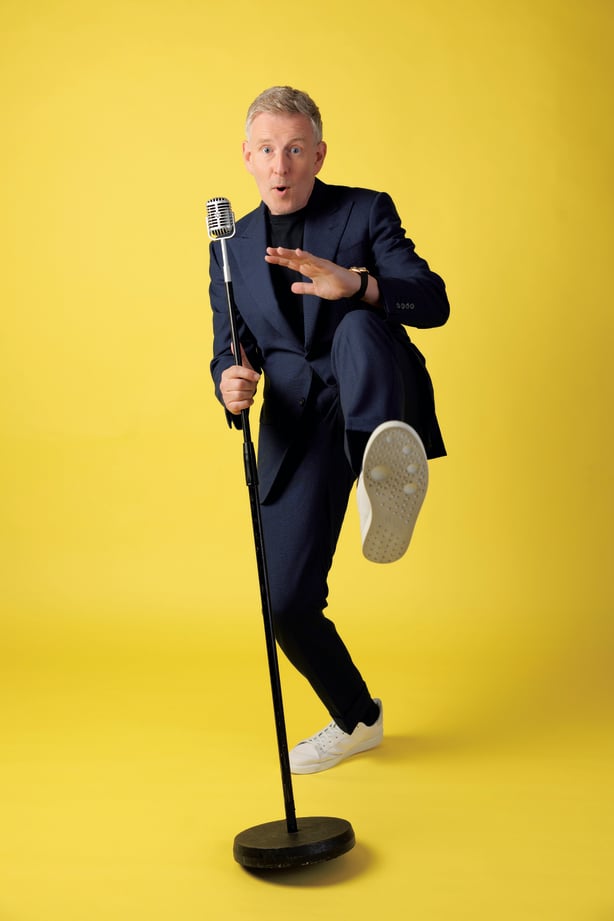
Patrick Kielty. Picture: Andres Poveda
There was nevertheless considerable speculation about whether Kielty would return after his original contract expired, with confirmation of a new agreement not arriving until July. From his perspective, the imagined drama bore little resemblance to what was actually happening.
“I always wanted to do the show again,” he says. The offer did not arrive as early as expected and, once the previous season had ended without an announcement, the absence of news created its own narrative. Kielty could observe it from the unusually comfortable position of knowing how the story would end. “I thought it was quite entertaining, if I am being honest,” he says. “I knew what the truth was.”
Living at the centre of that speculation is part of being the face of a show that viewers regard as theirs, and Kielty has no interest in seeking attention for its promotion, if he then objects when the coverage is less flattering or too personal.
“I think the pressure of The Late Late Show is a privilege,” he says, “because attention means people are watching and still consider the programme important. You can’t pick and choose. You can’t say, ‘Look at me here, don’t look at me here.’”
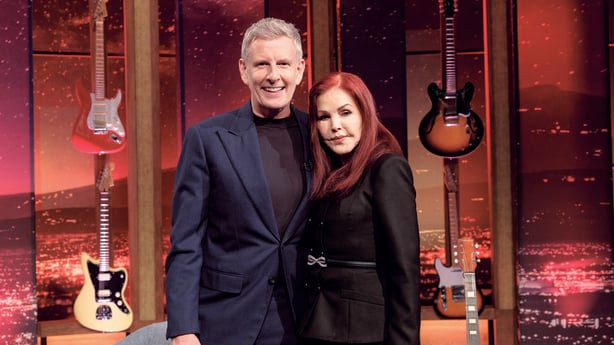
Priscilla Presley with Patrick Kielty. Picture: Andres Poveda.
Nor does he want people in the show’s production team approving every suggestion simply because it has come from the presenter. Questions behind the scenes are part of making the show better, while criticism from outside can be worth considering.
“You don’t want people to go, ‘Oh, you’re brilliant. This is great. Let’s do this. It’s a great idea,’” he says. When viewers write about what they enjoy and what they don’t, “you have to take that as they feel ownership of the show, and that means the show is important to them.”
He says he sometimes thinks, “Yeah, I get that, but I’m not really sure I agree with that,” while another observation may give him pause. “Maybe that is a point. Maybe I should have a think about that.” The sort of attention the show gets has changed as interviews and television appearances are increasingly dismantled into clips that travel independently online. People once read an entire story, he points out, whereas parts of an interview can now “go online and have a life of their own”.
The Late Late studio and set remain the same, while the experiments of Kielty’s opening season have given way to a show governed by the mood of a particular Friday. “The show’s not a 10-week run,” he says. “The show is one of those shows that is sort of, ‘How’s the country feeling this week? What are people interested in this week?’”
Compare his first ever show with the beginning of this season, he advises, and both the look and feeling will have shifted, without any grand relaunch.
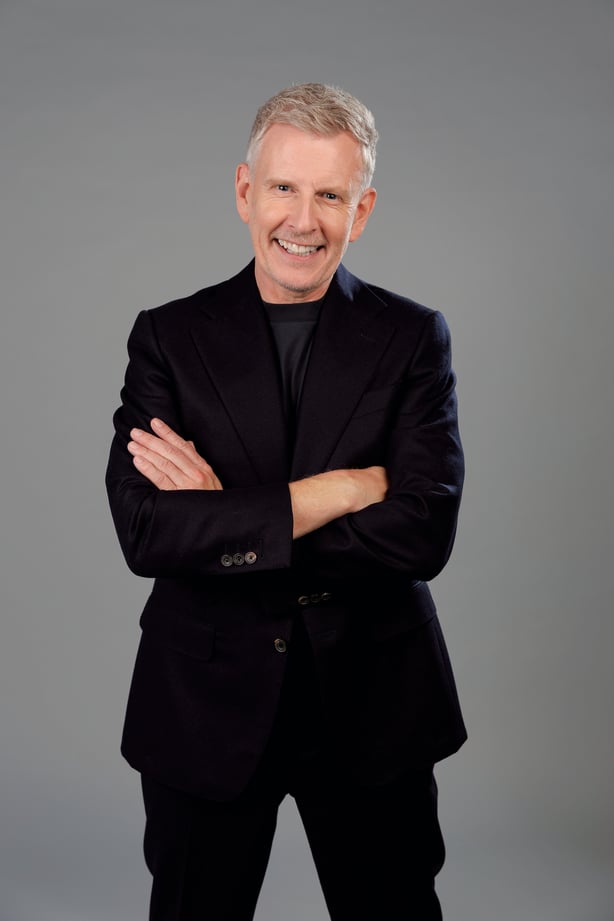
Patrick Kielty. Picture: Andres Poveda
Live television also resists easy judgement from the person sitting at its centre. Kielty recalls Johnny Carson’s belief that a show is never as good or as bad as its host imagines. “Sometimes you’re in studio, and the place is rocking, and the audience are really going for something, but the person at home isn’t in that audience,” he says. On other nights he may wonder, “Are they with us on this?” only to watch it back and realise, “That was actually a good piece of TV.”
There are occasions when the power of an interview is unmistakable. Last season, Majella O’Donnell spoke about her mental health and “you could hear a pin drop”. Kielty could see how touched by her story the audience were and recognising something of their own lives in it.
A photograph of The Late Late Show’s first host Gay Byrne, passed on the walk into the studio, offers a useful corrective. “He’s kind of looking over his shoulder in a director’s chair, and it’s sort of, ‘Don’t be getting ahead of yourself now, sonny.’ Feet on the ground is not a bad way to go on these things.”
Kielty still experiences flashes of disbelief about the position he now occupies, most often in the company of people who are part of his own memories of the show. Entertainment stars rarely unnerve him, but sitting beside Christy Moore returned him instantly to adolescence.
“You’re back to being 14, watching him on the show, and now he’s sitting beside you,” he says. “That sort of feeds into that notion of enjoying the moment.” When Moore admitted that The Late Late Show could make him nervous too, Kielty was astonished. “I was like, ‘What?’” he says. “I’m so mind-blown, like, just mind-blown.”

Patrick Kielty
The lesson is not confined to the conspicuous milestones that invite attention, because waiting for the next birthday or professional landmark risks missing the quieter pleasures in between. “You don’t have to wait to 56 to have another celebration,” he says. It is a modest shift rather than a grand mid-life re-invention, but it has given this new season a different purpose for him. After spending the first three years learning how to carry The Late Late Show, he wants to remember to enjoy the experience too.
His Mayo friend, meanwhile, has supplied a more urgent measure of the years ahead by informing Kielty that they have “only 10 good All-Irelands left” before age begins to interfere with the full enjoyment of the day.
By 65, his friend argued, “you’re only going to be fit for a couple of pints”. The calculation is deliberately absurd, but its conclusion has stayed with him after a year that has offered ample reason not to postpone celebration for a more convenient time.
“Now is now, right? Now is now,” he says, and enjoyment should not be deferred “because you just don’t know what’s around the corner.”