
Analysis: More nitrite-free products are entering supermarkets thanks to manufacturers using fruit and vegetable extracts to preserve meats
By Simona Grasso, UCD
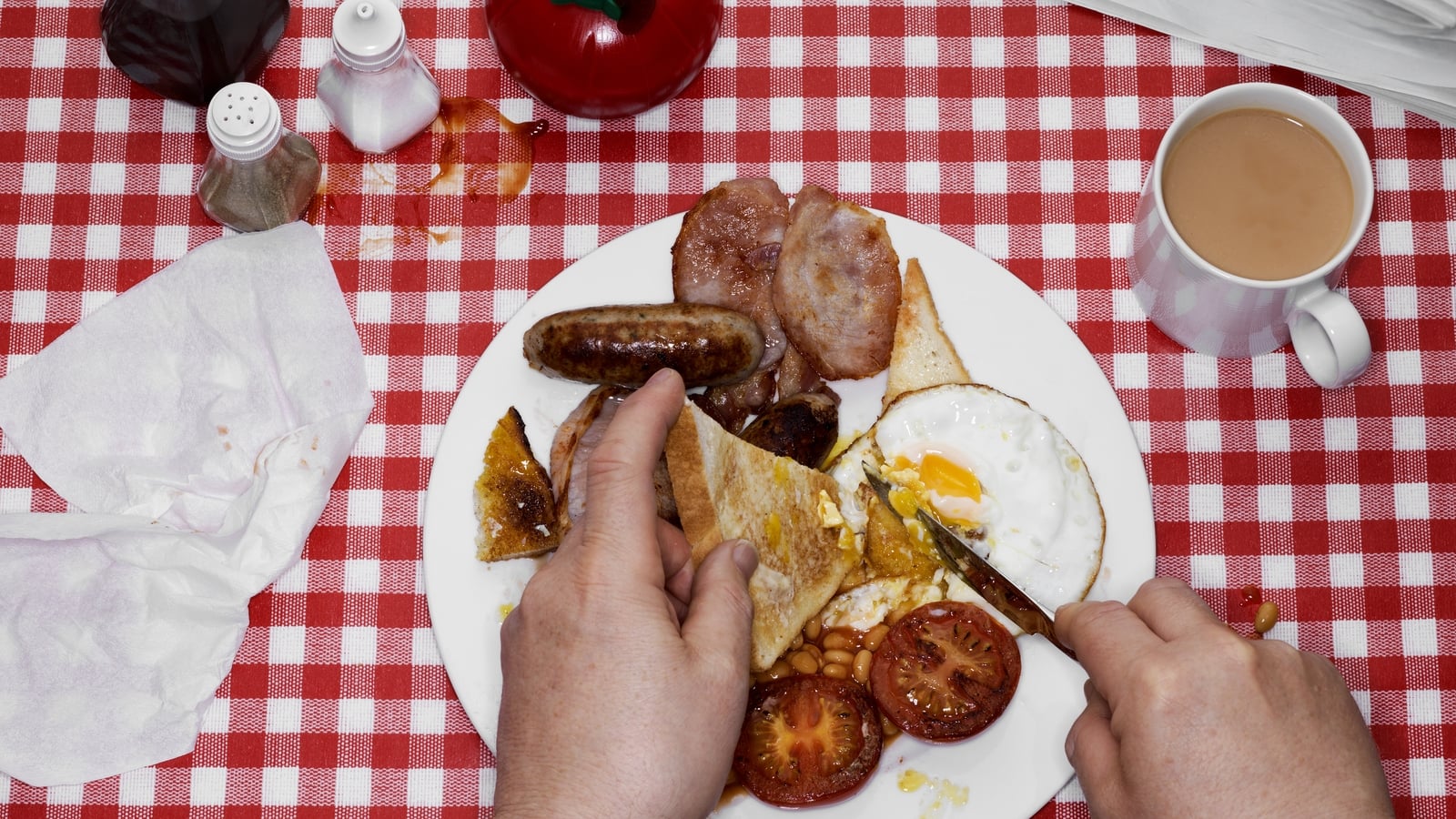
If you are a meat eater, you might have noticed on supermarket shelves a recent increase in nitrite-free meat products, including such breakfast staples as bacon. How are they made, and what’s the difference compared to the regular versions?
But first of all, what are nitrites and why are they used? As explained by the Food Safety Authority of Ireland, nitrites are currently authorised food additives in the EU. They work as preservatives and extend the shelf life of meat products, providing the typical cured meat flavour and colour. Nitrate (NO3) when added to food, converts to nitrite (NO2), which is the chemical with the preservative function.
Should we be concerned about them? In 2023 the EU lowered the maximum permitted levels of nitrates in processed meats as the presence of nitrites and nitrates in foods can give rise to the formation of compounds called nitrosamines, some of which are carcinogenic.
We need your consent to load this rte-player contentWe use rte-player to manage extra content that can set cookies on your device and collect data about your activity. Please review their details and accept them to load the content.Manage Preferences
From RTÉ Radio 1’s Morning Ireland, EU suspends Brazilian meat imports amid safety concerns
Processed meat manufacturers had until the start of October 2025 to make the transition to the new lower levels. Some manufacturers are also thinking ahead and launching in the market nitrite-free products. These use natural ingredients such as fruit and vegetable extracts, to replicate the functions of nitrites in meat products. Examples of products available in Ireland, including ham (Brady and Divilly) and bacon (Finnebrogue).
Higher price to pay
Let’s look at the price of the nitrite-free products compared to the regular product with low nitrites. For example, for the traditional Brady hams, Tesco currently sells the no nitrite version for €3.50/80g (€43.75 g/kg) while the regular version with low nitrite costs € 2.99/80g (€37.38/kg). The nitrite free Brady ham is about 17% more expensive that the regular Brady one and the increase comes to a product that is already premium and at the top of the ham range. It’s fair to note that both products are currently promoted at two for €5.
We need your consent to load this rte-player contentWe use rte-player to manage extra content that can set cookies on your device and collect data about your activity. Please review their details and accept them to load the content.Manage Preferences
From RTÉ Rdio 1’s Brendan O’Connor Show, UCC food historian Regina Sexton on the wonderful world of sausages
But there are also a few more differences that might be overlooked. The first one is that the meat content is different in the two products. The nitrite-free versions are made with 105g of raw pork per 100g of finished ham, while the regular version with low nitrites has a higher meat content (115 g of raw pork per 100 g of finished ham). The second one is that the regular low nitrite product also has added phosphates (to allow for water retention and increased yield), while the nitrite-free product does not have any added phosphates (cleaner label).
If we look at bacon, the Finnebrogue nitrite free “naked” bacon costs €3.89 per 200g (€19.45/kg) and it contains between 87% and 91% of pork. If we look at regular bacon with nitrites in Tesco, we can find a basic version that also contains 87% of pork and costs only €2.35 per 411 g (€5.88/kg) and a Tesco finest version that contains a high amount of pork (97%) and costs € 2.69 (€ 11.21/kg).
This means the nitrite-free versions do come at a cost (the basic Tesco bacon is only a third of the price of the nitrite-free bacon, while the Tesco finest is almost 40% cheaper) and do not necessarily translate in the highest meat content.
Ham and bacon consumers need to find a balance between the price they are willing to pay and the quality attributes that matter to them
Taste and flavour
Regardless of how clean of preservatives a ham might be, taste is always king and consumers would hardly repeat a purchase if they were not satisfied with the sensory quality of the product. A recent study found that nitrite-free cooked ham had a similar sensory profile and appearance to its conventional counterparts using a trained sensory panel.
Ham and bacon consumers need to find a balance between the price they are willing to pay and the quality attributes that matter to them, looking at the information on the front and the back of the pack to get a more complete picture of the product. So, next time you go food shopping and need to get some ham or bacon, if you find some nitrite-free versions, will you give them a try?
Follow RTÉ Brainstorm on WhatsApp and Instagram for more stories and updates
Dr Simona Grasso is an Assistant Professor and Ad Astra Fellow at the School of Agriculture and Food Science at UCD.
The views expressed here are those of the author and do not represent or reflect the views of RTÉ