
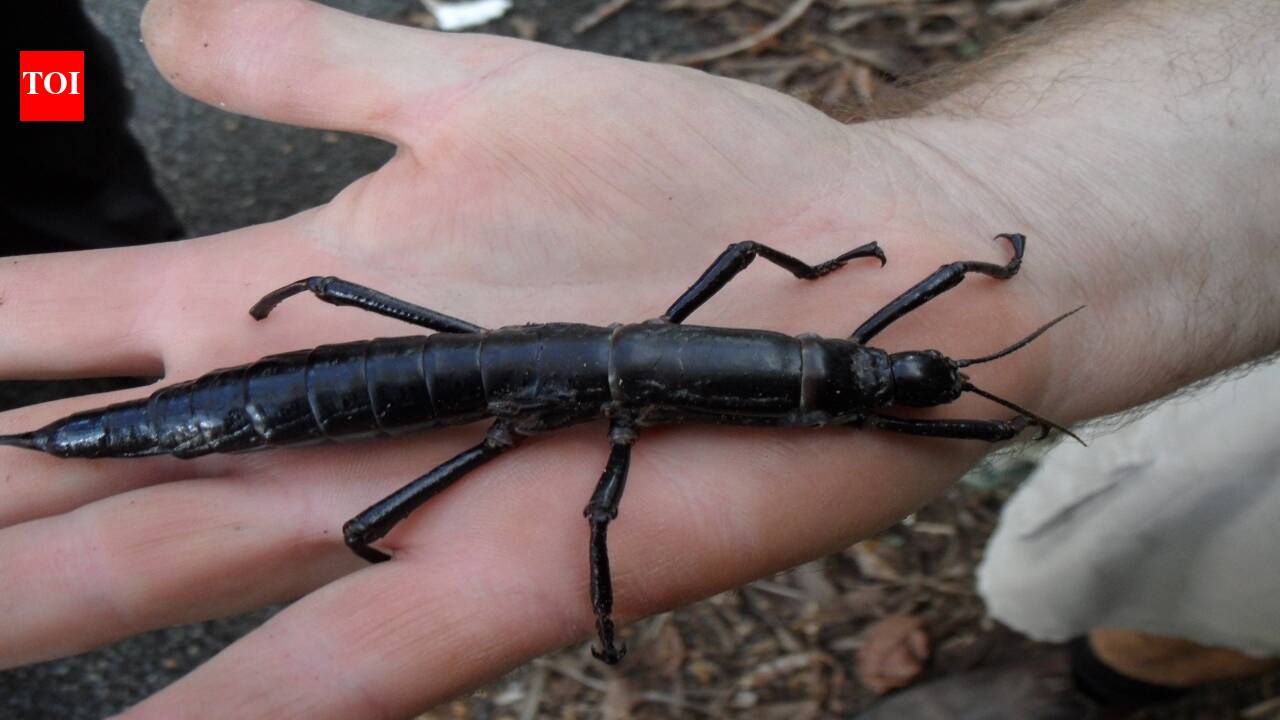
 A Lord Howe Island stick insect (Dryococelus australis) is crawling on a hand. Credits – Wikimedia Commons Conservation stories tend to be slow, on the scale of decades of habitat protection and slow population rebound. But every now and then, a species gets an ending nobody expected. Few are as dramatic as the Lord Howe Island stick insect, a large flightless creature that scientists had confidently written off as extinct for most of the twentieth century.Dryococelus australis, also known as the Lord Howe Island Phasmid or Land Lobster, once thrived on Lord Howe Island off the coast of New South Wales and was once common enough to be used as fishing bait. That abundance ended after the supply ship S.S. Makambo ran aground on the island in 1918 and Ship Rats came ashore with its cargo, spreading rapidly across Lord Howe Island. The rats drove the insect to extinction on Lord Howe Island within a few decades; the last phasmid there was seen in 1920, and later surveys failed to find any.In 2001 a team of Australian scientists scaled Ball’s Pyramid, a thin volcanic sea stack about twenty kilometres from Lord Howe Island, with a vague hope that the insect still lived in some corner of the world where it never belonged. They detected droppings behind one scraggly Melaleuca plant clinging to the rock, and a subsequent night-time search discovered a tiny surviving colony that numbered just 24 observed individuals by 2002, representing the only known population of the species.Rescuing a species down to its last few dozen membersRemoving insects from such a fragile population carried obvious risks, so authorities waited two years before they authorised a rescue. According to an NSW Government determination on the species, a team from the state’s national parks service finally returned to the pyramid in 2003 and collected two breeding pairs, sending one pair to a private breeder in Sydney and the other to Melbourne Zoo.The Melbourne pair produced the program’s first hatchling that year, a nymph named Yarra. The early development was more precarious than triumphal. Eggs from the original pair got smaller and smaller with each generation, and hatching rates started to decline, consistent with inbreeding in such a restricted gene pool. Zoo staff solved the problem in 2004 by switching several males between the Melbourne and Sydney populations and injecting fresh genetic material, which steadied the programme’s early wobble.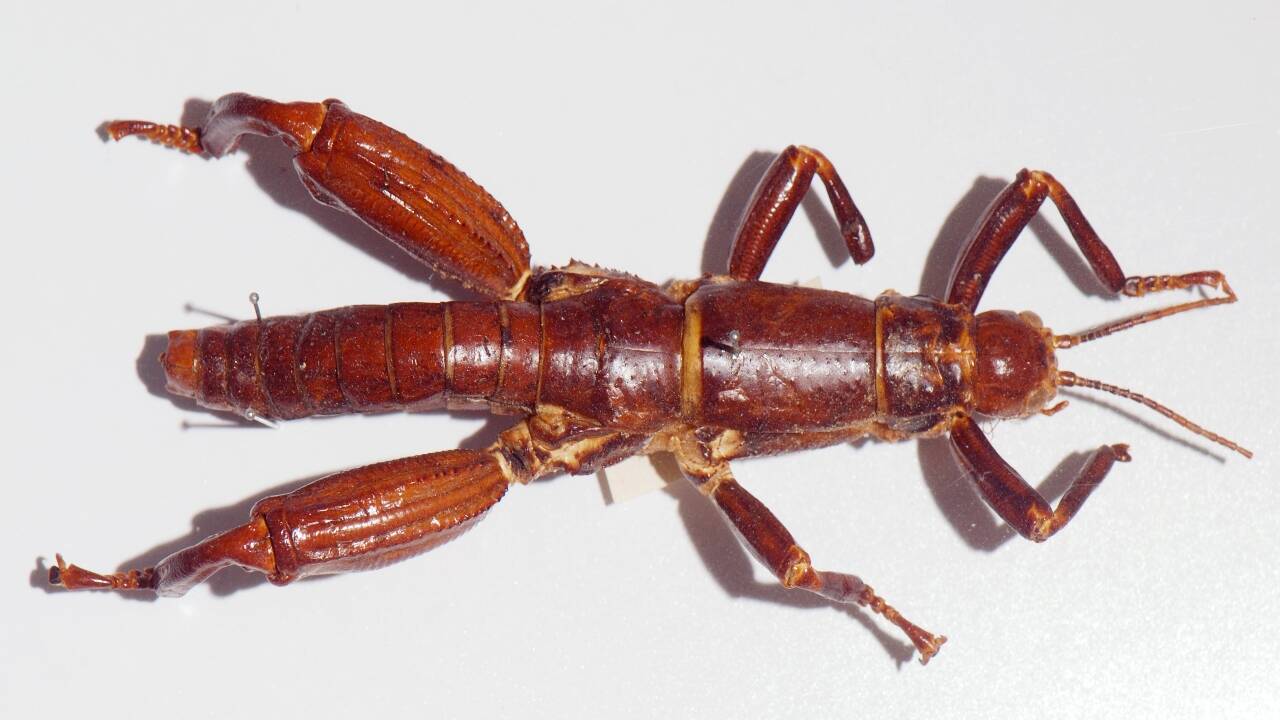
Lord Howe Island stick insect (Dryococelus australis) at Melbourne Museum. Credits – Wikimedia Commons
A colony that started with four insects and grew to thousandsConsidering how close to total extinction the species had come, it made a remarkable comeback. By 2006, there were approximately 50 individuals in captivity. Zoos Victoria says Melbourne Zoo has played a leading role in the species’ recovery since the captive-breeding program began, gradually honing the husbandry skills required to maintain such an uncommon invertebrate flourishing in captivity.Then growth accelerated rapidly from this early plateau. Within a decade or so of the arrival of the original pair, zoo staff were maintaining well over a thousand adult insects at any time, plus tens of thousands of eggs at various stages of development, numbers that would have seemed unimaginable when the entire species amounted to two dozen animals clustered under one shrub. The captive-breeding effort was later expanded to institutions including Bristol Zoo and San Diego Zoo, helping spread the insurance population across multiple collections. The Australian Museum participated in a 2017 expedition back to the pyramid to collect another female for breeding and has called the insect’s survival story one of the more remarkable rescues in its history of conservation work.A rat eradication programme on Lord Howe Island, finished in 2019, was planned in part for the future of this insect, leading to a cautious return of captive bred stick insects to the island their ancestors previously called home. Small experimental releases have started on neighbouring, rat-free Blackburn Island to explore if the species can establish itself outside a zoo enclosure. What began as a frantic four-insect rescue effort has morphed into one of the more optimistic entries in modern invertebrate conservation, a reminder that a species declared extinct may be, against all chances, waiting for you behind one bush on a rock in the midst of the ocean.