
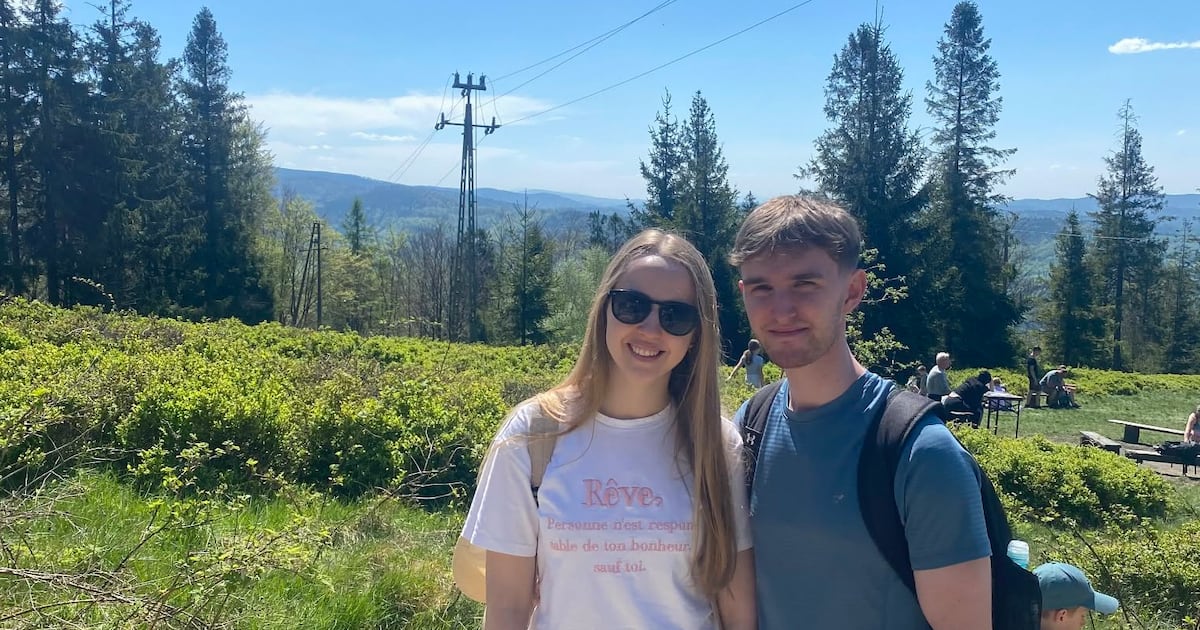
For most people, Kraków is a holiday destination, whether it’s a weekend away or a stag do. For me, it became my home for almost three years.
Shortly after the Covid lockdowns, I met my Polish girlfriend while working remotely in Spain. After several months of a long distance relationship, I decided to take the leap and move to Poland.
In in many ways, the direction of my move seemed unintuitive. Since Poland’s accession to the EU in 2004, more than 100,000 citizens emigrated to Ireland. And not only did Poland fail to top the list of my dream living destinations, it didn’t even make the list of places I’d ever considered moving to.
I was warned by friends and family that Poland was a “poorer” country than Ireland. Given its history, Poland still has a post-communist stigma that it struggles to shake, with many still associating it with grey communist buildings, lower wages and a lower standard of living. However, I now realise how outdated that perception is. Poland has actually been one of the fastest growing economies in the EU in recent decades.
Kraków at first impression is so picture-perfect, it’s like something out of a fairy-tale. Spared the destruction of the second World War, its historic buildings still dominate the city. Spotless cobbled streets wind through the Old Town, the Wisła river runs through the middle of the city and Wawel Castle overlooks it all.
Working as a software engineer, I quickly found a job at a multinational company. Although Polish wages are generally lower than Irish wages (although catching up), IT was an exception. I was earning roughly what I would have expected back at home, while my living costs were considerably lower. My girlfriend and I could rent a spacious two-bedroom apartment minutes away from the city centre, eat out several times a week and generally indulge while still saving comfortably.
Kraków is exceptionally clean and safe, noticeably so compared with many other European cities. I could walk through the city at any hour without any concern over my safety. Public spaces are well maintained and respected and in general there is very little visible disorder that has become commonplace in cities such as Dublin.
There were other perks too. Subsidised schemes gave me access to thousands of gyms, swimming pools and other sporting facilities across Poland, often for little or no cost. This along with the weather, long hot summers and winters with heavy snowfall made for a lifestyle with a strong emphasis on the outdoors.
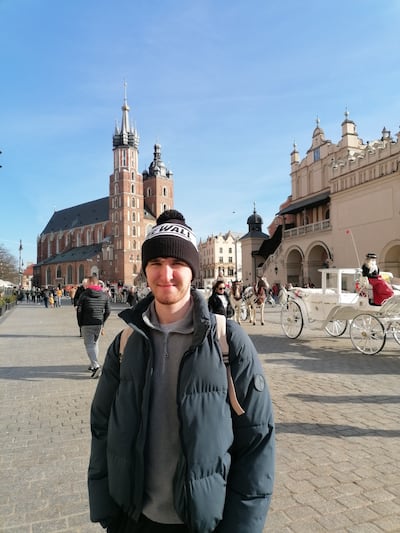 Abroad: Cathal Keany in Krakow, Poland
While the Polish economy is catching up with Ireland, culturally it felt in some ways, like Ireland from several decades ago. Religion and traditional values remained much more visible in everyday life than it is in Ireland.
While Ireland is famed for its welcome, in Poland people could initially seem reserved. But once you got to know them, I found locals to be incredibly warm.
Life in Krakow wasn’t perfect and as an outsider, loneliness did start to creep in over time. Learning any language is difficult, but Polish regularly tops the list of hardest languages to learn for English natives. Without the language and with Kraków having a relatively small international community compared with some western European cities, making deep friendships was difficult.
Ultimately my partner and I left Poland to pursue an exciting opportunity to live in Iceland. Since then, we have returned to Ireland, where we’ve settled for now. However the worsening housing crises, long public healthcare wait times and most importantly, the Donegal weather, does have me second guessing that decision at times.
I’m starting to come across more and more cases of Poles leaving Ireland to return home. This is borne out in the data. The population of Polish in Ireland fell by 24 per cent between 2016 and 2022, according to the census. Maybe it’s a sign of the times. And who knows maybe in the next few decades the roles will be reversed and us Irish will emigrate to Poland hoping to seek a better quality of life.
Cathal Keany is from Fahan, Co Donegal. He lived in Krakow, Poland from 2022 to 2025 and now lives in Donegal.