
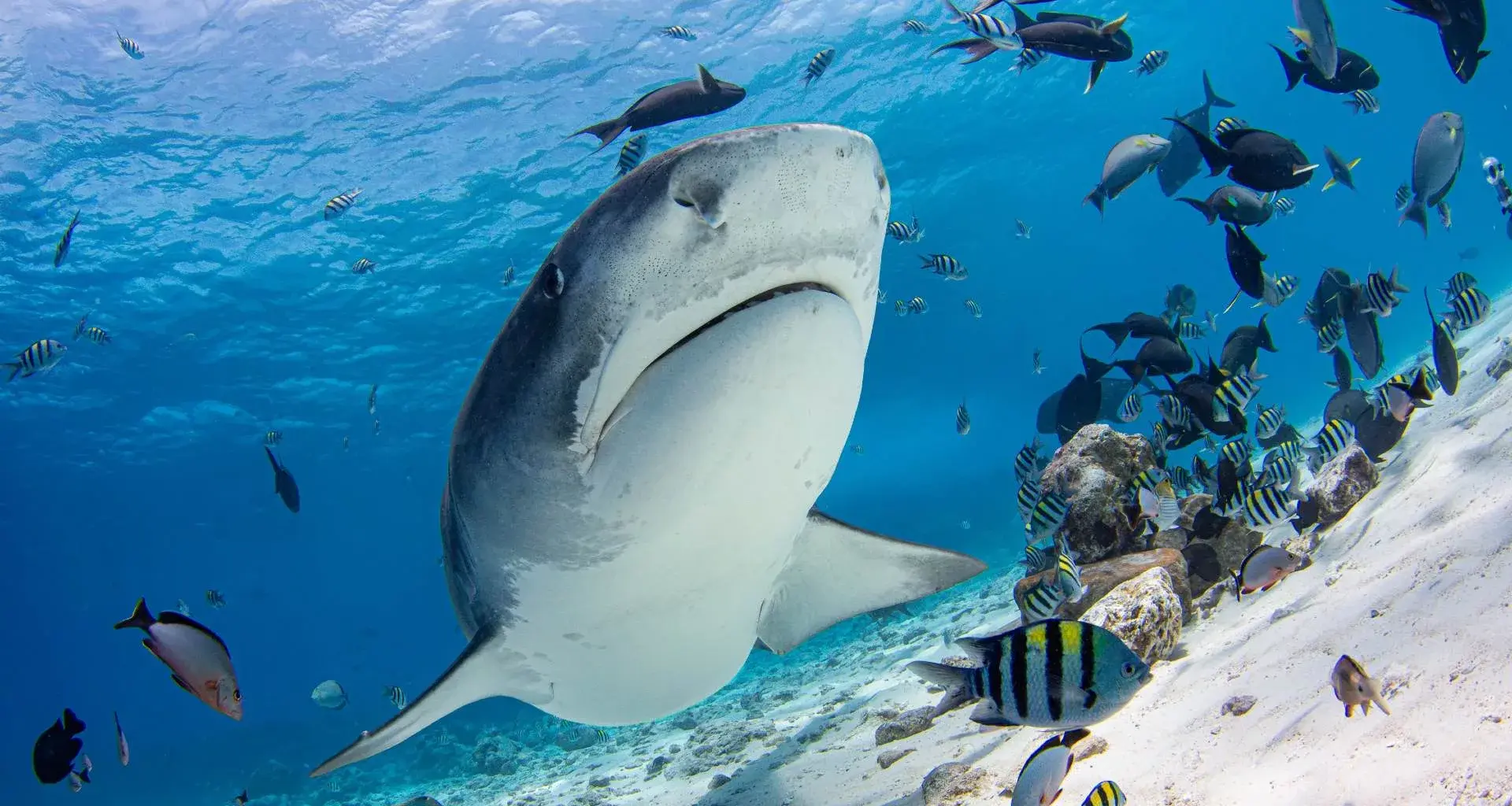
A college lecturer is back in the UK from Maldives shark-hotspot Fuvahmulah with what he considers extraordinary footage of tiger sharks, including one animal that proved especially inquisitive about his 360° camera. He is sharing his experiences this week in a live and online presentation that is free for the public to attend.
Donovan Lewis of University Centre Reaseheath (UCR) in Nantwich, Cheshire spent two weeks diving with the sharks around the island this summer. He was collecting 360° footage that will form part of Plymouth-based charity the Shark Trust’s One Ocean 360 project.
The programme uses immersive technology and virtual reality to give people an underwater perspective on sharks and help to challenge perceptions of the animals.
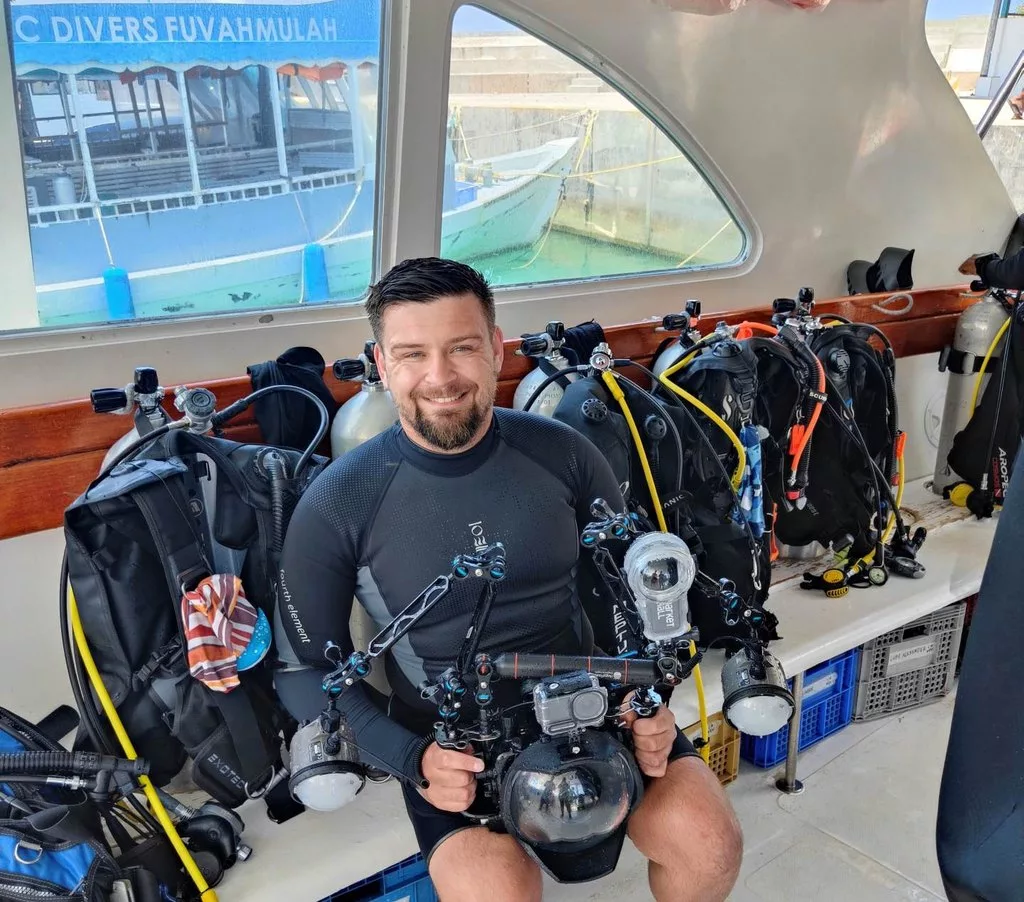 Donovan Lewis after a dive in the Maldives (Donovan Lewis)
“I was already planning to dive with tiger sharks in the Maldives, so when I heard about the One Ocean 360 project I knew I wanted to get involved,” says Lewis, a lecturer in UCR’s Animal Science department.
The zoologist previously spent more than 15 years at Blue Planet Aquarium as an educator, shark diver and scuba instructor, alongside field-research work on white shark populations and behaviour in South Africa.
One-island atoll
Fuvahmulah, in the far south of the Maldives, is a rare “one-island atoll”, where the ocean channel into the inner lagoon closed off over time, leaving a unique interior filled with freshwater lakes, marshes and lush vegetation.
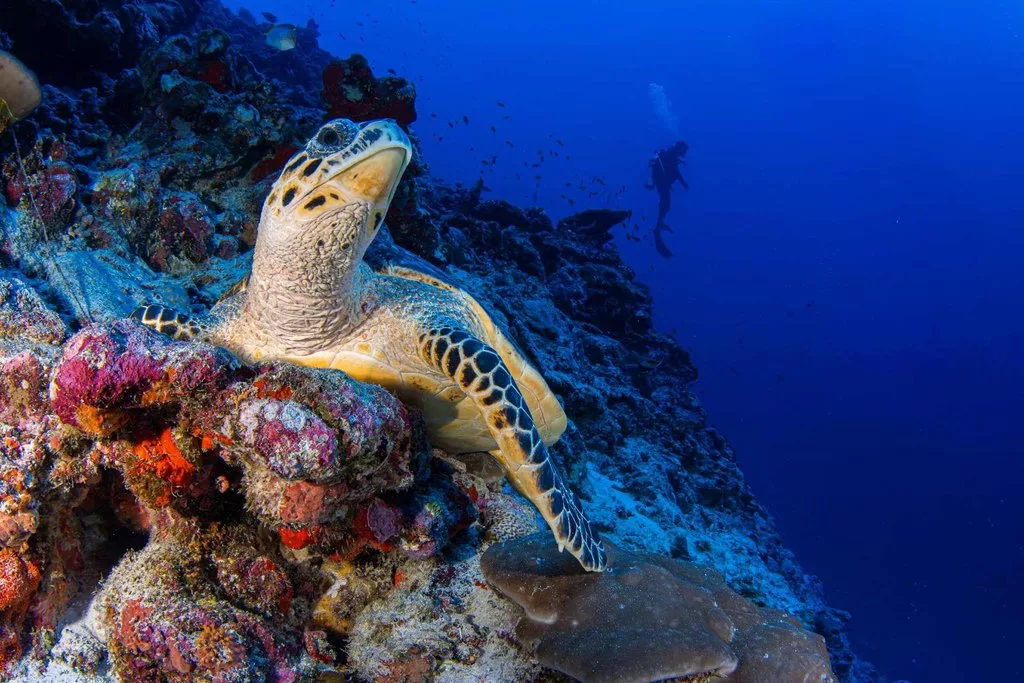 Turtle (Donovan Lewis)
It is best known for its large population of tiger sharks, with individuals returning to the area year after year. “It is an incredibly wild place,” says Lewis. “The tiger sharks come all the way into the harbour, so you can be surrounded by these huge animals just metres from the shore.
“There is a real sense of being in their world, rather than simply observing them from a distance.”
His camera was weighted down and placed on the seabed while he and the other divers watched the sharks from nearby. When one came close to investigate, the resulting footage provided what Lewis describes as one of the most memorable moments of the trip.
Lens of fear
“Unfortunately, sharks are often portrayed through a lens of fear, but immersive experiences like this give people the opportunity to see them differently,” says Lewis. “You can replace fear with curiosity, and curiosity is often the first step towards wanting to protect something.”
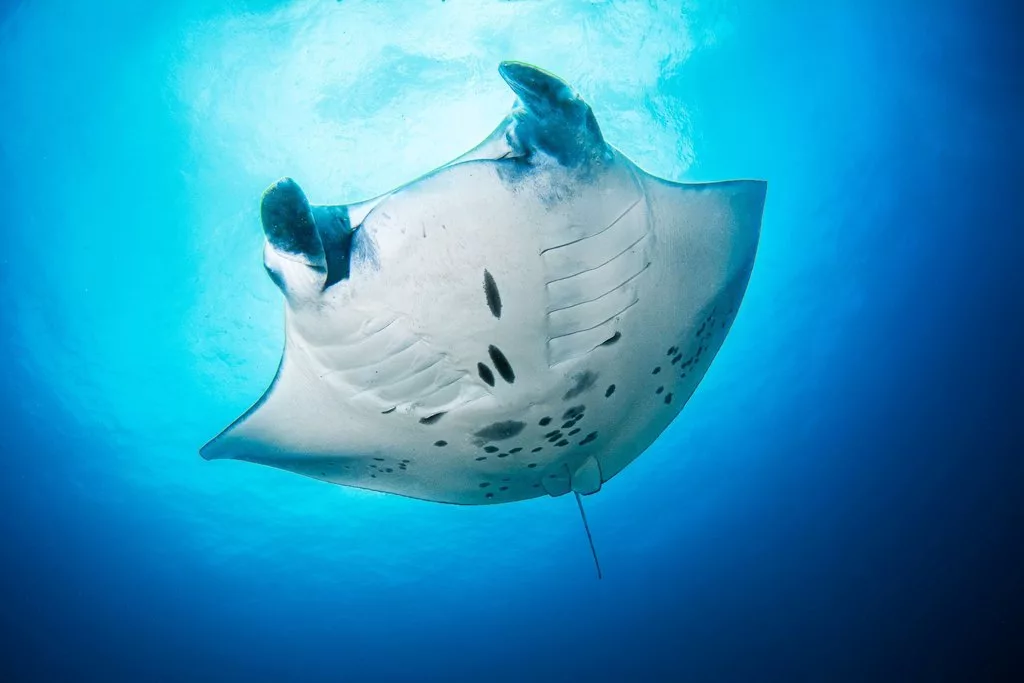 A manta ray in the Maldives (Donovan Lewis)
At UCR Shark Trust representatives have been using VR experiences with both students and visitors. “We’ve seen at Reaseheath how powerful VR can be,” says Lewis. “One student put on the headset for just four minutes and came away saying it was the most amazing thing she’d ever done.
“That’s what makes this technology so exciting; you can give someone an experience that completely changes the way they see sharks.”
Lewis will share his experiences of the Maldives, shark conservation work and the One Ocean 360 project at the first lecture in UCR’s 2026/27 Reaseheath Public Lecture Series. The one-hour Sharks of Paradise: Collaboration, Communication and Conservation takes place this Wednesday (16 September) and is free for anyone to attend, in person or online.
It begins at 6pm, with tea, coffee and biscuits available for those attending on campus. Register for the live lecture or to watch online here.
Also on Divernet: Donovan Lewis on shark behaviour and photography