
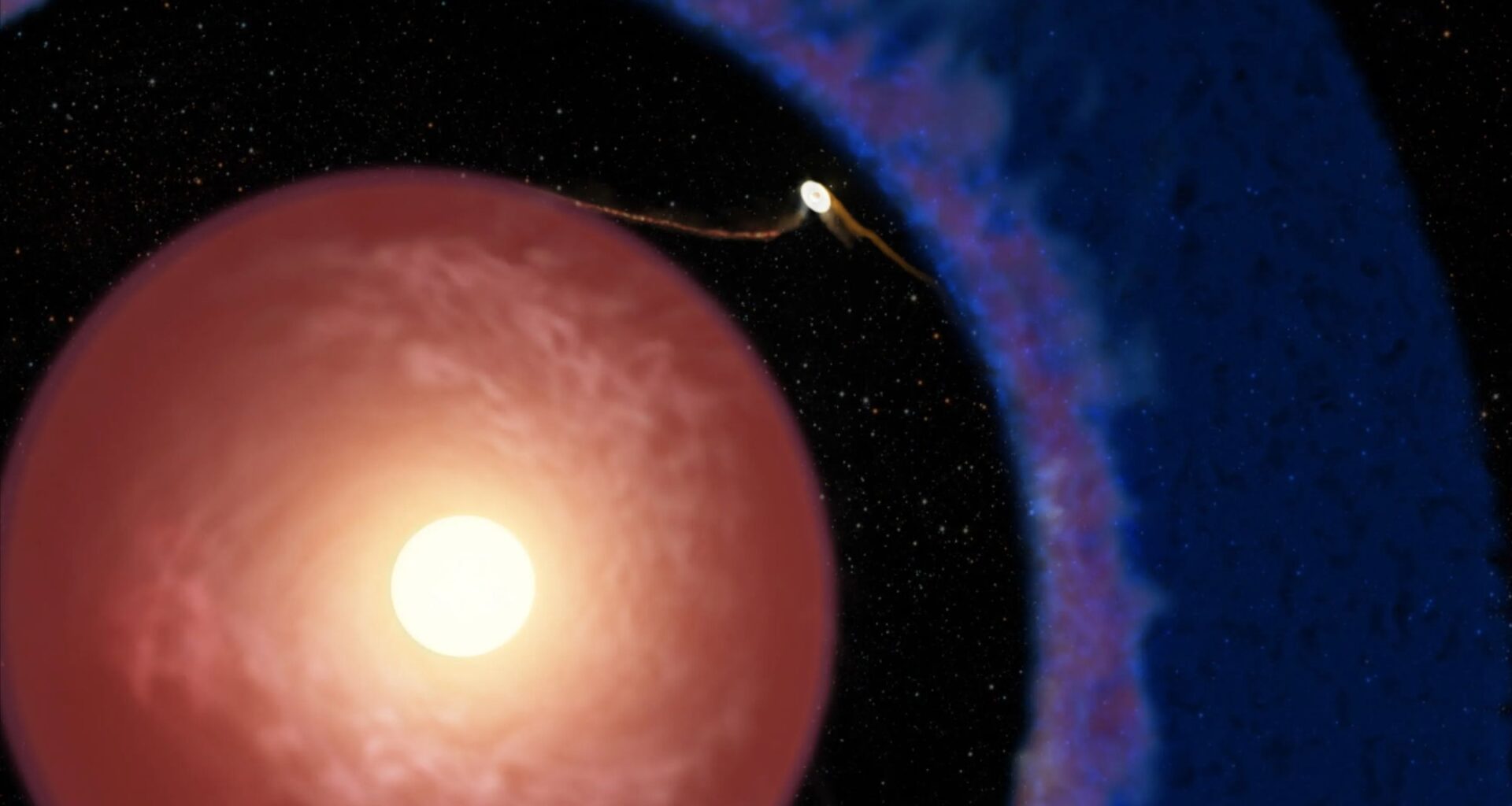
A “baby” exoplanet, discovered emerging from its cosmic cocoon around a nearby star, is the youngest alien world ever seen, a new study reveals. The planetary infant is less than 1 million years old and could help researchers study how other planets, including our own, took shape.
The juvenile world, dubbed Elias 2-24 b, orbits a newly formed star around 450 light-years from Earth. It is somewhere between two and four times as massive as Jupiter and almost twice as far from its home star as Neptune is from the sun.
You may like
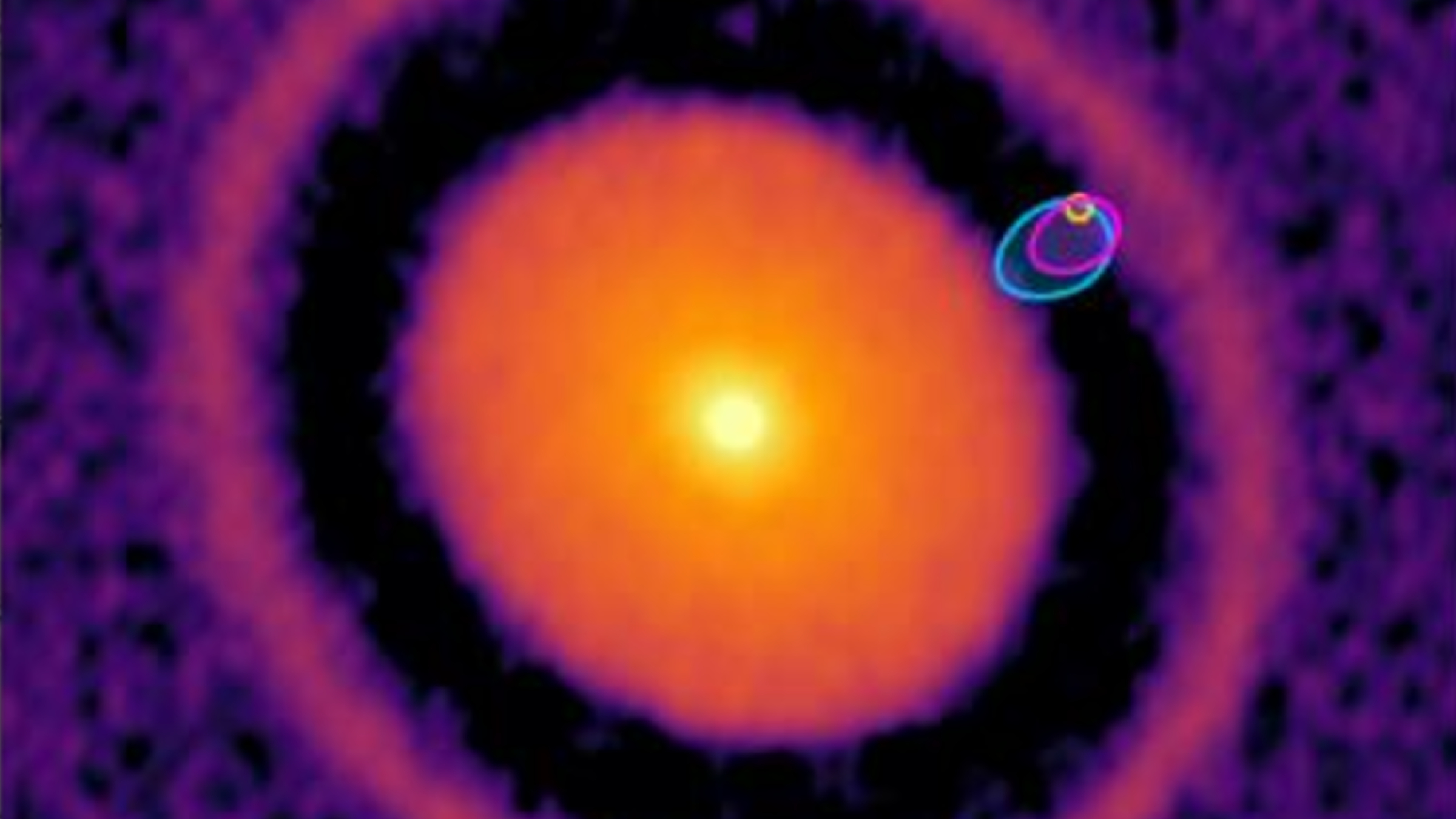
Astronomers first noticed the gap caused by Elias 2-24 b in 2017, but could not directly see the exoplanet until now.
(Image credit: Bernardi et al. 2026)
Record setter
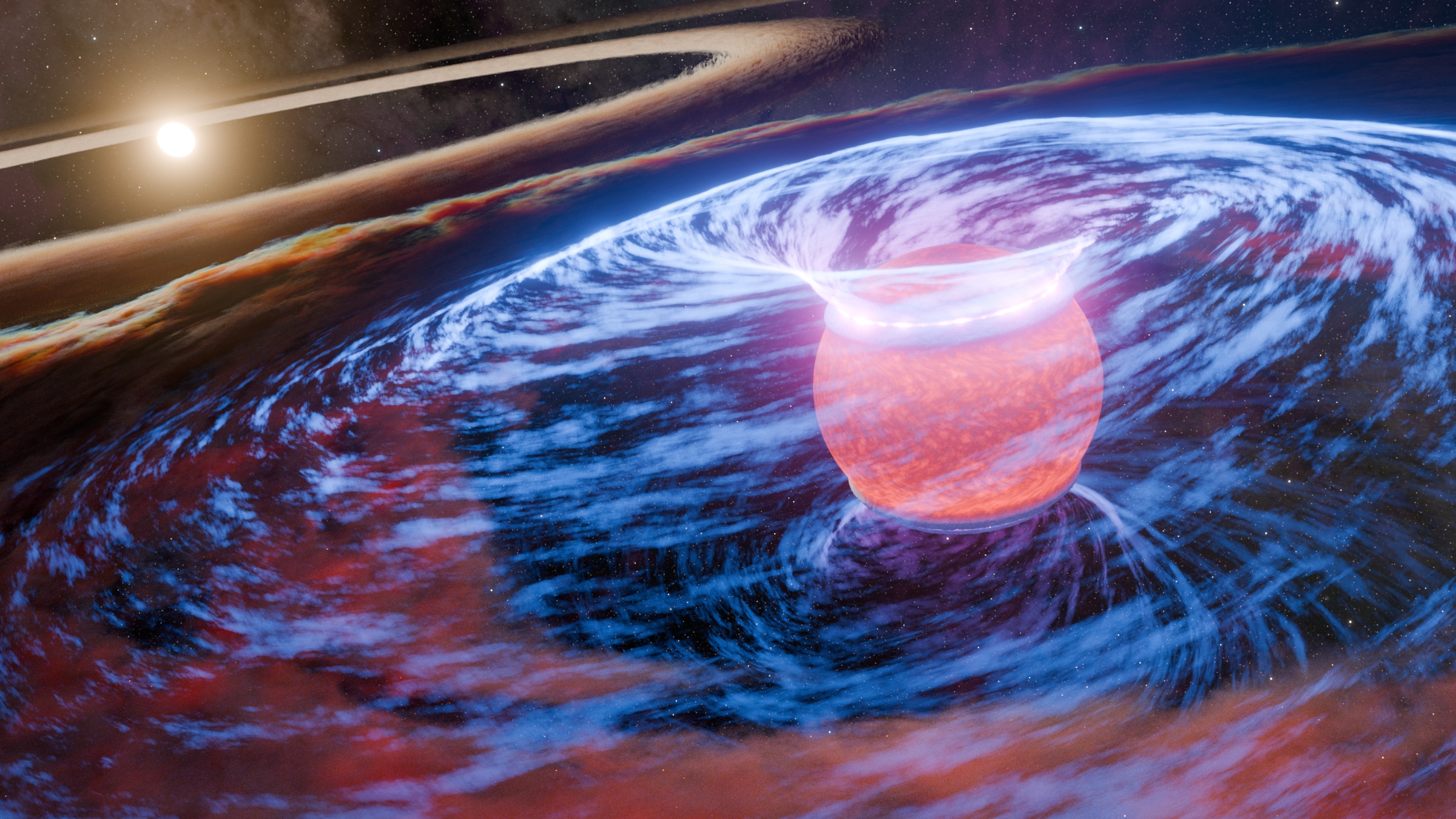
Planets form by accreting material from a star’s protoplanetary disk, as shown in this illustration of the fellow “baby” exoplanet WISPIT 2b, which is around 5 million years old.
(Image credit: NASA/JPL-Caltech/R. Hurt (IPAC))
What to read next
Mind the gaps
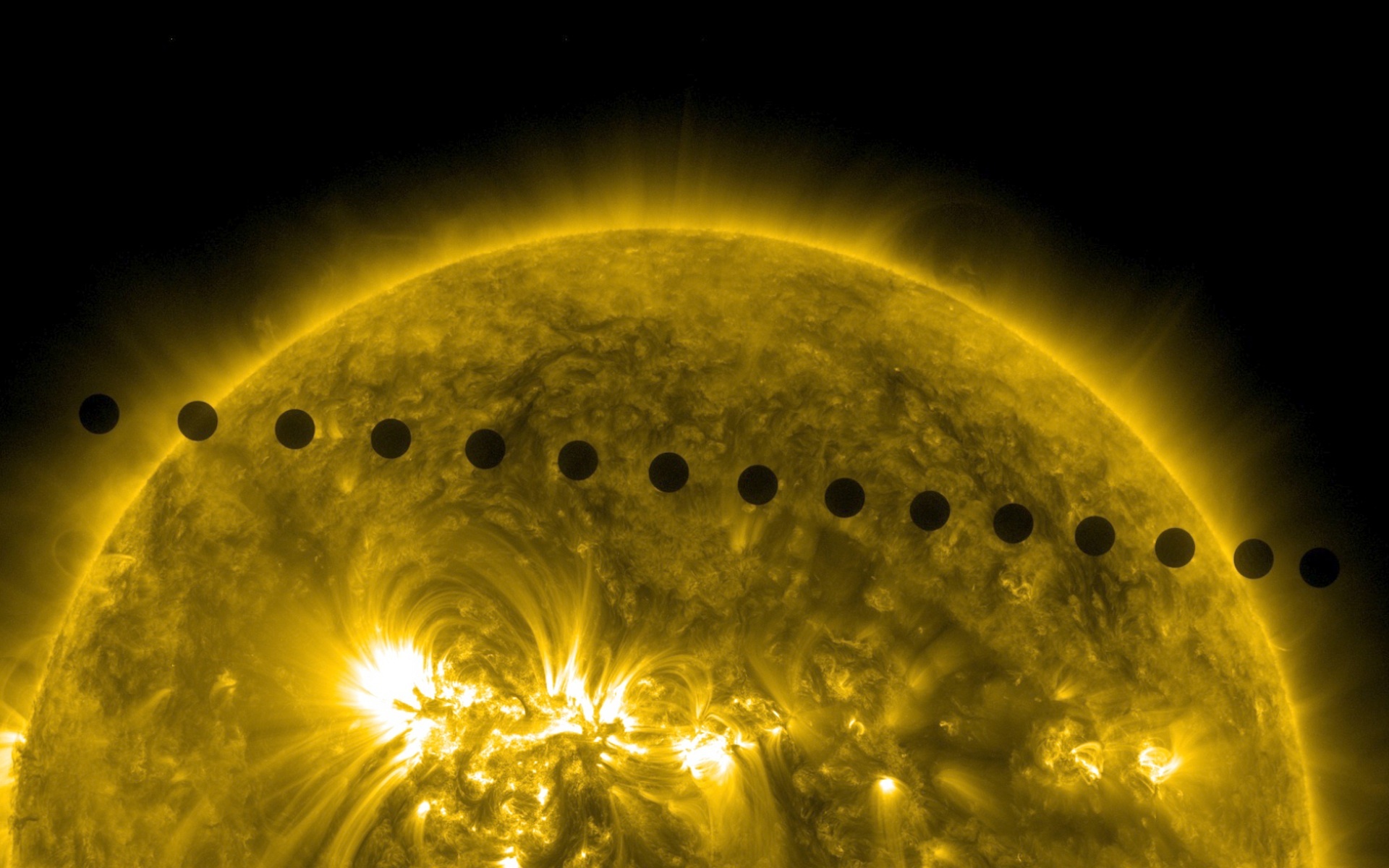
The most common method for finding exoplanets is by searching for transit events, where the alien world passes in front of its home star (similar to this transit of Venus in front of the sun). But this doesn’t work with protoplanetary disks.
(Image credit: NASA/SDO/AIA)
Bernardi, A., Zurlo, A., Cieza, L. A., Ruane, G., Christiaens, V., Dasgupta, A., Guidi, G., Mawet, D., Mesa, D., Pérez, S., & Williams, J. P. (2026). Searching for Embedded Protoplanets with the Keck/NIRC2 Vortex Coronagraph: Confirmation of a Core-accretion Planet in the Narrow Gap of the Elias 2-24 Disk. The Astrophysical Journal Letters, 1009(1), L3. https://doi.org/10.3847/2041-8213/ae9bb6