
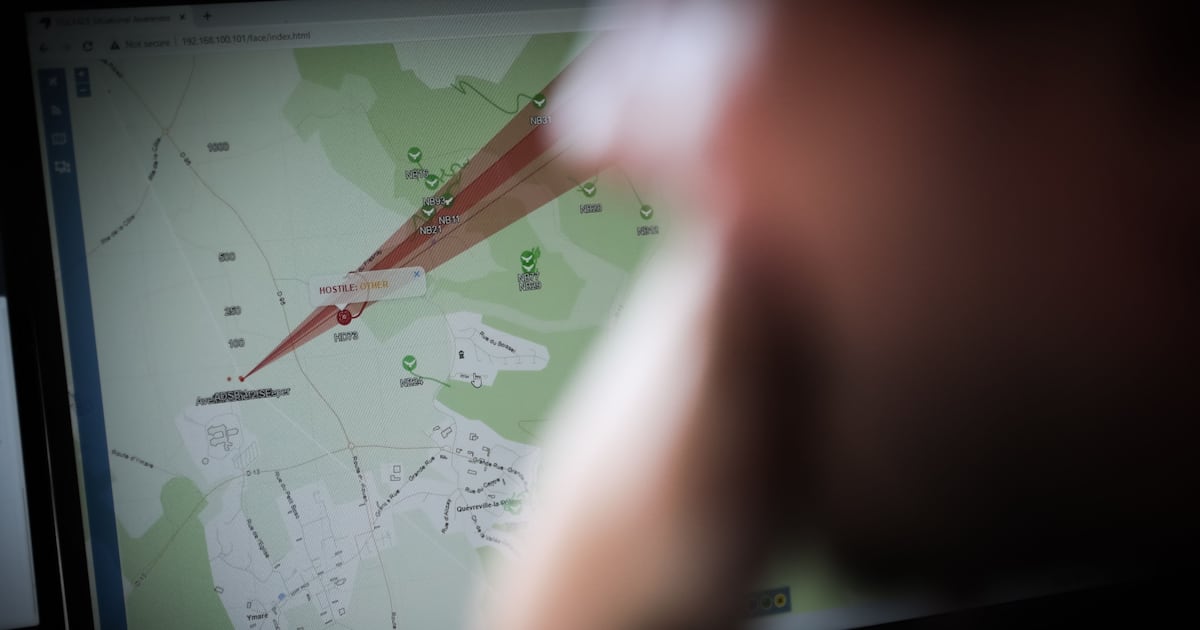
Ireland has signed an acquisition order with France for the delivery of long-range military radars, the Government has said.
Five deployable Thales long-range radar systems will be delivered as part of the agreement, starting next year, with the full capability to be in place by the end of 2028. The system is expected to cost €500 million.
Minister for Defence Helen McEntee previously said the system would strengthen Ireland’s ability to police its skies.
The agreement with the French ministry for the armed gorces was first approved in July.
The Commission on the Defence Forces had identified the development of a primary radar capability as an immediate priority to ensure Ireland could maintain a complete “recognised air picture” – meaning the military can see all aircraft over the State, including those with transponders switched off.
“I am committed to providing our Defence Forces with the equipment they need to ensure the safety and security of our State,” McEntee said in a statement. “Today is a further significant milestone in terms of delivery of the military radar programme which was a key recommendation made by the Commission on the Defence Forces.”
The Minister said being able to form a “complete recognised air picture of Irish airspace” would “very significantly enhance Ireland’s ability to protect our skies”.
Concerns about Ireland’s ability to defend its airspace have been regularly raised in the past few years.
A drone sighting was recently reported off the Co Wicklow coast around the time European foreign affairs ministers gathered at the Druid’s Glen resort for an event as part of Ireland’s presidency of the Council of the European Union.
Taoiseach Micheál Martin later downplayed concerns over security with the report coming in advance of the high-profile visit by US president Donald Trump.
However, he added: “There is more to do offshore, and that work is under way.”
Drones were spotted flying near Dublin last December during a visit by Ukrainian president Volodymyr Zelenskiy. After the incident, European Council president António Costa expressed his “full confidence” in Ireland’s ability to deal with security threats.
“What happened last week here in Dublin is another example of the hybrid attacks from Russia, and the hybrid threats from Russia to the European territory,” he said.
After Russian ambassador to Ireland Yury Filatov denied Russia was involved in the incident, the Taoiseach said: “I don’t share his views.”
At the time, Minister for Justice Jim O’Callaghan insisted additional security measures for drones would be in place for Ireland’s EU presidency.