
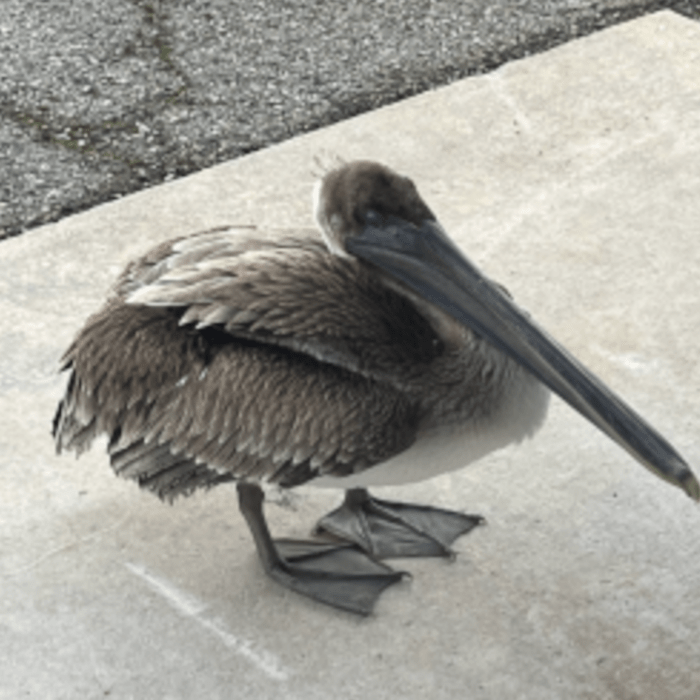
Usually, birds in need wind up at a wildlife rehabilitation center in one of two ways: either the center’s staff responds to a call, or a kindhearted human brings them in for treatment. It’s unheard of that a bird checks itself in. Yet, that’s the best description of what happened in mid-September at NOAA’s Southeast Fisheries Science Center Panama City Laboratory. Here’s how one brave brown pelican took itself to the doctor, and what biologists did to help.
An Unusual Visitor
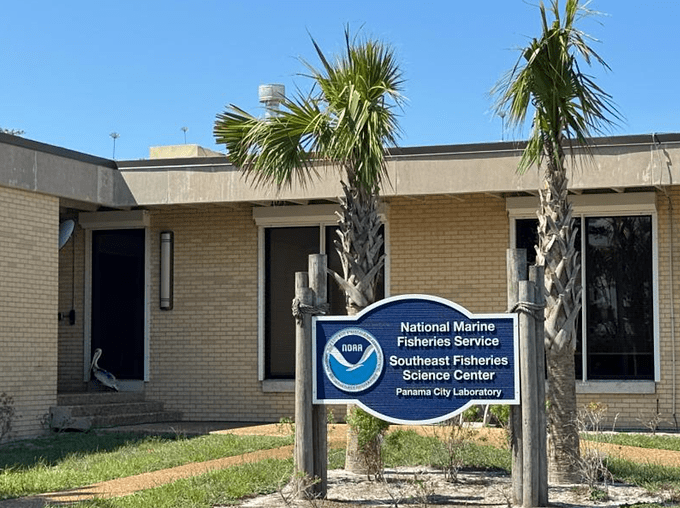 Via Ty Jones, facility manager, NOAA’s Southeast Fisheries Science Center
As an NOAA press release describes it, the center’s biologists were going through their routine workday tasks of data analysis and studying fish populations when they heard a knock at the door. When they went to greet their visitor, they found a brown pelican “repeatedly rapping its beak against the door,” the release says.
The press release notes that a staff biologist immediately diagnosed the problem. The pelican was entangled in fishing line — a deadly and tragically common problem. A double-barbed treble hook had become embedded in the bird’s right wing; and cactus spines were similarly embedded in its left foot.
With those symptoms, anyone, avian or human, would make a trip to the emergency room. In a way, that’s what this bird did… although the biologists, accustomed to working with aquatic creatures, had to get creative to treat their patient.
Check out another remarkable bird rescue story: Beauty the bald eagle, who needed help to fix her broken beak.
Helping the Patient
As the press release put it: “Using the same steady hands they use for tagging and surgically implanting acoustic tags in sharks and sawfish, the team safely restrained the bird.” Then, they snipped the barb and removed the hook from the bird’s foot, and they carefully freed the pelican’s wing from the line.
According to the biologists, the pelican displayed remarkable calmness throughout the operation. The visit and surgery took 10 minutes (a very quick procedure, by human standards).
With the bird’s injuries successfully treated, biologists released it and watched it take to the skies.
How to Prevent Similar Injuries to Birds
The NOAA reminds fishermen to stow used line in secure containers, drop scrap monofilament into designated recycling bins, and to use barbless hooks for easier removal if an accident occurs.
In this case, though, the patient pulled through — and the staff at Southeast Fisheries Science Center has a story to tell about the time when, for 10 minutes, they became avian emergency room personnel.
READ ON: If You See an Injured Bird, Here’s What to Do