
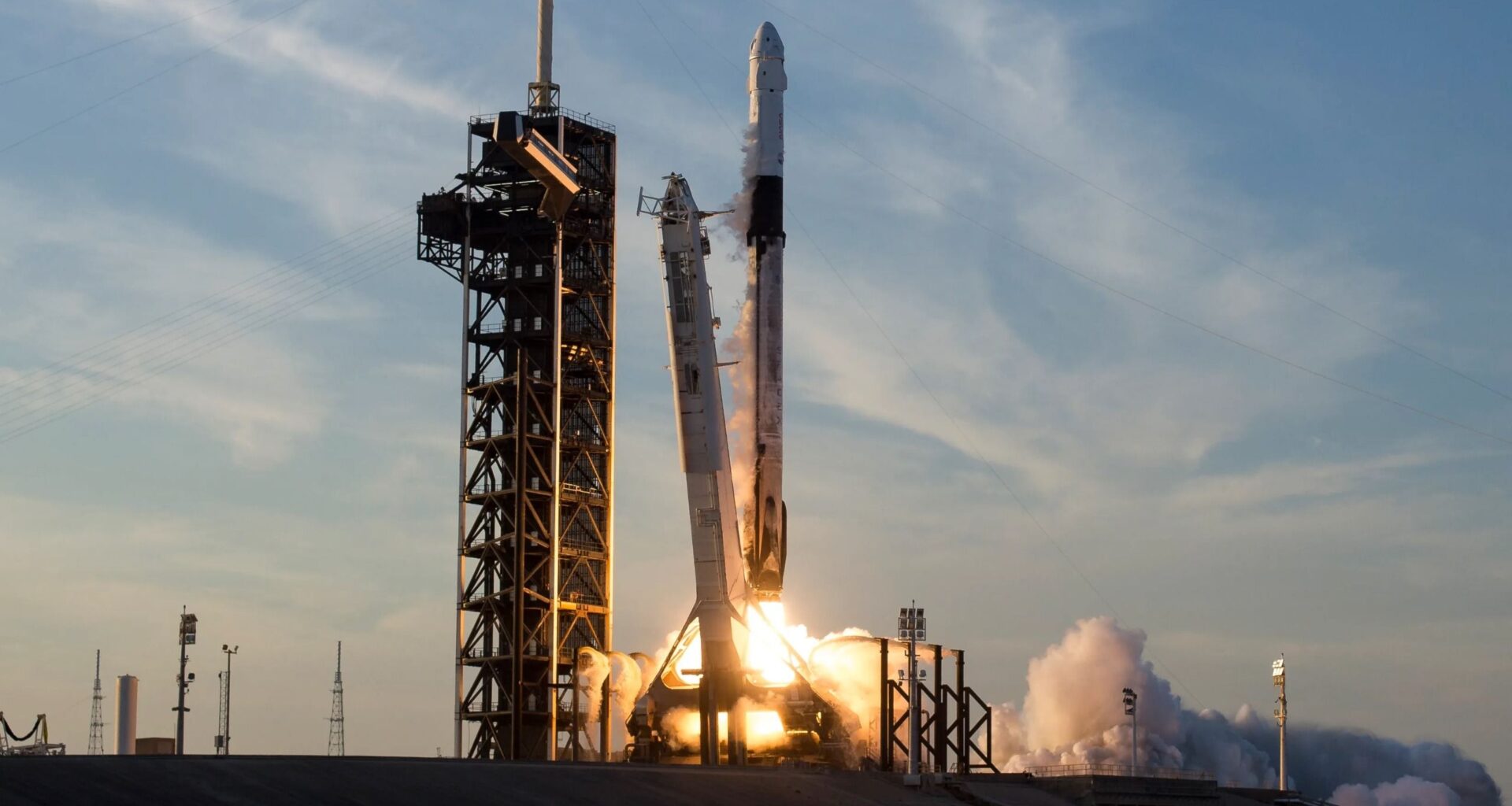
SpaceX will continue launching astronauts for NASA for at least another four years.
The agency just awarded Elon Musk‘s company $946 million to fly three more crewed missions to the International Space Station (ISS), a “period of performance” that runs through 2030.
“As part of the agency’s Commercial Crew Transportation Capability (CCtCap) contract, this change brings the total missions for SpaceX to 17 and helps NASA to maintain access to the space station with two unique commercial crew industry partners,” NASA officials said in a statement on Friday (Sept. 18).
The other commercial partner is Boeing, which, like SpaceX, got a CCtCap contract from NASA in 2014. The agency looked to these two companies to fill the crew-carrying shoes of the space shuttle, which had retired in 2011.
SpaceX has tackled the challenge with its Falcon 9 rocket and Crew Dragon capsule, which first launched astronauts to the ISS on the Demo-2 mission in May 2020. NASA certified that system for operational missions in November of that year, and SpaceX has completed 11 such astronaut flights to date.
You may like
It’s still conducting the 12th, known as Crew-12, and is gearing up for the launch of Crew-13, which is expected to occur in early October. The new contract modification will take SpaceX through Crew-17 and bring the total value of its CCtCap contract to $5.92 billion.
Boeing has had a tougher time. Its Starliner capsule flew its first crewed test mission to the ISS in June 2024, and things didn’t go according to plan; Starliner suffered thruster issues and other problems on the way to the orbiting lab, and the mission’s two crewmembers — NASA’s Suni Williams and Butch Wilmore — ended up coming back to Earth in a Crew Dragon in March 2025.

NASA still has not certified Starliner for operational astronaut missions, and it’s unclear when the capsule will fly again. However, Starliner is still part of the agency’s commercial crew plans, as Friday’s update indicates.
NASA and its international partners currently plan to retire the ISS in late 2030 or early 2031 (though the U.S. Congress has pushed to extend operations through 2032).
The agency anticipates needing the services of crewed orbital spacecraft even after the ISS is dead and gone, however. It’s encouraging the development of commercial space stations in low Earth orbit, which will be destinations for NASA astronauts and, perhaps, a range of other folks.
But Crew Dragon likely won’t be around when these future stations get up and running. SpaceX plans to retire the capsule in 2030 or thereabouts, according to Ars Technica, giving its duties (and those of pretty much all of the company’s other spaceflight systems) to its fully reusable Starship megarocket.