
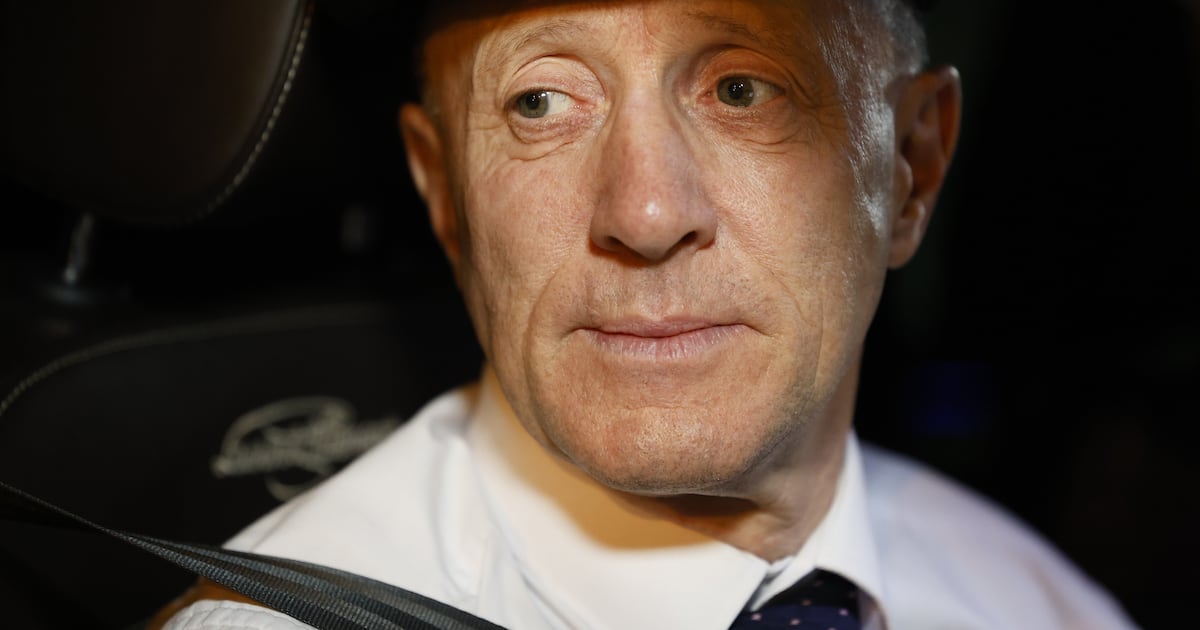
“You dirty little scumbag, ya,” the gruff yet eerily calm voice says.
“You’ll see what’s coming to you. Lord Jesus Christ will f**king punish you, and your f**king family and your generations that come after ya.
“And yes, you have f**king woken up the boys. And by f**k, you will never live a peaceful f**king day in your life ever again in Ireland.”
This threatening voicemail was left on the phone of a TD.
The politician appears so inured that they initially tell The Irish Times they have not been subjected to abuse in their political career before revealing, on reflection, that they have, in fact, received this threat against them and their family.
The TD is one of dozens of politicians who has had to have a Garda security assessment carried out on their family home due to an increase in the number of violent threats and volume of abuse they receive.
“We have cut hedges down, put in gates and put in CCTV. We are looking to get a CCTV camera now for our offices to make sure they are safe for staff,” says the politician, who asked not to be identified.
The Irish Times spoke to eight TDs, including ministers, and four senators this week but such is the fear about threats increasing and being targeted that they would only be quoted anonymously.
Since the last general election in November 2024, it is understood that about 60 TDs and senators have applied to the Oireachtas for a personal security allowance.
The allowance covers the reimbursement of up to €25,000 where a politician pays for security measures on their home or office, for them or for their staff.
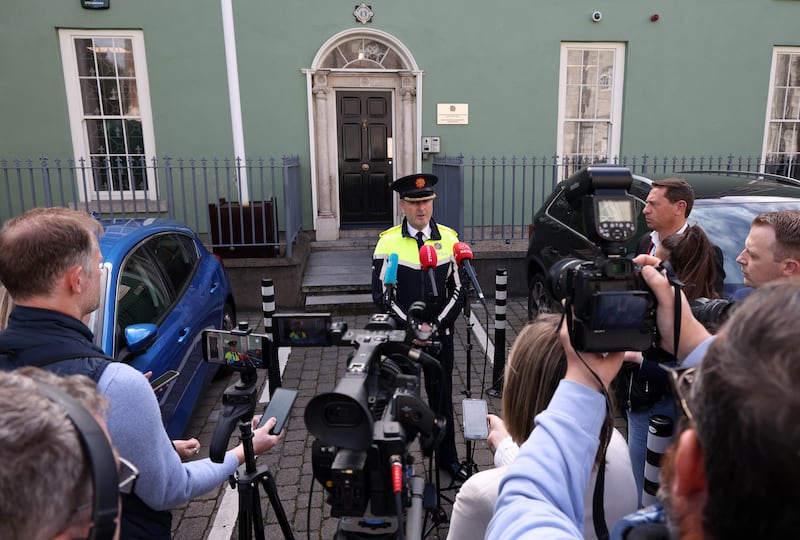 Garda Assistant Commissioner Jonathan Roberts speaks to reporters at Dublin Castle on Thursday about the attack on TD Michael Healy-Rae. Photograph: Colin Keegan/Collins
The allowance is usually paid after the Garda carries out an assessment of a politician’s home to advise on what measures would be appropriate.
At least two politicians have been advised as part of Garda assessments to consider creating “strong rooms” with reinforced, burglarproof doors which they can barricade themselves behind if their home is invaded.
One politician says she has already started to sleep with her bedroom door locked. The other says the experience has made them rethink how long they can spend in national politics.
In Leinster House on Wednesday evening, as news broke that Independent TD and former minister Michael Healy-Rae had been struck in Dublin, there was a sense of shock but an absence of surprise as friends and colleagues digested the news.
[ Healy-Rae assault casts long shadow over Dáil proceedings on first day backOpens in new window ]
Politicians from all parties and none, right up to the level of Cabinet who spoke to The Irish Times this week, say that a fear of a serious attack has become a normal part of Irish politics over the last 24 months as threats have escalated.
As one woman TD started her weekly drive back to her rural constituency on Thursday evening, she thought about the attack on Healy-Rae as she hit red traffic lights on her way out of Dublin.
“I was double checking the car doors to make sure they were locked,” she says.
The long-serving politician, who has received serious online and in-person threats to her safety, including one which was reported to gardaí, says she has started to become accustomed to working in a constant state of heightened vigilance.
“You’re conscious of threats all the time. Wherever you are, you find yourself scanning the room,” she says.
“When you have been attacked and you have a fear for your safety, you make yourself smaller. You’re constantly conscious of it; it takes a lot of the joy out of the job. It prevents a lot of us from going out socialising.”
In a ministerial car on the way to the annual Ploughing Championships in Screggan, Tullamore this week, one adviser to a minister was having a frank conversation with their politician about the possibility of a physical assault.
The most recognisable politicians in the State were about to mix within large crowds at one of the biggest public events in the Irish calendar, where an estimated 250,000 people would be in attendance over the three days.
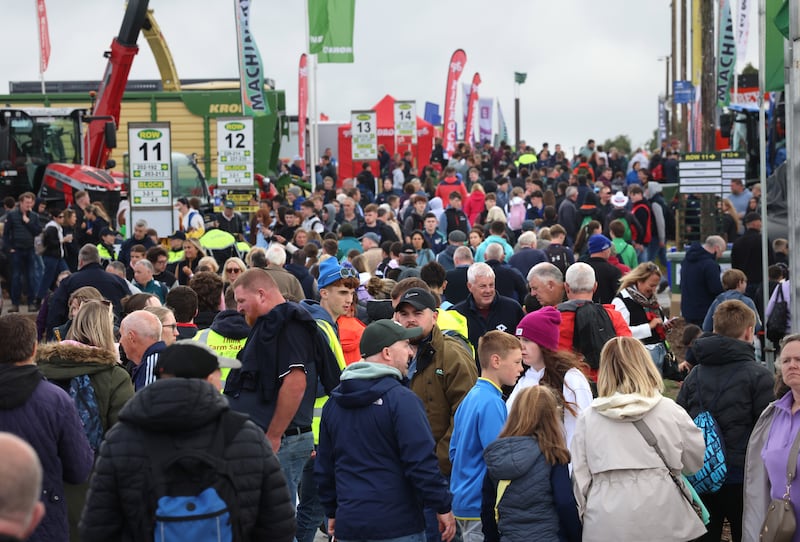 Crowds at the National Ploughing Championships in Screggan, Co Offaly, where there was an increased Garda presence this year. Photograph: Dara Mac Dónaill/The Irish Times
Ministers and advisers who attended this year described a significantly enhanced Garda presence around senior politicians through visible gardaí, plain clothes officers and detectives.
The heavier security presence was partly a response to concern about fuel protesters, but also a sign that high-profile politicians now just generally require more protection.
Opposition politicians who attended the same event also brought extra staff with them. One man in his 60s was arrested over an alleged attempted assault while approaching the Taoiseach at the event.
Two advisers say that anticipating abuse or attacks has become a more regular part of bringing a Minister to a public event. There is more advance planning and liaison with local gardaí before a minister visits a town. Spontaneous walkabouts or drop-ins on such trips – the traditional bread and butter of retail politics – have largely become a thing of the past. Events involving interactions between politicians and the public are much more regimented and scheduled due to the potential risks facing them.
Monitoring and trying to eliminate attacks against politicians is now a far more routine part of Irish policing. Serious threats against politicians are now immediately reported directly to Garda Commissioner Justin Kelly. Gardaí are proactively monitoring social media for credible threats against public representatives.
It just makes me feel so weak, talking about this publicly. I just have to push it deep, deep down and try to move on
— Woman TD
Since May 2024, the Garda has been running a dedicated operation – Operation Rialtas – to investigate threats against politicians. While figures are not yet available for this year, between 2024 and 2025, a total of 18 arrests have been made and 13 charges taken under the operation.
The Garda says there have also been three summonses, four cautions to people under the age of 18 and two cautions to over-18s. The categories of offences range from assault, burglary and firearms to criminal damage and theft. Damage and theft of election posters and harmful communications have also been recorded as alleged offences under the operation.
At the most senior levels of Government, two ministers describe how they jealously guard their sense of access to the public. Senior politicians are consciously not talking about abuse.
One woman says talking about abuse, particularly gendered or sexual abuse, makes her feel she would be defined in the minds of some constituents as a “victim”.
A senator says they are concerned that giving an interview would prompt a fresh wave of abuse.
“It just makes me feel so weak, talking about this publicly,” says one TD.
I would be a little smarter with certain public interactions in terms of walking away from conversations or situations when they become more heated, whereas before I would have been a bit more stubborn
— Minister
That same politician had a stone thrown through the window of their partner’s car. When abuse is at its peak, she could be yelled at on a weekly basis.
“I just have to push it deep, deep down and try to move on,” she says.
The overwhelming majority of politicians say they have had significant support from local gardaí.
One Minister described an occasion where they reported a serious incident to the Garda and later received a call from a journalist who had been briefed about the report, making them think twice about reporting such incidents again.
More constituency offices are being fitted with buzzers to control who enters and exits. Some staff describe how social media has become almost useless for politicians who try to shield themselves from abuse.
One Minister describes how they have removed their home address and personal phone number from the internet as much as possible. While they say they still canvass and distribute leaflets as much as possible, they are “a lot more wary of hosting public meetings or clinics”.
“I rarely go to them alone,” the Minister says.
“I speak to the gardaí a lot more regularly about my own circumstances. I would be a little smarter with certain public interactions in terms of walking away from conversations or situations when they become more heated, whereas before I would have been a bit more stubborn.”
Aengus O’Rourke, a Fianna Fáil councillor in Westmeath, is the chair of the Association of Irish Local Government (AILG), which recently tried to tackle a harassment campaign that targeted up to 70 women councillors across the country. O’Rourke says there has been a shift towards “hatred” of politicians.
He says he has seen “well-got and well-liked” people become “instant targets” as soon as they decide to run in local elections.
“We are all looked at in the one category – we have become public enemy number one in so many people’s minds,” he says.