
— Taking the “path of least resistance” has led Fred Cogelow, of Willmar, to renown as a wood sculptor in North America.
A group of citizens are confident that soon many people will be making their own paths to Willmar because of it.
They are working to develop a Cogelow Art Center. A collection of Cogelow’s works will be a focus for the center, but only part of its mission.
It will feature revolving exhibits of area artists, and its mission will be to help emerging artists begin their journeys.
“It will make a statement for Willmar,” said Fernando Alvarado, one of the founding members of the nonprofit
He sees the center as an opportunity to recognize Cogelow and his works, and as a way to introduce visitors and potential businesses to this community.

The branding logo for the Cogelow Art Center is the work of Luke Geiger.
Contributed / Cogelow Art Center
The center will host an exhibit featuring Cogelow’s works, “Coming Home,” from Sept. 28 through Oct. 30 at the Kandiyohi County Historical Society in Willmar. There will be an artist’s reception for the public featuring Cogelow and local artists Jesse Garcia, Mary La Patka, Shalese Sands and Ana Serrano from 5 to 7 p.m. Tuesday, Sept. 29.
Cogelow, who will be 77 next month, remains active in woodworking. He is expected to unveil a new work at the event. Two early works of his, originally acquired by the late Willmar trial attorney Joe Thompson, are to be loaned to the future arts center by Kay Thompson and also will be part of the exhibit opening later this month.
A conversation earlier this year between Alvarado and Willmar attorney David Moody started things moving. They spoke of their interest in an arts center and desire to see Cogelow’s work recognized in his hometown. They met with Cogelow and his wife, Doris, and gained their support.
Cogelow told the West Central Tribune that he hopes the center can enhance appreciation of wood carving and perhaps inspire a successor who would “leave a legacy of creativity far superior to my own.”
Moody said, “It’s obvious to me we need to seize this opportunity,” while speaking of showcasing Cogelow’s works and developing an arts center.
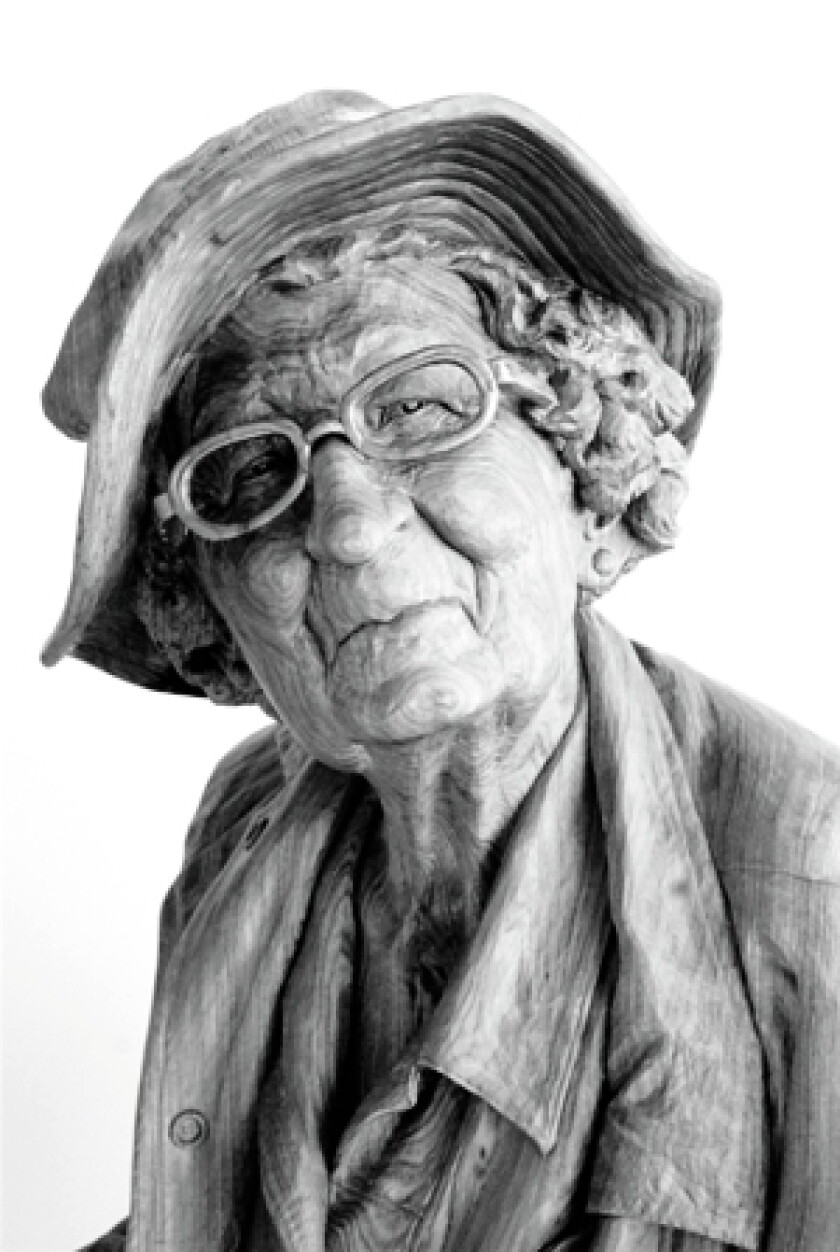
Willmar wood carver Fred Cogelow’s “A Penny Saved” is a life-size statue based on photographic studies of Zona Niece, who was also from Willmar. She died in 2015.
Contributed
Cogelow is known for his works well beyond Willmar. For more than a quarter century he has won the recognition of his peers with Best of Show awards at the International Woodcarvers Congress in Iowa. He’s won similar acclaim at the International Woodcarving Exhibition in Canada and at a wide range of shows and events throughout this country, including the Minnesota State Fair.
Not a bad track record for a guy who uses the words “path of least resistance” to describe his journey to becoming a wood sculptor. The 1967 Willmar High School graduate had no clear career path when he accepted a scholarship to attend the University of Chicago, where he would earn a degree in political science.
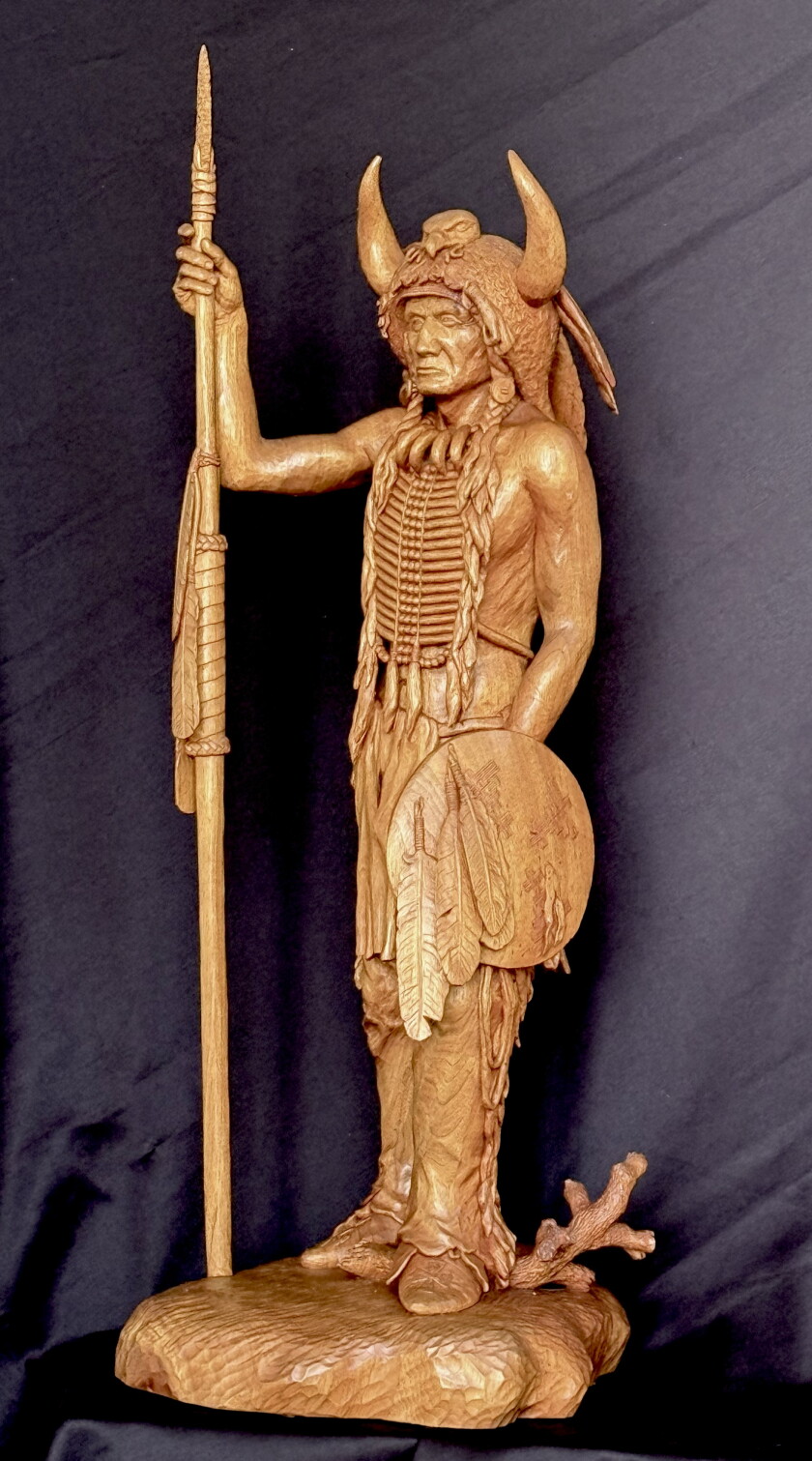
One of Fred Cogelow’s earlier works from the early 1980s, a depiction of an Oglala Sioux warrior, “Dog Dies Running,” marked an important step in his development as an artist. It was the sculpture that led him to believe in himself, Cogelow wrote in the 1991 book, “Sculptor in Wood: The collected woodcarvings of Fred Cogelow” published by Heart Prairie Press of Whitewater, Wisconsin.
Contributed / Fred Cogelow
The sharp-witted student liked to tell his counterparts from well-known, East Coast suburban addresses that he was from Pennock. He described the community as a small village nestled in the foothills of western Minnesota, where cows ranged freely, townsfolk lived in small shacks, and the mayor oversaw it all from his mansion.
Cogelow is happy to tell the rest of us that he actually is from Willmar. He creates his works in a second-floor studio behind the family home. He dismantled a chicken coop to build his studio.
He was not yet age 7 when his father died. He said his father was a jack-of-all-trades, and left behind a collection of tools, including a dull chisel. It was a start, but the young carver’s first work won no acclaim: His mother did not appreciate the emoji kind of face he carved on one of her prized bread boards.
His path of least resistance led to different jobs during summer breaks in his college years and after. His created his first carving while he was working in an adolescent program at the state hospital in Willmar.
A student had rounded off a part of a two-by-four in a halfhearted attempt at sculpturing as part of a project for the youths. Working a night shift, Cogelow picked up the piece and carved on it during his spare time. He carved “Albert the Alligator,” a rendition of the character from the “Pogo” comic strip.
It is now the official number one of 760 works he has registered since the start of his woodworking career. His journey as a wood-carver truly began in small steps, from carving images on a clawed foot for a furniture piece he was restoring to works for sale at craft shows, including walking sticks.
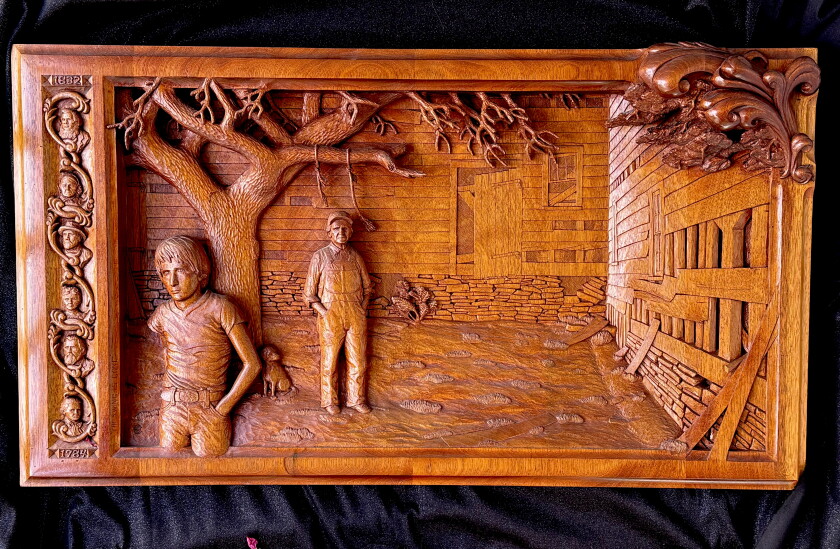
“The Swing Is Gone” tells a six-generation story of a barn now falling into disrepair, and the melancholic boy who “knows that before long the aging Grandpa and the aging barn, both dear to him, will be gone.” Grandpa is based on photos of Fred Cogelow’s old friend, the late Adolph Highstrom whom the artist describes as a “‘brush yankee,’ Swede bachelor who spent his prime years tending cows in the wooded gravel hills near Games and Skull Lakes in northern Kandiyohi County.”
Contributed / Fred Cogelow
He entered his first piece in competition at the International Woodworkers Congress in 1978. By 1983 he was among the event’s elite, winning five Best of Group prizes.
“I was off to the races,” Cogelow is quoted as telling Bob Mischka, of Heart Prairie Press, for the book Cogelow authored, “Sculptor in Wood: The collected woodcarvings of Fred Cogelow.”
In a recent interview Cogelow said he was “pretty much self taught.”
He is best known as a portrait artist. Carving mostly in butternut, but sometimes in basswood, he creates richly detailed portraits of people from the world of rural Minnesota.
Some of his subjects are people he asks to serve as models, but many are not.
“If you want to catch people being genuine and spontaneous, you have to try and catch them unawares,” he explained.
Sometimes, he will surreptitiously photograph a character that catches his eye in daily life and it becomes the image from which he creates.
“Ideas come from the environment,” he said. “The more you do it, the more ideas you have.”
Cogelow largely harvests his own wood, which he cures and keeps on hand for as many as 10 years before it is suitable for his carvings.
He describes his relief carvings as juxtapositions of elements and lines to create compositions that tell stories.
While the attention his works receive is important for his livelihood as a wood-carver, he prefers not to call attention to himself.
“I just call myself a guy who makes stuff,” he said, adding that he does not call himself an artist or claim to create art.
“When it evokes a response in the viewer, that’s when it becomes art,” he told the Tribune.
“Compulsive Creative Syndrome” is how he explains his drive.
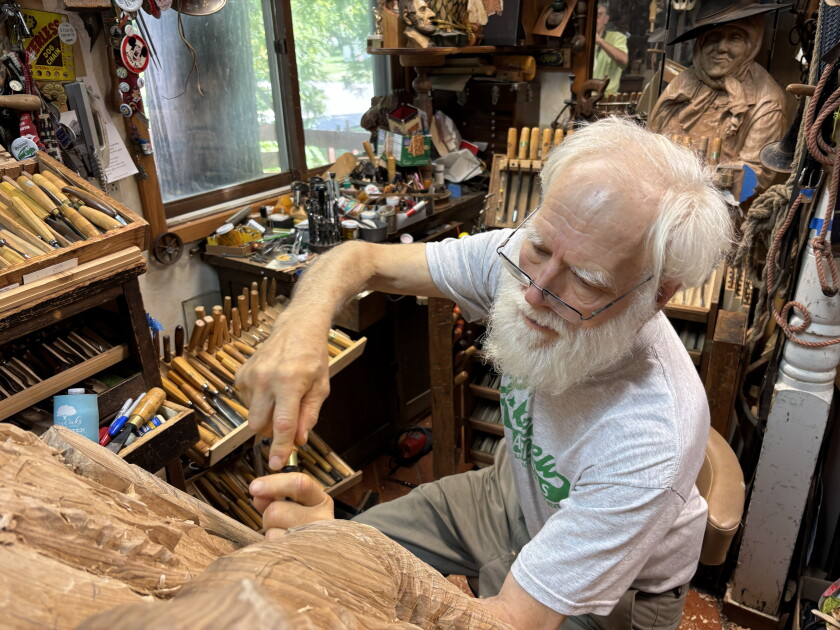
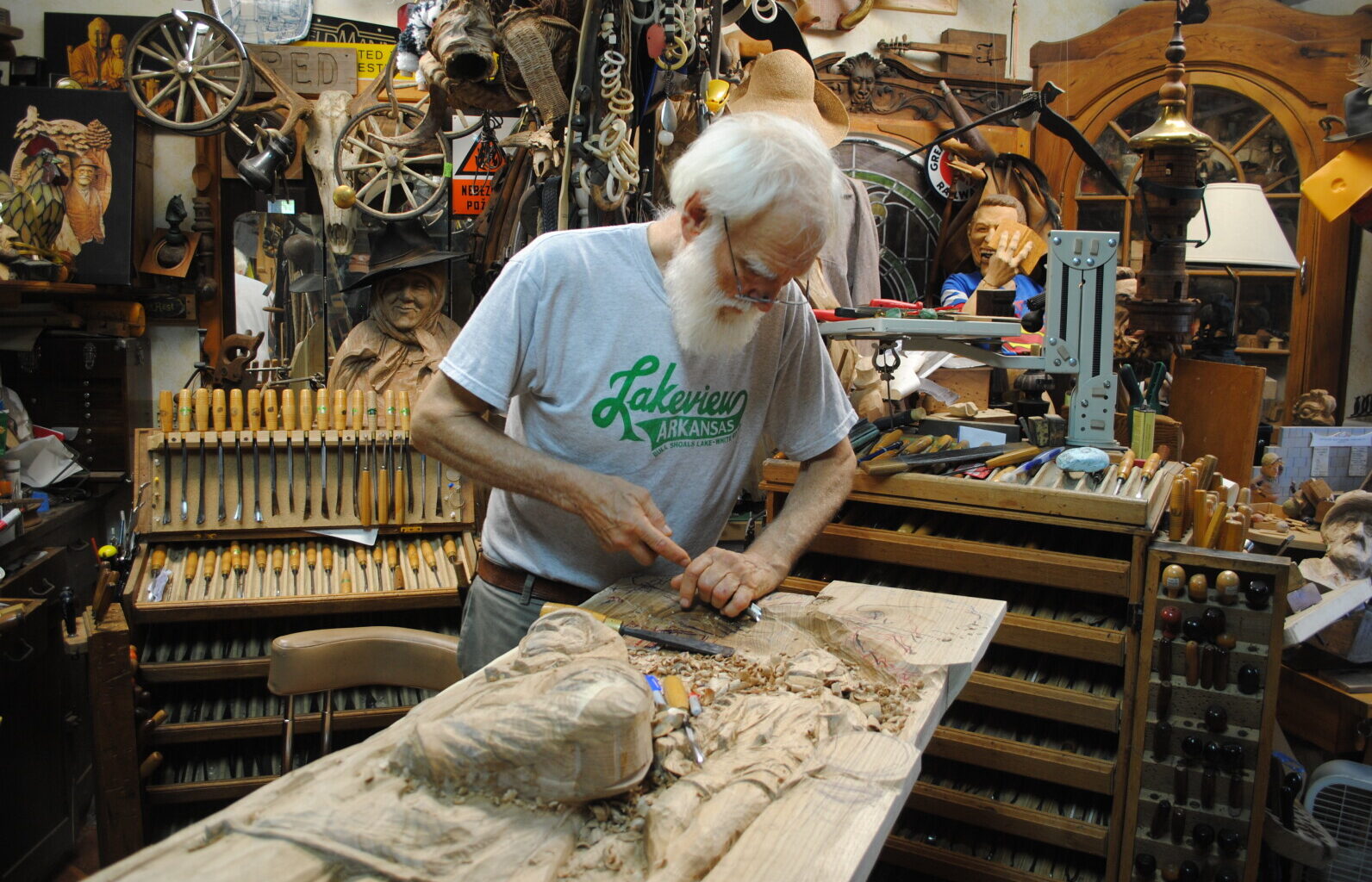
Fred Cogelow said he hopes the proposed Cogelow Art Center serves to enhance appreciation of wood carving and help emerging and area artists in the area. He is shown at work in his studio in Willmar on Sept. 9, 2026.
Tom Cherveny / West Central Tribune
Alvarado and Moody are hard pressed to find sufficient adjectives to describe their appreciation for the art created by Cogelow. Both expect that the arts center will attract national attention with Cogelow’s arts on exhibit.
“I’m not aware of any museums that have this kind of collection of masterpieces of wood carving,” said Moody.
The Willmar attorney serves as the director of the center and chair of a 15-member board of directors leading its formation. There are committees working on finding a location for the museum, membership, fundraising and other needs.
Funds are being raised through the Willmar Area Community Foundation. Founding memberships in the center are available at $15 for individuals, $25 for families and $100 for supporting businesses.
There is a lot of work ahead, but Moody and Alvarado are optimistic that the center will become a reality soon.
“It’s not going to happen overnight,” Moody said, but added that the board of directors is moving forward “like horses who’ve heard the fire bell.”
“ … They want to move ahead with this and do things, build it as carefully as possible with all the underpinnings that give it a solid presence.”
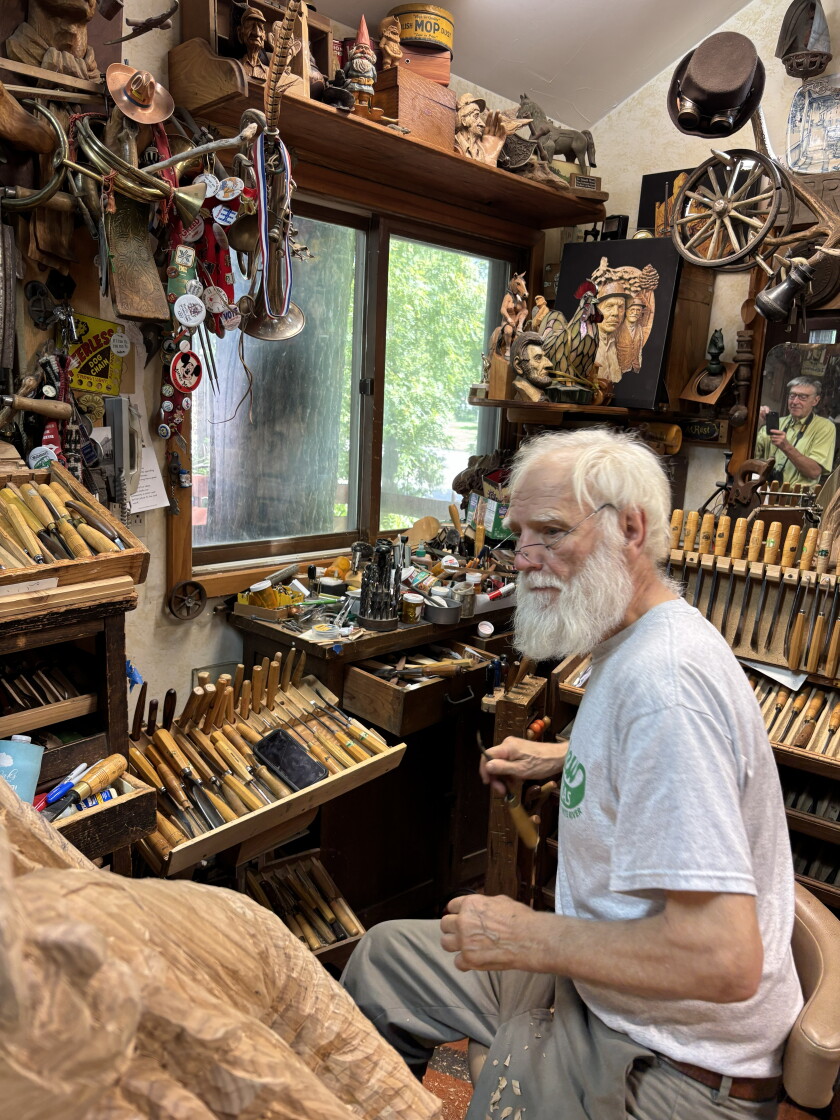
Fred Cogelow looks over a work in his studio on Sept. 9, 2026, as he prepares to grab a woodworking instrument. His collection of carving tools includes some of his own design.
Tom Cherveny / West Central Tribune