
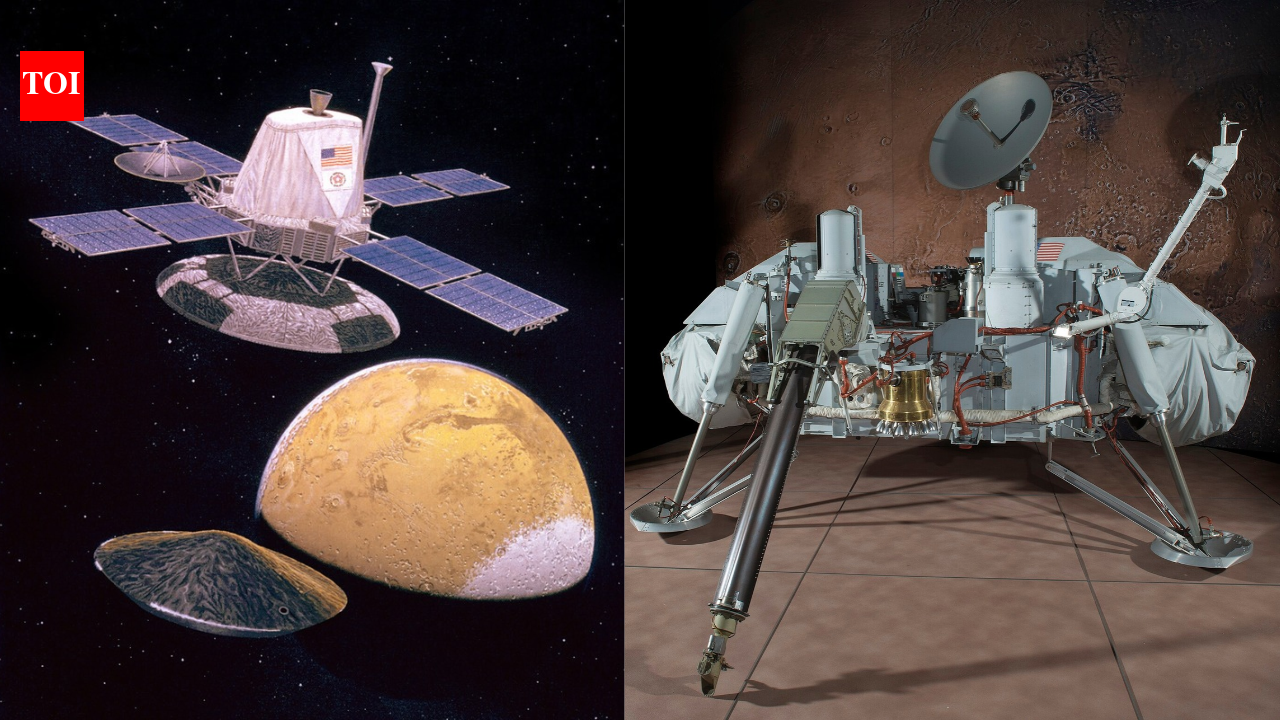
 Artist impression of a Viking orbiter releasing a lander descent capsule/Proof test article of the Viking lander | Wikimedia Commons NASA’s Viking landers reached Mars in 1976, and each lander carried a biology laboratory that was designed to test Martian soil for evidence that microorganisms might be present. The biology package included several experiments, including the Labeled Release experiment. NASA designed that test around a simple idea, which was to give a soil sample a small amount of radioactive organic nutrients and watch for signs that something in the soil metabolized them. The nutrient solution was tagged with carbon-14, and radioactive carbon dioxide could appear in the air above the soil if microorganisms consumed the material and produced metabolic byproducts. NASA’s account of the Viking mission describes the experiment as a search for metabolism in Martian material.Scientists could heat-treat a duplicate soil sample before adding the nutrients, and if the response disappeared after heating, that could provide evidence that a biological process was involved because microorganisms would be expected to be damaged by the treatment. That distinction became important once the first results arrived.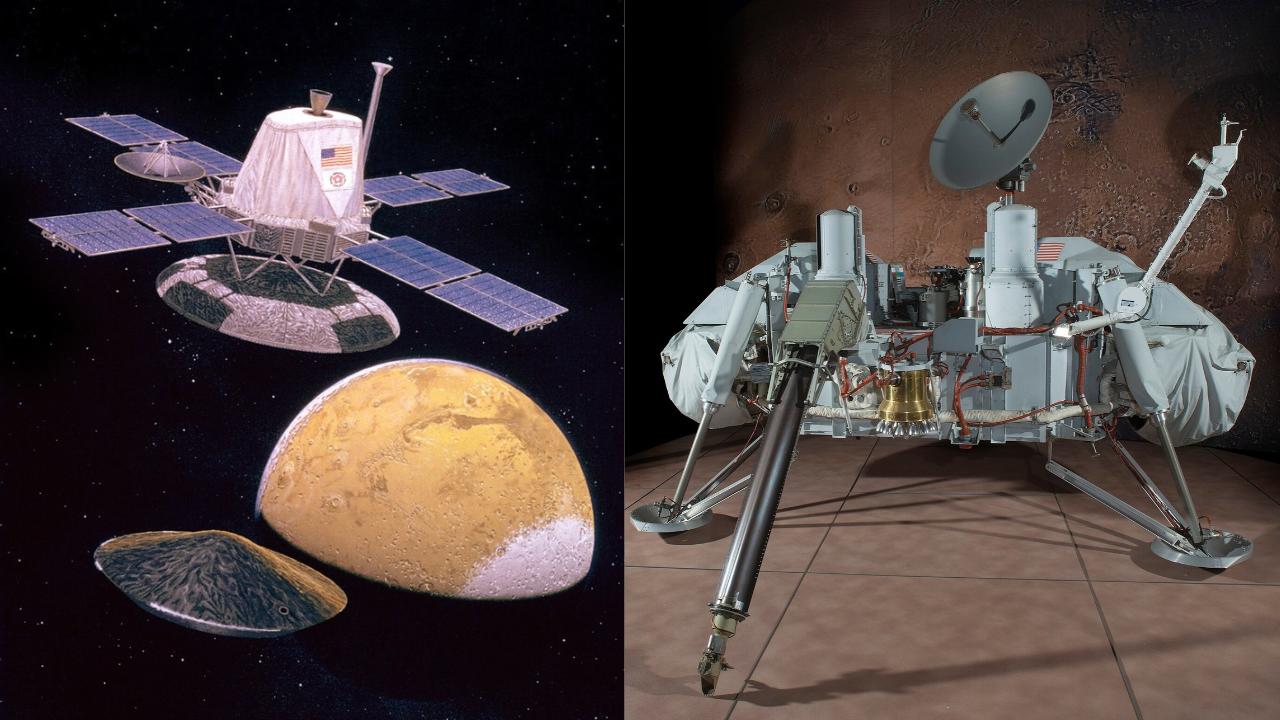
Artist impression of a Viking orbiter releasing a lander descent capsule/Proof test article of the Viking lander | Wikimedia Commons
The soil produced a response that resembled metabolismThe Labeled Release experiment generated radioactive gas after the nutrient solution was added to Martian soil, and NASA’s contemporary technical report described remarkably similar radioactive-gas evolution at the two Viking landing sites. The researchers also reported that the response was strongly reduced or eliminated by heat treatment, and at the time, those characteristics were compatible with the possibility that microorganisms were responsible. The report said that the results had biological and nonbiological interpretations and that the available evidence did not permit a conclusion about whether life existed on Mars.That made the result scientifically interesting but also difficult to interpret, since a biological experiment on Earth could be tested against organisms and known chemistry, but Mars offered no such certainty. Viking’s other biology experiments produced additional chemical reactions, but they did not provide a matching confirmation of the Labeled Release signal. NASA’s later review of the Viking biological experiments noted that the Labeled Release instrument was the only one whose results resembled those expected from a metabolizing system. The other experiments also detected reactions, but their characteristics did not fit the criteria for metabolism as clearly.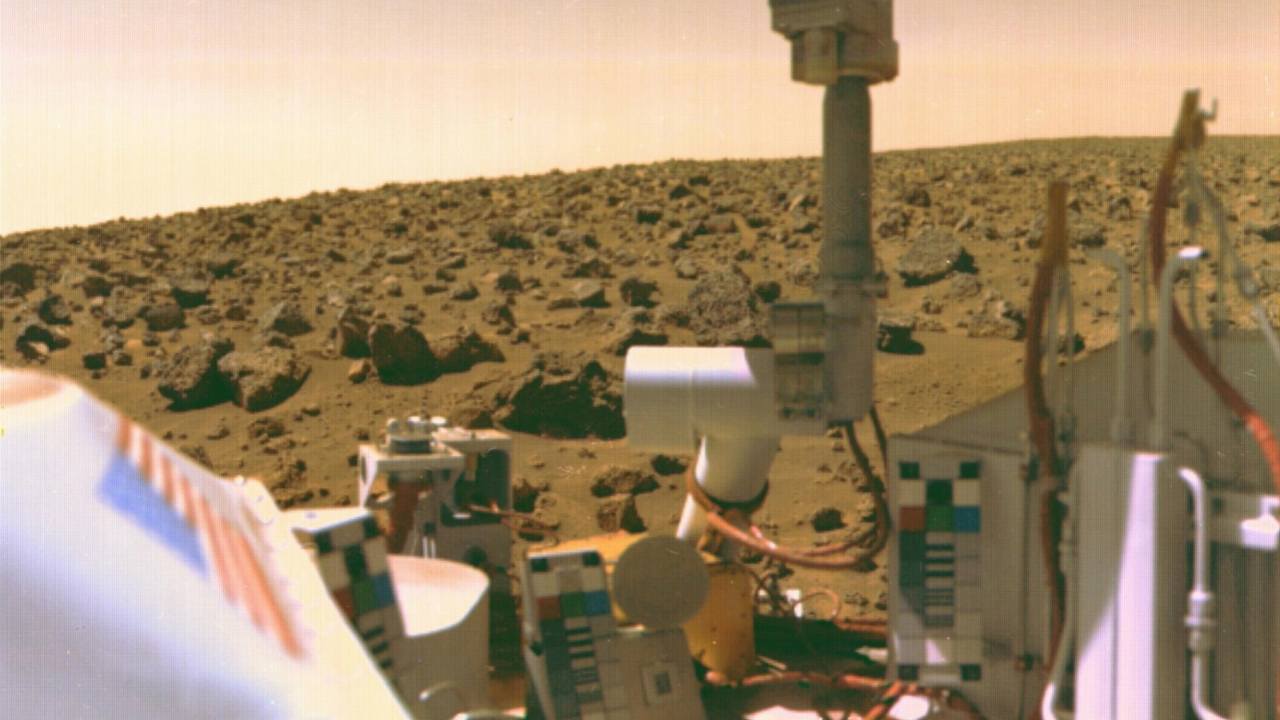
Image from Mars taken by the Viking 2 lander | Wikimedia Commons
Chemistry became a competing explanationNASA researchers examined the possibility that reactive chemicals in Martian soil could interact with the nutrient solution and produce gases without the involvement of living organisms. A NASA review published after the Viking experiments noted that oxidants, including hydrogen peroxide and iron oxides, could account for the observed reactions. The review concluded that the biological experiments had produced chemical reactions but had not provided a definitive answer about Martian life.That uncertainty is why the Viking experiment is often described as a possible life-detection signal rather than a discovery of life. The experiment was deliberately constructed so that a particular chemical response could indicate metabolism, and the Martian soil did produce a response with several characteristics that looked biologically interesting. But a signal that is consistent with biology is not the same as independently confirmed biological activity.The Viking missions therefore ended without NASA announcing that life had been found on Mars; instead, they left scientists with a more difficult problem: Martian chemistry could produce reactions that looked surprisingly similar to what a biological experiment was designed to detect. The Viking Labeled Release experiment remains part of the history of Mars exploration for precisely that reason, nearly five decades later. It was an early attempt to test another planet’s soil directly, and its most intriguing result was also one that could not be cleanly separated from the planet’s unfamiliar chemistry.