
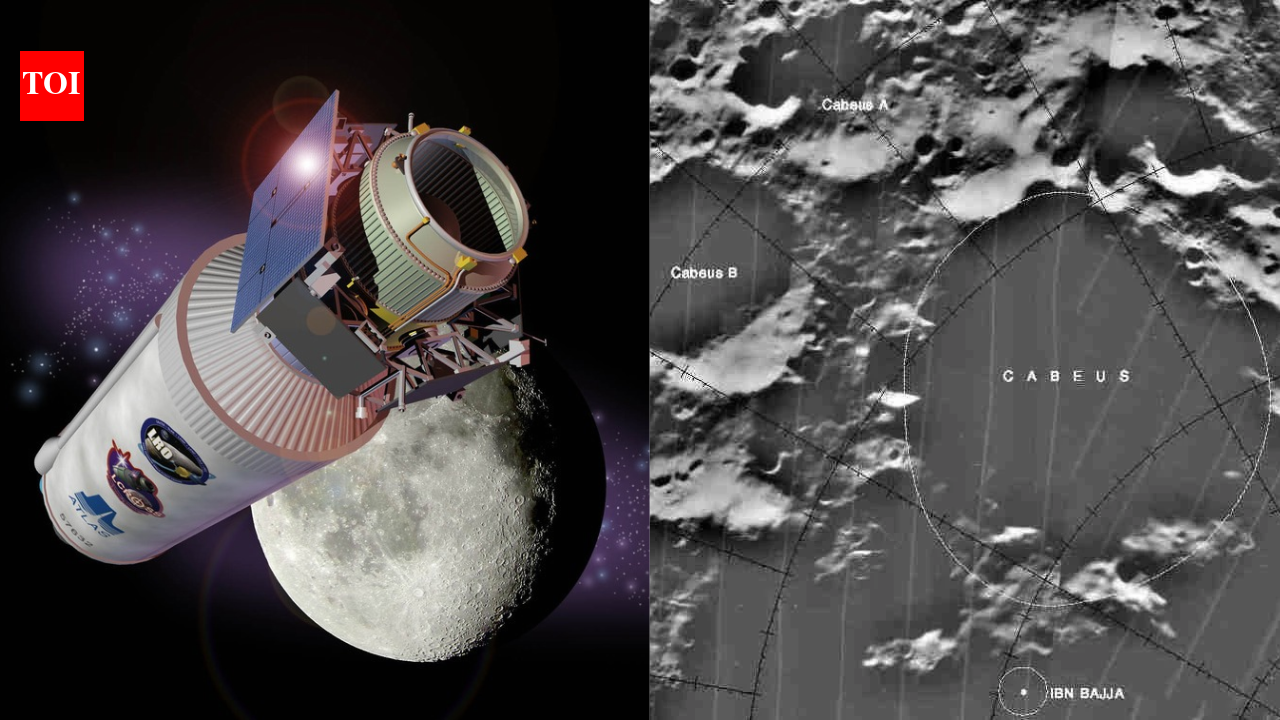
 NASA deliberately sent a spent rocket stage crashing into the Moon on October 9, 2009, with the target being Cabeus crater | Wikimedia Commons NASA deliberately sent a spent rocket stage crashing into the Moon on October 9, 2009, with the target being Cabeus crater, a permanently shadowed region near the lunar south pole where scientists suspected water ice could survive in extreme cold. The impact was part of NASA’s Lunar Crater Observation and Sensing Satellite mission, better known as LCROSS. The mission launched with the Lunar Reconnaissance Orbiter on June 18, 2009, with the specific objective of determining whether water ice existed inside a permanently shadowed lunar crater.Mission planners used the spent Centaur upper stage of the rocket that had launched LCROSS toward the Moon. The Centaur became the impactor, and NASA project scientist Anthony Colaprete later explained that the team used the roughly 2,300-kilogram, or nearly 5,000-pound, Centaur stage to create a much larger impact than LCROSS could have produced with a smaller dedicated projectile.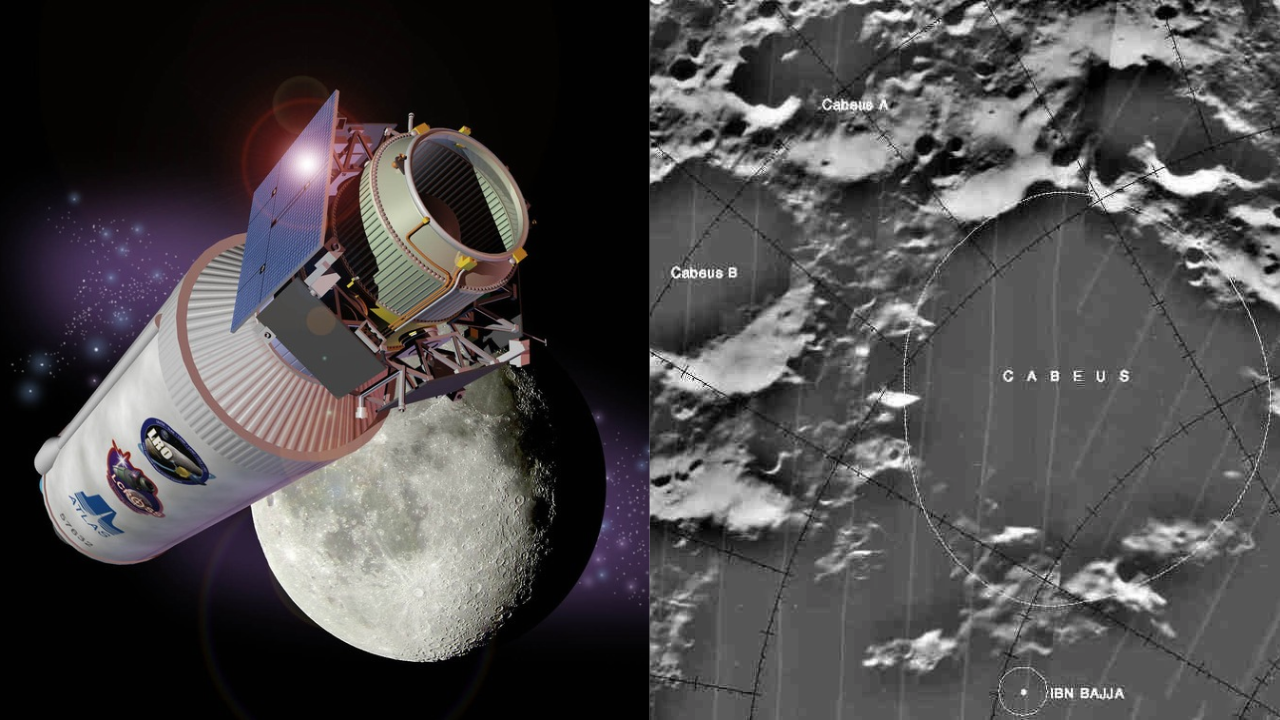
NASA deliberately sent a spent rocket stage crashing into the Moon on October 9, 2009, with the target being Cabeus crater | Wikimedia Commons
The impact was designed to expose buried materialCabeus was chosen because part of its floor never receives direct sunlight, and temperatures inside such permanently shadowed regions can remain extremely low, which allows volatile substances such as water ice to survive for long periods. LCROSS turned that environment into an experiment. The Centaur struck the crater at roughly 5,600 mph, and its collision excavated material from below the lunar surface and sent a plume of dust, soil, and vapor above the crater floor. The LCROSS spacecraft followed the impactor and flew directly through the debris plume about four minutes later.Its instruments were designed to analyze what had been thrown upward, and cameras recorded the event while spectrometers examined the light signatures of molecules in the plume. NASA initially reported that the mission had successfully uncovered water near the Moon’s south pole, while later analysis provided a more detailed picture of what the impact had excavated. The experiment was therefore not simply a case of seeing a flash and assuming that water was present, since scientists used the spectral information collected from the debris to identify water and other materials.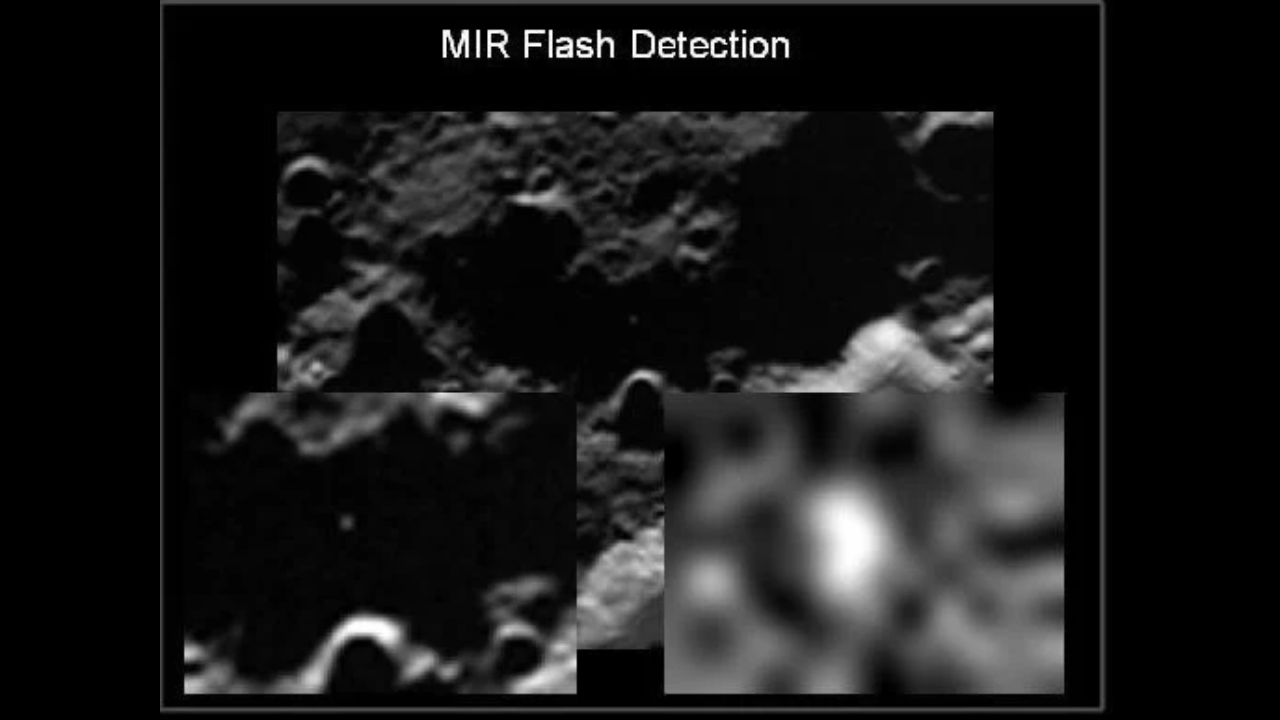
Image taken of the Centaur upper stage impact in the Cabeus crater near the south pole of the Moon | Wikimedia Commons
The debris contained water and other volatile compoundsA 2010 paper in Science reported that the LCROSS impact produced spectral signatures attributed to water vapor and ice, along with hydroxyl emissions. The researchers estimated that the maximum total water vapor and ice within the spacecraft’s field of view was about 155 kilograms. The findings also showed that water was not the only material excavated from Cabeus, as scientists detected several other volatile compounds, including light hydrocarbons, sulfur-bearing species and carbon dioxide.The permanently shadowed craters at the lunar poles had effectively acted as cold traps and had preserved material that could otherwise have been lost from the exposed lunar surface. The LCROSS spacecraft itself did not survive the mission, as it also struck the Moon a few minutes after passing through the Centaur impact plume and transmitting its measurements to Earth.NASA’s mission summary now describes LCROSS and LRO as having found evidence that lunar soil in shadowed craters contains useful materials and notes that water at some locations exists as relatively pure ice crystals. It began as a controlled collision and therefore became one of the key experiments in establishing the presence of lunar water ice. The Moon had been studied for centuries from a distance, but LCROSS used a spent rocket stage to physically excavate part of its hidden polar environment and let instruments examine what had been buried there.