
A record 127 Korean companies brought anime-style subculture games to Tokyo Game Show, seeking growth beyond MMORPGs.
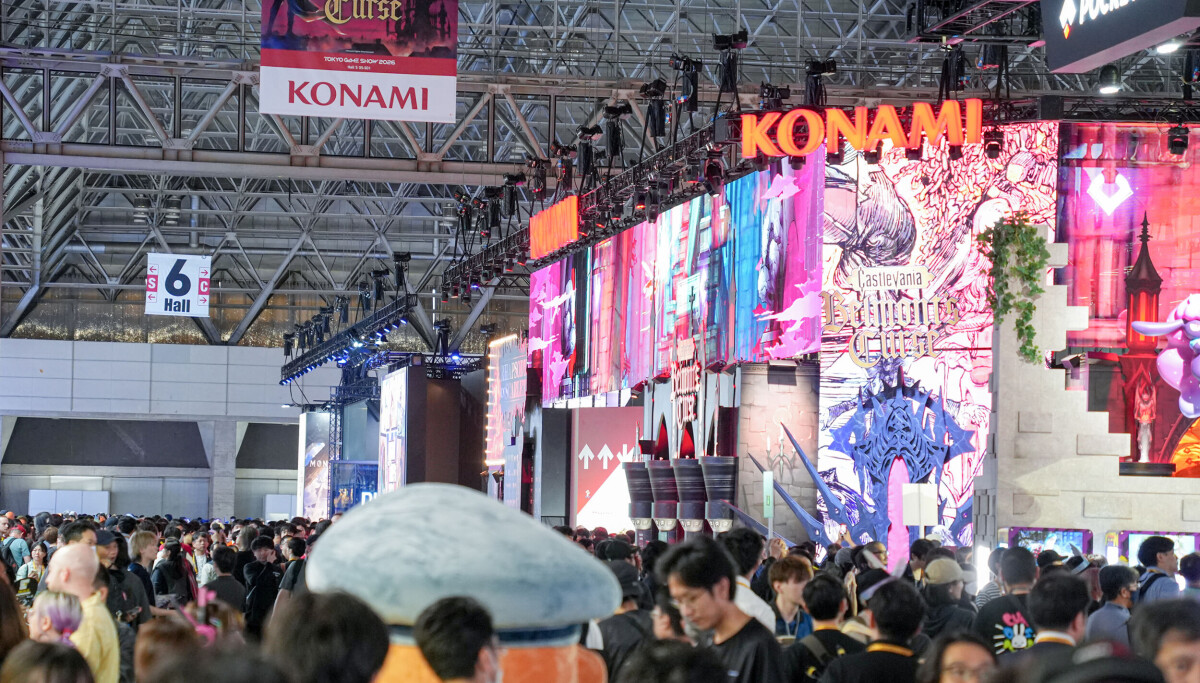
Visitors crowd the Makuhari Messe convention center in Chiba, Japan, on Sept. 17, the opening day of the Tokyo Game Show 2026.
YONHAP
A record 127 Korean game companies exhibited at the Tokyo Game Show, which opened Thursday — and for the first time, the country’s biggest publishers all brought subculture games, a genre built around anime-style art and characters, as their leading titles.
The shift signals that Korea’s largest publishers, long dependent on massively multiplayer online role-playing games, or MMORPGs, are now betting on more niche subculture games as their next growth engine, even if it means competing on Japan’s home turf.
Nexon Games unveiled Pareidolia, NC showed off Astrae Oratio, Netmarble introduced Pearl in Blue and Smilegate presented Miresi: Invisible Future at the show.
The Tokyo Game Show is considered one of the world’s two biggest game shows, alongside Gamescom in Cologne, Germany. Korean game companies had shown little interest in it until now as it had little overlap with an industry long focused on MMORPGs. In 2024, Nexon was the only one with its own booth.
That has changed as subculture games built strong fan followings and grew their share of the global market, with Korean companies racking up their own success stories. Nexon’s Blue Archive, released in 2021, and Shift Up’s Goddess of Victory: Nikke, released in 2022, are the leading examples. Blue Archive generated $650 million in cumulative revenue over its first four years, 73 percent of it from Japan. Nikke brought in $1 billion in revenue within two years of launch, with half that coming from Japan. China’s Genshin Impact and Arknights also gained popularity and helped expand the market.
Global research firm DI Market said the subculture game market is projected to grow from $5 billion last year to $10 billion by 2030. “In the past, if you pitched a subculture game in a meeting, it would get passed over,” one Korean game developer said. “Now management encourages developing them.”
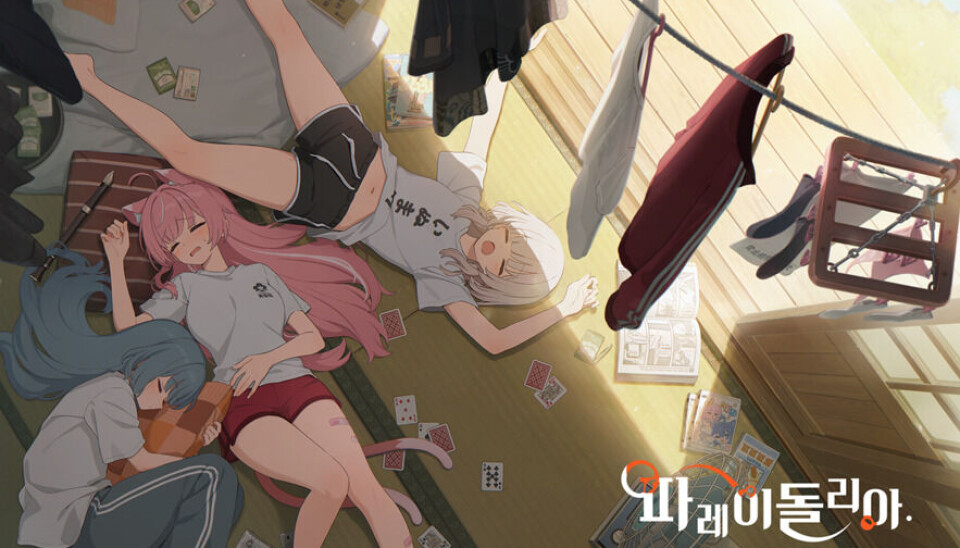
Nexon Games’ subculture game Pareidolia, unveiled at Tokyo Game Show 2026 on Sept. 17
NEXON GAMES
Subculture games also tend to have longer lifespans than other genres, since their business model centers on fandoms built around deep attachment to characters. Once a game gains popularity, fans often produce and share their own web novels, merchandise and other fan-made content. Their clearly defined, loyal user base also makes subculture titles attractive partners for brand collaborations — convenience store chain GS25 and fashion e-commerce platform Musinsa both ran ad campaigns last year using Blue Archive intellectual property.
Game company executives increasingly view the genre as a new cash cow. “Because the games rely heavily on animation, they cost less to produce than other genres,” one Korean game industry insider said. “Users tend to play alone rather than in groups, which also lowers server maintenance costs, and high user loyalty means sequels have better odds of succeeding.”
Japan remains the leader in this market, but its major game companies, including Nintendo and Sony, are focused mainly on developing packaged console games. That has left an opening for Korean companies, which bring deep experience in mobile games, to look for new opportunities in the space.
A shortage of original animation and comic intellectual property is seen as a weakness for the Korean industry, however. “Subculture games depend on stories compelling enough to captivate fans, and that’s exactly where the Korean game industry is weakest,” said Kim Jung-tae, a professor at Dongyang University’s Department of Game Studies.
BY OH HYEON-WOO [lee.jian@joongang.co.kr]
This article was originally written in Korean and translated by a bilingual reporter with the help of generative AI tools. It was then edited by a native English-speaking editor. All AI-assisted translations are reviewed and refined by our newsroom.