
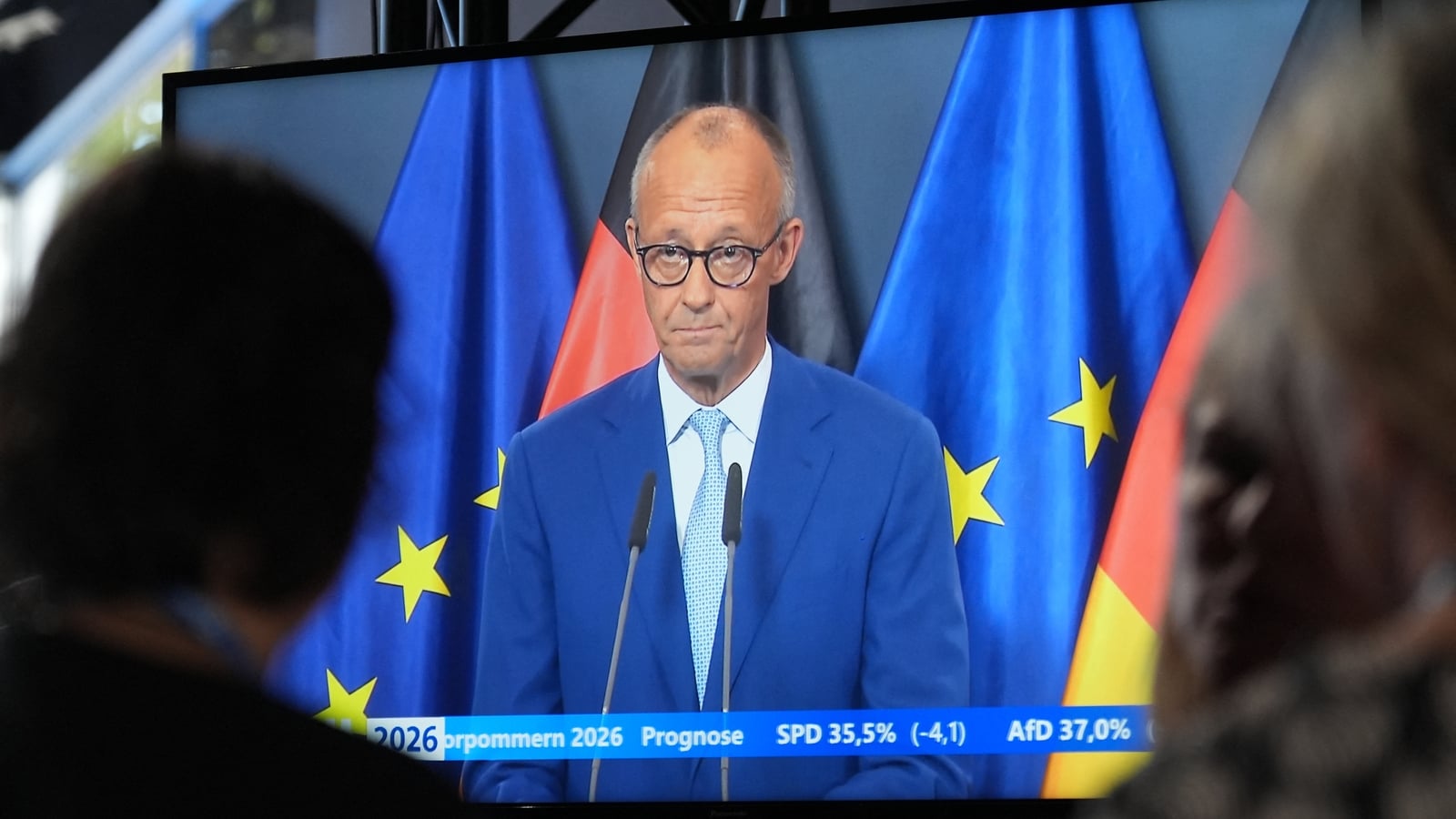
The Alternative for Germany (AfD) took first place in state elections in northeastern Germany, exit polls showed, delivering a “disaster” for Chancellor Friedrich Merz, who vowed to push ahead with his reform agenda.
The AfD was set to win 37% in the state of Mecklenburg-Western Pomerania, ahead of the centre-left Social Democrats on 35.5% and far in front of Mr Merz’s conservatives, who got 5.5% and barely crossed the threshold to enter the state parliament, according to exit polls on ARD public television.
However, the far-right party is unlikely to govern as the other main parties rule out working with it.
If confirmed, the result would be the worst in any state election for Mr Merz’s party since 1949. It would also be another first-place finish at state level in a month for the AfD party, which is shunned by mainstream parties but is topping national opinion polls.
“It’s a disaster,” Mr Merz said in televised remarks after the exit polls were published, but signalled that he would fight on as chancellor after speculation that a bad result could prompt him to resign.
In another election in the capital Berlin that also took place, the far-left Linke party was on 24.5%, while Mr Merz’s conservatives were on 20% and the AfD also gained in strength, hitting 16%.
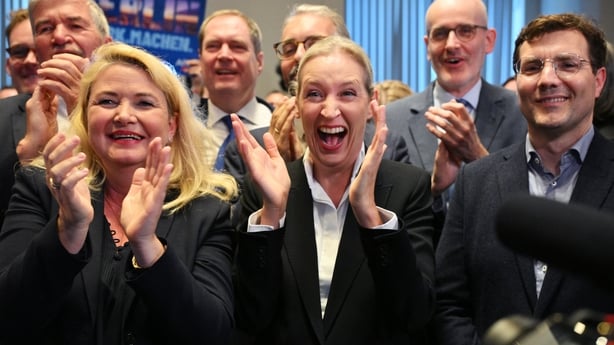
Co-leader of AfD Alice Weidel (C) and AfD top candidate for Berlin Kristin Brinker (L) celebrate results
The results may not prove a knock-out blow for Mr Merz, who last week received backing from eight conservative state premiers.
However, his low approval ratings, unpopular reforms and the triumph of the AfD in an earlier state election in Saxony-Anhalt have left his future in the balance.
Mr Merz has called a party meeting to discuss the way forward.
The elections in Mecklenburg-Western Pomerania, a largely rural state in the formerly communist east, and the capital Berlin follow the 6 September election in Saxony-Anhalt, where the AfD came close to the rare feat of winning an absolute majority.
Elections in the two states would not usually draw much interest outside Germany, but the AfD’s success in Saxony-Anhalt, which it sees as the first step towards winning federal elections due in 2029, has sent shock waves through Europe.
In just over a decade, the party, which wants to take tough action to deport foreigners with no right to stay in Germany, restore energy ties with Russia and quit the euro, has transformed itself from a fringe eurosceptic movement to the country’s most popular party.
The exit polls underscore the advances the AfD has made in recent years and raise fresh questions over the “firewall” strategy, under which the other main parties refuse to enter coalition agreements with it.
Merz has struggled
Elected last year on a promise of reforms to return Germany’s stagnant economy to growth, Mr Merz has struggled to win over voters, compounding resentment over unpopular pension, tax and healthcare reforms with a stream of communication missteps.
For the moment at least, senior CDU figures have rallied behind him, aware that replacing the chancellor – which would in any case be difficult on constitutional grounds – would leave any successor facing the same deep economic problems.
But disillusionment with his government has hung over the campaigns in both Mecklenburg-Western Pomerania and Berlin, where voters have focused on issues including soaring energy and housing costs.