
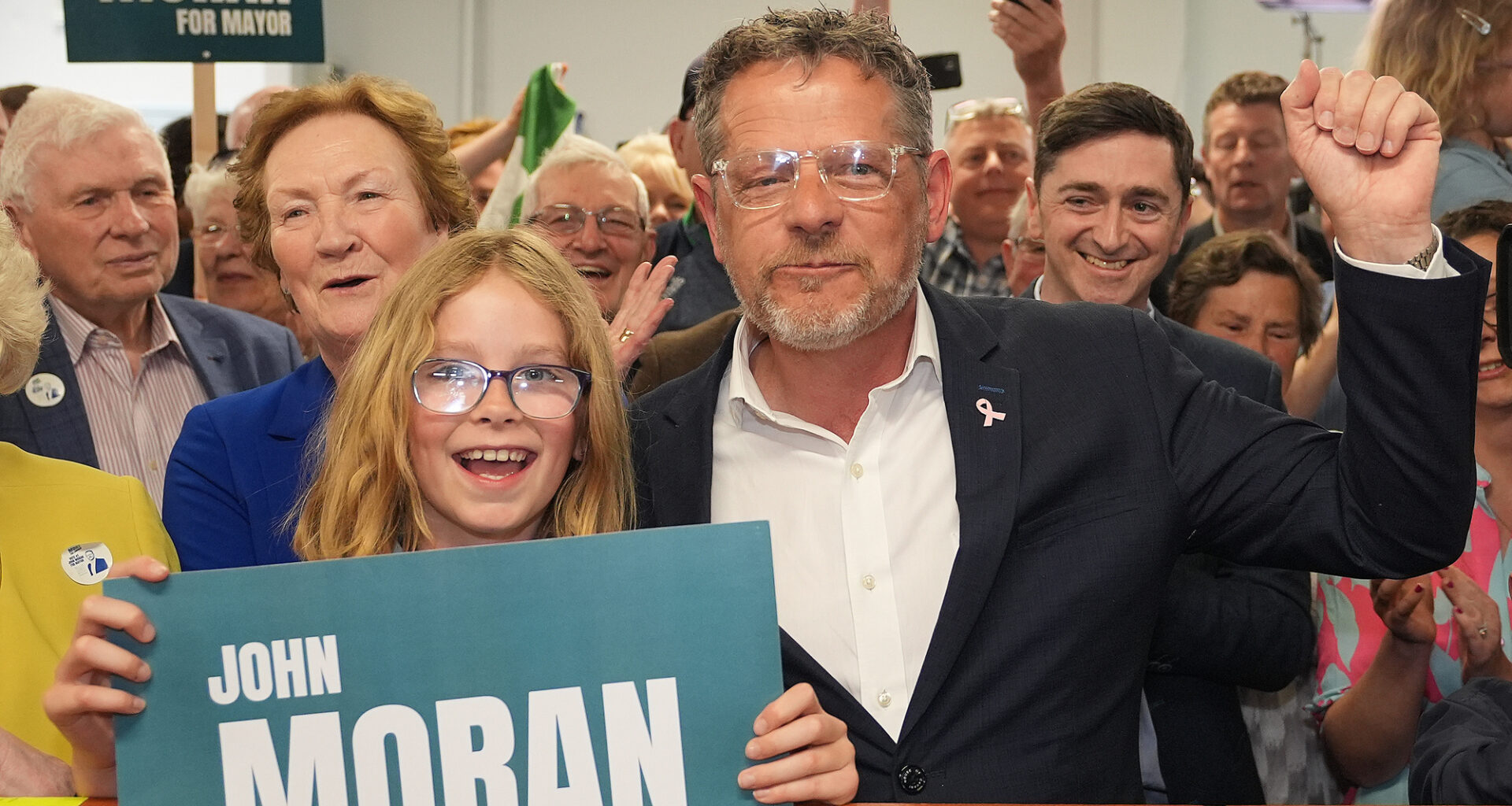
Limerick is testing something Ireland has never tried before: a directly elected mayor with a mandate across an entire city and county.
If responsibilities remain blurred, it will weaken the case for reform elsewhere.
People in Limerick will judge the system by what it achieves.
Are more homes being built? Is infrastructure keeping pace with growth? Are transport and public services improving? Can decisions be made within a reasonable time?
Businesses ask much the same questions. They need confidence that plans will lead to delivery and that somebody can be held responsible when progress stalls.
Some of the difficulty comes from Ireland’s highly centralised system.
Many decisions affecting housing, transport, water, energy, and economic development remain with government departments and national agencies.
A mayor cannot be held fully accountable for outcomes while lacking meaningful influence over the bodies responsible for them.
There is also uncertainty within the Limerick model. The 2024 legislation did not draw clear enough lines between the mayor, elected councillors, and the director general.
The mayor was elected across Limerick city and county on a published programme.
Councillors have their own democratic mandate and retain important decision-making functions.
Council staff are responsible for managing the local authority and delivering its work.
All three have legitimate roles, but the legislation gives too little guidance on how those roles fit together.
The controversy surrounding the adoption of the council’s corporate plan brought that problem into view.
The plan was deferred in January and eventually adopted at a special meeting in February that lasted around seven hours and included several adjournments.
Council minutes recorded that the annual service delivery plan and workforce plan could not progress until the corporate plan had been agreed.
The corporate plan sets the council’s direction and shapes its budgets, staffing, and delivery priorities.
It must take account of the mayoral programme, but its adoption is a reserved function of the elected council.
The process for reconciling those responsibilities was not clear enough.
Business has little interest in choosing sides between the mayor, councillors, and council management. Our members want the system to work.
For a multinational employer, that means certainty around infrastructure, housing, transport, and skills. For a large indigenous business, it means a region capable of making a coherent case to national government.
Growing firms need timely planning decisions, reliable services, and a clear route through regulation. Universities and public bodies need an agreed regional direction when planning investment, research and talent development.
The same issues affect communities. Delays in housing, transport, regeneration, or public works carry real costs for families and make it harder for employers to attract and retain people.
In Limerick Chamber’s July 2026 Business Sentiment Survey, more than 200 regional businesses gave a clear warning.
Seventy-seven per cent were concerned that confusion over governance, roles, and decision-making could damage Limerick’s reputation as a place to do business.
Sixty per cent said the uncertainty was having a negative effect on decisions about further investment or expansion.
There is still time to address that warning.
Limerick remains a highly attractive place in which to invest and grow.
It has a strong multinational base, ambitious indigenous businesses, respected third-level institutions, a skilled workforce and a well-established record of collaboration.
The region’s economic prospects are strong. Clear and effective local government will help us realise them.
The Government’s local democracy taskforce report and implementation plan, published in July, open the way for greater local accountability, financial autonomy, and devolution.
Limerick can provide valuable evidence for that work. It is already showing where a directly elected model has promise and where the legislation requires attention.
The statutory review of the Limerick mayoral legislation must begin no later than May 2027. Waiting until then would leave uncertainty in place through much of the current mayoral term.
Minister for housing, local government and heritage minister James Browne should start the review now and publish its terms of reference.
The review should examine the division of functions between the mayor and director general, the mayor’s authority over staffing and budgets, the role of councillors and the arrangements for resolving disagreements.
It should also consider how the mayor can engage more effectively with the national bodies responsible for infrastructure and services in Limerick.
The corporate plan process needs particular attention. The legislation should be clear about how the mayoral programme is translated into the corporate plan, annual budgets, and the council’s day-to-day work.
Practical improvements can be made before the review is completed. The mayor, councillors, director general and department should agree a working protocol immediately.
It should set out who leads on each major area, when consultation takes place, how amendments are considered, where final authority rests and how disputes are resolved.
That protocol should be published. Residents and businesses should not have to study legislation or follow lengthy council meetings to find out who is responsible for a decision.
There should also be a public record of delivery. A quarterly dashboard could report progress on housing, infrastructure, investment, planning timelines, and commitments in the mayoral programme.
Using 2024 as the baseline would allow the statutory review to assess what changed after the new model was introduced.
Limerick Chamber will provide evidence from businesses across the Mid-West and is ready to help bring business, education, and civic voices into the review.
Our role is to support solutions, encourage collaboration, and speak clearly when the region’s interests are at stake.
Limerick was willing to lead. That says something important about the ambition of the city and county.
It also places a responsibility on national and local government to learn from the experience and improve the model while there is still time to do so.
Clearer responsibilities will allow the mayor to lead, councillors to fulfil their mandate, and council staff to deliver.
They will give businesses greater confidence and help communities see whether the new system is producing results.
Getting this right will strengthen Limerick.
It could also give Ireland a better model of local government: closer to the people it serves, clearer about who is responsible, and better able to turn ambition into progress.
Donnacha Hurley is CEO of Limerick Chamber