
 3 min read
There was almost nowhere in New York my mother Mary Grigoriadis, a pattern painter, loved more than the Brutalist Marcel Breuer building on Madison Avenue that was home to the Whitney Museum of American Art from 1966 to 2014. When I was growing up we lived across the park, on the Upper West Side, and my mom and I would take the crosstown bus to see a show, she striding ahead in her -caramel-colored knee-high boots, my shiny patent leather shoes moving fast to keep up. Now in her eighties, my mother is making a return of sorts to the Breuer, thanks to a presentation of her paintings by the Ortuzar gallery at the Independent 20th Century art fair, which the iconic building’s current steward, Sotheby’s, is hosting this month.
 Steven Probert
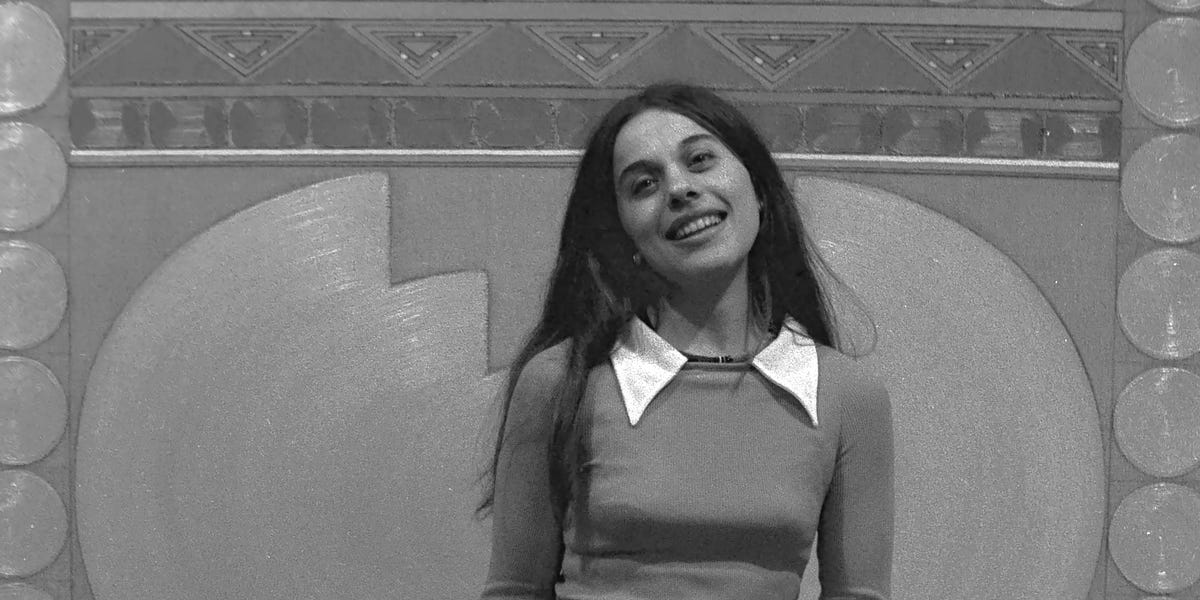
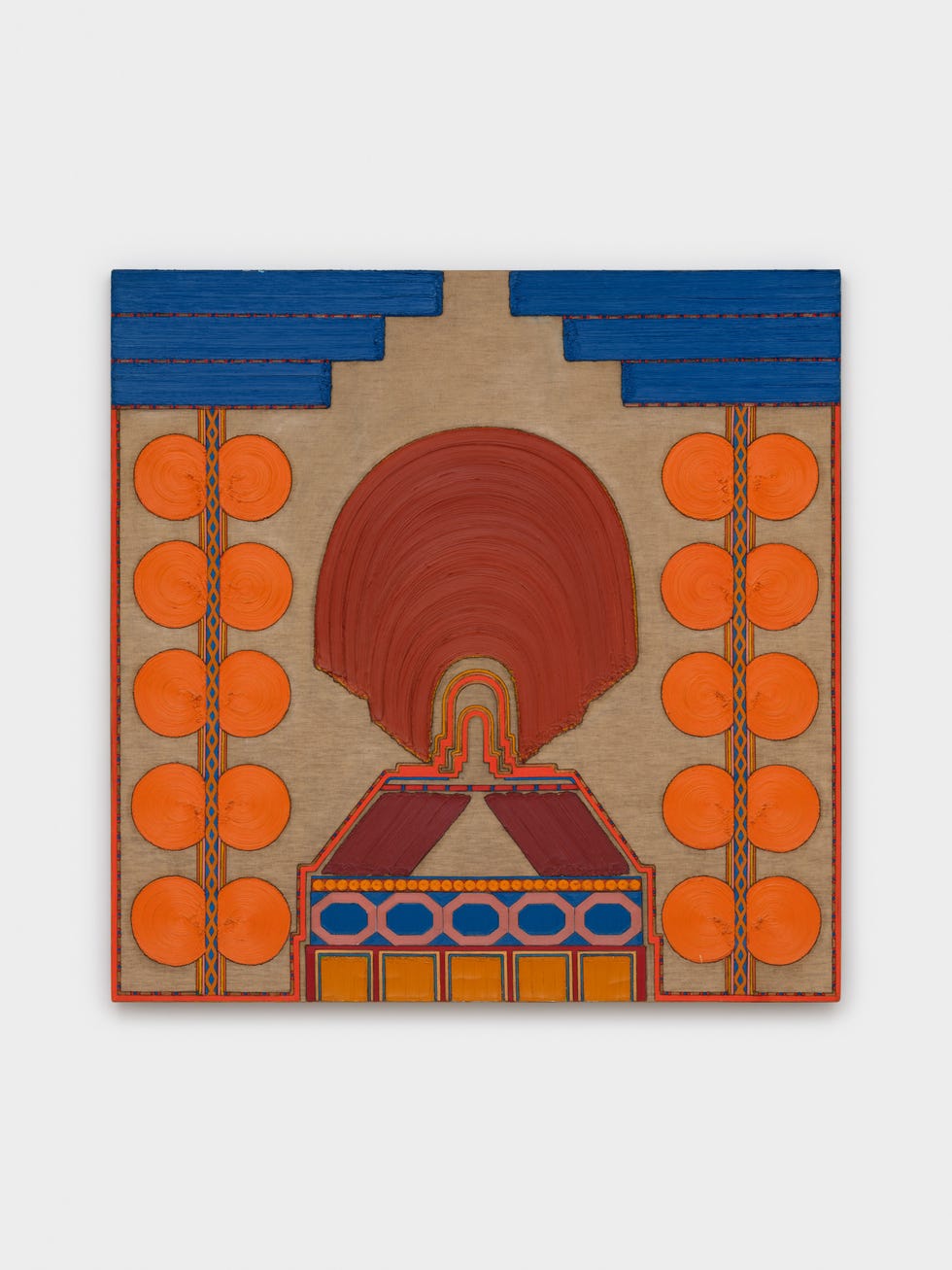
Mary Grigoriadis, Giotto’s Oranges, 1974. Courtesy of the artist and Ortuzar, New York. Top: Grigoriadis poses in front of her work Istanbul Bazaar during the opening reception of “Dotty Attie and Mary Grigoriadis” at A.I.R. Gallery in 1972.
As well as being a painter, my mother was a co-founder of A.I.R. Gallery on Wooster Street in Soho, the first women’s cooperative gallery in New York during the second-wave feminist period. Started by 20 women artists in 1972, A.I.R. existed outside the establishment, and many of the artists involved did not find their way, at that time, to the handful of galleries credited with building the market and shaping critical discourse.
 David Attie/A.I.R. Gallery Archives/Fales Library and Special Collections/New York University/Courtesy A.I.R. Gallery Brooklyn
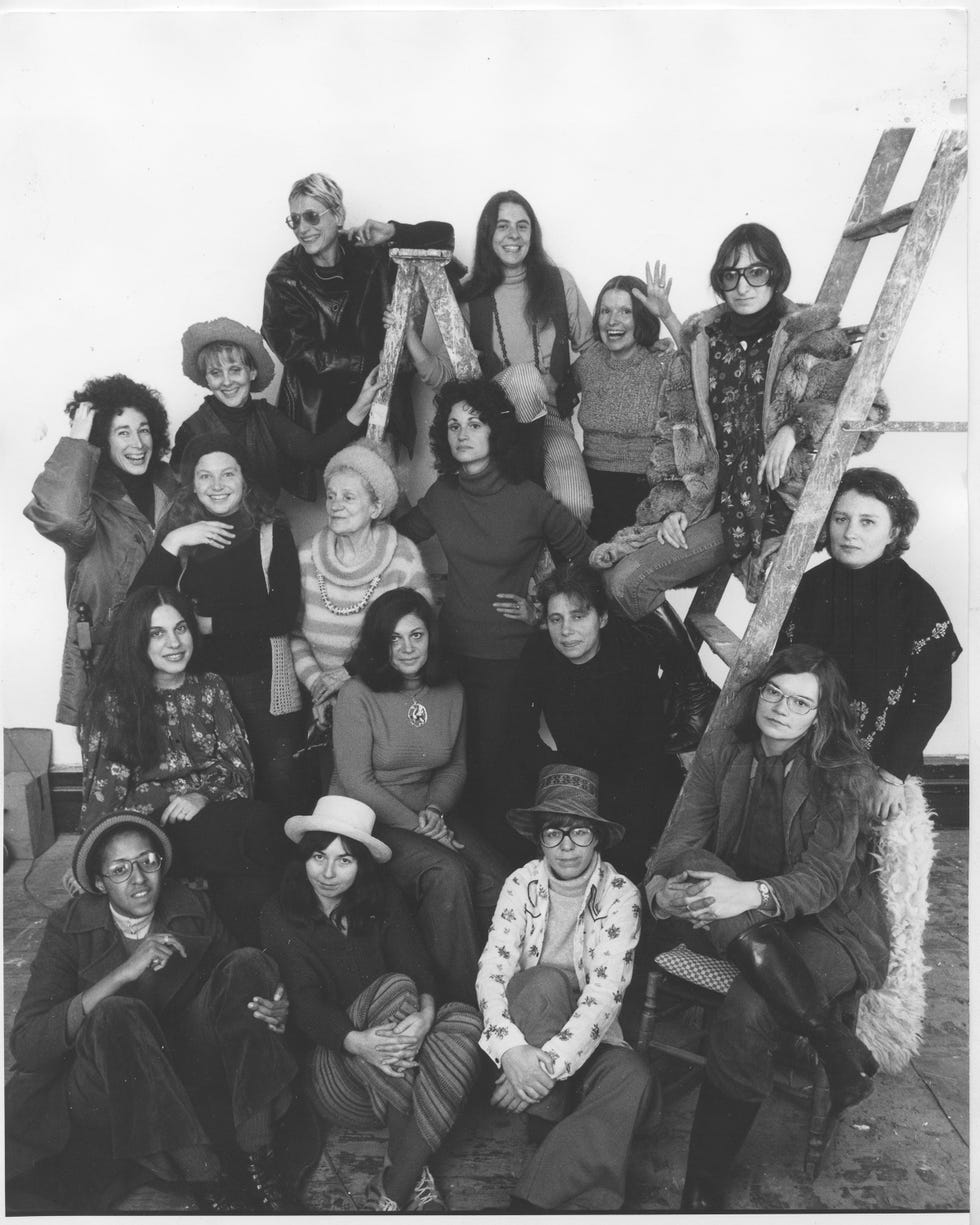
Mary Grigoriadis (second row, far left) with her fellow members of the artist-run A.I.R. Gallery in 1974, including artists Howardena Pindell, Nancy Spero, and Judith Bernstein.
For my mother the 1970s were a breakthrough time in her practice. She was able to develop her own style on her own terms at A.I.R. Exulting in the sensuousness of paint, she began with white-on-white surfaces, then moved to more earth-toned colors, and eventually to the exuberant works she is best known for. Her richly patterned, textile-like compositions incorporate an array of swirling organic shapes, dynamic industrial forms, and architectonic motifs that seem to span centuries and cultures.
“Mary steadfastly combined a feminist interest in the needle arts with one in architecture throughout her career,” says artist Harmony Hammond, also a co-founder of A.I.R. “The material presence of her lush paintings continues to celebrate intricate cross-cultural pattern and ornamentation.”
 Courtesy the artist and Ortuzar Gallery
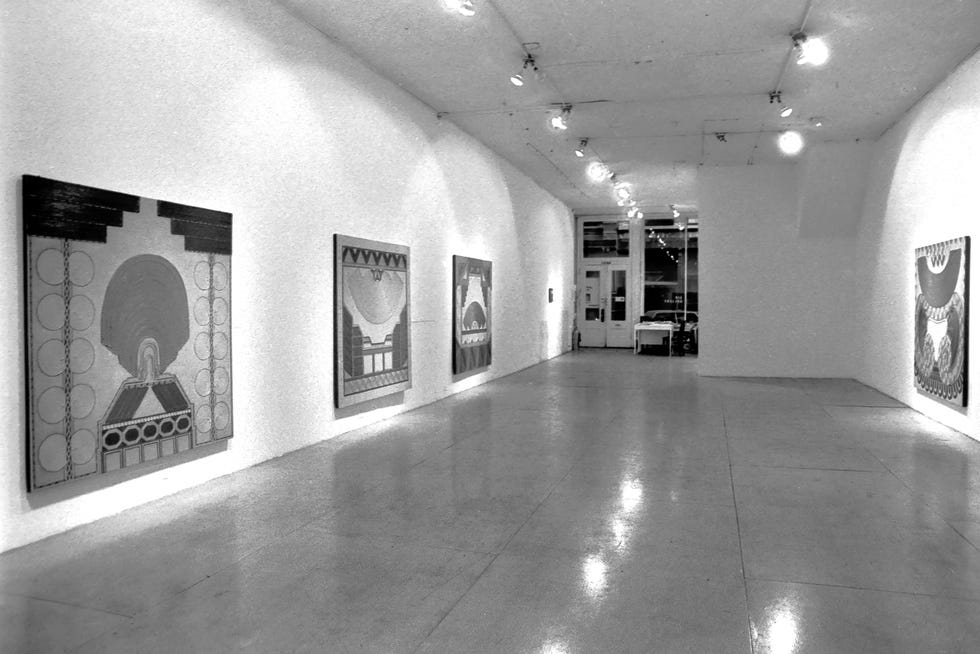
Grigoriadis’s 1975 solo exhibition at A.I.R.
My mom, whose body of work spans 40 years, once liked to work big, often stretching her canvases to six feet by six feet, because that was the largest size that could fit into our building’s elevator. I remember the canvases stacked in the hallway, and an art mover offering me a stick of caramel taffy as they were packed up.
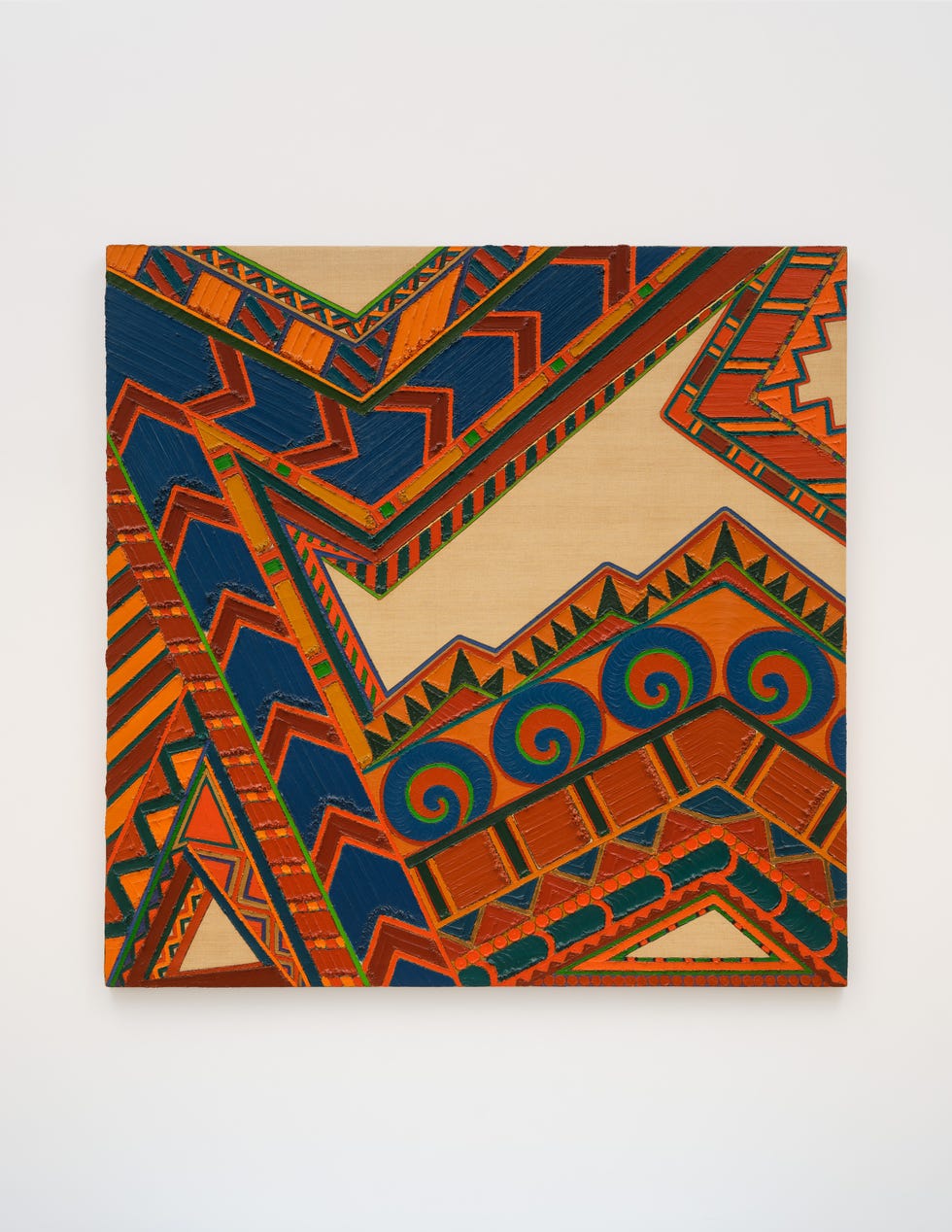 Courtesy the artist and Ortuzar, New York
Mary Grigoriadis, Ravenna Eve, c. 1979-1980.
One of the works Ortuzar is showing at the fair is titled Ravenna Eve. The painting hung in her bedroom for years, resting against the wall where some would place a flat-screen TV. But gazing at it was all she needed. Other works being exhibited left our home before I was old enough to remember, including Giotto’s Oranges, its palette and symmetry inspired by Giotto’s masterful frescoes for the Scrovegni Chapel in Padua.
As any curator or gallerist can attest, it’s the sweetest reward to see an artist who was long overlooked getting his or her due. This is triply true for the children of the artist, who also wish so fervently for their parent’s legacy to continue. My husband Craig Maldonado and I now live with a 1982 triptych painting in the home he designed for our family in Red Hook, Brooklyn. The work is as visible as a billboard to guests as soon as they step into the foyer. On the day the movers arrived to hang the work, my mother pulled me aside and asked, “Are you sure you want to live in the same space with these paintings? They have a lot of power.” Yes, Mom, I do.
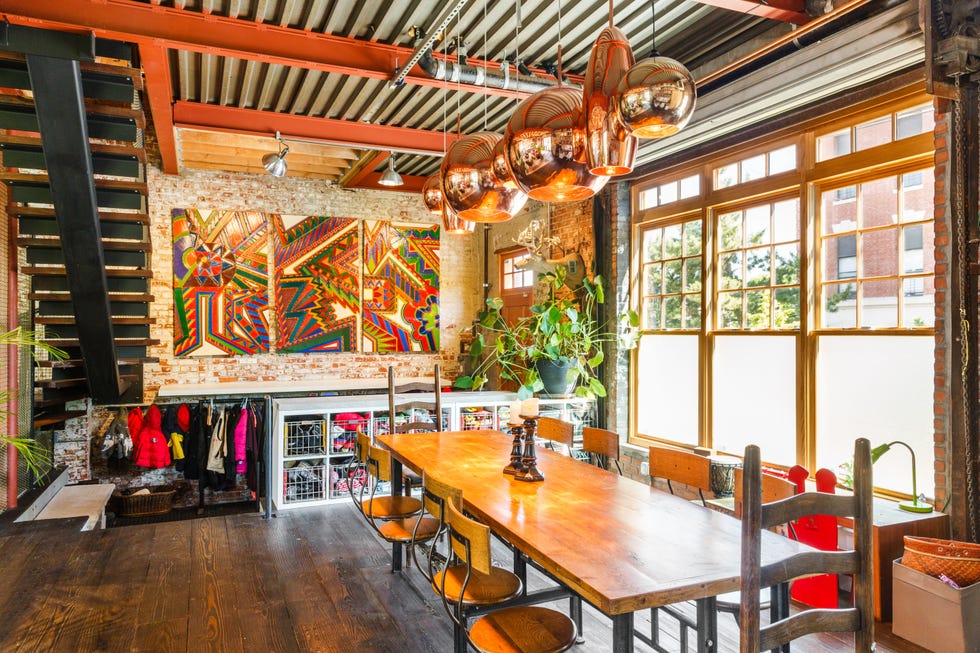 Alex Staniloff
The 1982 triptych in the writer’s Brooklyn home.
This story originally appeared in the September 2026 issue of ELLE Decor.