
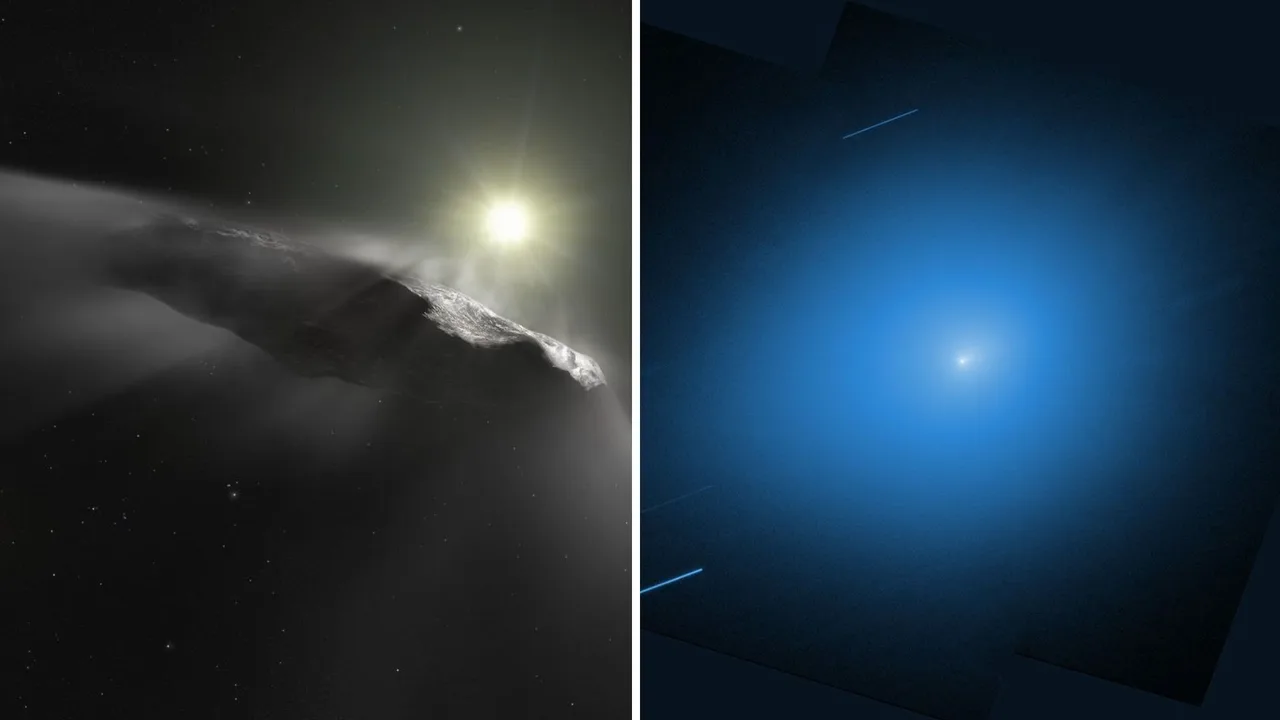
In a 2021 paper, Loeb had stated that ‘Oumuamua had “half a dozen anomalies relative to comets or asteroids in the Solar system” and insisted that “an artificial origin for ‘Oumuamua must be considered.” He mentioned facts like the lack of a cometary tail as an anomaly, along with its initial velocity, which he wrote “was unusual for a natural object that originated from a nearby star.” Loeb also wrote that ‘Oumuamua exhibited an excess push away from the Sun which would have required it to lose approximately 10 percent of its mass like other natural comets, but any such cometary activity was ruled out by NASA’s Spitzer telescope. Sharing more explanations on the said anomalies, Loeb said that ‘Oumuamua might be artificial in origin, possibly a light sail built by aliens.
Then came 3I/ATLAS, which drew more attention toward Loeb and his alien theories. He published multiple papers and articles explaining the anomalies that separated 3I/ATLAS from other comets and how its unusual brightness, lack of coma, sunward tail, and nickel/iron ratio call for investigation while considering its possible extraterrestrial origin. He had even stated in an article that if 3I/ATLAS did not fragment during its closest pass to the Sun (perihelion), it would be a major indication that 3I/ATLAS may not be a natural comet. The comet reached perihelion in late October 2025, and while there was no confirmation of its fragmentation, its extraterrestrial origin hasn’t been proven either.